

Progress towards an NDIS goal is not always a straight line or a major milestone. It might be a small change that makes everyday life work better for you. If your goals feel broad, progress comes and goes, or updates from different supporters do not quite join up, it can be hard to know what to count. A useful starting point is your own priorities, circumstances and starting point.
This guide explains how to measure progress towards NDIS goals in a practical, person-centred way. You’ll learn how to connect a goal with everyday activities, choose signs of progress, and record changes, barriers and setbacks. You’ll also find ways to bring your observations and supporters’ insights together, so you can discuss what matters and decide on next steps with confidence.
Key Takeaways
- Meaningful progress is about changes that matter to you, such as having more choice, confidence or participation, rather than meeting someone else’s idea of success.
- Learn how to measure progress towards ndis goals with a simple routine: clarify the goal, note your starting point, choose signs to look for, record them and reflect.
- Choose a tracking method you can manage, such as brief notes, a checklist, a calendar or another format that works for you.
- Use review conversations to explore what helped, what felt difficult and what you’d like to focus on next. A change in pace can be a reason to adjust support together, not assign blame.
How to Measure Progress Towards NDIS Goals Without Adding Pressure
Tracking a goal should not feel like a test you can pass or fail. Your progress belongs to you, and it is not a judgement of your worth. It may be gradual, uneven or different from what someone else expects. A change matters when it helps everyday life feel more like the life you want.
Broad goals can be difficult to reflect on until you connect them with real experiences. If your goal involves community participation, for example, think about a particular activity you choose. What would you like to feel or do differently before, during or after taking part? You might want more confidence arriving, more choice about how you join in, or a way to participate that feels comfortable. The National Disability Insurance Scheme (NDIS) provides the wider context, but your priorities give the goal personal meaning.
What counts as progress towards an NDIS goal?
Start with your own words: “What do I hope will feel or work differently?” You might want to feel more at ease arriving at an activity, decide how you take part, or attend more consistently when it suits you. There is no single right sign of progress. Your preferences and circumstances help determine what is meaningful.
Meaningful progress is a change that matters in your life, not a score that measures your value.
That is a useful guide for how to measure progress towards ndis goals without adding pressure. Look for shifts in confidence, choice, consistency or participation, even if they seem small. Make the signs specific enough to recognise. For example, instead of recording only “felt more confident,” note what you chose to do or what felt easier than before. If a goal does not connect clearly with daily life, talk it through with a trusted support worker or coordinator. You can explore what the goal means to you and which changes you want to notice.
A Simple Way to Track Progress Towards NDIS Goals
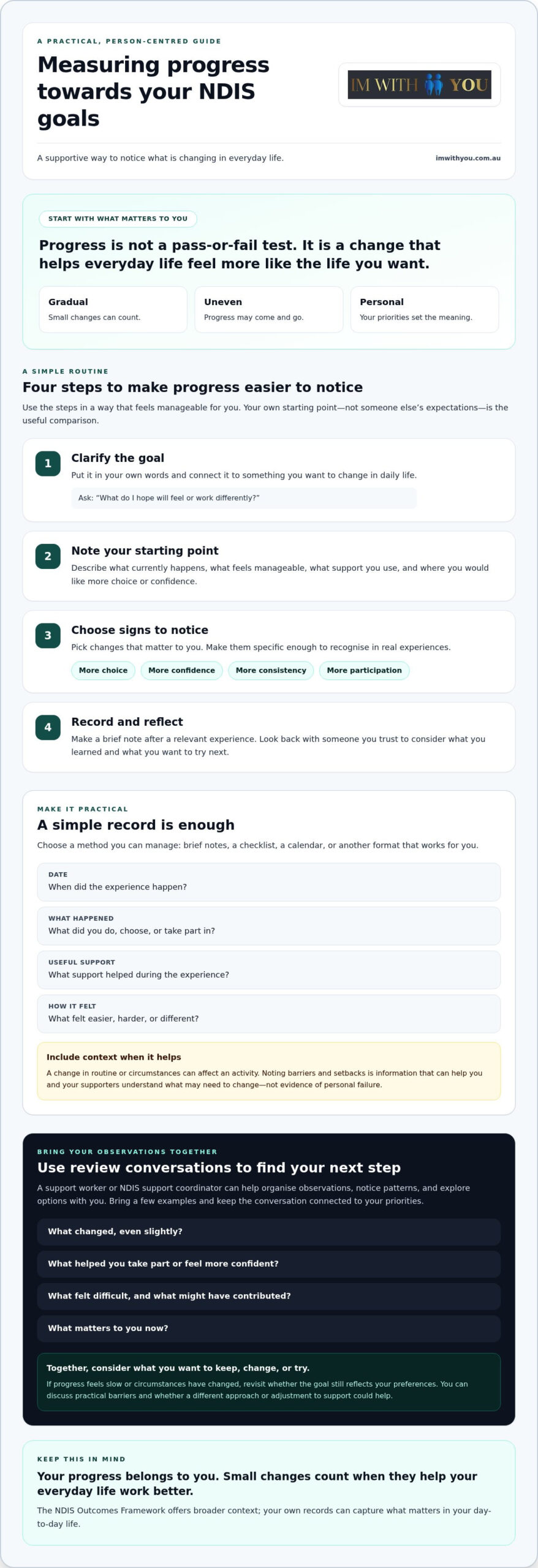
A small, repeatable routine can make goal tracking easier to manage. Use these steps in a way that suits you:
- Clarify the goal: Put it in your own words and connect it to something you want to change in daily life.
- Note your starting point: Describe what currently happens, including what feels manageable, what support you use and where you would like more choice or confidence.
- Choose signs to notice: Pick changes that matter to you. These might include making a choice, taking part in a preferred activity, feeling more confident or doing something more consistently.
- Record and reflect: Make a brief note after a relevant experience. Look back with someone you trust to consider what you have learned and what you want to try next.
Your tracking method does not need to be complicated. Try brief notes, a checklist, a calendar or another format that works for you. A simple entry could include the date, what you did, what support was useful and how the experience felt. You can also ask a support worker or coordinator to help bring observations together. If you’re considering who to work with, this guide to choosing an NDIS provider may help you think about the kind of collaboration that feels right.
Progress makes the most sense when you compare what’s happening now with your own starting point, not someone else’s expectations. The NDIS Outcomes Framework offers broader context on how the NDIS measures outcomes, while your own records can capture what matters in everyday life.
What should you record when tracking an NDIS goal?
Keep each entry simple: note the date, what happened, what support was useful and how you felt about the experience. If relevant, add what made the activity easier or harder, such as a change in routine or circumstances. These details are not evidence of personal failure. They can help you and your supporters understand what may need to change. If writing is not convenient, consider a checklist or another format that works for you.
If you’d like to explore support with coordination, you can learn more about NDIS Support Coordination.
Review NDIS Goal Progress and Choose Supportive Next Steps
Looking back at your notes can help turn separate experiences into a clearer picture. Start with questions that leave room for your perspective:
- What changed, even slightly?
- What helped you take part or feel more confident?
- What felt difficult, and what might have contributed?
- What matters to you now?
You do not need to have a neat answer straight away. A support worker or NDIS support coordinator can help you organise observations, notice patterns and explore possible next steps with you. For a useful review, bring a few examples from your notes and discuss what you want to keep, change or try. The conversation should stay connected to your priorities. A person-first language guide can support respectful, participant-led conversations.
What if progress towards an NDIS goal feels slow or has changed?
Slow or uneven progress is not a reason for blame. It may be useful information about what is working, what feels difficult or what has changed in your circumstances. Revisit whether the goal still reflects your preferences and priorities, then discuss practical barriers with your support team. Together, you can consider whether a different approach or an adjustment to support could help.
For example, if taking part in an activity feels harder than expected, consider what is getting in the way. Is the timing difficult? Does the current support feel right, or has your interest shifted? You can decide what you would like to keep, change or explore next. Progress is not always about moving faster. Sometimes it means choosing a direction that fits you better.
Learning how to measure progress towards ndis goals can make these conversations more grounded. Your observations offer a starting point, while your voice helps guide what happens next. You do not have to work it all out alone. Support coordination or disability support may help you bring information together and consider options at a pace that feels manageable.
Keep Your Goals Moving at Your Pace
Meaningful NDIS goal progress does not have to be quick or easy to measure. A simple record of what is changing, what support helps and what you want to focus on next can make reflection more manageable. The best way to approach how to measure progress towards ndis goals is to keep your priorities at the centre and treat slow or uneven progress as a chance to learn, not a reason for blame.
You do not have to make sense of every observation alone. Im with you offers disability support and NDIS Support Coordination, alongside community participation, advocacy and capacity-building support. If you’d like to explore support that can work alongside your goals, see how Im with you can walk alongside you with NDIS support.
Your goals can change as your life and priorities change. Take the next step that feels right for you, and remember that your voice matters throughout the process.
Frequently Asked Questions
How often should you measure progress towards NDIS goals?
Choose a rhythm that feels useful and manageable for you. You might jot down a brief observation after an experience linked to your goal, then review your notes with a trusted supporter at intervals that suit you. There is no need to record every detail. The aim is to notice meaningful changes without making tracking feel like another pressure.
What should you do if you are not making progress towards an NDIS goal?
Start by exploring what might be making the goal difficult, without blaming yourself. Consider whether practical barriers, changes in your circumstances or the type of support are affecting your experience. Ask whether the goal still reflects what matters to you. Then discuss what you have noticed with your support team and explore adjustments or a different next step together.
Can an NDIS support coordinator help track progress towards goals?
Yes. An NDIS support coordinator can work alongside you to organise observations, identify questions and discuss possible next steps with your support team. Your perspective should guide the conversation, including which changes feel important and what support you find useful. Coordination can help connect information from different supporters while keeping the focus on your priorities and choices.
What is the best way to record progress towards an NDIS goal?
The best method is one you can use comfortably and consistently. Try brief notes, a checklist, a calendar or another format that suits your preferences. For each relevant experience, record the date, what happened, what support helped and how you felt about it. You can also note barriers or changes in circumstances to make later reflection more useful.