

What if building money confidence meant practising one everyday task at a time, with support beside you, rather than handing over control? If you’ve searched “financial literacy support NDIS,” you may be wondering whether NDIS funding could relate to your goals. If budgeting, bills, spending or regular expenses feel difficult to manage, it’s understandable to want support that builds independence.
Financial literacy support is about developing money skills, not paying everyday bills or taking over someone’s finances. This guide looks at what person-led practice can involve, how it may relate to an NDIS plan without assuming funding is available, and what to ask a support provider or plan contact. It also shares practical ways to practise tasks such as planning expenses, checking bills and making spending choices, so you can consider a next step at your own pace.
Key Takeaways
- Start with a money-related goal that matters to you, then choose one manageable task to practise at your pace.
- Whether financial literacy support NDIS funding may cover depends on individual circumstances, so check current NDIA guidance and the participant’s plan.
- Before arranging support, discuss the approach you prefer and how you’ll stay involved in decisions.
- Support Coordination or Capacity Building Skills may offer relevant contexts to explore, subject to fit and funding confirmation.
What does financial literacy support mean for NDIS participants?
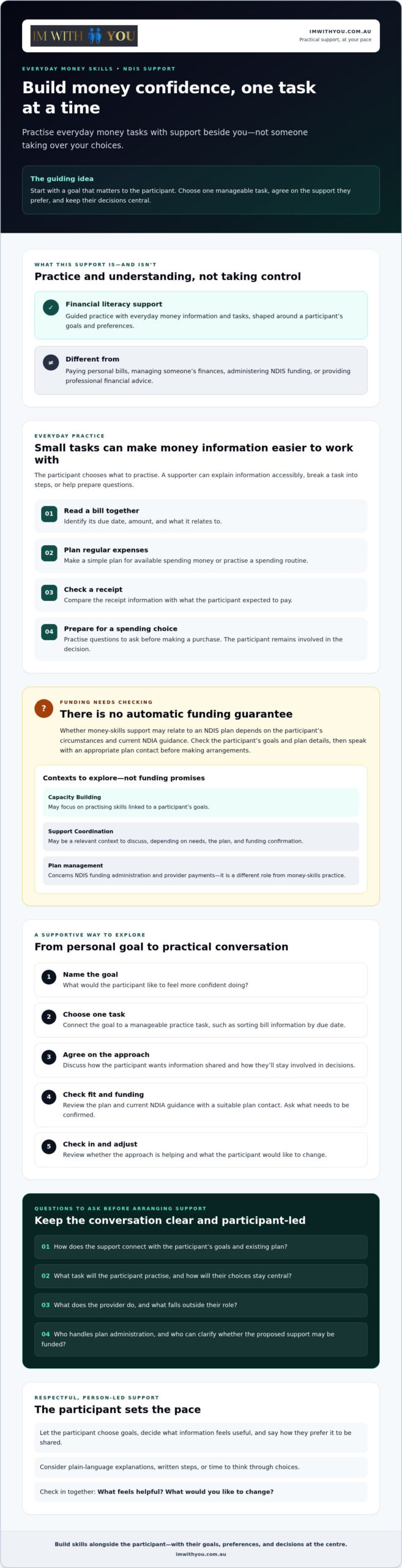
Money tasks can feel more manageable when you have time and support to practise them in a way that suits you. Financial literacy support NDIS discussions are about learning everyday money skills, not giving someone else control. You might read a bill together, make a simple plan for available spending money, or practise questions to ask before making a purchase.
Financial literacy broadly involves understanding and using financial information. In an NDIS context, the focus here is practical learning, not paying personal expenses or making financial decisions for a participant.
For a related perspective, watch this video from AFDO’s NDIS Financial Literacy Video Series:
How can money-skills support build everyday independence?
Financial literacy support is guided practice with everyday money tasks, shaped around a participant’s goals and preferences. You could work through a bill by identifying its due date, amount and what it relates to, or compare the information on a receipt with what you expected to pay. A supporter can explain information accessibly, break a task into steps or help you prepare questions. You remain involved in decisions about your money.
This is different from plan management, which relates to managing NDIS funding and provider payments. It is also not direct financial assistance to cover bills, or professional financial advice about what to do with money. If you’re exploring financial literacy support, clarify the task the provider can help with and which decisions remain yours. The aim is to practise with someone beside you, not to have them take over.
Can the NDIS fund financial literacy support, and what should you check?
Some money-skills support may relate to an NDIS plan, but funding depends on the participant’s circumstances and current NDIA guidance. There is no automatic funding guarantee. Start by checking the participant’s goals and plan details, then ask an appropriate plan contact whether the proposed support may be suitable. If the answer is unclear, confirm what information needs to be checked before making arrangements.
Keep the different roles clear. Capacity Building support may focus on practising skills linked to a participant’s goals. Plan management concerns NDIS funding administration, while direct financial assistance means help paying personal expenses. These are different types of support and are not interchangeable. The AFDO resource Financial Literacy for NDIS Self-Managers may also help participants who self-manage explore relevant money-management information.
What questions can you ask before arranging support?
A short conversation can help you understand what’s being offered and whether it fits. You could ask:
- How does this support connect with the participant’s goals and existing plan?
- What task will the participant practise, and how will their choices stay central?
- What does the provider do, and what falls outside their role?
- Who handles plan administration, and who can clarify whether the proposed support may be funded?
If funding remains uncertain, check current NDIA information or speak with a suitable plan contact before making arrangements. A provider can help you explore whether existing supports, such as NDIS Support Coordination and Capacity Building Skills, might relate to the participant’s goals, without promising funding. A clear conversation about needs and support preferences can help you decide what to explore next.
How to explore NDIS financial literacy support that feels right for you
Begin with what the participant wants to feel more confident doing. Choose one goal, identify a practical task connected to it, then discuss what kind of support would feel comfortable. For example, if the goal is to feel more prepared for regular expenses, a practice task could be sorting bill information by due date or planning a spending routine. Decide how you’ll check in and review whether the approach is helping.
Support Coordination or Capacity Building Skills may be relevant contexts for exploring financial literacy support NDIS, depending on the participant’s needs, plan and funding confirmation. A provider can discuss possible supports and fit, but cannot guarantee that a particular activity will be funded. For additional ideas, AFDO’s Financial Literacy for NDIS Self-Managers resource offers information for people who self-manage their plans.
How do you keep the support respectful and participant-led?
The participant should set the pace, choose the goals and decide what information feels useful. Agree on how they prefer information to be shared, such as plain-language explanations, written steps or time to consider choices. Check in regularly: What feels helpful? What would they like to change? A guide to respectful, person-first language can also support thoughtful conversations about preferences.
Before moving ahead, write down the goal, the task to practise and how you’ll review it together. If you’re considering a provider, use an NDIS provider selection guide to prepare questions about their approach and how they’ll respect the participant’s choices. You can also discuss disability support or coordination needs with a provider, then take time to decide what feels right. The participant remains at the centre of each next step.
Take the next step towards money confidence
Building money confidence can begin with one goal and a practical task to practise at your own pace. Financial literacy support NDIS discussions are about exploring skills that may fit a participant’s goals, not assuming funding is available or handing over control. Check the plan and current NDIA guidance, and clarify what a provider can support and what falls outside their role.
Im with you provides NDIS Support Coordination and Capacity Building Skills. We can discuss your existing support needs and explore options collaboratively, without promising funding or providing plan management or financial advice. If you’d like to discuss support that fits your goals, talk with us about your support needs. Contact us to start a conversation about the next step that feels right for you.
Frequently Asked Questions
Can the NDIS fund financial literacy support?
The NDIS may fund financial literacy support in some circumstances, but funding isn’t automatic. Whether financial literacy support NDIS funding applies depends on the participant’s individual circumstances, goals, plan details and current NDIA guidance. Check relevant plan information with an appropriate contact, such as a support coordinator or another suitable plan contact. They can help clarify what to check, but can’t promise eligibility.
What does financial literacy support help NDIS participants learn?
Financial literacy support can help participants practise everyday money skills, such as understanding a bill, planning spending or preparing questions about a purchase. The participant chooses what they want to work on and how they’d like to practise. A supporter can explain information accessibly or break a task into steps, while leaving decisions with the participant. Support means learning alongside someone, not having them take control.
Is financial literacy support the same as NDIS plan management?
No. Financial literacy support focuses on learning and practising money skills, while NDIS plan management involves administering plan funding and paying provider invoices. They serve different purposes and aren’t interchangeable. Im with you provides NDIS Support Coordination and Capacity Building Skills, but doesn’t provide plan management. If you’re unsure who handles plan administration, check the participant’s arrangements with an appropriate plan contact.
Who can help me explore financial skills support through the NDIS?
You can start by discussing the participant’s goals with a suitable support provider or plan contact. NDIS Support Coordination may help explore supports and plan options, while Capacity Building Skills may be a relevant context for practising skills if they fit the person’s needs. Funding isn’t guaranteed. Check current NDIA guidance and the plan details, and ask who can confirm whether a proposed support may be funded.