

What if a continence assessment could help make your needs clearer, while respecting your dignity and choices? It’s understandable to feel unsure about discussing personal routines and challenges. An ndis continence assessment can give you a structured way to describe what’s happening and identify what support may help in daily life.
In this guide, you’ll learn what an assessment may involve, what information a clinician might ask about and how to prepare at your own pace. We’ll also explain how the findings may provide evidence for NDIS support planning, including discussions about continence products or assistive technology. You can involve people you trust and talk through next steps with your support team. You don’t have to work it all out alone.
Key Takeaways
- An NDIS continence assessment can document disability-related needs and help inform support decisions, including those involving assistive technology.
- Prepare at your own pace by noting questions, gathering relevant information and choosing who you’d like involved.
- Record everyday patterns or support needs only if you feel comfortable and they’re relevant to the assessment.
- After the assessment, review the findings, ask for plain-language explanations and use the evidence as one input to NDIS discussions, not as a guarantee of funding.
What is an NDIS continence assessment, and what is it for?
An NDIS continence assessment can document how bladder or bowel needs affect a person’s daily life and what support may help. It gives the participant and their chosen team clearer information to use in support planning. The focus is on understanding individual needs, not judging personal routines or expecting anyone to share more than they feel comfortable discussing.
If continence-related assistive technology is being considered, assessment evidence may describe why particular supports could be relevant to the person’s disability and everyday needs. This information can help inform an NDIS funding decision, but it doesn’t determine the outcome. The National Disability Insurance Scheme (NDIS) makes its own decisions about supports and funding.
For practical ideas about supporting toileting with dignity, watch this video from Continence Health Australia:
What questions can a continence assessment help clarify?
An assessment may explore how continence needs show up throughout the day, what assistance is useful and whether current strategies or equipment meet the person’s needs. For example, the discussion might cover access to a toilet, help with changing, or how continence needs affect comfort and participation. Assistive technology may also come up if it’s relevant.
There isn’t one process or duration that applies to everyone. The approach can vary with the participant’s circumstances and the purpose of the assessment. You can share relevant details at a pace that feels manageable.
Assessment evidence can inform an NDIS funding decision, but it isn’t the decision itself. Findings may help explain support needs, but they don’t guarantee funding or a particular plan outcome. Keeping that distinction in mind can help you and your support team discuss next steps with clearer expectations.
How to prepare for an ndis continence assessment with confidence
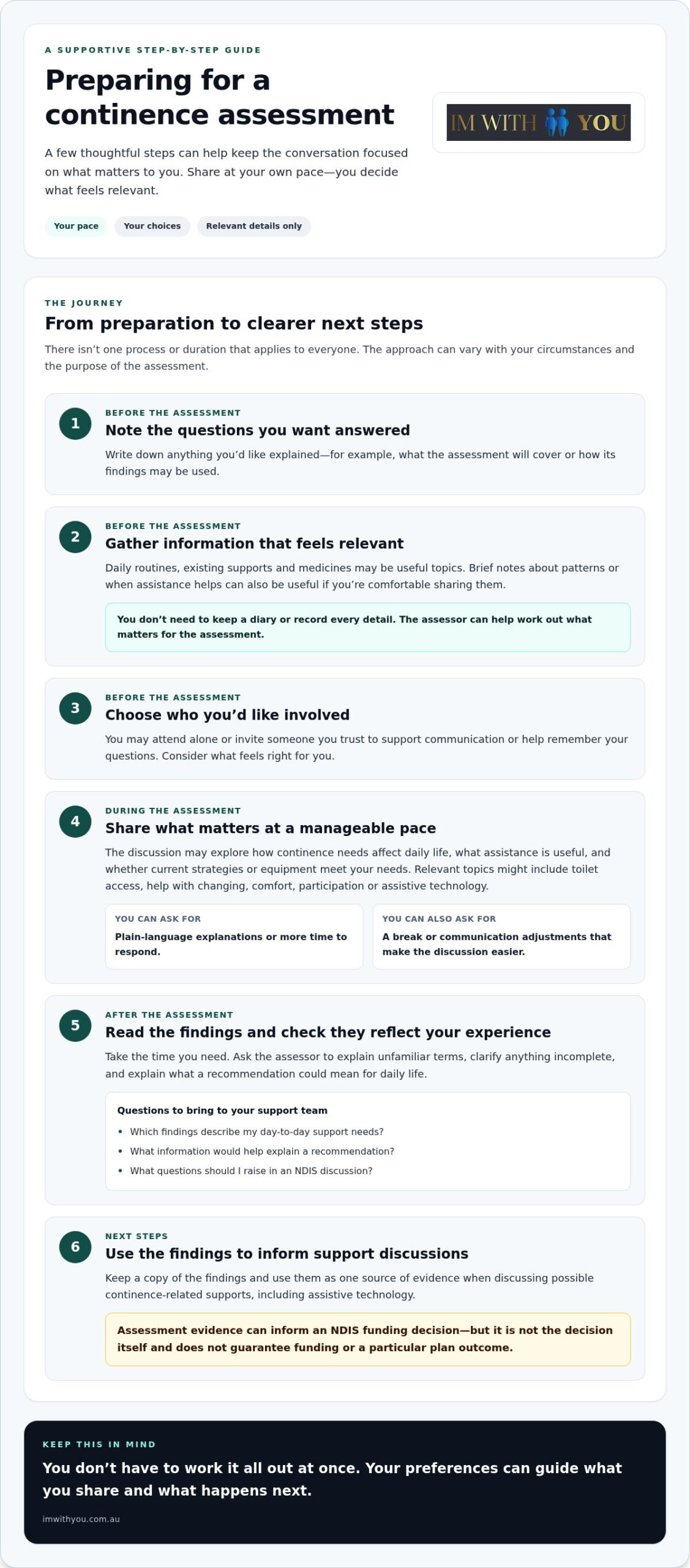
Preparing doesn’t mean having every detail ready. A few simple steps can help you feel more settled and keep the conversation focused on what matters to you. You’re in control of what you share. You can ask for a break or for communication adjustments that make the discussion easier.
- Note your questions. Write down anything you’d like explained, such as what the assessment will cover or how its findings may be used.
- Gather information that feels relevant. Daily routines, existing supports and medicines may be useful discussion topics. You don’t need to treat these as a required checklist. The assessor can help identify what’s relevant. The NDIS continence-related assistive technology assessment guidelines also explain the assessment’s role in the NDIS context.
- Choose who you’d like involved. You may prefer to attend alone or invite someone you trust to support communication or help remember your questions. Consider what feels right for you.
What information may be useful to have ready?
If it feels comfortable and relevant, you could make brief notes about everyday patterns, routines or support needs. For example, note when assistance is helpful or whether your current supports meet your needs. You don’t have to keep a diary or record every detail. Share what you can, and let the assessor help work out what matters for the assessment.
You can also explain how you prefer people to communicate with you. Respectful, person-first language keeps the focus on you as a person, not just a support need. Ask for plain-language explanations, more time to respond or a pause whenever you need one. If organising next steps feels difficult, Im with you support coordination can help you explore options collaboratively.
What to do after an NDIS continence assessment
When you receive the findings, take time to read them in a way that works for you. Ask the assessor to explain unfamiliar terms in plain language, check that the report reflects your experience and clarify anything that feels incomplete. If you’re unsure what a recommendation means for daily life, write down your question so you can return to it with the right person.
It may help to decide what you’d like to discuss next with your support team. For example, you could ask:
- Which findings describe my day-to-day support needs?
- What information would help explain a recommendation?
- What questions should I raise in an NDIS discussion?
An NDIS continence assessment provides evidence that may inform NDIS discussions, including consideration of continence-related supports. It doesn’t guarantee that a support will be funded or that your plan will change in a particular way. Keep a copy of the findings and use them to guide conversations about possible next steps.
How can support coordination help with next steps?
Support coordination can help you make sense of options and organise relevant next steps. I’m With You support coordination helps clients stay connected, explore opportunities and engage with their community, while keeping their preferences and goals central. You decide what matters most and what support feels right. A coordinator can help you work through questions and conversations, but doesn’t replace the assessor’s role or decide NDIS funding.
If you’d like support to explore your options at your own pace, you’re welcome to learn more about I’m With You’s personalised support.
Take your next step with support that fits you
Your next step can be a small one: decide what you’d like help understanding, then choose who you want beside you as you explore it. An NDIS continence assessment can be part of a wider conversation about the supports that matter in your everyday life, with your preferences guiding what happens next.
I’m With You offers person-centred disability supports in person and through telehealth, including support coordination and community nursing under the NDIS. We’re proud to have received the 2026 Australian Enterprise Award for Excellence in Disability Support and Advocacy. We’ll work alongside you with care and respect, while you remain at the centre of your choices.
Explore personalised support with I’m With You and take the next step at a pace that feels right for you.
Frequently Asked Questions
What is an NDIS continence assessment?
An NDIS continence assessment is a professional review that helps describe a person’s continence-related needs and how they may affect everyday activities. It can provide information for support planning, such as explaining why a particular product or assistance may be relevant. The information gathered depends on the individual’s circumstances.
What happens during a continence assessment?
A qualified health professional may ask about bladder or bowel experiences, daily routines, current supports and concerns affecting comfort or participation. They may discuss products or strategies relevant to the person’s needs. The conversation should help build a clearer picture, not assess someone’s worth or effort. You can ask why a question is being asked or request a pause.
How can I prepare for an NDIS continence assessment?
Before an NDIS continence assessment, consider noting a few questions or examples of situations where support makes a difference, such as needing help when away from home. You might also gather details about current products or assistance if they relate to the assessment. There’s no need to create a complete record. Share only what feels comfortable, and ask for communication adjustments that help you take part.
Does a continence assessment guarantee NDIS funding?
No. An assessment can provide evidence for the NDIS to consider, but it doesn’t guarantee funding, a specific support or a plan change. If the findings don’t address your needs clearly, you can ask what they mean and what information was considered. A support coordinator can help you explore questions and organise next steps, while the NDIS makes the funding decision.