
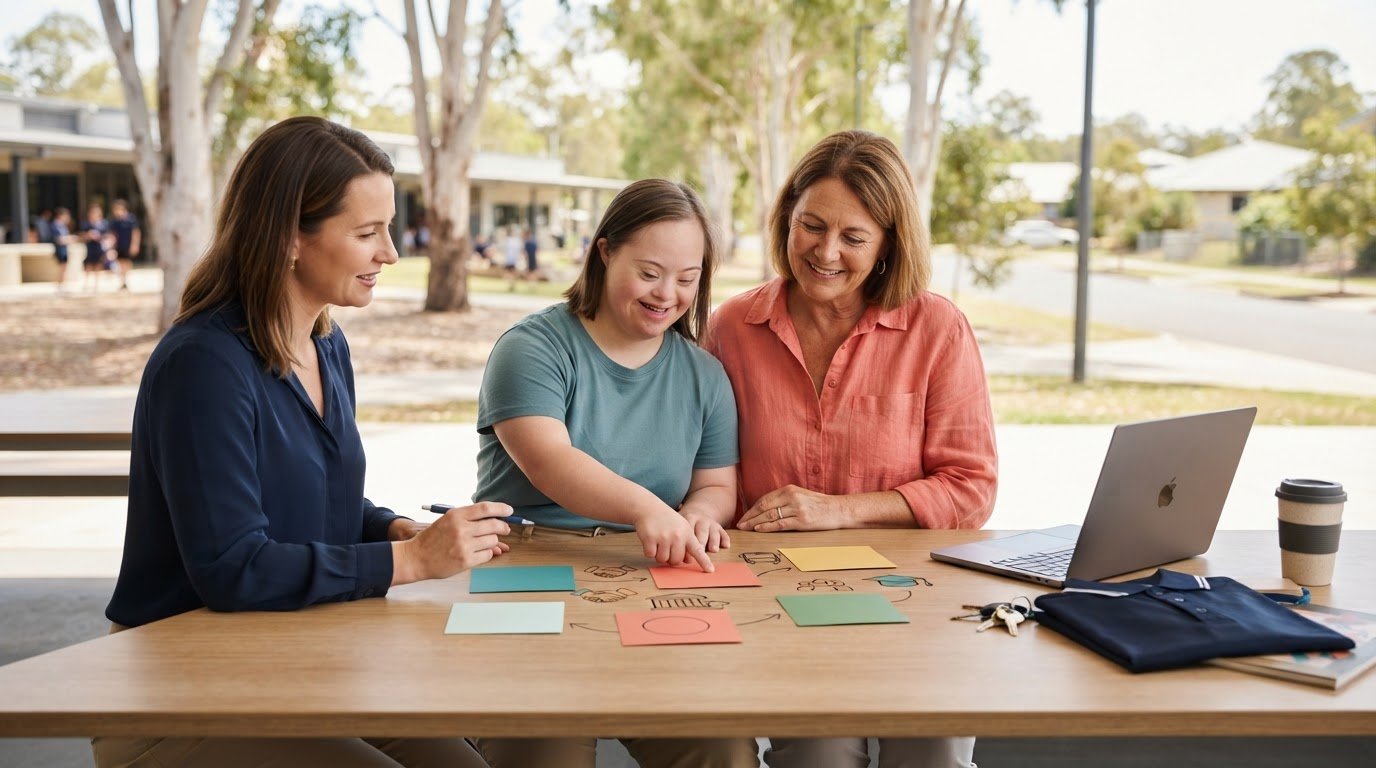
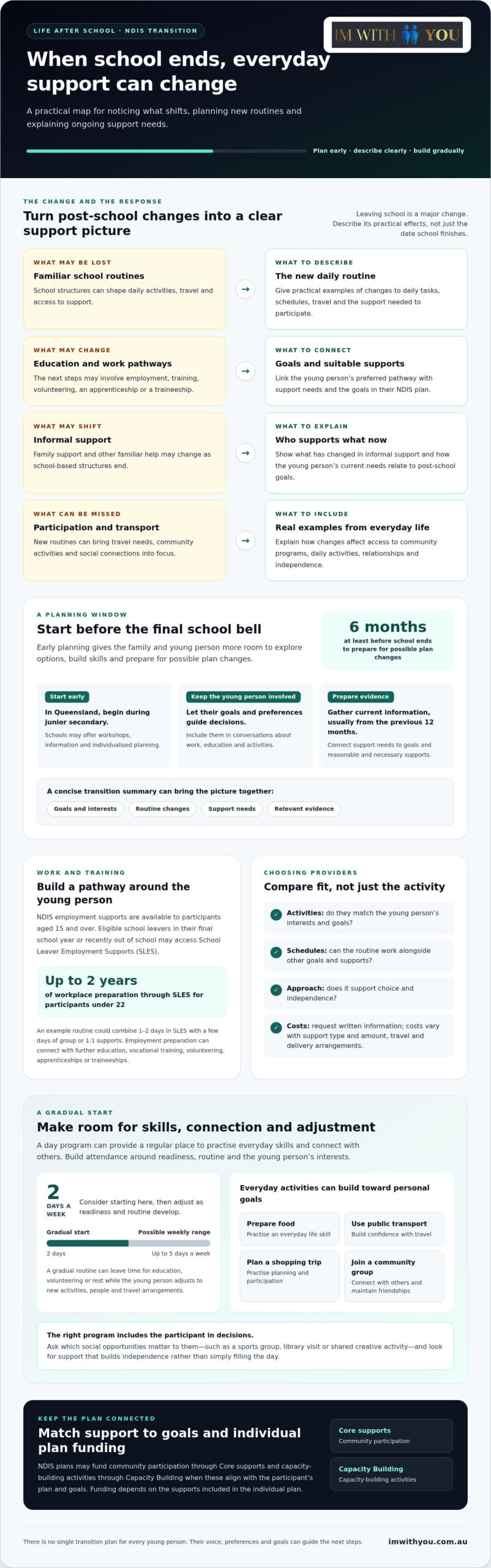
The transition starts well before the final school bell. Planning for life after school with the NDIS should begin during the final years of school; in Queensland, transition planning should start during junior secondary. Starting early gives your family more time to explore options and build skills and confidence.
It’s understandable to focus on Year 12, but leaving school can change education, daily routines, work goals and informal supports. Leaving school alone may not be enough to support a plan reassessment request; it helps to show the significant, ongoing changes around the young person. This guide explains how to prepare, explore day programs and plan for possible NDIS changes, one step at a time.
Key Takeaways
- Start transition planning during the school years, and include the young person so their goals and preferences shape what comes next.
- Explore work, training and volunteering pathways early, then discuss how NDIS employment supports may fit the young person’s goals.
- Consider a gradual start to community programs and build a weekly routine around life skills, relationships and participation.
- When considering a plan reassessment after school, document the ongoing changes to education, daily routines and supports.
1. How Do I Prepare My Child with Disability for Life After School?
Transition planning brings the young person, family and school together to set goals and plan next steps. In Queensland, begin during junior secondary; schools may offer workshops, information and individualised planning. Involve your child in decisions about employment, education and activities.
Hear a young person’s perspective on NDIS planning in this video:
NDIS employment supports are available to participants aged 15 and over. Eligible school leavers in their final school year or recently out of school may access School Leaver Employment Supports (SLES). For participants under 22, SLES can provide up to two years of workplace preparation. These supports complement school transition activities.
Build a manageable routine around the young person’s goals. For example, they could spend 1–2 days in SLES and a few days in group or 1:1 supports. Employment preparation can also connect with further education, vocational training, volunteering, apprenticeships or traineeships.
State and territory supports can include school transition planning and education pathways. In Queensland, schools may provide workshops, information and individualised support. Vocational education and training builds industry skills, while apprenticeships and traineeships combine work and training.
Compare providers by checking whether their activities, schedules and support approaches match the young person’s goals. Costs vary with the type and amount of support, travel and delivery arrangements. Request written cost information and compare it with the NDIS plan.
Before a plan review, discuss transition goals and funding early with a planner, Local Area Coordinator or support coordinator. Gather current evidence, usually from the previous 12 months, and show how support needs connect to the young person’s goals and reasonable and necessary supports.
2. Day programs for life skills and community participation
A day program can offer a regular place to practise everyday skills and connect with others. Activities might include preparing food, using public transport, planning a shopping trip or joining a community group. Choose activities that reflect the participant’s interests and build skills towards their own goals.
Consider starting with two days a week, then adjust attendance as the young person’s readiness and routine develop. Post-school schedules can range from two to five days a week, depending on the provider and the young person’s needs. A gradual start can make it easier to adjust to new activities, people and travel arrangements while leaving time for education, volunteering or rest.
Community participation can help young people maintain friendships and build relationships beyond school. Ask which social opportunities matter to them, such as a sports group, library visit or shared creative activity. A suitable program includes the participant in decisions and supports independence, rather than simply filling the day.
NDIS plans may fund community participation through Core supports and capacity-building activities through Capacity Building when these align with the participant’s plan and goals. Support coordination can help organise services and connect the plan with education, training and community programs. Funding depends on the supports included in the individual plan.
When describing changed circumstances, explain what has shifted since school ended. Give practical examples of changes to daily routines, education, informal support and participation. This helps show how the young person’s current support needs relate to their post-school goals.
For tailored help to build community skills and participation, explore Community Participation Support as one option in planning a suitable routine.
Significant and ongoing changes after leaving school
Leaving school at the end of Year 12 can reshape a young person’s education, employment, daily routines and informal support. Families should begin preparing for possible NDIS plan changes at least six months before school ends. The key is to describe what will change in everyday life, not simply state that school has finished.
For a reassessment request, explain how disability-related support needs connect to these changes and why they are significant and ongoing. For example, describe how losing school-based routines affects travel, daily activities or access to community programs. Include the young person’s interests, developing life skills and goals, then link each goal to the support they need.
Relevant evidence can help explain the difference between school and post-school life. Gather information about changes to the young person’s schedule, employment or training plans, informal supports and daily tasks. A clear comparison can show how support needs may change as familiar school structures end and new pathways begin.
Common gaps include assuming existing supports will cover new routines, overlooking transport or community participation, and not explaining changes to family support. Families should also plan how the young person will manage money from employment, Centrelink or other sources. These practical changes can affect independence and belong in transition planning alongside support needs.
Prepare a concise transition summary with goals, routine changes, support needs and evidence. Get support to plan for changing needs as your family works through this next stage.
Im with you: Disability Support Services
I’m With You provides Disability Support Services for young people and families preparing for life after school. If you’re coordinating supports, building a new routine or exploring community participation, NDIS Support Coordination and Community Participation Support can help connect goals with practical next steps. Disability Advocacy Services can support young people to express their needs and preferences.
There’s no single transition plan that suits every young person. Start by sharing the goals that matter most, such as developing life skills, exploring community activities or coordinating supports around changing routines. I’m With You can help focus on the young person’s choices and supports that fit their NDIS plan.
If you’d like support with this next stage, you’re welcome to contact Im with you.
Take the Next Step at Your Own Pace
Planning for life after school with the NDIS can feel more manageable when the young person’s voice guides the conversation. Invite them to choose one priority to explore first, such as a new interest, more responsibility at home or a meaningful way to spend their week. Writing it down gives everyone a shared starting point without requiring decisions about every detail at once. A note about what feels exciting or uncertain can also guide future conversations.
Keep plans flexible as confidence, interests and circumstances evolve. Families can revisit goals and shape practical next steps around what matters to the young person. If you’d like a supportive partner as you consider those steps, contact Im with you. You can move forward thoughtfully, with the young person’s choices at the centre.
Frequently Asked Questions
Why Start Now?
Starting early gives the young person room to practise making choices before adult routines take shape. Try a relaxed conversation: ask what they want more of, what they want less of and what they’d like to try. Record their answers in a format they prefer, such as notes, pictures or voice recordings, so their perspective can guide future decisions.
Do School Leavers Require NDIS Funding?
School leavers don’t automatically need NDIS funding for every post-school activity. Consider whether disability-related assistance is needed to make a chosen activity accessible. For example, distinguish the activity itself from support with communication, daily tasks or transport. This helps families describe the support the young person needs and relate it to their goals.
How Do I Prepare My Child with Disability for Life After School?
Help your child practise speaking up in appointments and making everyday decisions. They might keep a short note about their communication preferences, what helps when plans change and who they want involved in conversations. For adult healthcare, organise vaccination, medication and allergy records so the young person can gradually take part in managing their information.
What Options Are There for Young People After Leaving School?
Life after school also involves preparing for adult responsibilities beyond a timetable. Young people can develop an understanding of personal boundaries, relationships, and sexual and reproductive health with access to clear, age-appropriate information. They can also practise expressing preferences in everyday situations, such as what support they want during appointments or how they’d like to spend unstructured time.
When Should Students with Disability Start Planning for Life After School?
Planning for life after school with the NDIS should begin before a decision feels urgent, then adapt as the student’s interests develop. Start a conversation when they show curiosity about an adult goal or responsibility. Keep it open, invite their views and revisit priorities as they discover what feels right for their next stage.