

What if the most useful evidence for an NDIS plan review isn’t only a formal report, but a clear picture of how support needs affect everyday life? If you’re unsure which documents to gather or how to explain changes, you’re not alone. The evidence needed for an NDIS plan review can feel like a lot to pull together, especially when paperwork, deadlines and daily responsibilities are already demanding.
Useful information connects your goals with what happens in everyday life, the supports you use and any changes in your needs. This article will help you identify common evidence to gather, organise it clearly and describe your experience in your own words. We’ll also cover how support coordination and advocacy can help you prepare for the next conversation, with your choices and goals at the centre. You don’t have to make sense of every detail on your own.
Key Takeaways
- Build a clearer picture of your support needs by noting how they affect everyday activities, goals and existing supports.
- Use a simple document tracker to record each item’s date, author, topic and the need it helps explain.
- The evidence needed for ndis plan review is easier to understand when you connect reports and notes to specific goals and supports you want to discuss.
- Prepare a concise summary, then check current NDIA instructions for how and when to provide your information.
What evidence may help explain your needs in an NDIS plan review?
Gathering information for a plan review can feel like a lot, especially if your support needs are changing. Take it one step at a time. Focus on evidence that explains your disability-related support needs and their effect on everyday life. Information and evidence help inform the next plan. For background on how the scheme works, see this overview of the National Disability Insurance Scheme (NDIS).
A diagnosis and an account of functional impact provide different information. A diagnosis names a condition; functional evidence describes how support needs affect daily activities, relationships, learning, work or community life. Either may be relevant, but there is no single document that everyone must provide. Focus on what helps explain your circumstances and goals.
To explore how evidence can explain support needs in an NDIS plan, watch this video:
Evidence examples: reports, lived experience, and changes in daily support
Useful examples may include an occupational therapist’s report, notes from another relevant professional, your description of daily routines, or observations from people who support you. These are examples, not a mandatory document list. A report might describe what makes meal preparation difficult. Your own account could explain how that affects your independence or a personal goal. Observations from someone who supports you may show what assistance you need or what has changed.
Relevant evidence describes support needs in context, linking everyday life, personal goals and the assistance that may help. The evidence needed for ndis plan review depends on your situation. Choose information that reflects your experience clearly and respectfully, rather than gathering paperwork for its own sake.
NDIS Plan Review Evidence Checklist: Gathering & Organizing
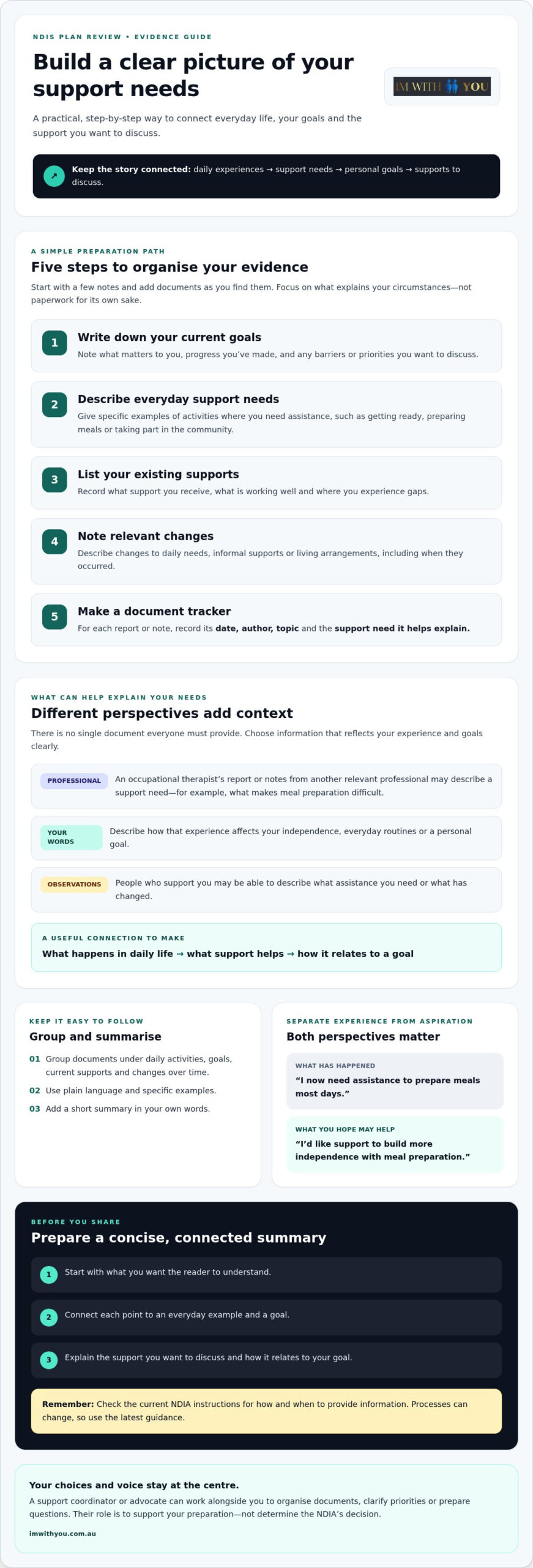
You don’t need to sort everything at once. Start with a few notes, then add documents as you find them. This checklist can help you connect the evidence needed for ndis plan review with your goals and day-to-day support needs.
- Write down your current goals. Note what matters to you, what progress you’ve made and any barriers or priorities you want to discuss.
- Describe everyday support needs. Include activities where you need assistance, such as getting ready, preparing meals or taking part in the community. Specific examples help explain what support looks like in practice.
- List your existing supports. Record what support you receive, what is working well and where you experience gaps.
- Note relevant changes. Describe changes to your daily needs, informal supports or living arrangements, including when they occurred.
- Make a document tracker. For each report or note, record its date, author, topic and the support need it helps explain.
Add a short summary in your own words. Separate what has happened from what you hope may help. For example, “I now need assistance to prepare meals most days” describes an experience. “I’d like support to build more independence with meal preparation” explains a goal. Both perspectives can help show what matters to you.
Make each piece of information easy to understand
Group documents under simple topics such as daily activities, goals, current supports and changes over time. Use plain language and specific examples, while keeping your perspective at the centre. If your living supports have changed, this guide to supported independent living in the NDIS may be relevant.
NDIS support coordination can help you organise information and prepare for conversations about your plan while respecting your choices.
How to prepare and share evidence for an NDIS plan reassessment
A short summary helps show how your documents fit together. Start with what you want the reader to understand, then connect each point to an example, a goal and the support you want to discuss. For instance, describe how a change affects a daily activity, what assistance you currently use and how the support you’re seeking relates to your goal. Keep the language clear and grounded in your experience.
The evidence needed for ndis plan review is most useful when it tells a coherent story, rather than leaving the reader to piece together separate reports. You don’t need to make every detail sound formal. Your own words can add important context alongside professional information.
Before sharing documents, check the current NDIA instructions for how and when to provide information for your reassessment. Processes can change, so use the latest guidance rather than relying on old advice or assumptions.
Prepare with support while keeping your voice at the centre
You choose who you’d like involved and what you want them to help with. A support coordinator or advocate can work alongside you to organise documents, clarify your priorities or prepare questions. Their role is to support your preparation, not determine the NDIA’s decision. A respectful working relationship matters; this guide to choosing an NDIS provider may help you think about what feels right for you.
Im with you provides support to help you organise information and express what matters. Your goals, choices and voice remain central.
Take your next step with confidence
Preparing for an NDIS plan review doesn’t mean collecting every document you can find. Focus on information that shows how your disability affects everyday life, what support you already use and how your needs connect with your goals. A simple tracker and a short summary in your own words can make your evidence easier to organise and explain.
The evidence needed for ndis plan review depends on your circumstances. Check current NDIA instructions before sharing information. Reports and personal observations can help describe your support needs, but they don’t guarantee a particular outcome.
Im with you offers NDIS Support Coordination and Disability Advocacy Services. We can walk alongside you as you organise your information and express what matters to you. Talk with Im with you about support coordination and advocacy. Your voice and choices remain at the centre, and you don’t have to take the next step alone.
Frequently Asked Questions
What evidence is needed for an NDIS plan review?
The evidence needed for an NDIS plan review depends on your circumstances and what you want to explain. Relevant information may include professional reports, your own account or observations from people who support you. Choose evidence that shows how your disability affects everyday activities, what support you use, how your needs have changed and how these relate to your goals. No single document suits everyone.
Can I use my own statement as evidence for an NDIS plan review?
Yes. Your own statement can explain your experience and support needs. Describe specific situations, such as tasks you need help with, how often you need support or what has changed in your routine. You can also explain your goals and the assistance you believe may help. Your perspective can sit alongside other relevant information rather than replacing it.
Do I need a new professional report for an NDIS plan reassessment?
Not necessarily. There isn’t one universal requirement for a new report in every reassessment. Consider whether the information you already have still explains your current support needs and any changes. If it doesn’t, an updated report from a relevant professional may help clarify what’s different. Check current NDIA guidance for information relevant to your circumstances, and avoid arranging new documents simply for the sake of having more paperwork.
How do I submit evidence for an NDIS plan review?
Check the current NDIA instructions for how and when to provide information, as processes can change. Organise your documents with a brief summary connecting each item to your everyday support needs, goals and the supports you want to discuss. Keep a copy of what you provide. A support coordinator or advocate may help you prepare, while the NDIA makes decisions about the plan.