
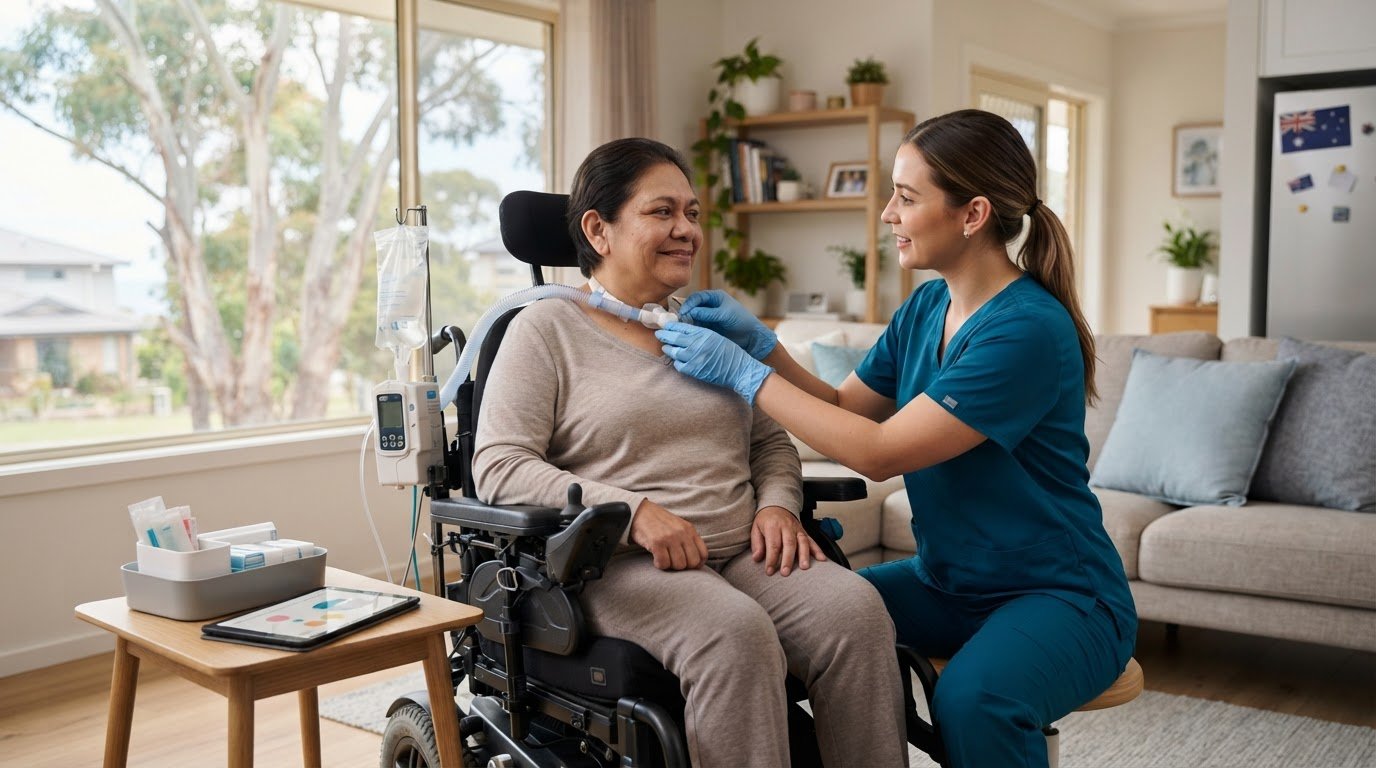
A task can look like personal care and still call for specialised support. Under the NDIS, high-intensity daily personal activities are supports for complex health needs that require workers with advanced skills or specific training. They include tasks such as complex bowel care, enteral feeding, severe dysphagia management and tracheostomy care.
It’s understandable if the difference from standard personal care feels unclear. The distinction depends on the health needs, risks and skills involved, not simply on how personal the task is.
This guide explains which activities may qualify, how high-intensity support differs from everyday personal care, and how these supports fit into an NDIS plan. It also covers what to consider when planning support, so you can understand the options and feel more confident about your next steps.
Key Takeaways
- Use the High Intensity Support Skills Descriptors to understand the skills and knowledge workers need for specific support tasks.
- Consider the complexity and health risks involved to distinguish specialised support from everyday personal care.
- Learn how individual support needs, planning evidence and risk management shape the way these supports fit into an NDIS plan.
- Explore how support coordination, advocacy and disability support can help you work through your options and plan next steps.
What Is High Intensity Daily Personal Activities?
In Australia, high intensity daily personal activities under the NDIS support complex health needs that require workers with advanced skills or task-specific training. The NDIA identifies these as health-related supports that help some participants manage daily life.
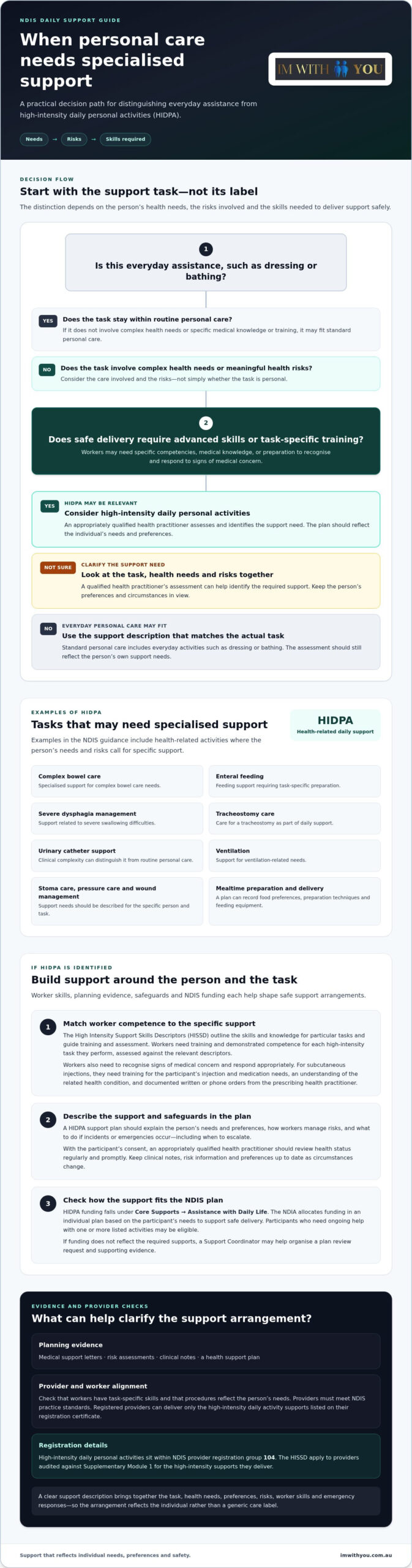
Examples include complex bowel care, enteral feeding, severe dysphagia, tracheostomy management, urinary catheter support and ventilation.
For a clear overview, watch NDIS High-Intensity Support Explained (2025 Guide) by Affective Care:
High-Intensity Support Skills Descriptors
The NDIS High Intensity Support Skills Descriptors (HISSD) set out the skills and knowledge workers need for particular high-intensity tasks, and guide training and assessment. Updated by the NDIS Quality and Safeguards Commission by February 2024, they help connect a participant’s support needs with relevant competencies, rather than relying on a general care qualification alone.
Workers Delivering High-Intensity Supports
Workers need training and demonstrated competence in each high-intensity task they perform. Their competencies should be assessed against the HISSD for the specific support they deliver. They also need to recognise signs of medical concern and respond appropriately. This task-specific preparation supports safety and helps match the support to the participant’s needs.
For urinary catheter management, clinical complexity distinguishes the task from routine personal care. Workers who provide subcutaneous injections need training for the participant’s injection and medication needs, as well as an understanding of the related health condition. They also need documented written or phone orders from the prescribing health practitioner.
A Support Coordinator can help organise a plan review request if funding does not reflect the supports required. Medical support letters, risk assessments, clinical notes and a health support plan can help explain the participant’s needs.
Standard personal care compared with HIDPA
Standard personal care supports everyday activities such as dressing or bathing. High intensity daily personal activities involve specific medical knowledge or training when a task’s complexity or health risks call for specialised support. The distinction depends on the task and the person’s needs, not simply on whether the assistance is personal.
The NDIS identifies HIDPA as health-related support for daily life. An appropriately qualified health practitioner assesses and identifies the need. These supports fall under Core Supports, Assistance with Daily Life, with funding allocated in the participant’s individual NDIS plan.
How do assessment and funding work? A practitioner’s assessment identifies the required support, while the NDIA provides funding in the plan for its safe delivery. The plan should reflect the participant’s support needs and preferences.
What risks and safeguards apply? A HIDPA support plan should explain how workers manage risks, incidents and emergencies, including the actions to take and when to escalate. With the participant’s consent, an appropriately qualified health practitioner should review their health status regularly and promptly.
How can someone request a plan review if funding is inadequate? A Support Coordinator may help request a review and organise evidence, such as medical letters, risk assessments, clinical notes and a health support plan. A clear management plan should record support needs, preferences, risks and emergency responses. For help organising support options, NDIS Support Coordination can help bring these planning steps together.
NDIS high-intensity daily personal activities
NDIS funding for high-intensity daily personal activities falls under Core Supports, Assistance with Daily Life. Participants who need ongoing help with one or more listed activities may be eligible. The NDIA allocates funding in an individual plan to support safe delivery, based on the participant’s needs.
The NDIS plan should describe the assistance required, the participant’s preferences and how workers respond to risks. For example, a mealtime support plan can record food preferences, preparation techniques and feeding equipment. It should also set out actions and escalation steps for incidents or emergencies.
HIDPA supports can include stoma care, pressure care, wound management, and mealtime preparation and delivery. For a high seizure risk, workers may administer epilepsy medication such as Midazolam. These examples show why a support plan should reflect the specific task, health needs and risks rather than rely on a generic description.
Registration matters too. In Australia, high-intensity daily personal activities sit within NDIS provider registration group 104. The High Intensity Support Skills Descriptors apply to providers audited against Supplementary Module 1 for the high-intensity supports they deliver. Participants can use these details to understand whether a provider’s registration and worker preparation align with their required support.
Support needs can change as a person’s circumstances change. Keeping clinical notes, risk information and support preferences up to date can help clarify those needs during planning conversations. Regular health reviews by an appropriately qualified practitioner, with the participant’s consent, can also inform safe support arrangements.
If you’re working through how support needs fit into an NDIS plan, talk with our NDIS Support Coordination team about planning the next steps.
Im with you: Disability Support Services
Im with you offers Disability Support Services, NDIS Support Coordination and Disability Advocacy Services to help you work through support needs and plan decisions. If you are preparing for a plan review or want support that reflects your daily routines and preferences, Support Coordination can help organise information and clarify next steps. Advocacy can support you to express your views during NDIS conversations, while Community Participation Support can help you pursue meaningful involvement in your community.
We are alongside you as you consider what matters, gather relevant information and discuss your goals. Support should respect your choices and focus on your life, not just paperwork.
Contact Im with you or visit imwithyou.com.au to talk about the support that may suit your goals.
Take the Next Step at Your Pace
As you consider high-intensity daily personal activities under the NDIS, let your priorities guide the next conversation. Think about what a safe, supportive day looks like for you, which routines matter most and how you want to be involved in decisions. Sharing your preferences can keep future planning focused on your life and the support that feels right for you.
You don’t need to have every detail worked out before seeking guidance. A conversation can help you organise your questions and consider a practical way forward. I’m With You is here to walk alongside you as you explore your options.
Contact Im with you to discuss your next step. You deserve to feel heard as you shape support around your goals.
Frequently Asked Questions
Do all NDIS providers offer HIDPA services?
No. Registered NDIS providers can deliver only the high-intensity daily activity supports listed on their registration certificate. Registration for one type of support, for example, does not automatically mean a provider can deliver every HIDPA task. When considering support, match the task identified in your plan with the provider’s registration and the workers’ task-specific competencies.
Who Are HIDPA Supports For?
HIDPA supports are for NDIS participants with ongoing needs related to one or more listed activities. For example, a participant who needs help with tube feeding or complex continence support may need this level of assistance. The person’s health needs and the task both matter. An appropriately qualified health practitioner assesses and identifies the need for these supports.
What are the costs associated with HIDPA?
HIDPA funding depends on the participant’s individual NDIS plan. These supports fall within Core Supports, Assistance with Daily Life, so the plan’s available funding and approved support needs shape what can be delivered. Your Support Coordinator can help you understand how the funding applies to your agreed support arrangements.
What are the high intensity support skills descriptors?
The High Intensity Support Skills Descriptors outline the skills and knowledge relevant to specific high-intensity tasks. They guide training and assessment, helping link a worker’s demonstrated competencies to the support they provide. For example, competencies should be assessed against the task involved, not assumed from experience with a different support activity.
What’s the difference between standard personal care and HIDPA?
Standard personal care assists with everyday routines such as dressing or bathing. HIDPA involves tasks where complexity or health risks require specific medical knowledge or training. A familiar routine may call for a different level of support if it includes a high-risk health task. The participant’s needs and the activity itself guide the distinction.