

What if the best guide to culturally appropriate NDIS support is your own sense of what feels respectful? Finding culturally appropriate ndis services can feel daunting when you’re unsure whether a provider will understand your cultural practices, communication preferences or personal boundaries. You deserve to feel listened to, not judged, when you share what matters to you.
Cultural fit is personal, and it should be shaped with you through open conversation. In this guide, we’ll explore practical questions to ask before choosing or changing a provider, ways to explain your preferences, and signs that a provider is listening beyond welcoming words. You’ll also learn how support coordination and advocacy may help you explore options and express your goals. Im with you as you work out what respectful, individual support looks like for you.
Key Takeaways
- Define cultural fit by your own identity, values and support preferences, rather than assumptions based on your background or language.
- For finding culturally appropriate ndis services, start by identifying what matters most to you and ask how a provider can take those preferences into account.
- Notice whether a provider listens openly and responds thoughtfully when you discuss communication, routines, food, faith or community.
- Write down your priorities and share only what feels comfortable; a trusted person or support coordinator may help you explore options.
What culturally appropriate NDIS services should feel like
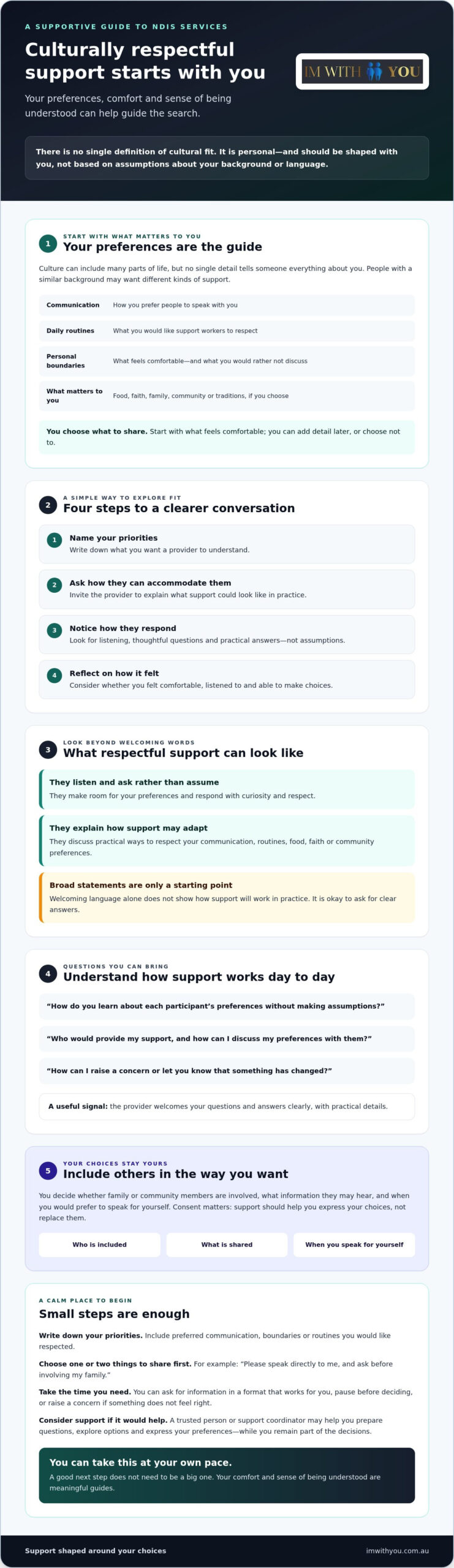
Culturally appropriate support starts with you, not a provider’s assumptions. Your identity, values, communication preferences and daily routines help define what feels respectful. Culture can include language, faith, family relationships, community connections, food, or traditions, but no single detail tells someone everything about you. Two people with a similar background may want very different support.
The National Disability Insurance Scheme (NDIS) provides disability-related supports, but the way support feels should be shaped around the individual. You should have room to explain what matters, make choices about how support is delivered, and raise concerns without feeling judged. Respect also means being listened to and treated with dignity, including when your preferences differ from what a provider expects.
How to describe what matters to you
You don’t need to explain your whole background to help a provider understand what works for you. You might share practical preferences, such as how you like people to communicate, routines you want respected, or boundaries around personal support. You can also say what you’d rather not discuss. Start with what feels comfortable, and add detail only if you choose.
Family or community involvement should reflect your wishes. You can decide whether you want someone included in conversations, what information they may hear, and when you’d prefer to speak for yourself. Consent matters; support should help you express your choices, not replace them.
Clear, respectful language can make these conversations easier. Explore person-first language and respectful communication for ideas you can use when discussing your preferences. In finding culturally appropriate ndis services, your own comfort and sense of being understood are meaningful guides.
How to assess whether NDIS services respect your cultural preferences
A provider’s welcoming language is a starting point, not proof that their support will suit you. As you’re finding culturally appropriate ndis services, look for how they respond when you explain what matters. A respectful provider will listen, ask rather than assume, and discuss how support might adapt to your preferences.
Try this simple process: name your priorities, ask how they can be accommodated, notice whether the answers are curious and practical, then reflect on whether you felt comfortable and had choices. You might ask about communication, routines, food, faith or community activities. You don’t need to share more than you want to. The aim is to understand whether you can discuss preferences openly and revisit them if they change.
Questions to ask a prospective NDIS provider
Use a conversation to learn how support works in practice. You could ask:
- How do you learn about each participant’s preferences without making assumptions?
- Who would provide my support, and how can I discuss my preferences with them?
- How can I raise a concern or let you know that something has changed?
Pay attention to whether the provider welcomes your questions and responds clearly, rather than relying only on broad statements about inclusion. For wider selection guidance, read this guide to choosing an NDIS provider. You can also explore community perspectives and resources from the National Ethnic Disability Alliance (NEDA).
If you’d like support to explore options or express your preferences, talk with Im with you about support coordination or disability advocacy. You can take the conversation at your own pace.
Next steps for finding NDIS support that feels like a partnership
You can make the search more manageable by writing down what you want a provider to understand. Note your priorities, preferred ways to communicate, and any boundaries or routines you’d like respected. Share only what feels comfortable. You can add more later if you choose.
If it would help, talk through your options with someone you trust or a support coordinator. They can help you prepare questions, compare responses and express your preferences, while you remain part of the decisions. A good next step doesn’t need to be a big one.
How to start a calm, clear conversation
Choose one or two priorities to begin. For example, you might say, “I’d like support workers to check before changing my usual routine,” or “Please speak directly to me, and ask before involving my family.” Then invite the provider to explain how they could approach this and what support might look like in practice.
Give yourself time to consider what you hear. You can ask for information in a format that works for you, pause before deciding, or raise a concern if something doesn’t feel right. You don’t have to agree to an arrangement just to keep the conversation moving.
Im with you provides disability support, community participation support, NDIS support coordination and disability advocacy. These may be options to discuss as you explore your needs and preferences, without assuming a cultural fit in advance. If you’d like to start that conversation, you can explore support with Im with you. Finding culturally appropriate ndis services is a personal process, and you can take it at your own pace.
Take the next step at your own pace
Finding culturally appropriate ndis services starts with what matters to you. Your identity and preferences are individual, so look for a provider who listens, asks rather than assumes, and is willing to discuss how support could reflect your choices. Writing down a few priorities can make those conversations easier, and you can share only what feels comfortable.
You don’t have to work through options alone. A trusted person or support coordinator may help you prepare questions and think through what feels right. Im with you provides disability support, community participation support, NDIS support coordination and disability advocacy. You can ask about these services and discuss your individual needs without assuming a cultural match in advance.
If you’re ready to explore a conversation, Let’s talk about support that feels right for you. Take your time. Your voice and choices belong at the centre of the process.
Frequently Asked Questions
What does culturally appropriate NDIS support mean?
Culturally appropriate NDIS support reflects your individual identity, values, communication style and preferences. It isn’t based on assumptions about your language, faith or community. You should feel listened to, have choices about how support is provided, and be able to decide whether family or other trusted people are involved. What feels respectful is personal, so your preferences should guide the conversation.
How can I tell if an NDIS provider will respect my culture?
Ask how the provider learns about your preferences and responds when they change. You might ask how they could accommodate a routine, communication preference, faith practice or community activity. Notice whether they listen carefully, ask questions without stereotyping and explain practical options. Welcoming language alone doesn’t confirm a good fit. Consider whether you feel comfortable, respected and able to make choices during the discussion.
Can I ask an NDIS provider to consider my cultural or religious preferences?
Yes, you can raise the preferences that matter to you and ask how they might shape your support. For example, you could discuss communication, food, routines, religious practices or whether you want family involved. Share only what you feel comfortable sharing. You can start with one or two priorities, ask what may be possible, and take time to consider the response before deciding.
What should I do if my NDIS support does not feel culturally appropriate?
Start by identifying what feels uncomfortable and what you’d like to change. If you feel safe doing so, raise it with the provider and explain what would help. You can ask a trusted person or support coordinator to help you prepare or join the conversation, if you wish. If the concern remains, explore other provider options. Support coordination or disability advocacy may help you consider next steps.