
What if distance isn’t the only barrier between you and the NDIS support you need? When providers are few, appointments can involve long trips, and it isn’t clear which funded supports may suit your circumstances, rural and remote NDIS access challenges can feel difficult to manage alone.
These barriers are real, and your preferences, routines and local context matter. This article offers practical ways to identify support options, prepare for provider conversations and consider approaches that respect your choice and dignity. We’ll cover travel and appointment coordination, questions about flexible service delivery, and supports such as Support Coordination, advocacy, community participation and disability support that you may be able to discuss if suitable and available. You don’t need every answer before you begin. A clear picture of what matters to you can make the next conversation more useful.
Key Takeaways
- Rural and remote ndis access challenges vary between communities, so start by identifying what is making support harder for you.
- Clarify your priorities and access barriers before exploring ways to receive support.
- Ask providers about delivery options, travel, communication needs and continuity before deciding whether a service feels right.
- Consider whether Support Coordination, advocacy or disability support may help you build an approach around your goals and community.
Rural and remote NDIS access challenges: what can make support harder to reach?
When support is a long way away, arranging an appointment can involve more than finding a suitable time. Distance, a small number of local providers and the effort of coordinating different services can affect everyday routines. If this feels familiar, the barriers you face deserve to be understood, not brushed aside.
Rural and remote ndis access challenges aren’t the same for everyone. One person may have a local service but little choice of provider; another may need to travel or explore appointments by phone or video. The National Disability Insurance Scheme provides broader background on how the scheme operates, but your community and preferences shape what access looks like in practice.
This video offers another perspective on NDIS access in rural and remote areas:
Which barriers can affect access to NDIS support outside major centres?
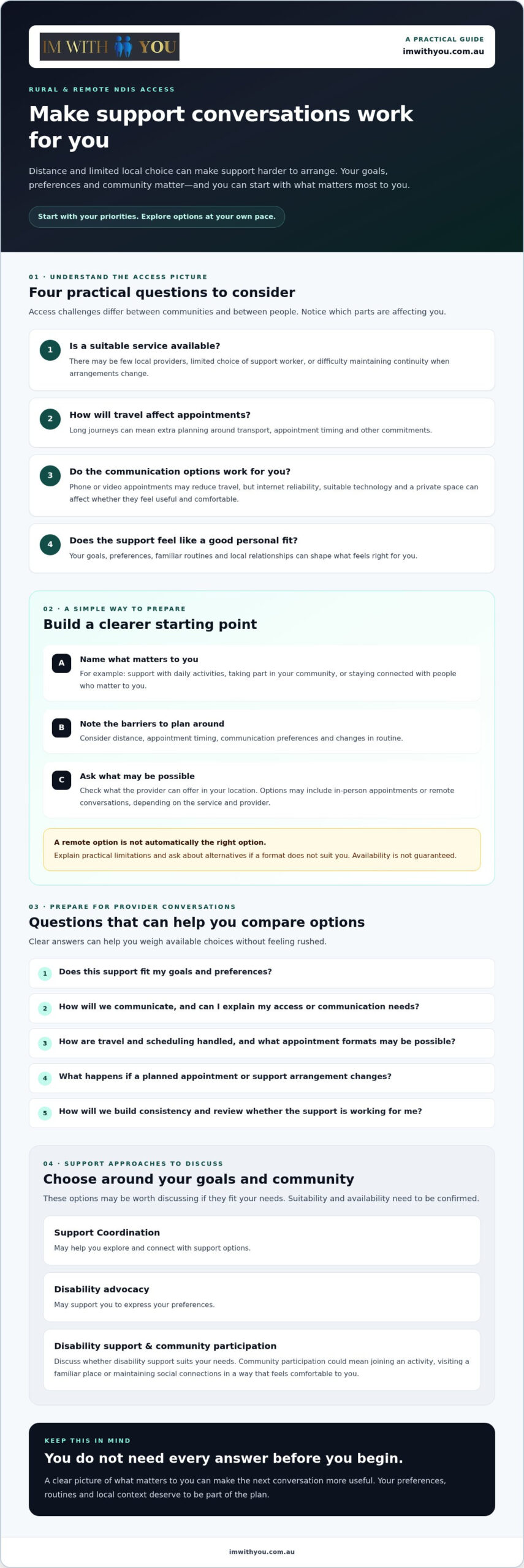
Break access down into four practical questions: Is a suitable service available? How will travel affect appointments? Do the communication options work for you? Does the support feel like a good personal fit?
Local choice may be limited, making it harder to find a preferred support worker or maintain continuity if arrangements change. It can also affect opportunities for community participation. Long journeys may require extra planning around transport, appointment timing and other commitments. These pressures vary between communities and aren’t inevitable for everyone.
Remote appointments may reduce travel, but they aren’t automatically the right option. Internet reliability, access to suitable technology and a private space can all affect whether a phone or video conversation feels comfortable and useful. When discussing support, explain any practical limitations and ask what alternatives may be possible if a format doesn’t suit you.
How to explore NDIS support options when local choices are limited
When local options feel narrow, a simple process can help you focus on what matters. First, identify your priorities, such as getting support with daily activities or taking part in your community. Then note the barriers you need to work around, including distance, appointment timing, communication preferences and changes in routine. This gives you a practical starting point for conversations with providers.
Next, ask whether a relevant support can be delivered in a format that suits you. Depending on the service and provider, options may include in-person appointments or remote conversations. Availability isn’t guaranteed, so check what can actually be offered in your location and whether the format feels accessible and comfortable for you.
What should I ask when comparing NDIS providers and support formats?
Before agreeing to support, talk through the practical details and how you want to be involved. You could ask:
- Does this support fit my goals and preferences?
- How will we communicate, and can I explain my access or communication needs?
- How are travel and scheduling handled, and what appointment formats may be possible?
- What happens if a planned appointment or support arrangement changes?
- How will we build consistency and review whether the support is working for me?
Clear answers can help you weigh the available options without feeling rushed. If choice is limited, explain what matters most to you, such as seeing a familiar worker or keeping appointments connected to local routines. The guide to how to choose an NDIS provider offers more prompts for considering fit. Support Coordination or disability advocacy may also be worth discussing if suitable. You can explore NDIS support options with Im with you and ask directly whether a service is available and appropriate for your circumstances.
Build a support plan that works for your circumstances and community
A useful support plan starts with your goals, not a standard checklist. You might want to build daily living skills, feel more confident attending a local event or stay connected with people who matter to you. Be realistic about what is accessible in your community, including distance, accessibility, familiar local relationships and how you prefer to keep in touch.
Support Coordination may help you explore and connect with options, while disability advocacy may support you to express your preferences. Disability support may also be worth discussing if it fits your needs. These services aren’t right for everyone, and their suitability and availability need to be confirmed. Ask providers what they may be able to offer and how their approach could reflect your goals.
How can support strengthen connection and everyday participation?
Community participation means different things to different people. It could involve joining an activity, visiting a familiar place or finding a comfortable way to maintain social connections. Let your interests and priorities guide the conversation rather than starting with a generic list of activities. For more ideas, explore leisure activities and community connection.
To make the conversation manageable, share one or two priorities first. Then discuss access needs, local relationships and what would help you feel comfortable and included. Ask what may be possible where you live, including any practical limits around travel or service delivery. Rural and remote NDIS access challenges can take time to work through, but you don’t have to plan every detail alone.
If you’d like to explore whether the organisation may suit your circumstances, you can discuss support options with Im with you and ask about suitability and availability in your area.
Take your next step towards support that fits
Distance and limited choice can make support harder to organise, but your goals and preferences can guide the next step. Start by identifying what matters most, then talk through practical needs such as travel, communication, appointment arrangements and continuity. Clear, specific questions can help you explore what may be suitable while keeping your choice and dignity in view.
Rural and remote ndis access challenges vary from person to person and community to community. You don’t have to work through every question on your own. Im with you is an Australian NDIS service provider offering disability support and Support Coordination. Suitability and availability depend on your circumstances, so a conversation can help you explore whether these supports may fit.
Talk with Im with you about support that may suit your circumstances. Your preferences matter, and you can take this process one step at a time.
Frequently Asked Questions
What are common NDIS access challenges in rural and remote communities?
Common barriers can include fewer nearby providers, long travel distances and difficulty coordinating appointments. You may also have limited choice of support workers, which can make it harder to maintain continuity or find a personal fit. Internet access and a private space can affect whether remote appointments suit you. These rural and remote ndis access challenges differ between communities and individuals.
Can NDIS supports be delivered remotely?
Some providers may offer phone or video appointments, but remote delivery isn’t suitable or available for every support or person. Ask whether your particular support can be delivered this way, what technology and internet access you’ll need, and how the provider will take your comfort and communication preferences into account. You can also discuss alternatives if a remote appointment doesn’t meet your needs.
How can I find an NDIS provider when there are few services nearby?
Start by writing down the support you’re looking for, your goals and practical needs, such as travel, scheduling and preferred communication. Then contact providers to ask about suitability, delivery formats, availability in your location and continuity if arrangements change. If you have Support Coordination, discuss whether it may help you explore options. Before proceeding, confirm that any suggested support fits your circumstances.
What can I do if my current NDIS supports are not working for me?
Tell your provider what isn’t working and what you’d like to change, such as appointment timing, communication or how the support relates to your goals. Ask to discuss possible adjustments and what happens if arrangements need to change. If you have a Support Coordinator or access to disability advocacy, consider asking whether they can help you express your preferences and explore next steps.