

What if your NDIS review wasn’t a stressful administrative hurdle, but a supportive conversation about your future? For many Australians, the thought of a plan meeting feels like being just another number in a vast system, often leading to a fear of losing vital funding. I’ve seen how the weight of this uncertainty can feel heavy, but you don’t have to carry it alone. This article provides the ndis review process explained with a gentle, human touch, turning a complex requirement into a manageable path forward.
I’m with you as we navigate these changes together. You’ll discover a clear roadmap that clarifies the difference between internal reviews, which you must request within three months of a decision, and external reviews through the Administrative Review Tribunal. We’ll look at the new 2026 framework and share actionable strategies to help you gather the right evidence. By the end of this guide, you’ll know exactly how to prepare your management plan and where to find a trusted advocate to walk alongside you, ensuring your dignity and independence remain the priority.
Key Takeaways
- Clarify the layers of the system, including the three-month deadline for internal reviews and the role of the Administrative Review Tribunal.
- Learn to implement an “Evidence First” management strategy by gathering updated functional capacity assessments and therapist reports.
- Discover how to craft a personal Impact Statement that ensures your daily needs and goals are seen beyond just the clinical data.
- See the ndis review process explained through a lens of partnership, helping you feel empowered rather than overwhelmed by government systems.
- Explore how Support Coordination and advocacy services can offer the expert guidance you need to manage your review timeline with total confidence.
Understanding the NDIS Review Layers: Internal vs. External
Feeling overwhelmed by the administrative side of the National Disability Insurance Scheme is completely normal. I’m with you as we break this down into manageable steps together. Having the ndis review process explained clearly helps you reclaim your agency when a decision doesn’t feel right. It’s vital to know the difference between a scheduled “Plan Reassessment,” which happens periodically to check your goals, and a “Review of a Decision,” which is your right to challenge a specific outcome you find unfair. One is a routine check-in; the other is a powerful tool for advocacy.
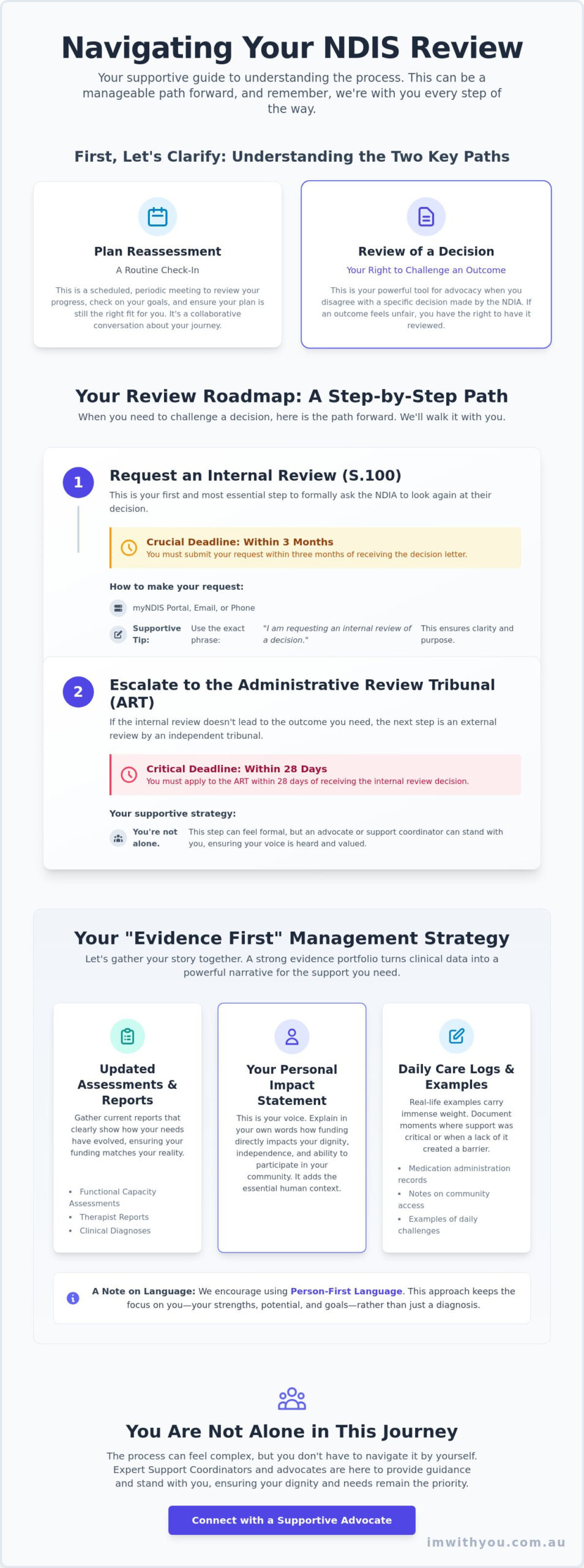
To help visualize these steps, this guide offers a clear overview of what to expect:
Step 1: Requesting an Internal Review
This is often called an “S.100 review.” It’s the first essential step for change. You can lodge this request through your myNDIS portal, by sending an email, or over the phone. I recommend using the specific phrase, “I am requesting an internal review of a decision,” so there’s no confusion with regular plan maintenance. You must submit this request within three months of receiving your decision letter to ensure your request is valid and heard.
Step 2: Moving to the Administrative Review Tribunal (ART)
Sometimes, an internal review doesn’t provide the resolution you deserve. If you still disagree with the outcome, you can apply for an external review through the Administrative Review Tribunal. This step must happen within 28 days of receiving your internal review result. While this stage feels more formal, staying calm and supported is your best strategy. Having a trusted advocate or support coordinator by your side ensures you aren’t just a number in a system, but a person whose needs and dignity matter deeply. We focus on your strengths, not just the paperwork.
Practical Management Strategies for a Successful Review
Successfully managing your plan requires more than just filling out forms. I’m with you as you organize your story to ensure the NDIA sees the full picture of your life. When you request a review of a decision, your most powerful tool is a well-organized evidence portfolio. This ndis review process explained focuses on proactive management strategies that turn clinical data into a compelling narrative for support. By aligning your evidence with the “Reasonable and Necessary” framework, you demonstrate exactly how each support worker or therapy session directly contributes to your independence.
Start by creating a dedicated folder, either physical or digital, to house every piece of NDIS correspondence. This simple habit lowers stress and keeps you prepared for any follow-up questions. Within this space, you’ll want to include an “Impact Statement.” This is your chance to speak beyond the numbers. While therapist reports are essential, your personal story explains exactly how funding impacts your dignity and social inclusion. It provides the human context that a standard medical report might miss.
Building Your Evidence Portfolio
Clinical diagnoses provide a baseline, but daily life examples carry the most weight. I encourage you to keep daily care logs that document moments where support is critical. This might include tracking the six rights of medication administration or noting when a lack of assistance limited your community access. Updated functional capacity assessments are also vital. These reports should clearly show how your needs have changed, ensuring your funding matches your current reality.
The Power of Person-First Language
The words we use matter deeply. Using person-first language in your reports keeps the focus on your identity rather than a disability. When briefing your therapists, ask them to highlight your potential and strengths while clearly outlining the barriers you face. This approach ensures the review focuses on your growth and goals. If you’re feeling overwhelmed by the paperwork, our team can walk alongside you with NDIS support coordination to help organize your evidence effectively.
You Are Not Alone: Navigating the Process with Support and Advocacy
The administrative side of a review can sometimes feel like a lonely climb, but I’m with you through every step of this journey. While having the ndis review process explained helps clarify the rules, the emotional weight of waiting for a decision is real. You don’t have to carry that stress by yourself. Partnering with a trusted NDIS provider can demystify the complex paperwork. They act as a steady companion, ensuring your voice remains central to every conversation with the agency.
Support Coordination is one of your most effective management tools during this time. Your coordinator can track the review timeline and manage the collection of therapist reports, allowing you to focus on your daily life. If you ever feel unheard or overwhelmed by the system, Disability Advocacy Services are available to speak up for your rights. These advocates focus on your systemic standing and legal protections, providing an extra layer of security. For families and carers, resources like the guide on Reviewing Your NDIS Plan from Carers Australia offer additional perspective on staying empowered throughout the process.
Leveraging Your Support Network
I recommend asking your Support Coordinator to lead the preparation of your review portfolio. They understand how to translate your goals into the specific language the NDIA requires. It’s also helpful to recognize the difference between your service providers and independent advocates. While your providers deliver your daily care, an independent advocate focuses solely on representing your interests during disputes. Using both ensures you have a comprehensive circle of support that protects your dignity.
Self-Care During the Waiting Period
Waiting for a review outcome can lead to “review fatigue,” which impacts the whole family. A vital management strategy is to intentionally step away from the paperwork. Maintaining your regular leisure activities is essential for your mental health and resilience. Whether it’s a hobby or a community outing, these moments of joy remind you that you’re a person with a vibrant life, not just a file in a government system. I’m committed to walking alongside you through every hurdle, keeping the focus on your strengths and your future.
Taking the Next Step with Confidence
Navigating the NDIS doesn’t have to be a journey you take alone. By understanding the layers of internal and external reviews and building a strong evidence portfolio, you’ve already taken the first steps toward securing the support you deserve. This guide has the ndis review process explained in a way that prioritizes your dignity and your story; it moves beyond clinical labels to focus on your actual life goals. I’m with you as you manage these administrative changes, ensuring you feel seen and heard throughout every meeting.
Our team, honored with the 2026 Award for Excellence in Disability Care, includes expert Support Coordinators who are ready to help you organize your evidence and advocate for your rights. With our nationwide advocacy and support network, you have a steady companion to help lower the stress of the system. Let us walk this path with you, contact our advocacy team today and let’s work together to protect your independence. You are capable, you are valued, and your future is full of possibility.
Frequently Asked Questions
How long does an NDIS internal review take in 2026?
Internal reviews typically take between 60 and 90 days, though the exact timeframe depends on the complexity of your specific request. I’m with you during this waiting period to help manage your expectations and keep your evidence organized. While the new 2026 framework aims for more flexible planning, staying proactive with your support coordinator ensures your file moves through the system as smoothly as possible.
Can I still use my current NDIS funding while a review is in progress?
Yes, your current funding stays in place and you can continue accessing your supports while the review is being processed. Your existing plan remains valid until a new decision is officially made. This stability is a core part of having the ndis review process explained simply, as it prevents gaps in your care. I’ll help you track your spending so your transition to a new plan is seamless.
What happens if my NDIS internal review is unsuccessful?
You have the right to request an external review through the Administrative Review Tribunal if you’re unhappy with the internal outcome. This application must be submitted within 28 days of receiving your internal review decision. It serves as an independent check on the NDIA’s choices. I’m with you to help prepare your impact statement and gather the clinical reports required to present a strong case for the supports you need.
Is there a cost to lodge an application with the Administrative Review Tribunal (ART)?
There is no cost to lodge an application for an NDIS review with the Administrative Review Tribunal. The government provides this service for free to ensure that financial status never prevents a person from seeking a fair outcome. This accessibility allows you to focus your energy on gathering evidence and working with an advocate. I’m here to guide you toward the right support services to help you navigate this formal stage with total confidence.