

What if the help you receive today is actually the secret to doing more for yourself tomorrow? It’s a common worry that accepting ndis support for daily living activities means giving up your agency or letting a stranger take over your personal space. You might feel overwhelmed by the technical language of the scheme or anxious about how a new face will fit into your private morning routine. I’m with you in these feelings. They’re a natural part of opening your door to support, and your desire for dignity is something we deeply respect.
We believe that true support isn’t about doing things for you; it’s about walking alongside you as a steady companion. This guide will show you how NDIS support for daily living activities can transform your routine into a path toward greater independence and confidence. We’ll explore practical ways to build a manageable daily rhythm, foster a trusted relationship with a support worker, and ensure you remain the lead architect of your own life. Together, we can turn those complex requirements into a simple, supportive plan that works for you.
Key Takeaways
- Understand how your Core Supports budget puts you in the driver’s seat by prioritizing your personal choices and daily routines.
- Discover how to use a “Support Map” to communicate your unique needs and goals when managing ndis support for daily living activities.
- Learn why a collaborative relationship built on open communication is the foundation of a safe and reassuring home environment.
- Experience the peace of mind that comes with a partner who says “I’m with you” and acts as a dedicated advocate for your independence.
- Gain actionable strategies to turn your daily responsibilities into opportunities for building confidence and long-term agency.
What is NDIS Support for Daily Living Activities?
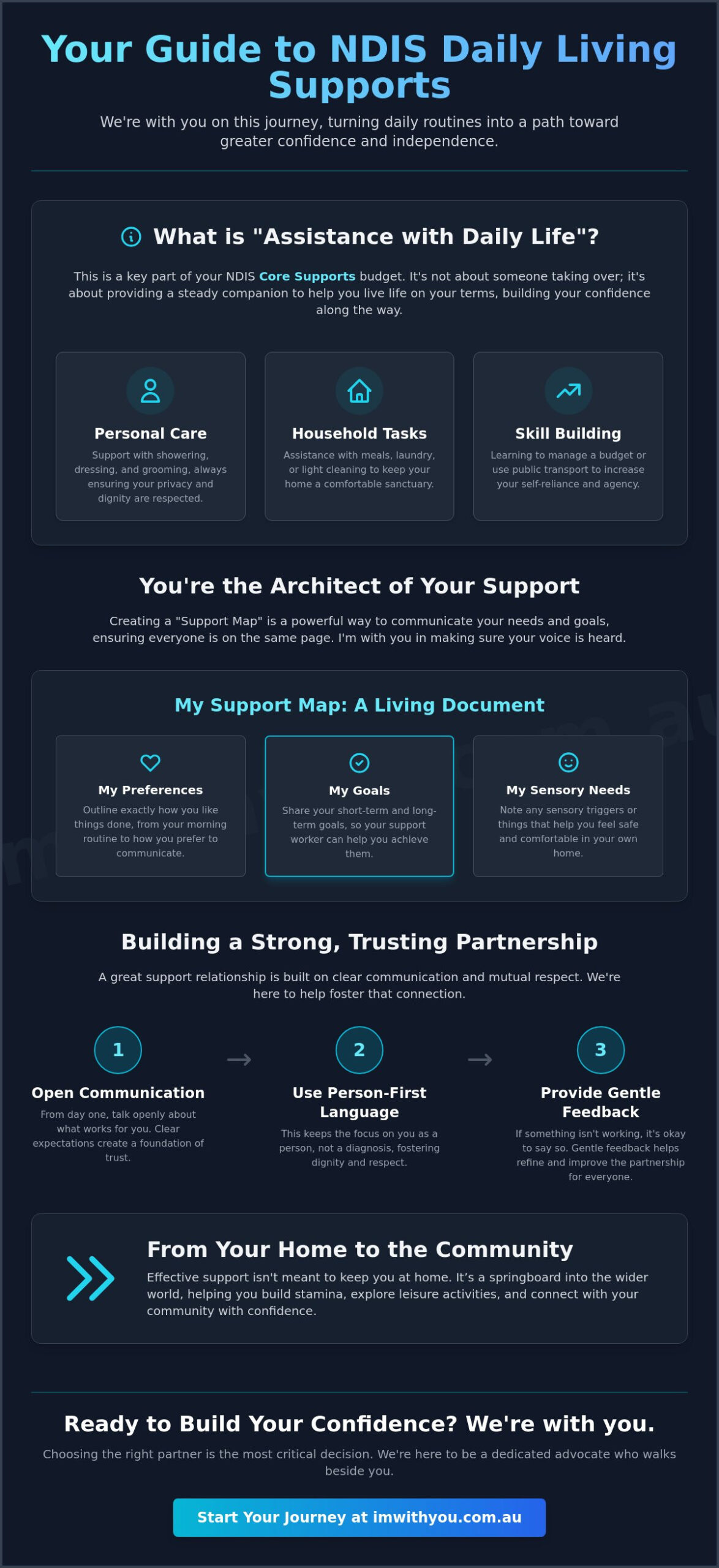
Understanding your NDIS plan can feel like learning a new language, but at its heart, it’s about giving you the tools to live your life on your terms. The National Disability Insurance Scheme (NDIS) provides a specific category called “Assistance with Daily Life” within your Core Supports budget. This isn’t just about ticking off a list of chores. It’s a person-centered approach that puts your choices at the center of every routine.
We see these supports as a vital bridge. They connect where you are today with the goals you’ve set for your future. Whether you want to feel more confident in your own home or venture out into the community more often, these services are designed to adapt to you. At I’m with you, we believe you shouldn’t have to navigate this journey alone. We’re here to walk alongside you as a steady companion, ensuring that ndis support for daily living activities feels like a natural extension of your day.
To better understand how these supports function in a real-world setting, watch this helpful video:
Common Examples of Daily Living Supports
- Personal care: Helping with showering, dressing, or grooming while maintaining your total privacy and dignity.
- Household tasks: Assistance with meal preparation, laundry, or light cleaning to keep your home feeling like a sanctuary.
- Skill building: Learning to manage a grocery budget or gaining confidence using public transport to increase your self-reliance.
The Role of Core Supports in Your Plan
Funding for ndis support for daily living activities is generally flexible. This means you can often move funds between different categories in your Core Supports budget to meet your changing needs. You’ll want to distinguish this from supported independent living ndis (SIL). While SIL typically involves 24/7 help in a shared living environment, daily living supports are usually about assisting you with specific tasks throughout your day in your own home or out in the community.
Effective Strategies for Managing Your Daily Living Supports
Managing your ndis support for daily living activities doesn’t have to be a source of stress. It’s actually an opportunity to design a life that truly reflects who you are. I’m with you in this process, and I want to help you move from simply receiving care to actively managing a partnership. One of the most effective tools you can create is a “Support Map.” This is a living document where you outline your specific preferences, any sensory triggers, and your weekly goals. It ensures that every person who enters your home understands exactly how you like things done, which protects your agency and reduces the need for constant repetition.
Your needs will naturally change as you gain new skills and confidence. This is why it’s vital to refer to the official NDIS guidelines to understand how your funding can adapt with you. Regularly reviewing your support plan ensures it stays relevant. When it’s time for your NDIS plan review, remember that you’re the expert on your own life. You have the right to lead that conversation and advocate for the adjustments that will best support your continued growth.
Collaborating with Your Support Worker
Trust is built on a foundation of clear expectations. From your first meeting, talk openly about what you need. We always recommend using person first language because it keeps the focus on your humanity rather than a diagnosis. If something isn’t working, provide feedback early and gently. This isn’t about being difficult; it’s about refining the partnership so it works better for both of you.
Integrating Daily Living with Community Life
Support isn’t meant to keep you within four walls. Effective ndis support for daily living activities acts as a springboard into the wider world. Whether it’s building the stamina for a trip to the shops or exploring what are leisure activities that bring you joy, your support worker should be your companion in discovery. If you’re looking for a team that prioritizes this kind of collaborative connection, our disability support services are here to help you take that next step.
Finding the Right Partner: Why the “I’m With You” Approach Matters
Choosing the right partner is the most critical decision you’ll make in this journey. It’s the difference between having a service provider who treats your day as a checklist and a dedicated advocate who walks beside you. Our award-winning excellence in care, recognized in 2026, reflects our commitment to this human-centered approach. We don’t just provide assistance; we foster a collaborative environment where your dignity is the priority. This level of oversight is essential. The ANAO report on Daily Life Supports emphasizes the importance of effective management in these core areas, and we take that responsibility to heart.
If you have NDIS Support Coordination in your plan, your coordinator can help you unlock the full potential of your budget. They act as a bridge, ensuring your ndis support for daily living activities aligns perfectly with your long-term aspirations. I’m with you in every step of this coordination, making sure you never feel lost in the system. We’re here to ensure your funding translates into meaningful, life-enhancing moments every single day.
Choosing a Provider Who Aligns with Your Values
When you first meet a potential ndis provider, ask questions that reveal their heart. Do they value your privacy? How do they handle feedback? Look for markers of empathy and reliability. You deserve someone with specialized industry expertise who still treats you like a friend. A good partner listens more than they talk, ensuring your voice remains the loudest in the room.
Next Steps to Accessing Support
Check your current plan for “Assistance with Daily Life” funding under the Core Supports category. If it’s there, you can start looking for a partner today. Transitioning to a person-centered model is a gentle process. It begins with an honest conversation about your goals and your daily rhythm. We’re here to help you make that change, ensuring your ndis support for daily living activities truly empowers your independence. “I’m with you” is more than our name; it’s our promise to your daily success.
Your Path to a More Confident Routine
Embracing support isn’t about losing your agency; it’s about gaining the freedom to focus on what matters most to you. By viewing your Core Supports as a flexible foundation and using tools like a Support Map, you ensure your voice is always the most important one in the room. We’ve seen how the right ndis support for daily living activities can transform a stressful morning into a calm, empowering start to your day. It’s a way to safeguard your energy so you can spend it on the people and hobbies you love.
As a national NDIS registered provider and recipient of the 2026 Award for Excellence in Disability Support, we’re committed to a model of person-centered advocacy and companionship. I’m with you in this journey, offering the steady, expert guidance you need to navigate the system without the stress. We’re here to walk alongside you, protecting your dignity and celebrating your growth at every turn. You don’t have to manage these complexities alone.
Let us walk beside you, contact Im with you today for a gentle chat about your support needs. You deserve a life filled with confidence, and we’re honored to help you build it.
Frequently Asked Questions
What specific tasks are covered under NDIS support for daily living activities?
NDIS support for daily living activities includes a broad range of personal and domestic tasks designed to help you maintain your independence at home. You can receive assistance with morning routines like showering and dressing, or household management such as laundry, cleaning, and meal preparation. It also covers skill building, which might involve learning how to manage your own grocery budget or safely using public transport. I’m with you in ensuring these tasks are handled with the utmost respect for your personal preferences.
Can I choose my own support worker for daily living tasks?
You absolutely have the right to choose who provides your care and enters your private space. Your agency is the priority, and selecting a support worker who feels like a trusted companion is essential for a positive experience. Whether you manage your own plan or work with a provider, you should always be involved in the selection process. We believe that building a steady, reliable partnership with someone you truly connect with is the key to a successful daily routine.
How do I know if I am eligible for Assistance with Daily Life funding?
Eligibility is typically decided during your NDIS planning meeting based on how your disability affects your ability to complete everyday tasks. To see if you currently have this support, look at your NDIS plan under the “Core Supports” budget for a category called “Assistance with Daily Life.” If you see funding allocated there, you can begin using it for your daily routines. If it isn’t currently in your plan, I’m with you in preparing the right information to advocate for these supports during your next review.
What happens if my needs change over time?
Your ndis support for daily living activities is designed to be flexible and can be adjusted as your circumstances or goals evolve. If you gain new skills and need less help, or if a change in your health requires more intensive support, you can request a plan reassessment with the NDIA. It’s helpful to know that a new planning framework is being introduced from mid-2026 to make these transitions simpler. We’re here to help you navigate these changes, ensuring your support always reflects your current path toward independence.