

What if the secret to securing your funding wasn’t about learning a secret code, but about understanding the heart of how the system views your life? It’s completely normal to feel like just another number when you’re trying to figure out what are ndis reasonable and necessary supports, especially with the 2026 reforms shifting the focus toward functional capacity rather than just a diagnosis. I’m with you in this journey, and I truly understand how heavy the worry can be when you’re facing a bureaucratic system that often feels clinical and cold.
You deserve to feel confident and empowered when you speak up for the life you want to lead. This guide is here to help you learn exactly how the NDIS decides what to fund so you can advocate for your supports with total clarity. We’ll walk through the six core funding criteria together, translate the complex jargon into simple terms, and explore practical management strategies to help you prepare for a successful, stress-free planning meeting.
Key Takeaways
- Understand the six legal criteria the NDIA uses to evaluate your plan so you can speak about your needs with clarity and confidence.
- Gain a gentle but clear understanding of what are ndis reasonable and necessary supports to ensure your plan reflects your true life goals.
- Discover how to gather the right professional evidence, like Functional Capacity Assessments, to protect your funding and demonstrate your daily requirements.
- Learn how to document help from family and friends while still securing the essential professional services you need to maintain your independence.
- Explore how having a steady companion and advocate by your side can make navigating the system feel like a supportive, collaborative partnership.
The 6 Criteria for NDIS Reasonable and Necessary Supports
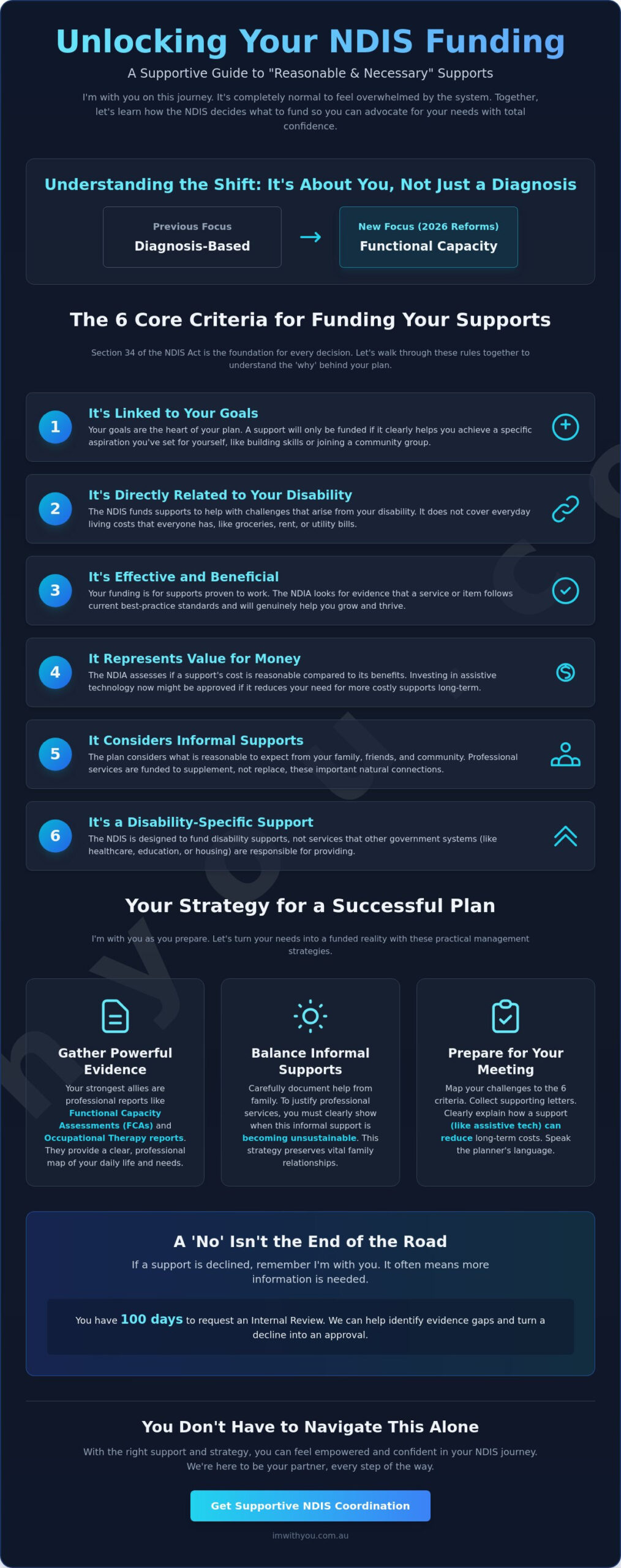
Section 34 of the NDIS Act serves as the legal foundation for every decision made about your plan. It’s the specific set of rules that defines what are ndis reasonable and necessary supports. I’m with you as we look at these criteria, because understanding the “why” behind a decision makes it much easier to advocate for the “what” in your daily life. The National Disability Insurance Scheme focuses on providing supports that are directly related to your disability. This means the NDIS won’t fund things that are part of everyday life for everyone, like general utility bills or a weekly grocery shop.
The “Value for Money” test is another vital piece of the puzzle. The NDIA evaluates whether the cost of a support is worth the long term benefits it provides. For instance, investing in high quality equipment now might reduce your need for physical assistance later. They also consider what is reasonable to expect from your family, friends, and the broader community. It’s a delicate balance of ensuring you have professional care while maintaining the natural connections in your life.
To better understand how these decisions are made, watch this helpful video:
Evidence-Based and Effective Supports
For a support to be funded, it must be “effective and beneficial.” This means the service or item should follow current best-practice standards. If you’re requesting a specific therapy, the NDIA looks for proof that it actually works for people with similar needs. It’s about ensuring your funding goes toward things that truly help you grow and thrive.
Goal Alignment: The Heart of Your Plan
Your goals are the anchor of your entire plan. If a support doesn’t help you reach a specific goal you’ve set, it likely won’t be funded. When you’re considering what are ndis reasonable and necessary supports for your situation, always look back at your aspirations. I’m with you in learning how to phrase your goals so that the necessary supports, like capacity building skills or community participation, are clearly and legally linked to your dreams.
Practical Strategies for Managing Your Funding Requests
I’m with you as you prepare to turn your needs into a funded reality. Understanding what are ndis reasonable and necessary supports becomes much simpler when you have a clear strategy for gathering evidence. It’s not just about what you need. It’s about how you prove that need through professional documentation. Occupational Therapy reports and Functional Capacity Assessments (FCAs) are your strongest allies here. These documents provide a clinical yet compassionate map of your daily life, showing exactly where a support bridges the gap between a challenge and a goal. Using person-first language in these reports ensures the focus remains on your agency and dignity rather than just a list of deficits.
Be careful when documenting “informal supports” from family or friends. While the NDIA values these connections, you must clearly show when this support is reaching a breaking point or is unsustainable. If a family member provides significant care, documenting the strain helps justify why professional assistance is a vital replacement. When the NDIA reviews your request, they are looking at what are ndis reasonable and necessary supports through the lens of the official NDIS criteria for reasonable and necessary supports. Showing that a professional service preserves your family relationships is a powerful management strategy.
Preparing for Your Planning Meeting
- Step 1: Map your daily challenges against the six NDIS criteria. This helps you speak the same language as your planner.
- Step 2: Collect supporting letters from health professionals and current providers that focus on your functional capacity.
- Step 3: Clearly articulate how a support reduces your need for other long-term funding. For example, a piece of assistive technology might lower your need for daily support worker hours over time.
Handling Rejections and Reviews
If a support is declined, remember that a “No” often simply means the NDIA needs more information. You have the right to request an Internal Review within 100 days of your plan approval. I’m with you during this process, helping you identify the specific evidence gaps that led to the decision. Often, a more detailed therapist letter or a clearer link to your goals can turn a decline into an approval. If you feel overwhelmed by the paperwork, our team can provide the NDIS Support Coordination you need to navigate these hurdles with confidence.
Navigating the NDIS Together: How We Support Your Journey
You don’t have to carry the weight of these regulations alone. While the system can feel like a maze of paperwork, our NDIS support coordination acts as a bridge between the clinical rules and your real life aspirations. I’m with you to help translate the complex language found in the NDIS operational guideline into a plan that actually works for your unique situation. We focus on making sure the NDIA sees the person behind the participant number. When we discuss what are ndis reasonable and necessary supports, we aren’t just talking about hours and budgets. We’re talking about your right to a full and vibrant life.
The Im with you promise is a commitment to advocacy that ensures your voice remains the loudest in the room. We’ve seen how tailored disability support services can transform a person’s daily experience, moving from surviving to truly thriving. This often involves connecting your funding to meaningful leisure activities and social groups that foster genuine connection. By focusing on your strengths, we help you build a support network that feels like a partnership rather than a clinical service.
Our Commitment to Your Independence
Living where and how you choose is a fundamental right. We provide specialized assistance to help you manage Supported Independent Living (SIL) applications, ensuring your home environment is safe and supportive. Our goal is to build your capacity skills so you feel empowered and steady. We want you to reach a point where you feel confident managing your own plan, knowing we’re always here as a backup whenever you need a little extra guidance.
A Partnership Built on Trust
Trust is earned through consistency and care. Our 2026 award for excellence in disability care reflects our deep dedication to helping participants secure the funding they deserve. We understand the stress that comes with defining what are ndis reasonable and necessary supports during a planning meeting. It’s why we approach every conversation with patience and specialized expertise. If you’re feeling overwhelmed or uncertain about your next steps, reach out to us. Let’s have a collaborative conversation about your goals and how we can walk this path together.
Empowering Your Journey Toward Choice and Control
You now have a clearer picture of how the NDIS evaluates your funding requests. By focusing on the six core criteria and gathering strong evidence like Functional Capacity Assessments, you can confidently explain what are ndis reasonable and necessary supports for your unique life. I’m with you every step of the way, ensuring your goals stay at the heart of every conversation with the NDIA.
Our expert support coordination team is dedicated to person-centered advocacy. This unwavering commitment to your success is why we were honored with the 2026 Award for Excellence in Disability Care. We don’t just manage plans; we walk alongside you to build a life defined by independence and dignity. You have the strength and the knowledge to advocate for the supports you deserve, and you’ll never have to do it alone.
Let’s navigate your NDIS journey together—contact Im with you today
Frequently Asked Questions
Does “reasonable and necessary” mean I can get any support I want?
No, the “reasonable and necessary” framework is a structured set of rules designed to ensure funding is used effectively for disability-related needs. While it offers flexibility, every support must align with the six criteria we discussed earlier. I’m with you in exploring how to frame your requests so they meet these standards while still reflecting your personal choices and lifestyle.
What are some examples of things the NDIS will not fund?
The NDIS generally won’t fund everyday living costs that everyone pays, such as groceries, rent, or electricity bills. They also won’t cover medical treatments like surgery or GP visits, as these fall under the general health system. Understanding what are ndis reasonable and necessary supports helps you focus your requests on items specifically related to your functional capacity and disability-related goals.
How does the NDIS decide if a support is “value for money”?
The NDIA considers a support “value for money” if the cost is reasonable compared to the benefits it provides. They look at whether the investment will increase your independence or decrease your need for other supports over time. It’s a management strategy that balances the immediate price with the long-term positive impact on your life and the overall sustainability of the scheme.
What happens if my disability needs change mid-plan?
You can request a plan review if your situation changes significantly before your current plan ends. This process allows the NDIA to adjust your funding to match your new requirements. I’m with you during these transitions, helping you gather the fresh evidence needed to show how your needs have evolved and why what are ndis reasonable and necessary supports for your situation has changed.