

What if the most important person in your support meeting wasn’t the coordinator or the clinician, but you? Understanding what is person-centred care in disability starts with a simple shift in perspective. It’s about moving away from a clinical checklist and toward your actual life. You deserve to be seen as a whole person, not just a set of requirements on a form. It’s exhausting when support feels like something being “done to” you rather than a choice you’re making for yourself.
I’m with you in the belief that your daily routine should belong to you. You’ve likely felt the frustration of being ignored by staff who focus more on the clock than your needs. This guide explores how person-centred care transforms support into a meaningful, collaborative partnership focused on your unique life goals. You’ll discover how this approach fosters greater independence and why a provider who walks alongside you can help you feel truly heard. We’ll look at how tailored support empowers you to take the lead in your own story.
Key Takeaways
- Discover how shifting from a clinical “fixing” mindset to a life-focused model places your unique strengths and dreams at the heart of your support.
- Explore what is person-centred care in disability and how it empowers you to take full control over who supports you and how you spend your time.
- Learn why treating you as the true expert of your own life is the essential foundation for a support relationship built on genuine respect and dignity.
- Uncover practical ways to collaborate with your provider to map out goals that reflect your real personality and long-term aspirations.
- Understand how your support team becomes a group of advocates who say “I’m with you,” transforming the worker role into a companion who walks alongside you.
What is Person-Centred Care in Disability Support?
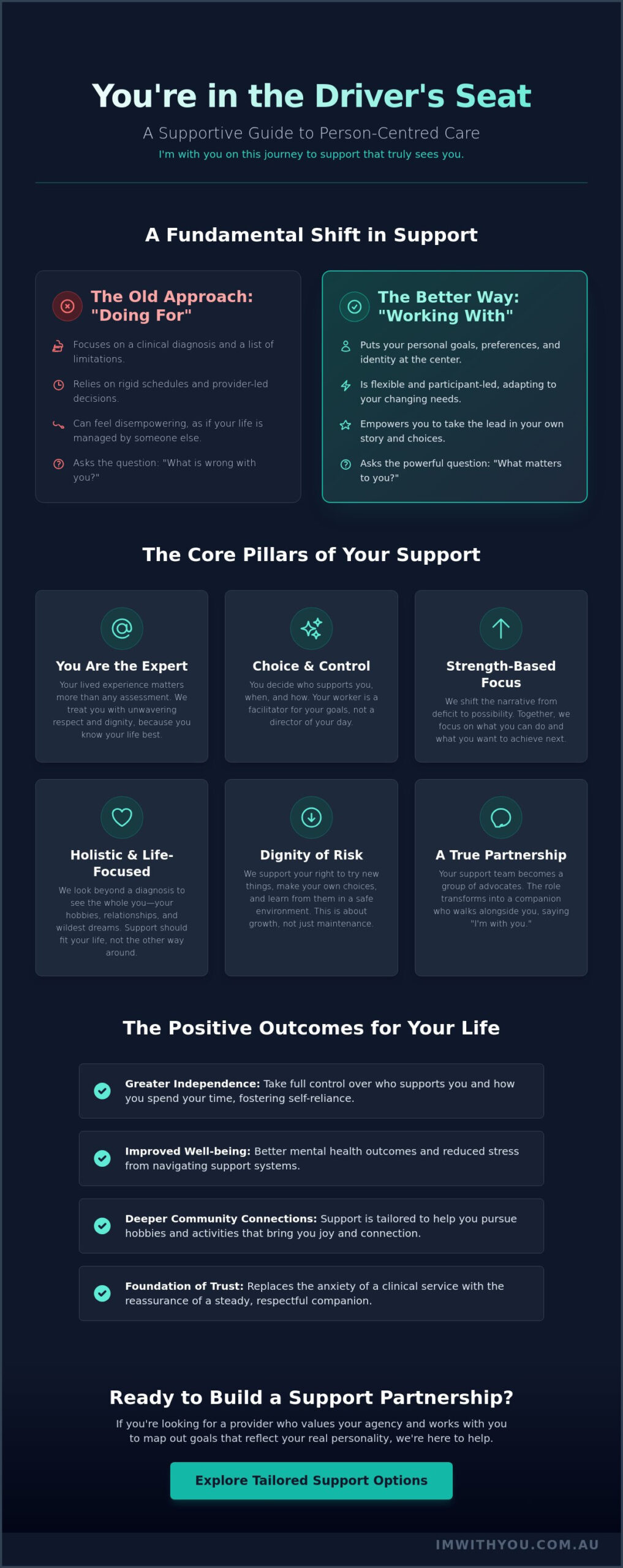
At its heart, person-centred care is a philosophy that places you in the driver’s seat of your own life. It moves the focus away from a clinical diagnosis or a list of “limitations” and puts your personal goals, preferences, and identity at the center of every decision. Instead of asking “What is wrong with you?”, we ask “What matters to you?”. This approach represents a vital shift from the traditional medical model, which focuses on fixing a person, to a person-centred model that focuses on supporting a meaningful life.
To better understand this concept, watch this helpful video:
This way of working isn’t just a nice idea; it’s the foundation of the NDIS Quality and Safeguards Framework. It’s a collaborative promise where I’m with you to ensure your voice is always the loudest in the room. By centering your choices, we create a partnership that respects your agency and supports your right to lead a life of your own choosing.
The Difference Between ‘Doing For’ and ‘Working With’
Traditional support often relied on rigid schedules and provider-led decisions. This “doing for” approach can feel disempowering, as if your life is being managed by someone else. In contrast, what is person-centred care in disability is all about “working with” you. It’s flexible and participant-led, adapting to your changing needs rather than forcing you to fit into a pre-set routine. A vital tool in this journey is the use of person-first language, which reminds everyone that you are a person first, and your disability is only one part of your story.
Why It Matters for Your Quality of Life
When you feel empowered to make your own choices, your quality of life naturally improves. Research shows that Person-centred planning leads to better mental health outcomes, increased independence, and deeper community connections. This approach builds a foundation of trust that reduces the stress of navigating the NDIS. It replaces the anxiety of a clinical service with the reassurance of a steady companion. By focusing on your strengths, we work together to manage your support in a way that feels safe, respectful, and entirely yours.
The Core Pillars: How Person-Centred Care Works for You
Truly understanding what is person-centred care in disability requires looking at the pillars that hold it up. These aren’t just abstract ideas; they’re the practical tools we use to ensure your support feels right every single day. At the foundation is the belief that you are the expert in your own life. This means treating you with unwavering respect and dignity, acknowledging that your lived experience carries more weight than any clinical assessment.
I’m with you in the belief that support should be holistic. We look beyond a diagnosis to see your hobbies, your relationships, and your wildest dreams. We also embrace the “dignity of risk.” This means supporting your right to try new things, make your own mistakes, and learn from them in a safe environment. It’s about growth, not just maintenance.
Choice and Control in Action
Choice and control mean you decide who enters your home, when they arrive, and exactly how they assist you. This applies to everything from daily routines to exploring what are leisure activities that bring you joy. Instead of a support worker directing your day, they act as a facilitator. They are there to help you achieve your goals on your terms, ensuring you stay in the driver’s seat of your social life and community connections.
A Strength-Based Approach to Disability
A strength-based approach focuses on what you can do and what you want to achieve next. It’s an empowering mindset that shifts the narrative from deficit to possibility. This perspective is especially helpful for families understanding intellectual disability and planning for a bright future. By focusing on strengths, we build a roadmap toward greater independence. If you’re looking for a partner who values your agency, we can help you explore tailored support options that put you first.
Navigating Your Journey: Putting Person-Centred Care into Practice
Putting these ideas into action is where the real transformation happens. It’s about moving beyond theory to daily practice. When we sit down together for collaborative goal setting, we aren’t just filling out forms. We’re mapping out a plan that reflects your true self and your specific dreams. Seeing what is person-centred care in disability in action means experiencing a living, breathing partnership that evolves as you do.
I’m with you in making sure this support never feels static. It’s a constant conversation rather than a one-off meeting. Our commitment to these principles was recently recognized with our 2026 award for excellence in disability support. This honor reflects our dedication to ensuring your voice remains the most important one in every room. We believe that your support worker should be a companion who walks beside you, not a “carer” who directs you.
How to Identify a Truly Person-Centred Provider
Finding the right fit is a vital step in your journey. As you speak with different teams, use this quick checklist to see if they truly value your agency:
- Do they ask about your interests and hobbies before discussing your diagnosis?
- Do they involve you in the selection of your support staff?
- Do they use empowering, respectful language in their documentation?
- Do they offer flexibility when your needs or goals change?
For more detailed advocacy tips, you can explore our guide on how to choose an NDIS provider. It’s designed to help you find a partner who feels like the perfect match for your lifestyle and your values.
The ‘I’m With You’ Commitment
Our brand promise is simple: we don’t lead from the front or direct you from above. Instead, we walk alongside you as a steady advocate and companion. We understand that managing the “admin” of life can be overwhelming. Our team handles the complex management tasks and coordination behind the scenes so you can focus on living your best life. You aren’t alone in this process; I’m with you every step of the way to ensure your support always feels safe, personal, and empowering.
Embracing Support That Truly Sees You
Choosing the right support is a deeply personal decision. By now, you’ve seen that what is person-centred care in disability isn’t just a clinical term; it’s a commitment to your dignity and independence. It’s about moving from being a passive recipient of care to an active leader of your own life. You deserve a partnership that values your strengths, respects your choices, and celebrates your unique goals every single day.
Our team is 100% focused on NDIS participant agency and choice. We’re proud to be recognized with the 2026 Award for Excellence in Disability Support, which reflects our dedication to walking alongside you as a steady advocate. Our compassionate, expert team is here to manage the complexities of support so you can focus on what matters most to you. I’m with you in this journey, ensuring you never have to navigate these systems alone.
Let’s walk this journey together; discover our person-centred NDIS supports today.
You have the power to shape your future, and we’re honored to support your vision. Your voice is the most important one, and we’re ready to listen whenever you’re ready to start.
Frequently Asked Questions
Is person-centred care only for people with physical disabilities?
No, person-centred care is a universal approach for everyone, regardless of their diagnosis or support needs. Whether you are living with an intellectual disability, a psychosocial condition, or a physical impairment, the focus remains on you as an individual. It’s about your goals and your life. This philosophy ensures that support is tailored to your unique personality and preferences, helping you build a life that feels authentic and fulfilling.
How does person-centred care work if someone has limited communication?
We use a variety of tools and collaborative strategies to ensure your voice is heard, even if you don’t use traditional speech. This might involve visual aids, technology, or working closely with your family and advocates who know you best. Understanding what is person-centred care in disability means recognizing that communication takes many forms. I’m with you in the effort to observe your reactions and preferences, ensuring your choices always guide the support we provide.
Does person-centred care mean the provider just does whatever I want?
It’s a collaborative partnership focused on your goals, balanced with a duty of care to keep you safe. While your choices drive the plan, our team provides expert guidance to help you navigate risks and manage responsibilities effectively. This model empowers you to take the lead while having a steady companion to help you make informed decisions. It’s about working together to find the best path forward for your long-term independence and happiness.
What should I do if my current NDIS provider isn’t being person-centred?
You have the right to request a change or look for a new provider that better aligns with your values. Start by having an open conversation with your current team about your needs. If you still feel unheard, remember that the NDIS is built on your right to choice and control. I’m with you in advocating for support that truly sees you. Exploring what is person-centred care in disability can help you identify exactly what’s missing in your current service.