

Imagine sitting in an NDIS planning meeting, feeling that familiar knot in your stomach as you try to explain why communication support is the key to everything else in your life. It’s a high-stakes conversation, and the pressure to get the wording exactly right can feel overwhelming. You want to ensure your voice is heard, but the technical language of the system often creates more questions than answers.
I know how confusing it is to distinguish between different budget pools or worry that your speech pathology ndis funding might be reduced during a scheduled review. You aren’t alone in feeling that the system speaks a different language than you do. I’m with you, and I understand that behind every administrative hurdle is a person who just wants to be heard and understood. It’s okay to feel anxious, but you don’t have to carry that weight by yourself.
This guide is here to help you navigate those complexities with a sense of calm and partnership. You’ll learn exactly where speech therapy sits within your plan, how to advocate for your needs during meetings, and ways to manage your supports so they truly serve your long-term goals. Let’s take this journey together, one clear step at a time, to make sure you have the support you deserve.
Key Takeaways
- Find out which specific NDIS budget category holds your speech pathology ndis funding and why this distinction matters for your daily life.
- Discover how to present your needs through a supportive lens that meets NDIS criteria while keeping your personal strengths at the center.
- Learn five practical steps to prepare for your next planning meeting, from gathering compassionate evidence to advocating for your independence.
- Explore the “I’m with you” philosophy of management, creating a partnership that ensures you never have to manage your supports alone.
- Uncover a strategic way to make your funding go further by incorporating Allied Health Assistants into your personalized care plan.
Understanding Your Speech Pathology NDIS Funding Categories
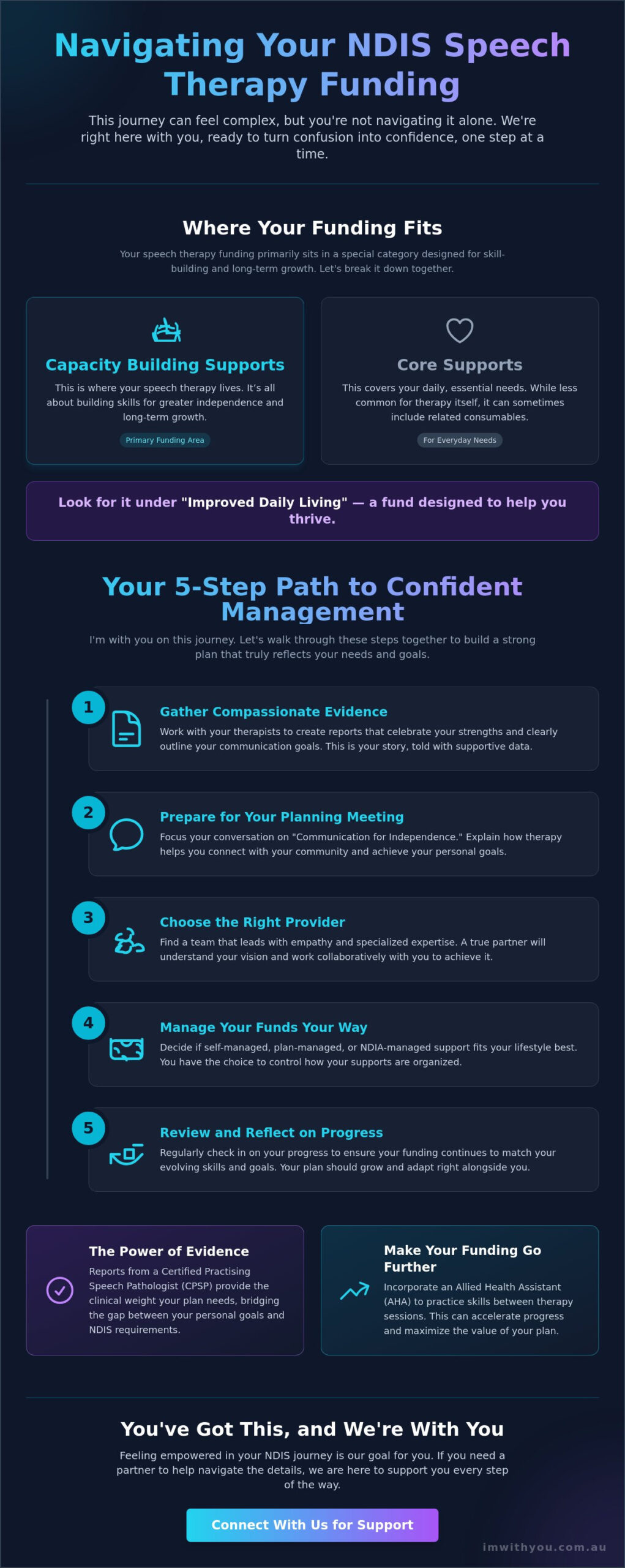
Understanding how the National Disability Insurance Scheme (NDIS) organises its support can feel like learning a whole new vocabulary. When you’re looking for speech pathology ndis funding, you’ll primarily find it nestled within the “Capacity Building” budget, specifically under the “Improved Daily Living” category. This area is dedicated to helping you develop the skills you need to participate more fully in your community and home life.
It’s natural to feel a bit lost in these administrative definitions, but please remember that you aren’t alone in this. Our team is right here to help you translate these categories into real-world support that makes sense for your life. We believe that understanding your funding is the first step toward feeling empowered in your journey.
To better understand how these funding options work in Australia, watch this helpful video:
Capacity Building vs. Core Supports
Most speech therapy focuses on long-term growth and skill development, which is why it sits in Capacity Building. While Core Supports usually cover everyday items or immediate needs, there are rare times when speech-related consumables might fit there. As we work together, we always start by using person-first language. This ensures our partnership is built on a foundation of respect and dignity from the very first conversation.
What the NDIS Typically Covers in Speech Therapy
The NDIS aims to fund supports that are “reasonable and necessary.” Instead of viewing this as a clinical hurdle, think of it as a way to ensure the support you receive is truly meaningful for your goals. Whether you’re managing challenges with swallowing (dysphagia) or looking for better ways to connect through social communication, your speech pathology ndis funding is a tool for your independence. I’m with you as we explore how these supports can open new doors. This funding typically covers:
- Comprehensive assessments to understand your unique communication profile.
- Individual therapy sessions tailored to your pace and personal preferences.
- Training for your family or caregivers so they can support you effectively at home.
- Alternative and Augmentative Communication (AAC) technology for those who need specialized ways to express themselves.
5 Steps to Secure and Manage Your Speech Therapy Budget
Securing the right level of speech pathology ndis funding is a process of telling your story in a way the system understands. It’s about translating your daily challenges and future dreams into a structured request for support. I’m with you through every step of this management journey, ensuring you feel confident and heard. By following a clear path, you can lower the stress often associated with these administrative requirements.
- Step 1: Gathering Compassionate Evidence. Work with your current therapists to create reports that highlight your strengths and specific communication goals.
- Step 2: Preparing for Your Planning Meeting. Focus your conversation on “Communication for Independence,” explaining exactly how therapy helps you connect with your community.
- Step 3: Choosing the Right Provider. Use our guide on how to choose an NDIS provider to find a team that leads with empathy and specialized expertise.
- Step 4: Managing Your Funds. Decide if self-managed, plan-managed, or NDIA-managed support fits your lifestyle best. You can find technical details on these options at the Official NDIS Website.
- Step 5: Reviewing and Reflecting. Regularly review your progress to ensure your funding evolves alongside your growing communication skills and changing life stages.
The Power of Evidence-Based Advocacy
Reports from a Certified Practising Speech Pathologist (CPSP) are considered the gold standard because they provide the clinical weight needed for NDIS reviews. These professionals understand how to document functional impact while keeping your humanity at the center of the narrative. A strong therapist report bridges the gap between clinical need and your personal NDIS goals, making it easier for planners to see the value of your request.
Handling Funding Shortfalls
It’s incredibly disheartening when a plan comes back with less funding than you expected. If this happens, don’t lose heart; it’s often just a sign that the system needs more specific information about your daily life. Our NDIS support coordination can help you navigate the appeals process and advocate for a plan reassessment that truly reflects your needs. Exploring your options with a trusted advocate can turn a complex process into a clear path forward.
Collaborative Strategies for Effective Therapy Management
Managing your support shouldn’t feel like a solo mission. I’m with you, and together we can turn a complex budget into a meaningful life. We view therapy as a collaborative partnership between you, your loved ones, and your dedicated therapist. This person-centered approach is why “Im with you” was recognized for award-winning excellence in 2026. We set a standard where therapeutic supports feel safe, empowering, and deeply human. It’s about more than just checking boxes; it’s about building a foundation for genuine connection and social inclusion.
Maximising Your Budget with Allied Health Assistants
One of the most effective ways to manage your speech pathology ndis funding is by using a blended model of care. Allied Health Assistants (AHAs) work under the direct supervision of a senior clinician to provide regular, frequent practice sessions. This ensures you get high-quality support while helping your budget last much longer throughout the plan year. According to Speech Pathology Australia, this collaborative workforce model is a recognized way to deliver consistent and effective therapy. It is a brilliant strategy for developing capacity building skills without feeling the constant pressure of a dwindling budget.
Integrating Therapy into Daily Life
Therapy is most powerful when it happens in the moments that matter most to you. Instead of focusing only on clinical milestones, we look at how communication brings joy to your day. You can practice your communication goals during everyday leisure activities, like sharing a meal, visiting a park, or playing a favorite game with friends. This is why caregiver training is such a vital part of the NDIS funding model. It empowers the people closest to you to be your steady companions in every conversation. This turns therapy from a weekly appointment into a natural part of a life well-lived. By building these skills together, we ensure your progress is sustainable and deeply rooted in your personal community.
Your Pathway to Confident Communication
Navigating the complexities of the NDIS doesn’t have to be a source of stress. By understanding that your support sits within the Capacity Building budget and learning how to advocate with strong evidence, you’ve already taken the most important steps toward independence. Remember that strategies like incorporating Allied Health Assistants can help your budget go further, ensuring you have the consistent support needed to reach your personal goals. Making the most of your speech pathology ndis funding is a journey of partnership and advocacy; you don’t have to walk it alone.
As specialists in Therapeutic Supports and Support Coordination, we provide national coverage with a deeply person-centered approach. Our commitment to excellence was recognized with the 2026 Award for Excellence in Disability Support, but our true reward is seeing you thrive. I’m with you as you explore new possibilities for connection and growth. Let’s navigate your NDIS journey together; contact Im with you today. You have the strength to lead your support journey, and we’re here to be your steady companions every step of the way.
Common Questions About Speech Pathology NDIS Funding
Can I use NDIS funding for speech pathology if I don’t have a formal diagnosis yet?
Yes, you can often access support before a formal diagnosis is finalized, especially for children under the age of nine through the Early Childhood Early Intervention (ECEI) pathway. For older participants, the NDIS focuses more on the functional impact of your communication challenges rather than a specific medical label. I’m with you in gathering the right evidence to show how these challenges affect your daily life so you can get the support you deserve.
What is the difference between ‘Improved Daily Living’ and other NDIS budget categories?
‘Improved Daily Living’ is a sub-category of your Capacity Building budget specifically designed for therapy that builds long-term skills. While Core Supports might pay for immediate help or everyday items, speech pathology ndis funding sits in Capacity Building because it focuses on your growth and independence. It’s important to manage these pools carefully, as you generally can’t move funds from Capacity Building to cover Core Support needs.
How many hours of speech therapy will the NDIS fund per year?
The number of hours depends on your unique goals, but many participants receive between $2,000 and $8,000 annually, which provides roughly 10 to 40 hours of therapy at current national rates. Those with complex communication or swallowing needs might receive allocations exceeding $20,000. Your plan is tailored to what is “reasonable and necessary” for your situation, and we can help you advocate for a budget that reflects your actual requirements.
Can my NDIS funding pay for speech therapy apps or communication devices?
Yes, the NDIS can fund specialized apps and Augmentative and Alternative Communication (AAC) devices, usually through the Capital Supports budget. To access this, you’ll need a comprehensive assessment and a recommendation report from a speech pathologist. This report explains why the specific technology is the most effective way to help you communicate. I’m with you during this assessment process to ensure the system understands the value of these tools for your independence.
What should I do if my speech pathology funding runs out before my plan review?
If your funds run out early, you can request a plan reassessment if your circumstances have changed or if the initial funding didn’t meet your functional needs. It’s helpful to work with your therapist to document why the current allocation was insufficient. We can assist you in gathering the evidence needed to show the NDIA that additional support is required to maintain your progress and safety.
Does the NDIS fund speech pathology for adults as well as children?
The NDIS provides speech pathology funding for participants of all ages, recognizing that communication and swallowing supports are vital throughout your entire life. While children often focus on early language development, adults may use their funding for social communication, workplace interaction, or managing dysphagia. No matter your age, the focus remains on helping you live a full, connected life with the right therapeutic supports by your side.