

What if your NDIS plan review wasn’t a test you had to pass, but a gentle conversation about the life you’re building? It’s completely natural to feel a wave of anxiety when your reassessment approaches, especially if the meeting feels more like a clinical audit than a support session. You might worry about confusing terminology or feel a lingering fear that your funding won’t match your evolving needs. Im with you, and I want you to know that you don’t have to face this process alone.
Learning how to prepare for ndis plan review meeting is the best way to replace that stress with a sense of calm agency. While the NDIA has confirmed that the new planning framework won’t begin until April 1, 2027, staying informed about your current rights is essential. This guide will show you how to manage your reassessment with confidence, ensuring you have the evidence and support needed to reach your goals. We’ll walk through the practical steps of gathering documentation, translating “NDIS speak” into your own words, and focusing on the strengths that lead to your independence.
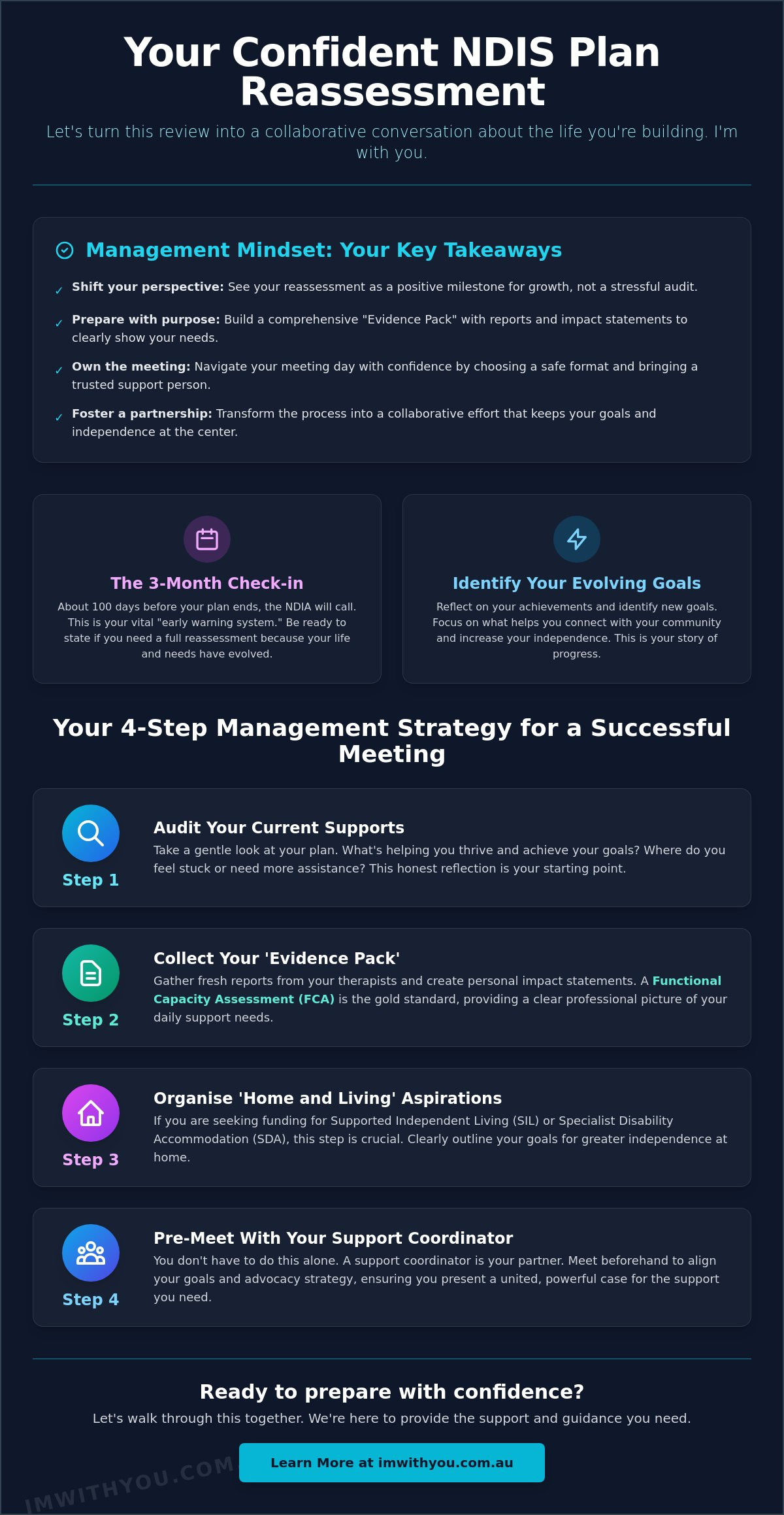
Key Takeaways
- View your NDIS plan reassessment as a positive milestone for growth and personal progress rather than a stressful administrative audit.
- Master how to prepare for ndis plan review meeting by conducting a gentle audit of your current supports to identify what’s working and where you need more help.
- Learn how to build a comprehensive “Evidence Pack” with therapist reports and impact statements that clearly communicate your daily needs.
- Navigate your meeting day with confidence by choosing a format that feels safe for you and exercising your right to bring a trusted support person.
- Transform the reassessment process into a collaborative partnership that keeps your personal goals and long-term independence at the centre of the conversation.
The Heart of the Meeting: Understanding the NDIS Plan Reassessment Process
The NDIS recently updated its language; what we once called a “plan review” is now officially known as a plan reassessment. It’s helpful to see this as more than just a paperwork exercise. Instead, think of it as a scheduled opportunity for your supports to catch up with your life. The National Disability Insurance Scheme is designed to be flexible, and this meeting is the key to ensuring your funding reflects who you are today and who you want to become tomorrow.
I know that the lead-up to this date can feel heavy. Many people tell me it feels like they’re being audited or tested on their disability. If you’re feeling overwhelmed by that “audit” feel, please know that’s a completely normal response. I’m with you in this process, and my goal is to help you move toward a person-centered review. This means the conversation focuses on your daily joy, your community connections, and your personal growth rather than just a spreadsheet of costs. Learning how to prepare for ndis plan review meeting begins with recognizing that you’re the expert in your own life.
To better understand how this process works and what to expect, watch this helpful video:
The 3-Month Check-in: Your Early Warning System
Around 100 days before your plan is due to end, you’ll likely receive a call from the NDIA. This is your three-month check-in, and it’s a vital early warning system for your future support. During this call, you can decide if a simple “check-in” to continue your current plan is enough, or if you need a full reassessment because your life has changed. Knowing how to prepare for ndis plan review meeting means being ready for this call so you can clearly state your preference for a full meeting if your current supports aren’t quite hitting the mark. While the full rollout of the new planning framework is scheduled for April 1, 2027, your current right to a thorough reassessment remains firmly in place.
Identifying Your Evolving Life Goals
Before the meeting, take a quiet moment to look back at your previous plan. What did you achieve this year? Maybe you joined a new community group, gained a new skill, or increased your independence at home. Celebrating these wins is just as important as identifying gaps. As you think about your goals for next year, focus on what will help you connect more deeply with your community. If you’re supporting a family member through this transition, you might find our guide on Understanding Intellectual Disability: A Gentle Guide for Families helpful for framing these evolving aspirations.
Your 4-Step Management Strategy for a Successful Review Meeting
Managing your review is easier when you break it into small, manageable pieces. I’m with you, and together we can ensure nothing is missed. A structured approach turns a daunting task into a series of achievable milestones. Following a clear strategy is the best way to learn how to prepare for ndis plan review meeting without feeling overwhelmed. This Preparing For an NDIS Plan Review guide suggests starting your preparation at least two months in advance to give yourself plenty of space to breathe.
- Step 1: Audit your current supports. Look at what’s helping you thrive and where you feel a bit stuck.
- Step 2: Collect your ‘Evidence Pack’. Gather fresh therapist reports and your own impact statements.
- Step 3: Organise your ‘Home and Living’ aspirations. This is crucial if you are seeking SIL or SDA funding.
- Step 4: Pre-meet with your support coordinator. Use this time to align your advocacy strategy and goals.
Gathering Strong Evidence and Allied Health Reports
A Functional Capacity Assessment (FCA) is often the gold standard for these meetings. It provides a clear, professional picture of your daily life and the support needed to bridge the gap between your current situation and your goals. When working with your therapists, it’s helpful to ensure they use language that aligns with the “reasonable and necessary” criteria the NDIS uses. This is particularly vital if you’re exploring A Gentle Guide to Supported Independent Living (SIL) in the NDIS. Clear reports reduce confusion and provide the NDIA with the evidence they need to support your growth.
The Power of Professional Advocacy
You don’t have to carry the weight of this meeting alone. A support coordinator acts as your partner, managing the complex “moving parts” of the system while keeping the focus on your agency. They help translate your needs into the right terminology and stand beside you as a steady companion. If you feel like you need a trusted advocate to walk this path with you, our NDIS support coordination services are designed to offer that extra layer of security. Knowing how to prepare for ndis plan review meeting is much simpler when you have a guide who understands your unique journey.
Navigating the Meeting Day with Confidence and Partnership
When the day of your meeting arrives, remember that the environment should work for you, not against you. You have the choice to meet face-to-face, over the phone, or via video call. If you’re feeling anxious, picking a familiar space like your own home for a video meeting can lower those barriers of stress. I’m with you from the first question to the final plan approval, and that includes helping you decide which setting feels most secure. You also have a fundamental right to bring a support person. Whether it’s a dedicated support coordinator, a trusted friend, or a disability advocate, having a companion ensures you don’t have to carry the conversation alone.
One of the hardest parts of learning how to prepare for ndis plan review meeting is getting ready to talk about your “bad days.” It can feel counterintuitive to focus on struggles when you’re working so hard on your strengths. However, describing your support needs on your most challenging days ensures your budget is sufficient for your real-life requirements. It isn’t about being negative; it’s about being accurate so you can maintain your dignity and independence. To help you feel even more grounded, you can refer to the official NDIS guide to preparing for your plan meeting for a clear sense of the NDIS’s expectations.
What to Bring to Your Meeting
Having your documents organised in a physical or digital folder allows you to stay focused on the conversation rather than searching for facts. Your “Evidence Pack” is your foundation, but your Participant Statement is your heart. This is your personal story, written in your own words, detailing your life and your needs. If you’re currently looking for new partners to help you reach these goals, our guide on How to Choose an NDIS Provider can help you find a team that truly aligns with your values.
Managing Post-Meeting Expectations
Once the meeting concludes, your plan enters the “Plan Approval” phase. While wait times can vary, staying in touch with your support coordinator can help you navigate the weeks ahead with patience. If the new plan arrives and doesn’t quite reflect your needs, don’t lose heart. You have the right to request an S100 internal review of the decision. This is simply another step in the journey of how to prepare for ndis plan review meeting outcomes, and I’ll be right there to help you advocate for the supports you deserve.
Stepping Into Your Future with Confidence
Your NDIS plan reassessment is more than a date on a calendar; it’s a doorway to new possibilities and continued independence. By viewing this meeting as a collaborative conversation rather than a hurdle, you empower yourself to advocate for the life you want to lead. We’ve explored how understanding the process, gathering your evidence pack, and choosing a comfortable meeting setting can transform your experience from one of anxiety to one of agency. Mastering how to prepare for ndis plan review meeting is simply about giving your future self the best possible foundation.
I’m with you every step of the way. Our advocacy-led approach puts your dignity first, ensuring your voice is heard and respected. As recipients of the 2026 Award for Excellence in Disability Support, we take our commitment to your growth seriously. Our expert NDIS support coordinators are available nationally to help you align your goals and manage the complex moving parts of the system. Let’s prepare for your plan review together, contact our compassionate team today. You have the strength and the tools to succeed, and we’re honoured to walk this path beside you.
Frequently Asked Questions
How long does an NDIS plan review meeting usually take?
An NDIS plan review meeting typically lasts between 60 and 90 minutes. This timeframe provides enough space for a thoughtful conversation about your goals and support needs without feeling rushed. It’s your time to be heard, and I’m with you to ensure the discussion moves at a steady pace that feels comfortable and safe for you.
Can I request a plan review earlier than my scheduled date?
You can request a plan reassessment earlier than your scheduled date if you experience a significant change in your life circumstances. This involves submitting a “Change of Circumstances” form to the NDIA to explain why your current supports are no longer sufficient. Learning how to prepare for ndis plan review meeting requests like this is vital when you face unexpected shifts in your health, housing, or daily support requirements.
What should I do if my funding was cut in my last plan?
If your funding was reduced previously, the best approach is to gather fresh, detailed evidence that clearly demonstrates why your supports meet the “reasonable and necessary” criteria. Focus on providing updated functional capacity assessments and therapist reports that highlight your daily challenges and goals. I’m with you in this effort to rebuild your evidence pack so your next plan accurately reflects your needs and promotes your independence.
Do I need to bring my child or the person I care for to the meeting?
You aren’t required to bring your child or the person you care for to the meeting if it would be distressing or overwhelming for them. While the participant’s voice is the heart of the scheme, their physical presence isn’t a mandatory rule for a successful outcome. You can share their story through reports, videos, or your own observations as part of how to prepare for ndis plan review meeting steps to ensure their needs remain the central focus.