

What if the most important tool you carry as a support worker isn’t your schedule or your training manual, but your ability to stay emotionally whole while giving so much of yourself? It’s a role that demands incredible heart, yet many people find themselves feeling isolated in one-on-one community settings or drained by the high-needs advocacy their clients deserve. You might be asking yourself what makes a good ndis support worker when the emotional stakes are so high. Im with you in that feeling of weight, and I want you to know that your dedication is the foundation of everything we do.
This article will help you identify the essential qualities that define excellence in disability support, from technical expertise to the soft skills that build genuine trust. We’ll explore practical strategies to manage the emotional demands of your career so you can maintain your passion without burning out. We’ll also look at how finding a provider that truly values your wellbeing makes all the difference. By the end, you’ll have a clear path toward sustainable, compassionate care that empowers both you and the individuals you support.
Key Takeaways
- Discover how a balance of emotional intelligence and proactive advocacy sets the foundation for truly transformative disability support.
- Explore what makes a good ndis support worker through the lens of person-first language and a deep commitment to client dignity.
- Learn to view burnout prevention as a core professional competency, helping you manage the unique stressors of the Australian NDIS landscape.
- Find out why a collaborative partnership with your provider is essential for maintaining your energy and passion in one-on-one roles.
- Gain actionable strategies for emotional resilience so you can continue to provide compassionate care while feeling fully supported in your journey.
What Makes a Good NDIS Support Worker? Defining Excellence in 2026
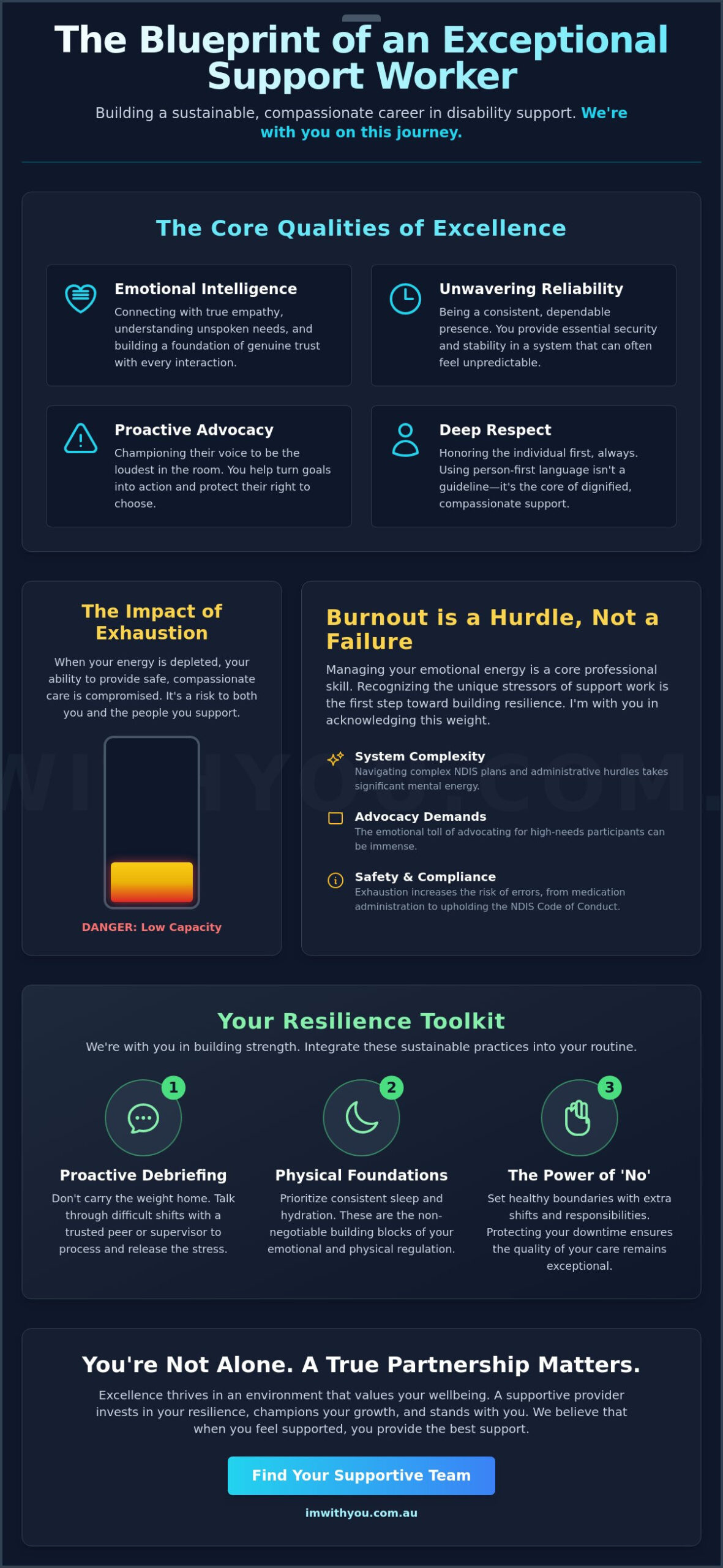
What makes a good ndis support worker in 2026 isn’t just about ticking boxes on a checklist. It’s about a unique blend of emotional intelligence, unwavering reliability, and the courage to be a proactive advocate. We see excellence as a commitment to walking alongside someone, ensuring their voice is the loudest in the room. This starts with a deep respect for dignity, often expressed through the intentional use of person-first language to ensure the individual always comes before their diagnosis.
Reliability is the heartbeat of this role. In a system as complex as the National Disability Insurance Scheme, participants often face a world of unpredictable changes and administrative hurdles. Being a steady companion means showing up exactly when you say you will, providing a sense of security that allows a person to focus on their growth. Understanding what makes a good ndis support worker also means recognizing that technical skills are only half the story. You need a deep, compassionate understanding of intellectual disability to provide care that is truly individualized and respectful of specific sensory or communication needs.
To better understand this concept, watch this helpful video:
The Heart of Advocacy: Standing Up for Participants
A great support worker looks far beyond the daily tasks of personal care or community access. They see the person’s long term goals and untapped potential. This involves carrying what I call the advocacy weight. It’s the mental and emotional energy required to ensure a participant’s voice is heard within the NDIS system. I’m with you in this effort; it’s about making sure the individual’s agency is never lost in the paperwork. True excellence is found when you transition from being a service provider to being a partner in someone’s independence, ensuring their choices are respected by every stakeholder involved in their care plan.
Managing Stress and Burnout: The Professional Skill of Sustainable Care
I’ve seen many dedicated professionals believe that burnout is a sign of personal failure. In reality, learning to manage your emotional and physical energy is a core professional competency. It’s a vital part of what makes a good ndis support worker. When you view your own health with the same person-centred compassion you give your clients, you create a foundation for a long, rewarding career. This isn’t just about “self-care” in a general sense; it’s about the practical management of your capacity to show up every day with warmth and presence.
The Australian disability sector presents unique stressors that can weigh heavily on even the most experienced workers. Navigating the complexity of NDIS plans and the advocacy required for high-needs participants takes a significant toll. Adhering to the NDIS Code of Conduct requires a high level of integrity and alertness. If you’re physically or emotionally depleted, your ability to maintain this standard can slip. I’m with you in recognizing that this work is demanding, and your wellbeing is the engine that drives your support.
Exhaustion also directly impacts safety. Maintaining sharp focus is essential when you’re responsible for complex tasks like the six rights of medication administration. A tired mind is more prone to small oversights that can have serious consequences. By prioritizing your resilience, you aren’t just helping yourself; you’re actively protecting the individuals in your care. If you’re looking for a team that prioritizes this balance, you might find our approach to supportive disability services a breath of fresh air.
Practical Strategies for Daily Resilience
Building resilience requires a “Sustainable Practice” checklist that you follow as strictly as any shift report. This includes:
- Proactive Debriefing: Don’t carry the weight of a difficult shift home. Talk it through with a trusted peer or supervisor.
- Physical Foundations: Prioritize hydration and consistent sleep. These are the basic building blocks of emotional regulation.
- The Power of ‘No’: Learn to set healthy boundaries with extra shifts. Protecting your downtime ensures that when you are on the clock, the quality of care remains exceptional.
Rediscovering Joy Outside the Role
Engaging in your own leisure activities is a powerful shield against compassion fatigue. Whether it’s a hobby, sport, or spending time in nature, these moments allow your “advocacy muscles” to rest. A balanced life outside of work directly improves the genuine warmth and calm presence you bring to every shift.
The ‘Im With You’ Philosophy: Why Partnership Prevents Exhaustion
When we discuss what makes a good ndis support worker, we often focus solely on the individual’s traits. While empathy and skill are vital, even the most resilient professional needs a supportive foundation to thrive. A great worker can only reach their full potential within a healthy NDIS provider environment. I’ve seen how isolation can drain the spirit of even the most dedicated carers, which is why we’ve built a culture centered on partnership rather than just management.
Our 2026 award for excellence isn’t just a trophy on a shelf; it’s a reflection of our commitment to walking alongside our team. We believe in “Collective Care,” a model where the responsibility for advocacy and complex problem-solving is shared. You shouldn’t have to navigate the weight of the NDIS Code of Conduct or the stress of a client’s crisis by yourself. I’m with you in every challenge, ensuring that when a situation feels overwhelming, you have a team ready to step in and share the load.
This approach transforms the role from a solitary task into a collaborative mission. When management takes an active interest in your wellbeing, it prevents the exhaustion that often leads to high turnover in our industry. We don’t just ask you to care for others; we make it our priority to care for you, fostering a space where your growth and mental health are valued as much as your technical skills. It’s this shared dedication that truly defines what makes a good ndis support worker in a professional setting.
Choosing a Culture of Support and Excellence
Working for a provider that actively listens to your feedback is the best way to reduce the feeling of isolation. I invite you to reflect on your current situation: does your provider treat you as a valued partner or simply as a number in a system? A truly supportive culture acts on your insights and empowers you to make decisions that benefit your clients. By choosing a workplace that celebrates your contributions and offers proactive debriefing, you ensure your career in disability support remains as rewarding and sustainable as the day you started.
Stepping Into a Sustainable Career of Care
Choosing to be a support worker is a profound commitment to the independence and dignity of others. We’ve explored how the blend of proactive advocacy, emotional intelligence, and professional resilience defines what makes a good ndis support worker in our current landscape. It’s a role that asks for your heart, but it shouldn’t cost you your wellbeing. By viewing sustainable practice as a core skill and finding a provider that treats you as a partner, you can ensure your passion remains bright for years to come.
As specialists in NDIS Support Coordination and Advocacy, we take pride in our Awarded for Excellence in Disability Support 2026. This recognition reflects our compassionate, person-centred approach to both our clients and our incredible staff. You don’t have to carry the weight of advocacy alone. I’m with you in this mission, providing the steady companionship and expert guidance you need to thrive.
Join a team that values your heart; discover how I’m With You supports our carers. Your journey in disability support is important, and I’m here to walk beside you every step of the way.
Frequently Asked Questions
What are the most important qualities of a good NDIS support worker?
Excellence is defined by a blend of emotional intelligence, reliability, and a commitment to proactive advocacy. When considering what makes a good ndis support worker, look for someone who prioritises person-first language and respects individual dignity in every interaction. They act as a steady companion, showing up exactly when they say they will while ensuring the participant’s voice remains the focus of their care. This combination of heart and technical competence ensures that support is both safe and empowering.
How can I tell if I am experiencing support worker burnout or just normal stress?
Normal stress usually fades after a restful weekend, but burnout feels like a heavy, persistent emotional exhaustion that rest doesn’t fix. You might notice a sense of compassion fatigue, where you feel detached from your clients or lose interest in the leisure activities you once enjoyed. I’m with you in recognising these signs early. If your exhaustion starts to impact your focus on safety tasks, it’s a clear signal that you need professional debriefing and a shift in your management strategy.
What can I do if I feel isolated as a community support worker?
Isolation is a common challenge in one-on-one community roles, but you can overcome it by actively seeking peer connection and “Collective Care” networks. Reach out to your supervisor for regular check-ins or join support groups where you can share experiences with others in the field. I’m with you in this effort; building these professional bridges ensures you aren’t carrying the weight of advocacy alone. Engaging in scheduled debriefing sessions helps turn a solitary job into a shared journey.
How does a supportive NDIS provider help prevent worker exhaustion?
A supportive provider prevents exhaustion by treating you as a valued partner rather than just a number in a system. They implement practical strategies like manageable shift scheduling, proactive mental health support, and open channels for your feedback. This partnership approach is a key part of what makes a good ndis support worker thrive over the long term. When management shares the responsibility for problem-solving and advocacy, it lowers your stress and allows you to focus on providing high-quality, compassionate care.