

Accessing therapy isn’t just about ticking boxes or following a rigid set of rules; it’s about aligning evidence-based support with your personal vision for a better life. You might be feeling overwhelmed by technical jargon and wondering, “can i use ndis funding for therapy for my specific needs?” It’s completely natural to feel a bit lost in the paperwork or worried about a request being rejected. I’m with you in this process, and I want you to know that your goals are the most important part of this conversation.
I understand the stress that comes with coordinating different specialists while trying to make sense of your plan. This guide will help you discover how to navigate NDIS therapeutic supports and clearly understand the funding criteria. We’ll explore how to find the right path for your unique journey and match therapies to your personal goals. By the end, you’ll have the clarity and confidence to pursue the support you deserve, feeling less alone and more empowered in every step you take. Let’s look at your options together.
Key Takeaways
- Learn how your therapy funding fits within the Improved Daily Living category to help you manage your Capacity Building budget with ease.
- Discover exactly how you can use ndis funding for therapy by identifying evidence-based supports that align with your unique path to independence.
- Understand the importance of matching specific therapies, like occupational or speech therapy, directly to your personal life goals.
- Find out how a collaborative partnership with a support coordinator can lower your stress and help you find the right therapeutic match.
- Gain the confidence to navigate the system knowing I’m with you to ensure your voice is heard and your needs are met.
Understanding How NDIS Therapy Funding Works
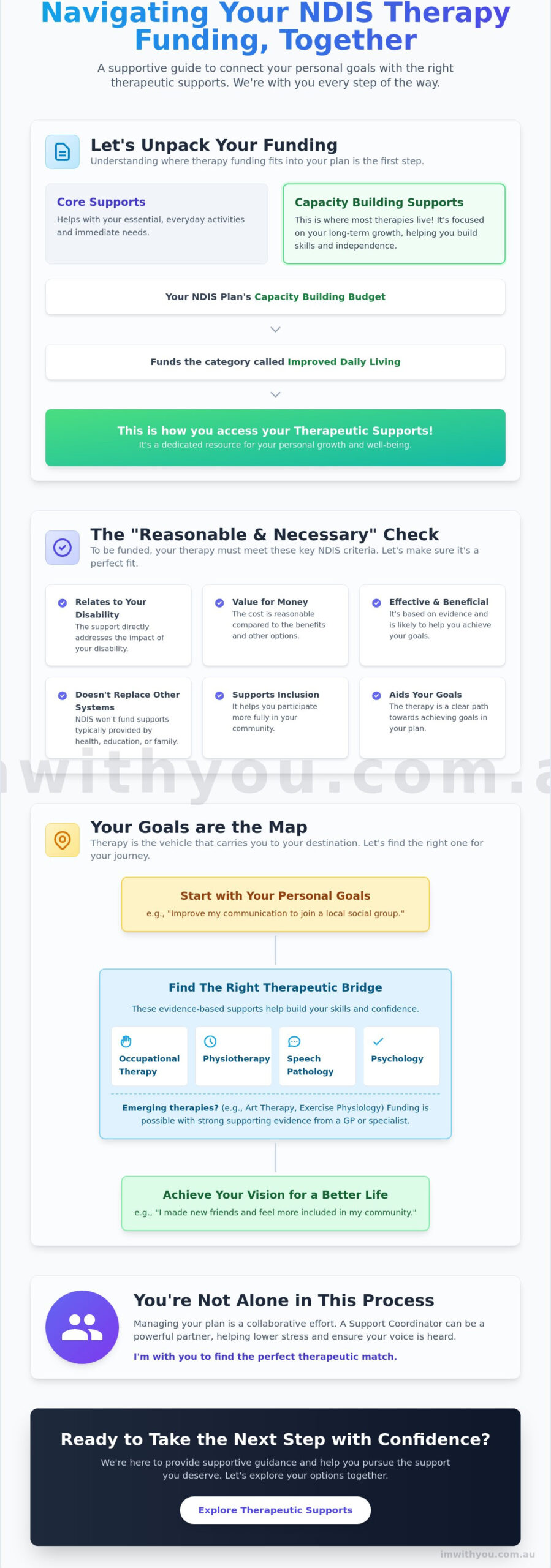
Starting your journey with the National Disability Insurance Scheme (NDIS) often feels like learning a new language. If you’re asking, “can i use ndis funding for therapy?” the answer is usually found within your Capacity Building budget. Most therapeutic supports live under a specific category called Improved Daily Living. I’m with you as you decode these terms, and it helps to think of this funding as a dedicated resource for your personal growth and wellbeing.
NDIS therapy funding acts as a practical tool for reaching your life milestones rather than just being a medical necessity. It focuses on evidence-based interventions that empower you to build lasting independence in your own way.
To help clarify how this looks in a real-world setting, watch this helpful video:
The Capacity Building Budget Explained
This part of your plan is distinct from your Core Supports. While Core helps with your immediate daily activities, Capacity Building focuses on your long-term functional capacity. It’s about developing the skills you need to participate more fully in your community. You’ll often use this budget to partner with Allied Health professionals like Occupational Therapists or Speech Pathologists. These experts work alongside you to improve how you interact with the world around you every day.
The “Reasonable and Necessary” Framework
The NDIA uses a specific set of six criteria to determine what they will fund. They call this the “Reasonable and Necessary” test. Essentially, they want to ensure the therapy is directly related to your disability and offers true value for money. It’s also vital to show that the support doesn’t replace what the standard health system or your family would typically provide. When you wonder, “can i use ndis funding for therapy for this specific goal?” this framework provides the answer by looking at how the support helps you live a more inclusive life. I know this sounds technical, but it’s really just a way to ensure your funding is used effectively to support your unique journey.
Matching Your Goals to the Right Therapeutic Supports
Your NDIS plan acts as a map for the life you want to lead. When you ask, “can i use ndis funding for therapy?” it’s helpful to remember that therapy is simply the vehicle that carries you toward your destination. Every session with NDIS-funded therapy supports should bring you closer to your personal milestones. I’m with you in ensuring these choices reflect your values. Your comfort with a therapist matters just as much as their clinical skills.
Commonly funded options include Occupational Therapy, Physiotherapy, Psychology, and Speech Pathology. You might also wonder, “can i use ndis funding for therapy for things like Exercise Physiology or Art Therapy?” These “outside the box” options are often possible if they meet evidence-based criteria. The goal is to find what helps you grow. If you’re looking for guidance, exploring our Therapeutic Supports can help you find a path that feels right for your unique journey.
Evidence-Based vs. Emerging Therapies
The NDIS prioritizes therapies with proven outcomes for your specific diagnosis. This approach ensures your budget goes toward supports that truly work. If you want to try an emerging therapy, you’ll need strong supporting evidence from a GP or specialist. This documentation helps explain why a specific support is necessary for your progress and how it will safely help you build functional capacity over time.
Connecting Therapy to Social and Community Participation
Therapy provides the foundation for community participation support by building your daily confidence. You might set a goal like “improving my communication to join a local social group.” In this case, Speech Pathology becomes the bridge to making new friends and feeling more included. When you see therapy as a way to unlock social doors, it feels like a path to joy rather than just a clinical requirement.
How to Manage Your Therapy Funding and Find Support
You’re never alone in this process. Managing your plan is a collaborative effort between you and your support team. When you ask, “can i use ndis funding for therapy?” the answer becomes much clearer when we walk through it together. I’m with you as we explore how to track your budget and review your progress against the goals you’ve set for yourself.
Effective management starts with understanding the official NDIS guidelines on therapy supports. These rules provide the structure, but your personal journey provides the purpose. My commitment to you is to walk alongside you during every stage of your therapy journey, ensuring you feel heard and respected.
The Power of Advocacy and Support Coordination
A NDIS Support Coordination partner acts as your dedicated advocate during plan reviews. They help articulate your needs to the agency, ensuring your funding matches your aspirations. By handling heavy administrative tasks, they reduce your stress so you can focus entirely on your sessions and personal growth.
Steps to Start Using Your Funding Today
If you’ve been wondering, “can i use ndis funding for therapy for this specific goal?” you can take small, meaningful steps right now to activate your support. First, review your current plan categories to see which therapeutic supports are already included. Once you’re ready, we can help you set up service agreements that protect your rights and outline clear expectations.
- Check your Improved Daily Living category for available funds.
- Identify therapists who align with your values and communication style.
- Look for providers who prioritise person-first language and respectful care.
Choosing a provider who sees you as a person first makes all the difference in your progress and peace of mind. I’m here to help you make those connections.
Embracing Your Path to Independence
Finding the right therapeutic support is about more than clinical sessions; it’s about reclaiming your agency and moving closer to your dreams. Choosing therapies that align with your vision ensures your budget works for you, rather than the other way around. Asking “can i use ndis funding for therapy” is a powerful first step toward the independence you deserve, and you don’t have to navigate those answers alone. I’m with you as you explore these possibilities, ensuring your plan truly reflects who you are and what you hope to achieve.
As a team specialized in Support Coordination and Advocacy, we focus on a compassionate, person-centered approach that puts your needs first. We’re honored to have been awarded for excellence in disability support in 2026, a recognition that reflects our deep commitment to every individual we serve. This partnership is built on trust and a shared vision for your future. Let us walk alongside you on your NDIS journey, explore our therapeutic supports today. You have the strength to reach your milestones, and we’re here to help you clear the path.
Frequently Asked Questions
Can I use NDIS funding for a gym membership as therapy?
The NDIS typically doesn’t fund standard gym memberships because they’re considered an everyday living cost that most people pay. However, you can often use your budget for a professional like an Exercise Physiologist to support you during those gym visits. This professional support focuses on building your functional capacity and physical health through evidence-based movement. I’m with you in identifying how these specific sessions can help you reach your long-term wellness milestones safely and effectively.
What happens if my NDIS plan doesn’t have enough funding for the therapy I need?
If your plan lacks the funds for necessary sessions, you can request a plan review or a “Change of Circumstances” assessment from the NDIA. It’s a good strategy to gather evidence from your specialists that clearly shows how more therapy will help you reach your goals. While we navigate that process together, we can look at prioritizing your most vital supports. This proactive management keeps your progress on track while we advocate for the additional resources you deserve.
Can I use a therapist who is not NDIS registered?
Whether you can use a non-registered therapist depends entirely on how your plan is managed. If you are self-managed or plan-managed, you have the flexibility to choose any qualified therapist who meets your needs and professional standards. If your plan is NDIA-managed, you’re required to use NDIS-registered providers. When asking “can i use ndis funding for therapy” with a specific specialist, always check your management type first to confirm your options and maintain your choice and control.
Is there a limit on how many therapy sessions I can have per year?
There isn’t a specific “number” of sessions set by the NDIS for everyone. Instead, your frequency of care depends on your total budget and the “reasonable and necessary” criteria outlined in your plan. You have the agency to work with your therapist to create a schedule that balances your needs with your available funds. I’m with you in monitoring your budget usage so you have consistent, reliable support throughout the entire life of your plan without running out early.