

What if transitioning from ECEI to NDIS is a process you can prepare for, rather than a single handover day? It’s understandable to wonder what might change, who will guide you, and whether your child’s support will continue without disruption.
For children continuing under the Early Childhood Approach, planning for the next step can begin around 12 months before they turn nine. This guide explains what may change, how early childhood partners and NDIS contacts can support the process, and what information to gather about your child’s strengths, needs and goals. We’ll walk through practical questions to ask and ways to make informed decisions, so you and your family can approach the transition with greater clarity and feel supported along the way.
Key Takeaways
- Understand how terminology and support arrangements may shift, so unfamiliar changes feel easier to discuss.
- For transitioning from ecei to ndis, gather relevant reports, progress notes and everyday examples that help describe your child’s strengths and support needs.
- Centre your child’s preferences, relationships and participation when discussing what matters for their next steps.
- Prepare questions about who to contact, how information will be shared and when to revisit the plan, then record the answers and agreed next steps.
Transitioning from ECEI to NDIS: What May Change for Your Child?
Unfamiliar terms, new contacts and questions about current supports can make this stage feel like a lot to hold at once. You don’t have to understand every detail immediately. Knowing what a pathway change means, and what it doesn’t decide, can help you focus on the questions that matter for your child.
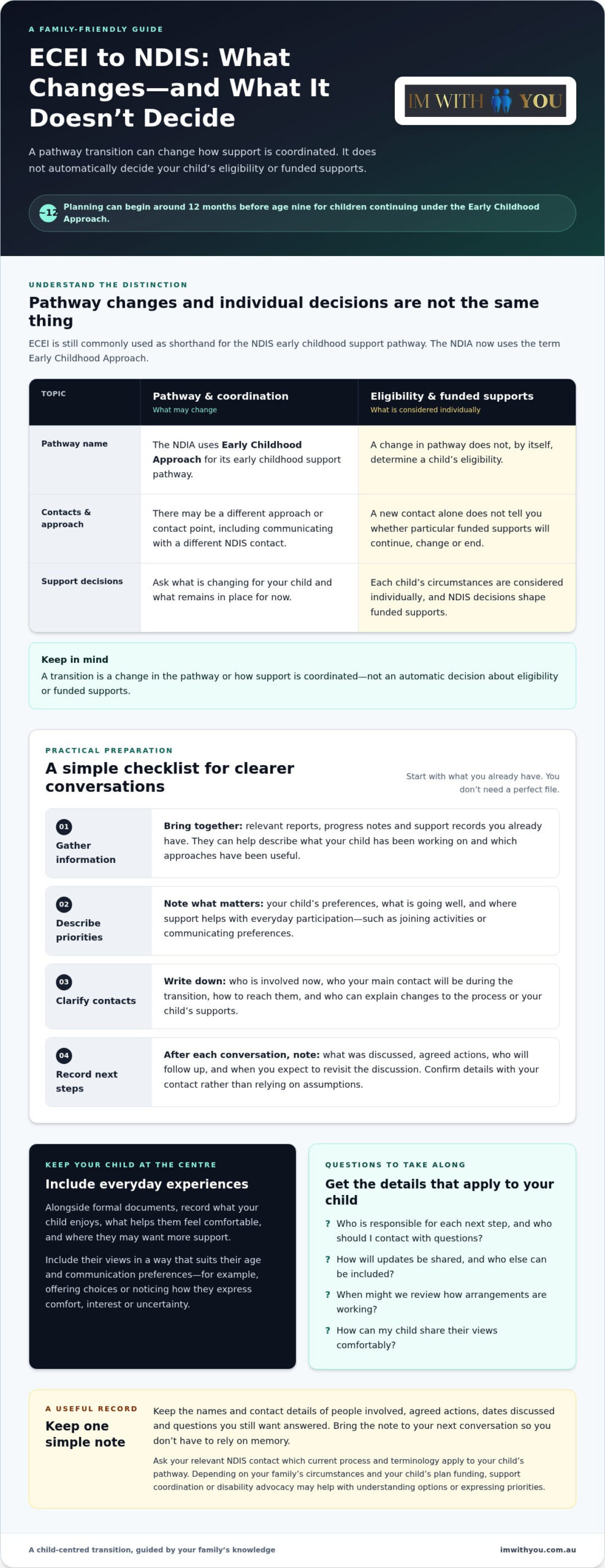
ECEI is still commonly used as shorthand for the National Disability Insurance Scheme’s early childhood support pathway. The NDIA now uses the term Early Childhood Approach. The broader National Disability Insurance Scheme (NDIS) provides the context for understanding this pathway, but a change in pathway does not automatically determine a child’s individual eligibility or the supports in their plan. Each child’s circumstances are considered individually.
Does moving from ECEI mean my child loses support?
Not necessarily, but it’s best not to assume that supports will stay identical or continue without any change. A transition may involve a different approach or contact point, while funded supports are a separate matter shaped by the child’s circumstances and NDIS decisions.
A transition is a change in the pathway or way support is coordinated, not an automatic decision about a child’s eligibility or funded supports.
For example, a family may begin communicating with a different NDIS contact as the child’s pathway changes. That change alone doesn’t tell you whether particular funded supports will continue, change or end. Ask the relevant contact to explain what is changing for your child, what remains in place for now, and how decisions about their supports will be communicated. Keep a note of the answers and any agreed next steps. This can make the process feel more manageable while you prepare for the practical checklist in the next section.
ECEI-to-NDIS Transition: A Practical Checklist
A few organised notes can make conversations about your child’s next steps clearer. You don’t need to build a perfect file or gather every document. Start with what you already have, then ask your relevant NDIS contact which current process and terminology apply to your child’s pathway.
- Gather useful information. Bring together relevant reports, progress notes and support records you already have. These can help explain what your child has been working on and what approaches have been useful.
- Describe priorities. Note what matters to your child and family, what is going well, and where support helps with everyday participation, such as joining activities or communicating preferences.
- Clarify contacts. Write down who is involved now, who your main contact will be during the transition, and how to reach them. Ask who can explain changes to the process or your child’s supports.
- Record next steps. After each conversation, note what was discussed, any actions agreed, who will follow up, and when you expect to revisit the discussion. Confirm details with your contact rather than relying on assumptions about how the pathway works.
What information can help families prepare?
Alongside formal documents, everyday examples can offer a fuller picture. Record what your child enjoys, what helps them feel comfortable, and where they may want more support. Include their views in a way that suits their age and communication preferences, such as offering choices or noting how they express comfort, interest or uncertainty. These details help keep conversations collaborative and focused on the child.
As you think about supportive relationships, this guide to choosing an NDIS provider may help you consider what matters in working together. If coordination would be helpful for your family, you can also explore NDIS support coordination with Im with you as part of a person-centred approach.
Keeping the Transition Child-Centred: Support, Questions, and Next Steps
As conversations move forward, keep bringing them back to your child’s everyday life. What do they enjoy? Which relationships help them feel connected? What makes it easier for them to join in at home, school or community activities? Sharing strengths, preferences and what support looks like in practice can help others understand what matters to your child, not just what appears in documents.
You might ask the relevant contact:
- Who is responsible for each next step, and who should I contact if I have a question?
- How will updates be shared with our family, and who else can be included in those conversations?
- When might we review how the arrangements are working, and what should we do if our child’s needs or circumstances change?
- How can my child share their views in a way that feels comfortable for them?
There may not be one answer that fits every family. Ask for the details that apply to your child and write down what you agree together.
How can families feel supported through the handover?
A simple record can make follow-up easier. Keep the names and contact details of people involved, agreed actions, dates discussed and questions you still want answered. You can bring this note to the next conversation, so you don’t have to rely on memory during a busy or emotional time.
Depending on your family’s circumstances and your child’s plan funding, NDIS support coordination may help you understand available options and organise supports. Disability advocacy may also help you express your child’s and family’s priorities in discussions. These supports are collaborative: your knowledge of your child remains central, and decisions should reflect their individual situation.
If you’d like a supportive conversation about your family’s needs, you’re welcome to connect with Im with you to explore person-centred disability support. You don’t have to work through each next step alone.
Take the Next Step at Your Family’s Pace
You don’t need to have every answer before moving forward. One small step, such as writing down a question or sharing what helps your child feel heard, can make the next conversation more manageable. As you continue transitioning from ECEI to NDIS, let your child’s priorities guide the decisions and give yourself room to seek clarity as circumstances evolve.
Im with you is recognised for a high standard of quality care and received an award for excellence in 2026. If you’d like to explore person-centred support alongside your family, you’re welcome to connect with Im with you. Your family brings important knowledge of your child, and you deserve to feel supported as you consider what comes next.
Frequently Asked Questions
What does transitioning from ECEI to the NDIS mean?
It means your child’s early childhood support pathway may change as their needs and circumstances are considered under the NDIS. ECEI is commonly used shorthand for the Early Childhood Approach. The transition may involve different contacts or processes, but the pathway change alone doesn’t decide whether your child meets NDIS access requirements or what supports they may receive.
Does my child automatically lose support when they transition from ECEI to the NDIS?
No, a pathway transition doesn’t automatically mean your child loses support, but it also doesn’t guarantee that every arrangement will continue unchanged. If you’re unsure what applies, ask the relevant contact which supports are currently in place, whether any arrangements are changing, and when a change would take effect. A clear explanation can help your family plan around routines and appointments.
How can I prepare my child for the transition from ECEI to the NDIS?
Prepare in a way that suits your child’s age, communication and comfort. You might explain that some of the adults helping your family could change, while reassuring them that you’ll talk through what happens next. A simple picture schedule, a short conversation, or offering choices about how they join a meeting may help them feel included without putting pressure on them.
Who can help families understand the ECEI-to-NDIS transition?
Your child’s early childhood partner or relevant NDIS contact can explain the pathway and clarify which process applies to your family. If it suits your circumstances and plan funding, an NDIS support coordinator may help you understand and put options into practice. Disability advocacy may also support your family to express your child’s needs and priorities during discussions.