

What if preventing burnout isn’t about getting better at doing it all, but making sure you don’t have to do it alone?
When caring takes up so much time and energy that there’s little room to recover, it can affect your wellbeing and your relationship with the person you love. And asking for help doesn’t mean you’re letting them down. A practical guide to how to avoid caregiver burnout australia starts with recognising when the load is becoming too much, then finding ways to share it.
We’ll explore signs that caring demands are affecting you, manageable ways to divide responsibilities and protect time for rest, and how coordinated disability support may ease some day-to-day pressures. NDIS support coordination and disability support can be part of a broader shared-care plan, shaped around the person’s goals, dignity and choices. You can care deeply while making space for support, and you don’t have to work it all out alone.
Key Takeaways
- Learn how to avoid caregiver burnout australia by noticing changes in your energy, mood, sleep, patience, or connection, then choosing a manageable next step.
- Try a simple sequence: name one pressure, choose one adjustment, and review whether it makes the routine feel more manageable.
- Explore how clear limits, shared tasks, and small pauses can create breathing room without adding a complicated new routine.
- Consider how trusted people and suitable disability supports could contribute to a shared plan shaped around the participant’s goals and choices.
How to Avoid Caregiver Burnout in Australia: Notice When Caring Is Becoming Too Much
Feeling depleted doesn’t mean you’re failing the person you care for. It can be a signal that the demands on you need attention and support, too. Caring strain may show up as changes in your usual energy, mood, sleep, patience or sense of connection. One difficult day doesn’t tell the whole story; look for changes that linger or make everyday life harder.
Caregiver burden, also known as caregiver burnout, describes the pressures unpaid carers may experience across physical, emotional and social aspects of life. Ongoing caring strain is a description of what you may be experiencing, not a clinical diagnosis. Understanding how to avoid caregiver burnout australia can begin with noticing what’s changed for you, without judging yourself.
What changes might tell you it is time to pause and reassess?
Compare how you feel now with your own usual baseline. Perhaps you’re more tired than usual, sleeping poorly, feeling short-tempered, or turning down contact with people who matter to you. These changes can be clues to explore, not proof that you have a particular condition.
A brief, private note can help you spot patterns. Jot down what felt demanding and what, if anything, brought relief. Keep it simple and use it to understand your needs, not to grade how well you’re coping.
- Notice changes in your energy, mood, sleep and patience.
- Record which tasks felt especially heavy and when you felt more at ease.
- Consider what you’d like to change, even if it’s a small adjustment.
If these changes persist or feel difficult to manage, consider speaking with an appropriate health professional. You can describe what you’ve noticed and ask for support in working out what may help. You deserve care and understanding, too.
Practical Ways to Avoid Caregiver Burnout Without Adding More Pressure
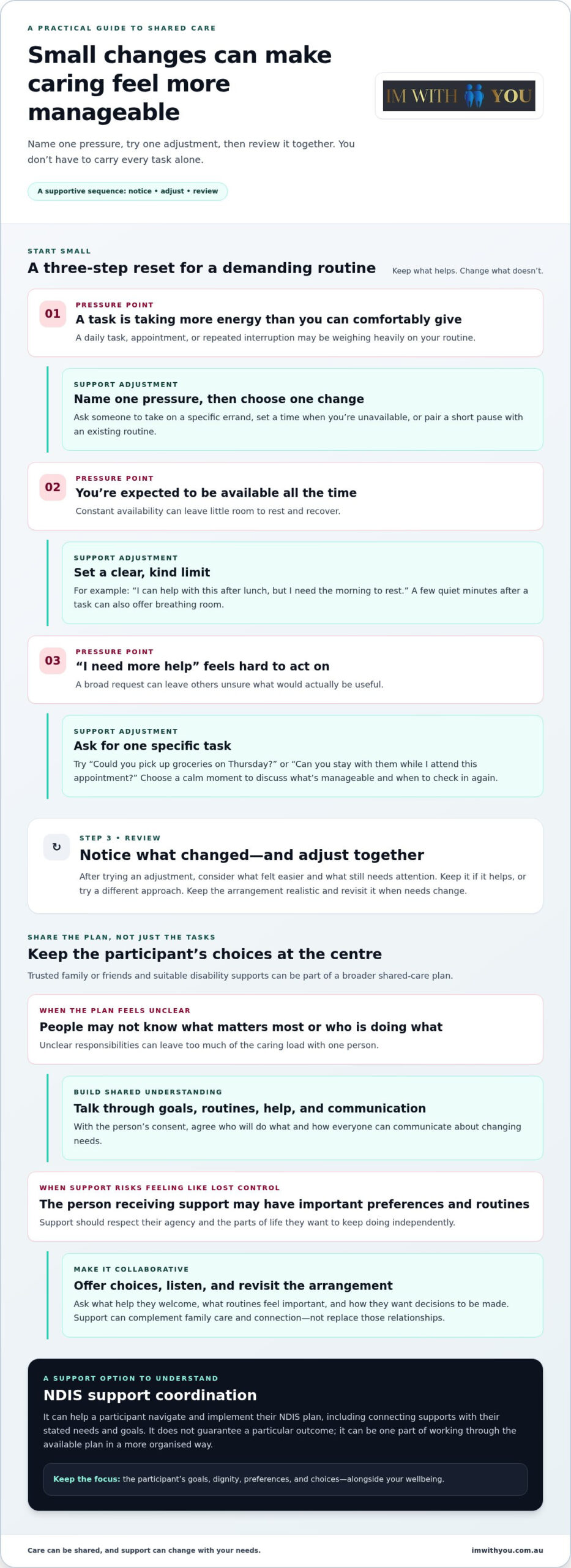
You don’t need to redesign your whole routine at once. A manageable first step in how to avoid caregiver burnout australia is to choose one pressure point and test one small change. Keep what helps, adjust what doesn’t.
Try this simple sequence:
- 1. Name one pressure. Is a daily task, appointment, or repeated interruption taking more energy than you can comfortably give?
- 2. Choose one adjustment. You might ask someone to take on a specific errand, set a time when you’re unavailable, or pair a short pause with an existing routine, such as making a cup of tea.
- 3. Review whether it helps. After trying the change, consider what felt easier and what still needs attention. Keep the adjustment if it works, or try a different one.
Sustainable caring includes planned support and recovery, not constant availability. A clear limit can be kind and practical: “I can help with this after lunch, but I need the morning to rest.” Small pauses count, too. A few quiet minutes after a task can offer breathing room without requiring a new schedule.
How can you ask others to share the caring load?
Make the request specific. Instead of “I need more help,” try “Could you pick up groceries on Thursday?” or “Can you stay with them while I attend this appointment?” Naming a task gives the other person a clear way to respond.
Choose a calm moment to talk about what’s manageable, what feels difficult, and when you’ll check in again. Keep the arrangement realistic, and remember that sharing care should respect the person’s preferences and your relationship with them.
If you’re considering disability support, this guide to choosing an NDIS provider can help you think through what matters to the person receiving support. Carer Gateway, an Australian Government program, also offers carers support and information. Collaborative disability support may be one part of a broader shared-care plan.
Build a Shared Support Plan That Respects You and the Person You Care For
A shared support plan can bring trusted family or friends together with suitable disability supports, while keeping the participant’s preferences at its centre. Start by talking about what matters to them: their goals, routines, the kind of help they welcome, and how they want decisions to be made. With their consent, agree on who will do what and how everyone can communicate about changing needs.
For those thinking about how to avoid caregiver burnout australia, this kind of planning can help make responsibilities clearer without placing the whole load on one person. NDIS support coordination can help a participant navigate and implement their NDIS plan, including connecting supports with their stated needs and goals. It doesn’t guarantee a particular outcome, but it can be one part of working through the available plan in a more organised way.
How can support feel collaborative rather than like giving up control?
Invite the person receiving support to shape the conversation. Ask what they’d like to keep doing independently, where they’d welcome assistance, and what routines feel important. Offer choices, listen without rushing, and revisit the arrangement together if something doesn’t feel right. Support can complement the care and connection family provide; it doesn’t have to replace those relationships.
If the person’s circumstances involve support with daily life at home, information about supported independent living in the NDIS may help you understand whether that option is relevant to explore. The right mix of support is personal, and the participant’s agency should guide the discussion.
If you’re considering what a broader plan could include, you can explore Im with you’s disability support as one possible part of it. You don’t have to map every detail at once. Start with the person’s priorities and take the next step together.
Take the Next Step Towards More Supported Caring
Support needs can change, and a shared-care plan can change with them. You don’t need to have every answer before you begin. A useful next step may be to talk together about what feels important now, then revisit the plan when circumstances shift. Your wellbeing belongs in that conversation, alongside the person’s preferences and hopes.
Learning how to avoid caregiver burnout australia isn’t about doing everything perfectly. It’s about making room for care that can adapt, with support around you rather than pressure to manage alone. If disability support could be part of the picture, explore disability support with Im with you and consider what may fit the person’s goals.
You deserve to feel supported as you care for someone you love. One thoughtful next step is enough for today.
Frequently Asked Questions
Can caregiver burnout happen even when you love the person you care for?
Yes. Love and exhaustion can exist at the same time; feeling worn down doesn’t measure your devotion. Strain may build from accumulated responsibilities, interrupted sleep or always being the person others rely on. Try separating the relationship from the workload: which parts of caring bring connection, and which demands leave you depleted? That distinction can help you explain what needs to change.
How do I tell someone I need help with caring?
Ask for one defined action, rather than expecting someone to guess what would help. If you’re considering how to avoid caregiver burnout australia, a direct request such as “Could you take them to their appointment on Tuesday?” gives the other person something clear to respond to. Share what you can manage, listen to what they can offer, and agree on a realistic time to check in again.
Is caregiver burnout the same as depression?
No, caregiver burnout and depression aren’t interchangeable terms, and this article can’t assess or diagnose either. Ongoing exhaustion, low mood or trouble coping may have different causes. If these experiences persist, feel severe or disrupt your daily life, speak with a qualified health professional. You could note when the changes began and how they affect sleep, work or relationships to help explain what’s been happening.
What should I do if I feel unable to keep someone safe right now?
If anyone is in immediate danger, call Australia’s emergency number, 000. If there’s no immediate danger but the situation feels unmanageable, contact someone you trust and state plainly what help is needed now. For example, ask them to come over or help arrange support. A health professional or relevant support service can help you consider further steps.