
What if the best way to support a family member is to build skills together while keeping their choices firmly at the centre? NDIS family capacity building supports can help strengthen confidence and everyday skills, but NDIS terminology can make it hard to know where to begin. It’s also natural to want to help without taking over.
This guide explains what family capacity building can look like in practice and how support can encourage the participant’s goals, independence and voice. We’ll explore respectful ways to build skills together and how options such as Capacity Building Skills, Support Coordination and therapeutic supports can fit into the picture. You’ll have a clearer starting point for exploring what may work for your family, one step at a time.
Key Takeaways
- Understand how ndis family capacity building supports can grow confidence and practical skills while keeping the participant’s goals and choices central.
- Use a simple, shared approach to skill-building: agree on a goal, choose one manageable step, practise, and reflect together.
- Use everyday routines and community activities as opportunities to practise skills at the participant’s pace and in ways that reflect their interests.
- Explore how Capacity Building Skills, Support Coordination, Occupational Therapy and Disability Advocacy can support your family, subject to the participant’s goals and NDIS plan.
What do NDIS family capacity building supports actually mean?
NDIS language can feel overwhelming when you’re trying to help someone you love. In practice, ndis family capacity building supports are about developing knowledge, confidence and practical skills around goals chosen by the participant. This could include learning how to offer support that encourages independence, rather than stepping in to do everything for them.
Family involvement should complement the participant’s preferences and decisions, not replace them. The National Disability Insurance Scheme (NDIS) includes capacity building as part of its support framework. What this looks like for a family depends on the participant’s goals and the kind of help they welcome.
This video offers another perspective on making an NDIS plan work for the participant:
How can families support a participant without taking over?
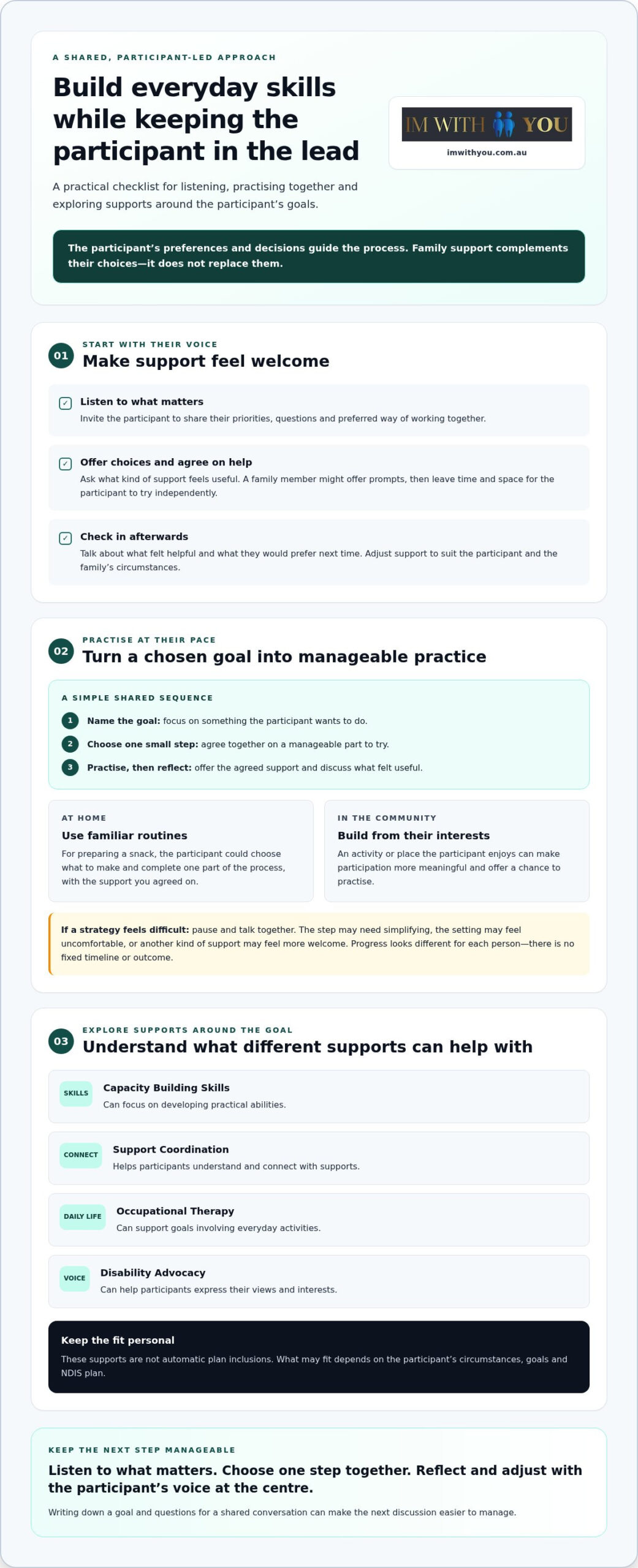
Start by listening. Ask what matters to the participant, offer choices, and agree on what kind of help feels welcome. For example, a family member could offer prompts while the participant practises a task, then give them time and space to try it independently. Check in afterwards: what felt useful, and what would they prefer next time?
There’s no single right family role. Each person’s time, energy and relationship with the participant is different, so support should reflect those circumstances. Respectful language can help keep the participant’s identity and voice in focus. Explore the guide to person-first language for more ways to communicate with care.
Practical ways families can build confidence and everyday skills
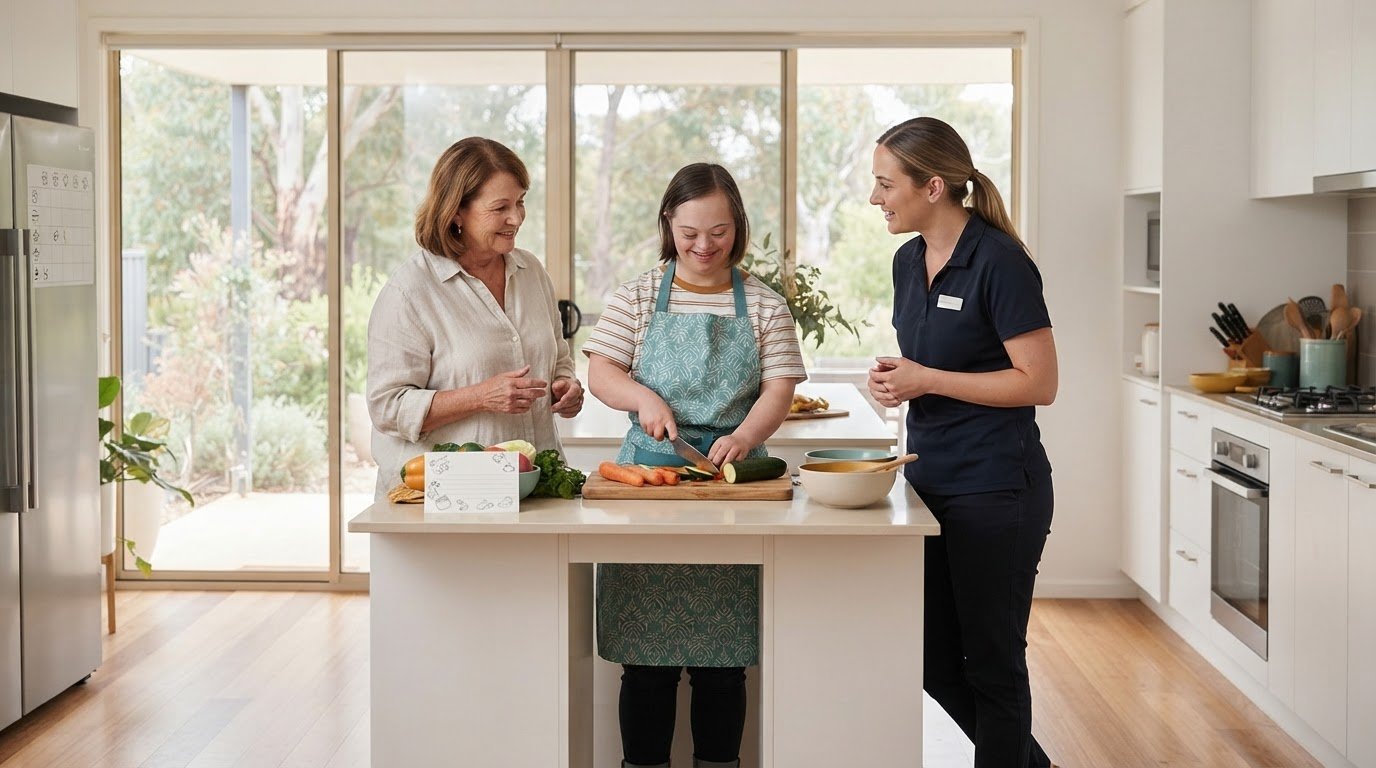
Connect practice to something the participant wants to do. Name the goal, agree on one small step, practise it together, then talk about what felt helpful. For example, if they’d like to prepare a snack, they could choose what to make and complete one part of the process while you offer the support you agreed on.
Everyday routines provide familiar opportunities to practise, while community participation can help build confidence through places and activities the participant enjoys. Adjust the pace and approach as needed. Progress looks different for each person, so focus on what matters to them rather than a fixed timeline or outcome. The NDIS official guidance on capacity building supports explains the purpose of these supports and their place in NDIS funding.
What does strengths-based support look like at home and in the community?
Notice what the participant already enjoys or does well, then build from there. Offer accessible choices, encourage their efforts and allow time to practise without pressure. At home, that might mean choosing between two tasks or deciding which step to try independently. In the community, an activity connected to their interests can make participation more meaningful. Browse ideas for leisure activities and connection for inspiration.
If a strategy feels difficult, pause and talk about what could change. The step may need simplifying, the setting may feel uncomfortable, or a different kind of support may be more welcome. These ndis family capacity building supports work best as a shared process, guided by the participant’s feedback. If you’re working on practical skill development, explore Capacity Building Skills support.
Connecting family capacity building with NDIS supports and next steps
Once you’ve identified what the participant wants to work towards, consider which supports align with that goal. Capacity Building Skills can focus on practical abilities, while Support Coordination helps participants understand and connect with supports. Occupational Therapy can support goals involving everyday activities, and Disability Advocacy can help participants express their views and interests.
These supports are not automatic plan inclusions. The right fit depends on the participant’s circumstances, goals and NDIS plan. Keeping their priorities at the centre helps your family explore ndis family capacity building supports without assuming a particular service or outcome is guaranteed.
How can families take a clear, participant-led next step?
Start with a shared conversation. Invite the participant to name their priorities, questions and preferred ways of working together. Family members can add what they’ve noticed, while leaving space for the participant to guide decisions. Writing down a goal and the questions you’d like answered can make the next discussion more manageable.
Im with you provides Support Coordination and Capacity Building Skills to help participants work through support options and develop skills in line with their goals. A collaborative approach starts with listening to what matters to the participant and shaping support around their voice. For more guidance, read our guide to choosing an NDIS provider.
Each family’s next step will look different. If you’d like to explore a supportive way forward together, learn more about Im with you’s NDIS support options.
Take the next step together
Family capacity building is a shared process, guided by what the participant wants to achieve. Listening to their preferences, choosing a manageable step and reflecting together can help keep support respectful and practical. The right ndis family capacity building supports depend on the participant’s circumstances, goals and NDIS plan, so there’s no single path every family needs to follow.
Im with you provides Capacity Building Skills and NDIS Support Coordination to help participants and families explore options and work towards goals collaboratively. Your next step can be a conversation about what matters most, what questions you have and how you’d like to work together. Explore how Im with you can walk alongside you and your family.
You don’t have to have every answer today. Start with the participant’s voice and take the next step together, at a pace that feels right.
Frequently Asked Questions
What are NDIS family capacity building supports?
NDIS family capacity building supports help families develop knowledge, confidence and practical skills to support a participant’s own goals. The focus is on working alongside the participant, not making decisions for them. For example, a family member could learn how to offer helpful prompts while the participant practises an everyday task, with the participant guiding what support feels right.
Can family members receive support through an NDIS participant’s plan?
Some supports may involve family members when this helps the participant work towards their goals, but an NDIS plan is for the participant’s disability-related support needs, not a general family support budget. Whether a particular support is suitable depends on the participant’s circumstances, goals and plan. Discussing the intended benefit for the participant can help clarify the purpose of a support.
How can families support independence without taking over?
Ask the participant what they want to do and what kind of help they welcome. Offer choices, agree on a manageable step, and give them time to try it in their own way. If support feels frustrating or intrusive, pause and adjust together. A prompt or encouragement may be more helpful than completing the task for them.
What NDIS supports can help families build capacity?
Capacity Building Skills, Support Coordination, Occupational Therapy and Disability Advocacy can all be relevant options to explore. They can support skill development, connecting with supports, everyday activities or expressing the participant’s views. The best fit depends on the participant’s circumstances, goals and NDIS plan, so funding and suitability aren’t guaranteed. Im with you provides Capacity Building Skills and NDIS Support Coordination.