
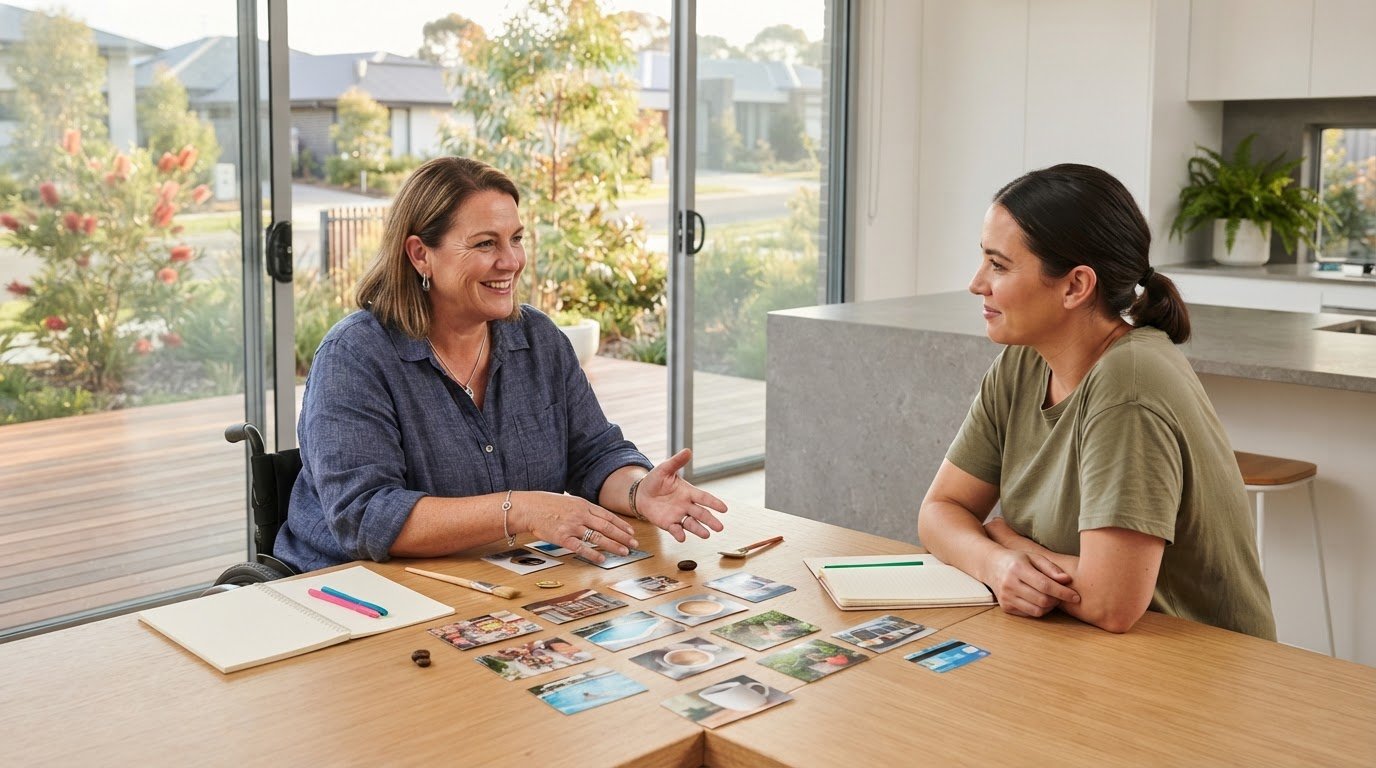
If you’re searching for tailored disability support, choosing a service is about more than finding a list of options. What if the right support is the one that fits the life you want to live?
Choosing support can feel personal and complicated. You may be weighing what could help with daily routines, meaningful goals and community connection, while wanting to keep choice and control in your hands. Understanding how NDIS funding relates to different services can add another layer of uncertainty.
This guide will help you explore support options, consider how they might fit your goals and preferences, and understand what to look for in a supportive partnership. At Im with you, we work alongside you to understand what matters in your life. You can take things one step at a time, ask questions and decide what feels right.
Key Takeaways
- Start with your goals, daily routines, interests and communication preferences to identify support that feels personal and useful.
- Compare disability support options by how well they fit your priorities and respect your choice and control.
- Explore how community participation and capacity-building skills may connect with everyday goals and your NDIS plan.
- A conversation with Im with you can help you share what matters and explore a comfortable next step.
Find disability support that starts with what matters to you
Choosing support can feel like a lot, especially when you’re weighing practical help against what matters to you personally. Your voice should lead the conversation. Start with what you want your days to look and feel like, then consider where support could help you take part with greater choice and connection.
Goals don’t have to be large or fixed. You might want support with a daily routine, confidence with a task, community activities or an interest you’d like to pursue. Understanding disability can include recognising how personal experiences and the surrounding environment shape participation. Support should respect your strengths and preferences, without defining you by a diagnosis or promising a particular outcome.
This ABC News report looks at disability support work and complaints, highlighting why respectful, person-centred support matters.
Turn personal goals into a clear support starting point
Write down where you’d like more help, confidence or connection in everyday life. Include the routines that matter, interests you’d like to make room for and strengths you want support to build on. Consider how you prefer to communicate, what helps you feel listened to, and what respect looks like in practice. These details can help shape support around your life rather than asking you to fit a fixed approach.
Use those priorities to guide your thinking about what kind of support may fit. At Im with you, we work alongside participants, keeping their goals and preferences central. For more ideas about assessing fit and communication, read our guide to how to choose an NDIS provider. You can take time to reflect. Naming one thing you’d like support to make more possible is a meaningful place to begin.
Compare disability support by fit, communication, and plan alignment
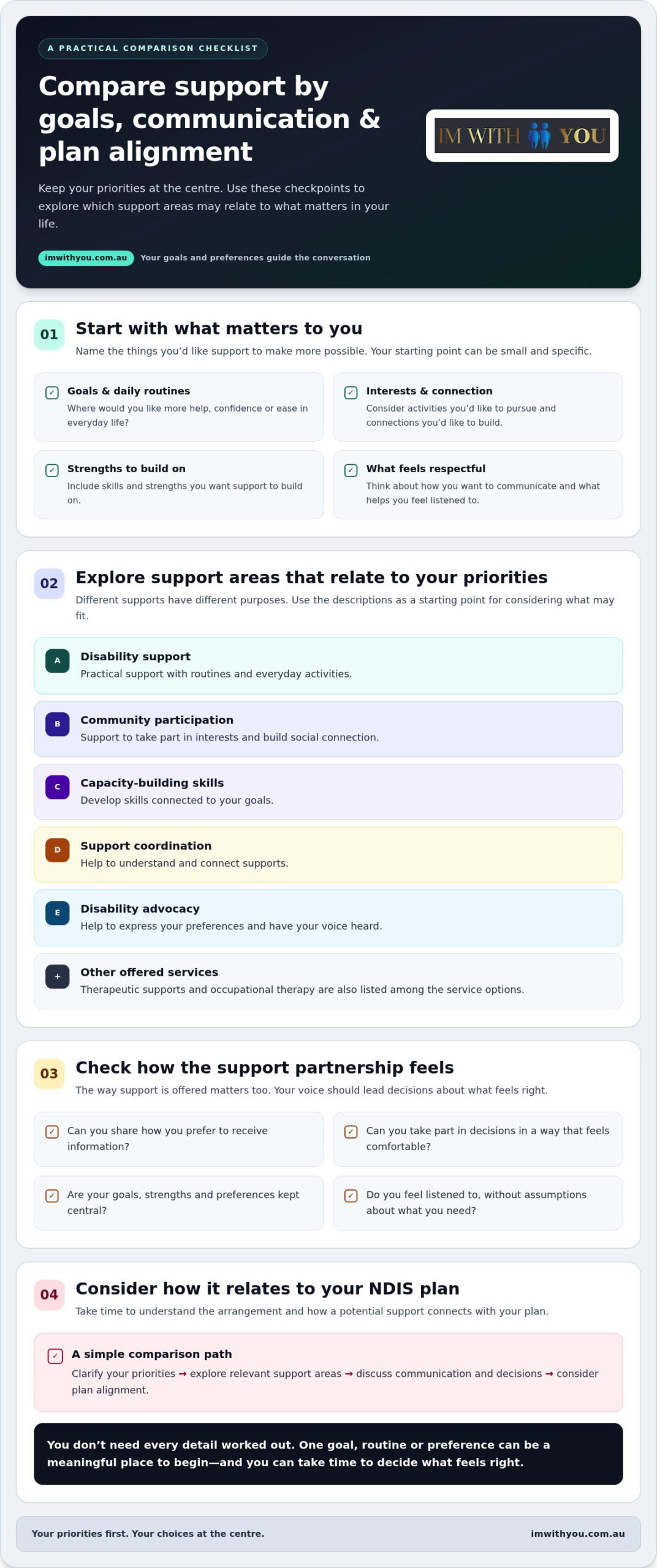
Once you’ve identified what matters, compare support options against your priorities. Clarify your goals, consider which support areas may relate to them, and think about how you prefer to communicate and make decisions. You can also look at how potential supports align with your NDIS plan. The NDIA’s guide to how to find and choose a provider offers further guidance as you explore your options.
Understand which support areas may match your goals
Disability support can relate to practical routines and everyday activities. Community participation can support involvement in interests and social connection, while capacity-building skills focus on developing skills connected to your goals. As you compare options, consider what you’d like to do more easily or be more involved in. Your preferences can guide the conversation.
Other supports have different purposes. Support coordination can help you understand and connect supports, while disability advocacy can help you express your preferences and have your voice heard. Im with you offers these services and works alongside participants to explore how they relate to what matters in their lives.
- Clarify priorities: Identify the goals, activities or connections that matter to you.
- Explore relevant support: Consider which support areas relate to those priorities.
- Discuss communication: Share how you like to receive information and take part in decisions.
- Consider plan alignment: Look at how a support relates to your NDIS plan and take time to understand the arrangement.
Bring these reflections to a conversation with Im with you. You can explore a possible next step together at a pace that feels comfortable.
Take a supported next step with Im with you
You don’t need to have every detail worked out before exploring support. A first conversation can begin with what matters to you now, what feels comfortable and what you’d like to work towards. From there, you can consider options in relation to your goals and NDIS plan, at a pace that feels manageable.
Im with you offers disability support and community participation, as well as support coordination, disability advocacy, therapeutic supports, occupational therapy and capacity-building skills. These options can relate to different parts of life, from taking part in community activities to developing everyday skills or connecting with supports. The focus is on exploring what may fit your priorities while keeping your choices at the centre.
Start a conversation that keeps you in control
You might share a goal you have in mind, a routine where you’d welcome support, or the way you prefer people to communicate with you. You can also talk about what support feels comfortable and what you want to work towards. You decide what to share and what matters most.
At Im with you, we want the conversation to feel clear and collaborative. We’ll listen to your preferences and explore a next step together, without assuming what you need or promising a particular outcome. You can take time to consider your options and decide what feels right for you.
If you’re ready to explore support, talk with Im with you. We’re here to listen and work alongside you as you consider your next step.
Take the next step at your own pace
Support is a better fit when it begins with your goals, routines, strengths and preferences. As you compare options, consider both the support itself and how communication feels, as well as how the service may align with your NDIS plan. You remain central to the decisions.
At Im with you, disability support, community participation, support coordination and disability advocacy can each be part of a conversation about what matters in your life. You don’t need to have every answer ready. Sharing one priority or describing the kind of support that feels comfortable is a meaningful place to begin.
To explore a next step together, let’s talk about the support that matters to you. We’ll listen and work alongside you as you consider what feels right. Your goals can guide the way forward, one step at a time.
Frequently Asked Questions
What does disability support include?
Disability support can help you work towards personal goals and take part in everyday life. Im with you offers disability support, community participation, capacity-building skills and support coordination. The right option depends on your needs, goals and preferences. For example, you might explore support with daily activities, community connection or understanding how to use your supports, without assuming a particular result.
How do I choose disability support that feels right for me?
Start with your goals, routines, strengths and preferences, then consider what kind of support could fit your daily life. Clear communication can help you feel heard and stay involved in decisions. At Im with you, we work alongside you to explore options collaboratively and understand what matters to you.
Can NDIS funding be used for disability support?
Im with you provides services billed against participants’ approved NDIS funding. Whether a particular support relates to your plan depends on your approved funding and individual circumstances. Consider your plan alongside the support you’re exploring, and discuss how the service connects with your goals and needs. Not every support will be funded.
What happens when I first talk with a disability support provider?
An initial conversation is a chance to explain what matters to you and what support you’re looking for. You can share your preferences, goals and what would help the discussion feel comfortable. With Im with you, the conversation is collaborative and guided by what you want to discuss. Together, you can clarify a possible next step without needing to settle every detail straight away.