

How can medication support follow the seven rights without making a person feel their choices have been taken away? It’s understandable to worry about missed doses, mistakes or unclear records, especially when disability support and clinical care can seem hard to distinguish. NDIS medication management support can be part of a respectful routine shaped around the person’s preferences, with clear boundaries around who provides clinical advice.
This guide explains the seven rights in everyday language and shows how they can help create consistent routines while keeping dignity and choice in view. We’ll look at where everyday support can fit, what to communicate and record, and when a medication question or concern needs advice from an appropriate health professional. You don’t have to work it all out alone. We can take it one step at a time.
Key Takeaways
- Use the seven rights as prompts for following agreed medication instructions while respecting a person’s choices.
- Understand how NDIS medication management support can sit alongside everyday disability support without replacing clinical advice or decisions.
- Make routines more consistent with clear communication and relevant records.
- Discuss medication-related support in the context of a participant’s goals, preferences and individual plan.
What does NDIS medication management support mean for everyday routines?
Medication routines involve more than remembering a dose. NDIS medication management support can include agreed assistance with routines, communication and support arrangements, shaped around the participant’s preferences and existing instructions. Before a routine begins, clarify what assistance is expected, which instructions to follow and how to raise a concern. This helps participants and their support team understand their roles.
Disability support is different from clinical care. Support workers don’t prescribe medication, change a dose or make clinical decisions. If instructions are unclear or something seems wrong, pause and seek advice from an appropriate health professional. A seven-rights check can prompt careful attention, but it never replaces the person’s specific instructions.
For a broader introduction to medication support, read our six rights of medication administration guide.
This webinar offers another perspective on medication management in an NDIS context:
What are the seven rights of medication support?
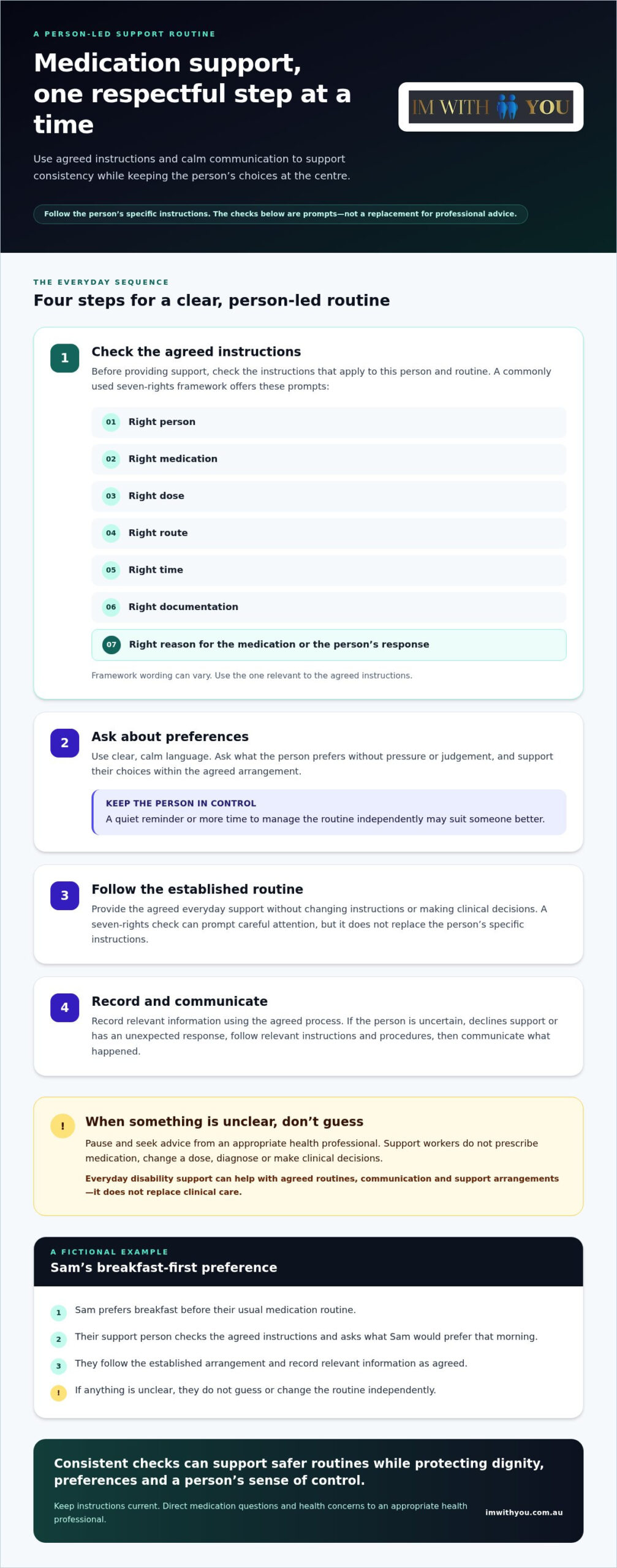
A commonly used framework prompts checks for the right person, medication, dose, route, time and documentation, as well as the reason for the medication or the person’s response. The wording and number of rights can vary between frameworks, so follow the one relevant to the agreed instructions. These checks reflect wider drug safety principles, but they don’t replace professional guidance.
In everyday practice, use the framework as a quiet prompt: follow the agreed routine, respect the participant’s choices and communicate relevant information clearly. It should support consistency without turning a person’s day into a checklist.
How can the seven rights support a safe, person-led medication routine?
A steady routine can make the seven rights easier to apply without making the person feel rushed. With NDIS medication management support, this simple sequence can help keep agreed arrangements clear:
- Check the agreed instructions before providing support.
- Ask about the person’s preferences and support their choices.
- Follow the established routine without making clinical decisions.
- Record and communicate relevant information using the agreed process.
Fictional example: Sam prefers to have breakfast before their usual medication routine. Their support person checks the agreed instructions, asks what Sam would prefer that morning and follows the established arrangement. Afterwards, they record relevant information as agreed. If anything is unclear, they don’t guess or change the routine independently.
The Australian Government Department of Health and Aged Care’s safe, person-led medication routine principles offer broader context for respectful medication practices in the community.
Consistent checks can support safer medication routines while protecting a person’s dignity, preferences and sense of control.
How can support people respect choice and respond to concerns?
Use clear, calm language and ask about preferences without pressure or judgement. If the person is uncertain, declines support or has an unexpected response, follow the relevant instructions and agreed procedures, then communicate what happened. Don’t diagnose, recommend a dose change or make clinical decisions. Direct medication questions and health concerns to an appropriate health professional.
These respectful routines can sit alongside broader disability support services, with the participant’s choices at the centre.
What can NDIS medication management support look like in practice?
In practice, NDIS medication management support can be planned as part of a person’s wider disability support, alongside their goals, preferences and existing medication instructions. The focus is on agreeing how everyday support fits into the person’s life, not taking decisions away from them. A useful discussion can cover what support the person wants, what instructions guide the routine, how information will be recorded and who to speak with if a question arises. Each participant’s circumstances and NDIS plan are different, so don’t assume one arrangement will suit everyone.
For broader medication safety context, the Australian Commission on Safety and Quality in Health Care outlines the National Medication Safety Standard. Its health-service context is distinct from everyday disability support, but it can help explain why clear communication and agreed processes matter.
How can participants and families build a supportive plan?
Start with the person’s voice. Together, note their preferences, routine information and questions to discuss with the support team. For example, someone may prefer a quiet reminder or more time to manage the routine independently. Agreeing on what support looks like and how to communicate a concern can make the approach clearer for everyone. A predictable routine can build confidence while leaving the person in control of their choices.
If medication routines form part of a living-support arrangement, our supported independent living NDIS guide offers related information. Keep medication instructions current and direct clinical questions to an appropriate health professional.
It’s okay to take the next step gradually. If you’re exploring how disability support could fit around a person’s goals and daily routines, explore disability support with Im with you. We’re here to walk alongside you as you consider the options.
Build medication routines with confidence and choice
The seven rights can offer a helpful prompt for checking an agreed medication routine, while the person’s individual instructions remain the guide. Respectful communication, consistent routines and clear records can support safety without taking away choice. When a question involves medication decisions or a health concern, an appropriate health professional is the right person to advise.
NDIS medication management support should fit within broader disability support and the participant’s goals. Im with you provides disability support and community nursing under the NDIS, with support shaped around each person’s circumstances and choices.
If you’re considering what support might look like for you or someone close to you, take the next step at your own pace. Explore how Im with you can support you. You don’t have to work through the options alone. We’re here to walk alongside you.
Frequently Asked Questions
What are the seven rights of medication administration?
The seven rights are commonly described as the right person, medication, dose, route, time, reason and documentation. They offer a practical prompt for checking an agreed routine, not a replacement for individual instructions or advice from a health professional. Some frameworks use different wording or include a response check, so follow the framework relevant to the person’s support arrangements.
Can NDIS support workers help with medication management?
NDIS support workers can assist with medication-related routines when this forms part of agreed support arrangements and is consistent with the person’s instructions. Assistance might include helping maintain a routine or communicate relevant information. Workers don’t prescribe medication, change doses or make clinical decisions. The type of assistance depends on the participant’s circumstances and the arrangements in place.
What should I do if someone refuses their medication?
If someone refuses medication, respond calmly and respectfully. Don’t pressure them or make an independent decision about what happens next. Follow the person’s relevant instructions and agreed procedures, and record or communicate the refusal as required by those arrangements. If you’re concerned or unsure what to do, contact an appropriate health professional for guidance.
Does NDIS funding cover medication management support?
NDIS funding may cover disability-related support with medication routines when it aligns with the participant’s circumstances and plan, but funding isn’t guaranteed. The cost of medication itself is generally separate from support funding and may be covered through arrangements such as the PBS or Medicare. For advice about medication costs, speak with a health professional or relevant government service.