

If you’re exploring NDIS community nursing services, it’s reasonable to want clear answers about what support may involve and whether it suits your needs. The right support should take account of your preferences, circumstances and goals, rather than feel like a one-size-fits-all list of tasks.
This guide explains what to clarify about a provider’s service scope, your NDIS plan and practical arrangements. It also offers questions to help you describe what matters to you and make a more informed decision.
Every person’s situation is different. Use these steps to understand your options and decide what you’d like to ask a provider.
Key Takeaways
- NDIS community nursing services can vary between providers. Ask which specific supports they currently offer and what falls outside their scope.
- Write down the goals you want support to help with, then review the relevant information in your NDIS plan.
- Funding depends on your individual circumstances. Check current NDIS guidance and clarify how your plan may apply before making arrangements.
- Share your communication preferences and questions with a provider so you can assess whether the support feels like a good fit.
What are NDIS community nursing services, and what might they involve?
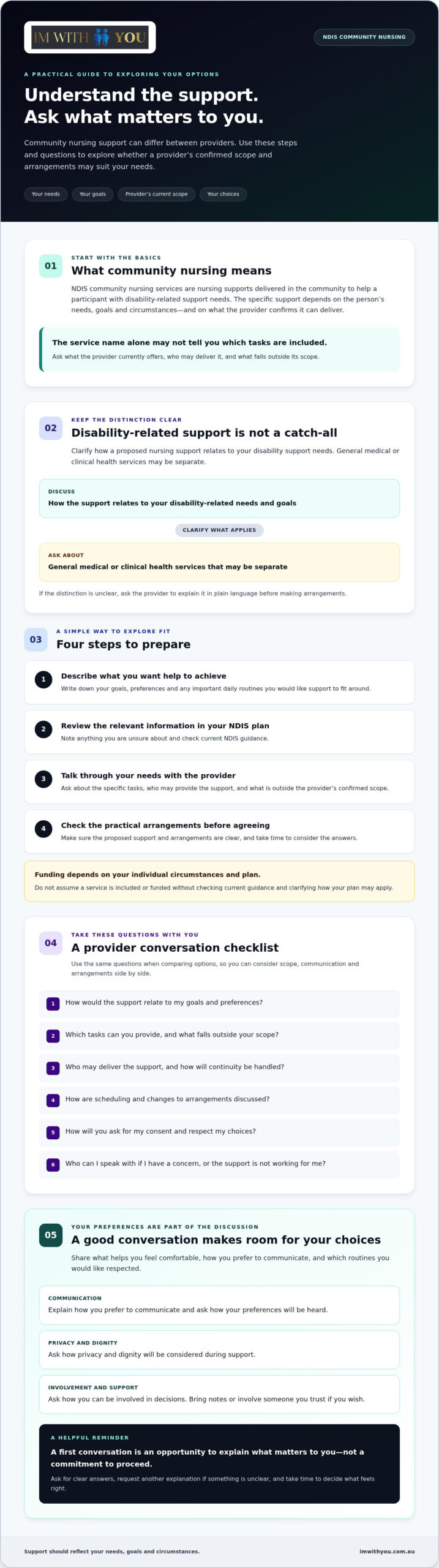
NDIS community nursing services are nursing supports delivered in the community to help a participant with disability-related support needs. The specific support depends on the person’s needs, goals and circumstances, and on what the provider confirms it can deliver. The name of a service alone may not tell you which tasks are included.
These supports sit within the broader National Disability Insurance Scheme (NDIS), but they aren’t a catch-all for every health concern. Clarify how a proposed nursing support relates to your disability support needs, and whether general medical or clinical health services may be separate. If the distinction isn’t clear, ask the provider to explain it in plain language before making arrangements.
For another perspective on NDIS community nursing, you can watch this video:
What should I clarify about the nursing support offered?
Ask the provider to describe the specific tasks it can deliver, who may deliver them and what is outside its service scope. Rather than relying on a broad service description, explain what you’re looking for and ask whether it is currently within the provider’s offering. Im with you lists Community Nursing under the NDIS as an offering; you can discuss whether its current scope matches your needs.
It can also help to explain how you prefer to communicate, what helps you feel comfortable and which routines you’d like respected. Ask how your privacy and dignity will be considered, and how you can be involved in decisions about your support. Community nursing in the NDIS context means support discussed in relation to a participant’s disability-related needs, goals and the provider’s confirmed scope.
How can you check NDIS community nursing fits your needs and plan?
A few practical steps can help you work out whether the support may suit you. First, describe what you want help to achieve, such as support that fits around an important daily routine. Next, review the relevant information in your NDIS plan and write down anything you’re unsure about. Then discuss your needs with the provider and check that the proposed support is within its confirmed scope before agreeing to arrangements.
Funding depends on your individual circumstances and plan. Check current NDIS guidance, and ask the provider what information it needs to discuss whether the proposed support may fit your situation. Don’t assume a service is included or funded without checking. If you’re comparing options, use the same questions for each provider so you can consider their scope, communication approach and arrangements side by side.
Questions to take into a provider conversation
You can bring notes or ask someone you trust to support the conversation. These questions can help you understand what to expect and whether your preferences will be heard:
- How would the support relate to my goals and preferences?
- Which tasks can you provide, and what falls outside your scope?
- Who may deliver the support, and how will continuity be handled?
- How are scheduling and changes to arrangements discussed?
- How will you ask for my consent and respect my choices?
- Who can I speak with if I have a concern, or the support isn’t working for me?
Before agreeing, ask for the tasks, arrangements and any limits to be explained clearly. If something is unclear, ask the provider to explain it another way or to confirm what you’ve discussed. You can take time to consider the answers before deciding. For more ideas on assessing fit and asking questions, read this guide to choosing an NDIS provider.
If you’d like to explore whether Im with you’s Community Nursing under the NDIS may suit your needs, learn about community nursing support and clarify the current scope directly with the provider.
How to explore NDIS community nursing support with a provider
A first conversation is an opportunity to explain what matters to you, not a commitment to proceed. Before reaching out, jot down your goals, how you prefer to communicate and any routines or choices you’d like respected. You may also want to note questions about which tasks the provider can deliver, who may provide the support and what limits apply.
Im with you lists Community Nursing under the NDIS among its offerings. Discuss the specific support you’re looking for with the provider, then check whether its current scope may suit your needs and circumstances. You could begin with a straightforward question: “Can we talk through what I’m looking for and what your community nursing support includes?”
A first conversation can help you decide what feels right
Take your time. Ask for clear answers, consider how comfortable you feel during the conversation and involve a trusted supporter if you wish. You can ask how the provider will listen to your preferences and what the next steps would be. These questions can help you understand your options without assuming that support is available or funded for your situation.
If medication support is relevant to your questions, this guide to medication administration rights may help you prepare. Discuss any medication-related task directly with the provider to confirm whether it falls within its current scope.
If you’d like to explore whether the offering could be a fit, talk with Im with you about Community Nursing under the NDIS. You can explain what you’re hoping for, ask questions and decide on next steps together.
Take the next step at your own pace
Choosing support starts with identifying what you want to achieve and asking clear questions about the provider’s scope, communication and practical arrangements. Check how your NDIS plan may apply to your circumstances before making decisions. A useful conversation should leave you feeling heard and informed, with enough detail to consider whether NDIS community nursing services suit your needs.
Im with you lists Community Nursing under the NDIS as an offering. Ask about the current service scope, the tasks it may include and whether it could align with your goals. Take time to consider the answers and raise any points that remain unclear.
To explore your options, talk with Im with you about community nursing support. Share what you’re looking for, ask about the current scope and discuss the next steps that may suit you.
Frequently Asked Questions
What are NDIS community nursing services?
NDIS community nursing services are supports that may help a participant address nursing-related needs connected with their disability. The specific tasks, who delivers them and how support is arranged can vary. Ask the provider to explain its confirmed scope and whether it matches your needs. Don’t assume every provider offers the same tasks or that this replaces other health services.
Can NDIS funding cover community nursing?
Funding for community nursing depends on your individual circumstances and plan arrangements. Review the relevant information in your NDIS plan, then check current NDIS guidance for details that apply to your situation. You can also discuss the proposed support with a provider and ask what information may help clarify whether the service and your plan arrangements align.
How do I choose an NDIS community nursing provider?
Check the provider’s service scope, how the support may relate to your goals and whether its communication approach suits you. Ask how consent, continuity and practical arrangements will be handled before you agree. Take time to raise any concerns and compare the answers you receive. For more guidance on comparing options and asking questions, read this guide to choosing an NDIS provider.
Is NDIS community nursing the same as medical care?
Don’t assume NDIS community nursing and general medical or clinical health services are interchangeable. Ask the provider to explain exactly which disability-related support it offers and whether your needs may require a different clinical service. Clarifying this early can help you understand who to contact and what support is within the provider’s confirmed scope.