

What if the most transformative support for your child didn’t take place inside a clinic, but right at your kitchen table? If you’re feeling emotionally exhausted by complex daily behaviours and tangled plan rules, I’m with you. It’s completely natural to worry that bringing external support into your living room might disrupt your family life. Thankfully, exploring supportive parent training programs ndis can bring clarity, calm, and genuine reassurance back into your everyday routines.
You deserve to feel capable and supported without second-guessing every decision. You’ll discover how parent and carer coaching builds lasting confidence, which Capacity Building categories fund this support, and how to collaborate with an empathetic provider who truly walks alongside your family. Here is a clear, gentle look at turning everyday moments into meaningful progress.
Key Takeaways
- Learn how parent training programs ndis transform ordinary daily routines into practical opportunities for emotional regulation, communication, and lasting independence.
- Clarify how Capacity Building categories, including Improved Daily Living and Improved Relationships, fund allied health coaching and positive behaviour support.
- Discover how to identify an empathetic provider who respects your home life and walks alongside your family as a dedicated partner.
- Gain gentle, practical guidance on setting manageable milestones that fit naturally into your family’s existing household rhythms.
Understanding Parent Training Programs Under the NDIS Framework
Caring for a child with complex needs often feels isolating, but you don’t have to carry every challenge alone. Within the National Disability Insurance Scheme, parent training is designed as intentional capacity building rather than administrative compliance. Effective parent training programs ndis provide tailored carer coaching that translates therapy goals into comfortable, everyday household rhythms. I’m with you in ensuring support strengthens your natural family dynamic, respecting your household values instead of turning your living room into an overwhelming clinic.
Core Benefits and Evidence-Based Approaches for Everyday Home Life
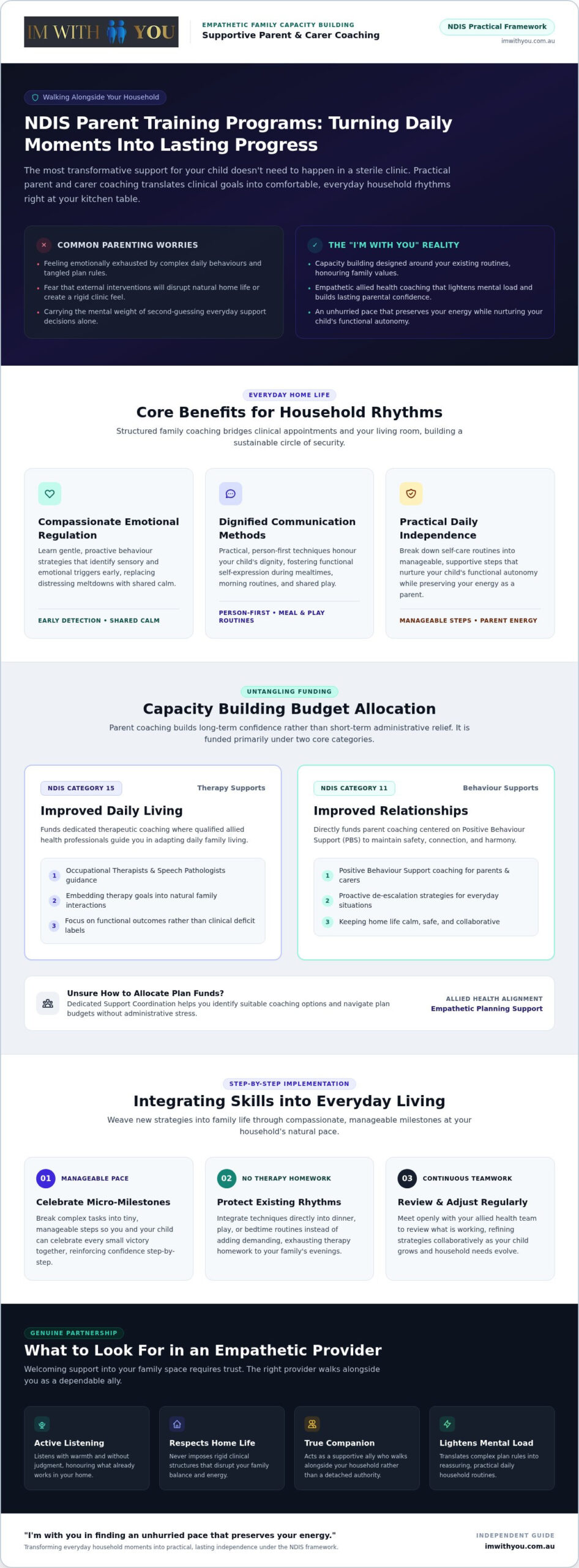
When evidence-based strategies integrate smoothly into family routines, meaningful progress takes root across all life stages. Structured family coaching creates an empowering bridge between clinical allied health appointments and your everyday environment, ensuring steady consistency across your week:
- Compassionate emotional regulation: Learn gentle, proactive behaviour strategies that identify sensory and emotional triggers early, replacing distressing meltdowns with shared calm.
- Dignified communication methods: Practical, person-first techniques honour your child’s dignity, fostering functional self-expression during mealtimes, morning routines, and shared play.
- Practical daily independence: Break down self-care routines into manageable, supportive steps that nurture your child’s functional autonomy while preserving your energy as a parent.
By reinforcing your natural family connections, parent training programs ndis build a reliable circle of security around your child, giving your entire household sustainable confidence. Rather than treating support as an isolated weekly appointment, this collaborative approach embeds progress directly into the moments you already share together.
How NDIS Funding Categories Support Parent and Carer Capacity Building
Untangling your funding shouldn’t feel like a test. Parent coaching is funded primarily under your Capacity Building budget, which builds long-term confidence rather than just short-term relief. Understanding how these budgets operate makes finding effective parent training programs ndis much simpler:
- Improved Daily Living (Category 15): Funds therapeutic coaching where occupational therapists or speech pathologists guide you in adapting everyday routines. This falls directly under NDIS capacity building therapy supports, helping you embed therapy goals into natural family interactions.
- Improved Relationships (Category 11): Directly funds coaching around Positive Behaviour Support, teaching you proactive de-escalation strategies that keep home life calm and safe.
Aligning Plan Goals with Practical Training and Allied Health Supports
Effective training always starts with functional outcomes rather than clinical deficit labels. When supporting a child with an intellectual disability, coaching helps you tailor routines around practical communication and shared connection. Collaborating openly with your allied health team ensures every strategy feels manageable and relevant to your family’s needs.
If you feel unsure how to allocate your plan funds toward parent training programs ndis, dedicated Support Coordination helps you identify suitable coaching options without the administrative stress. When you need a steady advocate to help explore your choices, our team at I’m with you is here to walk alongside your family.
Choosing the Right Provider and Implementing Lasting Strategies Together
Welcoming support into your family space requires genuine trust. The right partner listens without judgment, honouring what already works in your household. When evaluating parent training programs ndis, look for practitioners who lead with empathy, warmth, and active listening. Official NDIS capacity building supports should lighten your mental load, never imposing rigid clinical structures that disrupt your daily balance.
Collaborative Steps to Integrate Practical Skills into Your Family Routine
Discovering how to choose an ndis provider who acts as a true companion transforms coaching into reassuring teamwork. I’m with you in finding an unhurried pace that preserves your energy while building your child’s autonomy. You can weave new skills directly into daily living through practical, compassionate steps:
- Celebrate micro-milestones: Break complex tasks into tiny, manageable steps so you and your child can celebrate every small victory together.
- Protect existing rhythms: Integrate techniques into dinner, play, or bedtime routines instead of adding demanding therapy homework to your evenings.
- Review and adjust regularly: Meet with your team to review how strategies are working, refining your approach as your child grows and needs evolve.
Quality parent training programs ndis should strengthen your natural family support network over time. With a dependable guide walking alongside you, everyday routines become calmer, lighter, and filled with lasting progress.
Moving Forward with Confidence and Shared Support
Empowering yourself with practical strategies doesn’t mean changing who you are as a family. When you tap into supportive parent training programs ndis, you turn challenging everyday moments into shared opportunities for connection, calm, and genuine growth. You deserve to feel confident in your decisions, knowing your child’s independence is nurtured through familiar household rhythms.
You don’t have to carry the load alone. Recognized with a 2026 Excellence Award for quality care, our team provides empathetic, person-centred disability support services and dedicated NDIS Support Coordination tailored to your household. Connect with Im with you to explore how our compassionate team can support your family’s journey, walking alongside you every step of the way.
Frequently Asked Questions
Can NDIS funding be used to pay for parent training programs?
Yes, NDIS funding covers disability-specific parent coaching under Capacity Building budgets, provided the training directly relates to your child’s functional goals. General parenting classes aren’t eligible, but specialized parent training programs ndis that equip carers to support daily living, communication, or emotional regulation are recognized supports. These services help families manage daily routines with greater confidence and practical ease.
What is the difference between parent training and direct child therapy under the NDIS?
Direct therapy focuses primarily on the child developing specific motor, sensory, or communication skills with an allied health clinician. In contrast, parent training guides you as a carer, teaching practical management strategies you can use during ordinary household routines. This collaborative coaching empowers you to reinforce developmental goals naturally throughout the week, bridging clinic appointments and home life together.
Do I need a formal diagnosis or specific plan goal to access parent training?
You don’t necessarily need a formal medical diagnosis if your child accesses early intervention supports before turning nine. However, you do need an overarching plan goal connected to building daily independence, communication, or positive relationships. Framing goals around family routines ensures that parent training programs ndis qualify as a reasonable and necessary investment in your child’s functional development.
How do I request parent capacity building during my NDIS plan review?
You can request parent capacity building by explaining how carer coaching directly impacts your child’s daily progress and stability at home. Share specific daily challenges with your planner, LAC, or Support Coordinator, supported by therapist recommendation letters. Highlighting how building your own skills reduces ongoing crisis interventions clearly demonstrates that the support is both practical and outcome-focused.