
What if the secret to deeper connection with your loved one isn’t found in a clinical manual, but in a five-second video of a shared laugh? It’s exhausting when traditional therapies focus entirely on deficits, often leaving you feeling overwhelmed. I’m with you in wanting something different; a way to move past clinical noise and focus on the heart of your relationship.
You might be asking, what is video interaction guidance and how can it change your daily life? This gentle, strengths-based approach uses short video clips to highlight the positive micro-moments of communication you’re already sharing. It’s about empowering you to see your own success as a partner or carer. We’ll explore how VIG works within the NDIS framework to build capacity and foster genuine attunement, helping you feel more confident and supported every step of the way.
Key Takeaways
- Learn what is video interaction guidance and how this gentle, strengths-based approach focuses on the beautiful moments of connection you’re already creating.
- See how the simple process of filming ten minutes of everyday activity helps you and your practitioner identify patterns that foster deeper relationships.
- Explore how VIG serves as a powerful tool for capacity building, directly supporting your NDIS goals for communication and social participation.
- Find out how shared review sessions empower you with the confidence to lead your own journey and strengthen your bond with your loved one.
What is Video Interaction Guidance? A Strengths-Based Approach to Connection
At its heart, Video Interaction Guidance is a gentle, short-term intervention that uses carefully selected video clips to help people deepen their communication and relationships. A trained practitioner films a brief, ordinary interaction between you and your loved one, then reviews the footage together with you to identify the moments where real connection is already happening. Those moments become your foundation. Not a list of corrections. Not a clinical report. A genuine celebration of what you’re already doing beautifully.
To see this process in action, this short video explains it clearly:
The Philosophy of Connection: Moving Beyond Clinical Labels
VIG aligns naturally with person-first language, because it sees the whole person before any diagnosis or label. Your practitioner isn’t there to evaluate or judge. They walk alongside you as a partner, helping you see your own strengths reflected back through the screen. The focus stays on shared joy: those small, spontaneous moments of laughter, eye contact, or mutual recognition that quietly build trust over time. These aren’t trivial details. They’re the real building blocks of lasting connection and long-term growth.
How the VIG Process Works: Your Journey of Discovery
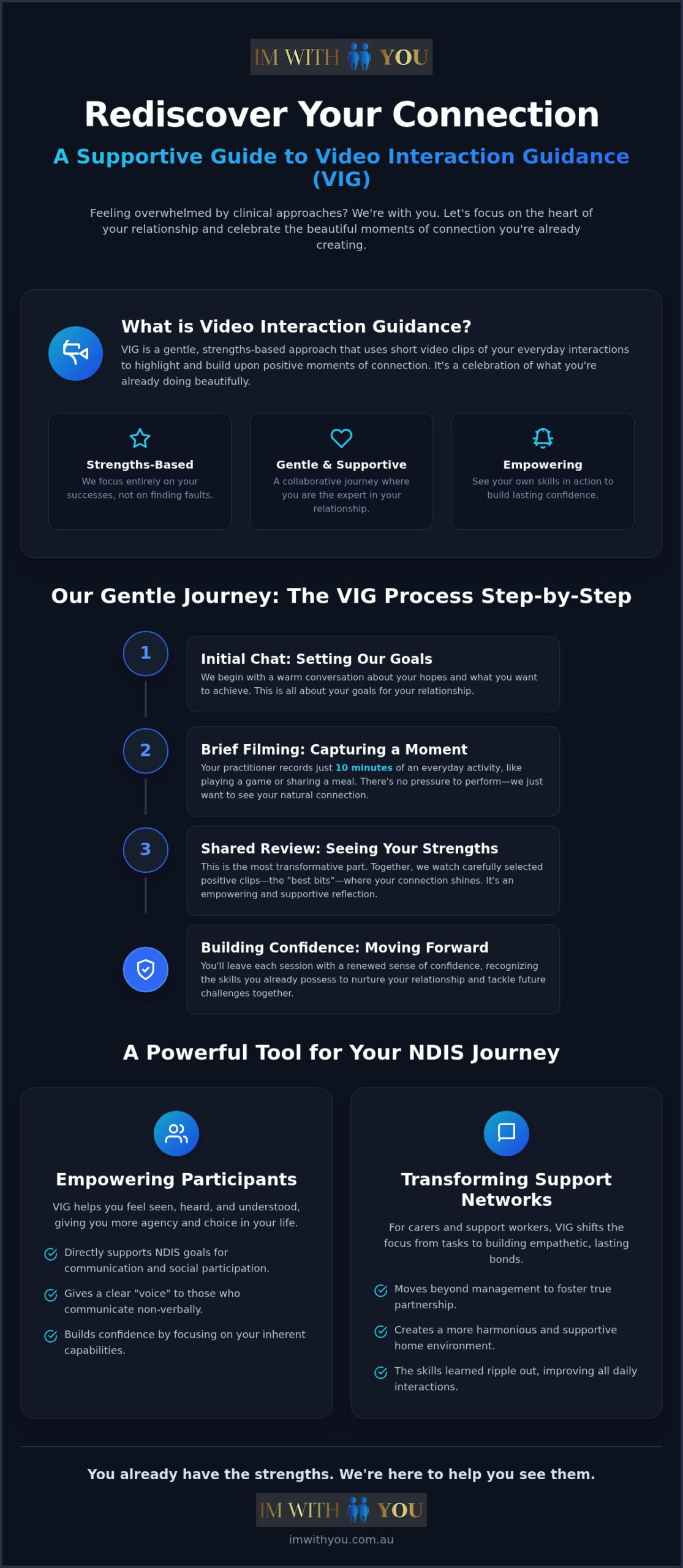
Starting something new can feel daunting, especially when it involves a camera. I want you to know that the VIG process is a gentle, collaborative journey. It moves through a predictable cycle: an initial meeting to discuss your hopes, a brief filming session, and a shared review. During the filming, your practitioner records just 10 minutes of an everyday activity. You might be eating lunch, playing a favorite game, or simply sitting together. There’s no pressure to perform; we just want to capture your natural rhythm.
The most transformative part of understanding what is video interaction guidance is the shared review. Your practitioner acts as a steady companion, selecting only the positive clips where connection is clearly happening. We look for the “best bits” because they show your existing skills in action. Sitting down to watch these moments together creates a safe space to reflect. It’s an empowering experience that focuses on your strengths as a partner or carer, ensuring you feel supported rather than judged.
Identifying Micro-Moments: The Power of Seeing What Works
Micro-moments are those tiny, split-second nods, smiles, or glances that we often miss in the busyness of life. When you see yourself “getting it right” on screen, it builds immediate confidence and significantly reduces stress. This process helps you understand intellectual disability from a place of deep connection rather than administrative management. If you feel ready to discover these moments in your own life, our therapeutic supports are designed to help you thrive.
The Benefits of VIG for NDIS Participants and Support Networks
Discovering what is video interaction guidance often leads to a deeper realization: it’s a powerful tool for achieving NDIS goals. By focusing on successful moments, VIG directly supports social participation and communication. It empowers participants by giving them more agency and choice in their daily lives. When people feel truly seen and heard, they’re more likely to express their preferences and take an active role in their own care.
This approach also transforms support networks. Support workers move away from just managing tasks and toward building empathetic, lasting bonds. This is especially vital in supported independent living settings. When residents and staff communicate better, the entire home environment becomes more harmonious and supportive. It shifts the focus from what’s “wrong” to the strengths of the partnership.
Strengthening Relationships and Building Communication Confidence
VIG acts as a beautiful form of advocacy. By understanding what is video interaction guidance, you gain a practical way to give a clear “voice” to those who may communicate non-verbally by highlighting their subtle cues and intentional gestures. The skills you learn in these sessions don’t stay in the room. They ripple out into every area of life, from quiet moments at home to active community participation. You’ll find yourself feeling more confident in every interaction.
I’m with you in believing that relationships are the foundation of a good life. When you’re searching for the right NDIS provider, finding one that values these deep connections is essential. Choosing a partner who prioritizes attunement ensures your support isn’t just clinical; it’s genuinely human and deeply respectful.
Building Brighter Connections Together
Understanding what is video interaction guidance opens the door to a more joyful, attuned relationship with your loved one. By focusing on your existing strengths and the beautiful micro-moments of connection you already share, VIG empowers you to communicate with confidence. It moves the conversation away from clinical labels and toward a life focused on shared joy and social inclusion. This approach honors the unique dignity of every individual while building practical capacity for the future.
We’re here to walk alongside you as a steady companion. As winners of the 2026 Award for Excellence in care, we specialize in compassionate NDIS advocacy and expert Support Coordination to help you navigate your plan with ease. We’re here to walk alongside you; contact Im with you today to learn more about our supportive services. You’ve got the heart to make this work, and I’m with you every step of the way.
Frequently Asked Questions
Is Video Interaction Guidance a type of therapy?
VIG is a gentle, evidence-based therapeutic support that falls under the umbrella of relationship-based interventions. It’s designed to strengthen bonds rather than fix a clinical problem. Unlike traditional treatments that focus on deficits, this therapy highlights your natural strengths. It helps you build a more attuned relationship through collaborative reflection on your shared successes, making it a deeply empowering experience for everyone involved.
I’m nervous about being filmed; is VIG still right for me?
It’s completely natural to feel a bit camera-shy at first. I’m with you in making sure this feels safe and non-judgmental. Remember, your practitioner only selects the positive best bits where you’re already connecting well. There’s no pressure to perform or be perfect; we’re just looking for those quiet, beautiful moments of shared joy that already exist in your everyday life.
Can VIG be funded through my NDIS plan?
Yes, VIG can typically be funded through your NDIS plan under the Capacity Building, Improved Daily Living category. Since it’s a therapeutic support often provided by allied health professionals like psychologists, it fits well within goals focused on communication and social participation. It’s a proactive way to build your skills and confidence as a support person while improving the participant’s long-term quality of life.
How many sessions of VIG are usually needed to see a difference?
Most families see a meaningful change within three or four cycles of filming and review. Because the process focuses on what is video interaction guidance in practice, seeing your own success on screen, the impact is often immediate. These short-term interventions are designed to give you lasting tools you can use every day, helping you feel more confident in your communication long after the sessions end.