
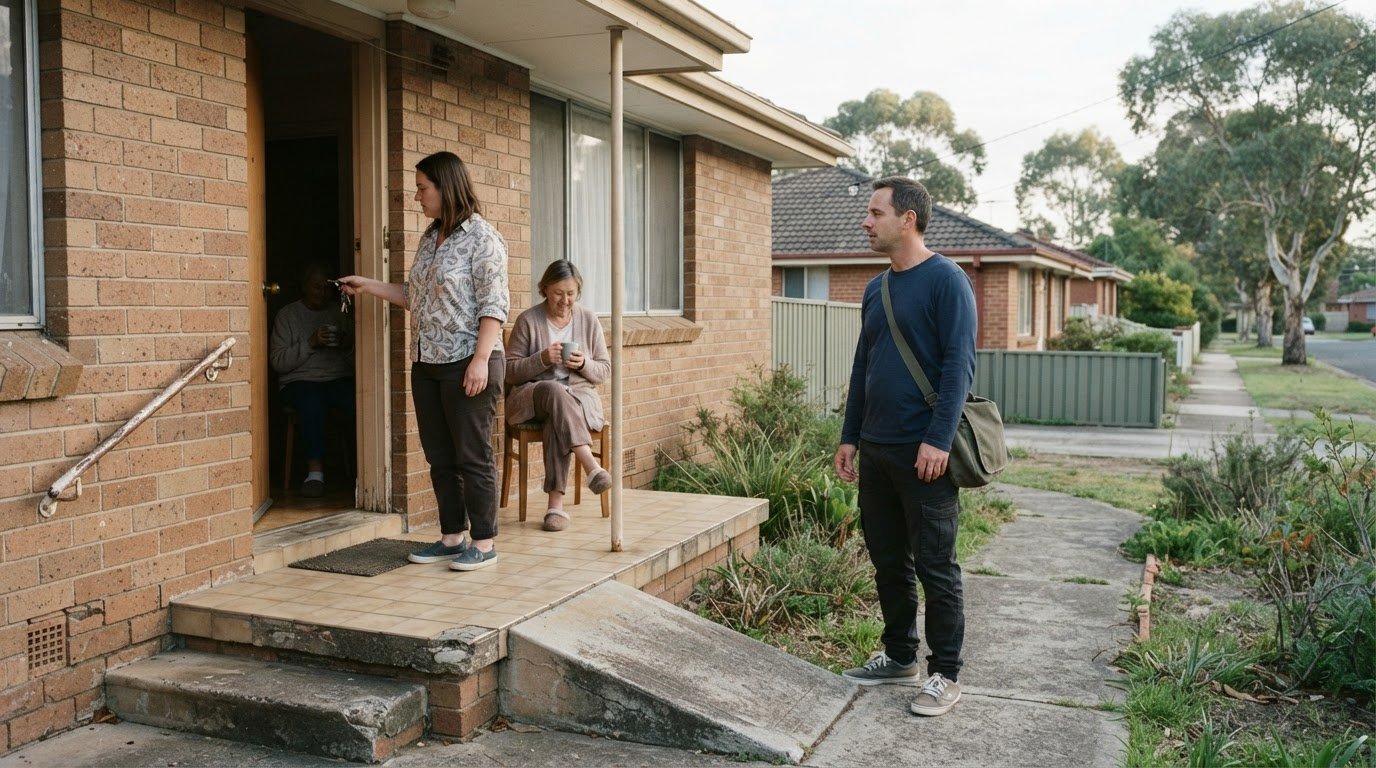
What if asking for help could support both your wellbeing and the person you care for? When caring demands leave little room for rest or everyday routines, it can be hard to admit you’re struggling or know what kind of help to ask for. Exploring carer burnout NDIS support can start with recognising the strain without blaming yourself.
You deserve support, and it’s okay to talk about what feels difficult. NDIS funding is for the participant, so supports need to relate to their needs and agreed routines. Your own wellbeing may call for separate attention. This guide will help you recognise when caring is becoming difficult to sustain, prepare for a practical conversation, and understand where participant-led supports such as personal supports, community access or support coordination may fit. We’ll take it one manageable step at a time, together.
Key Takeaways
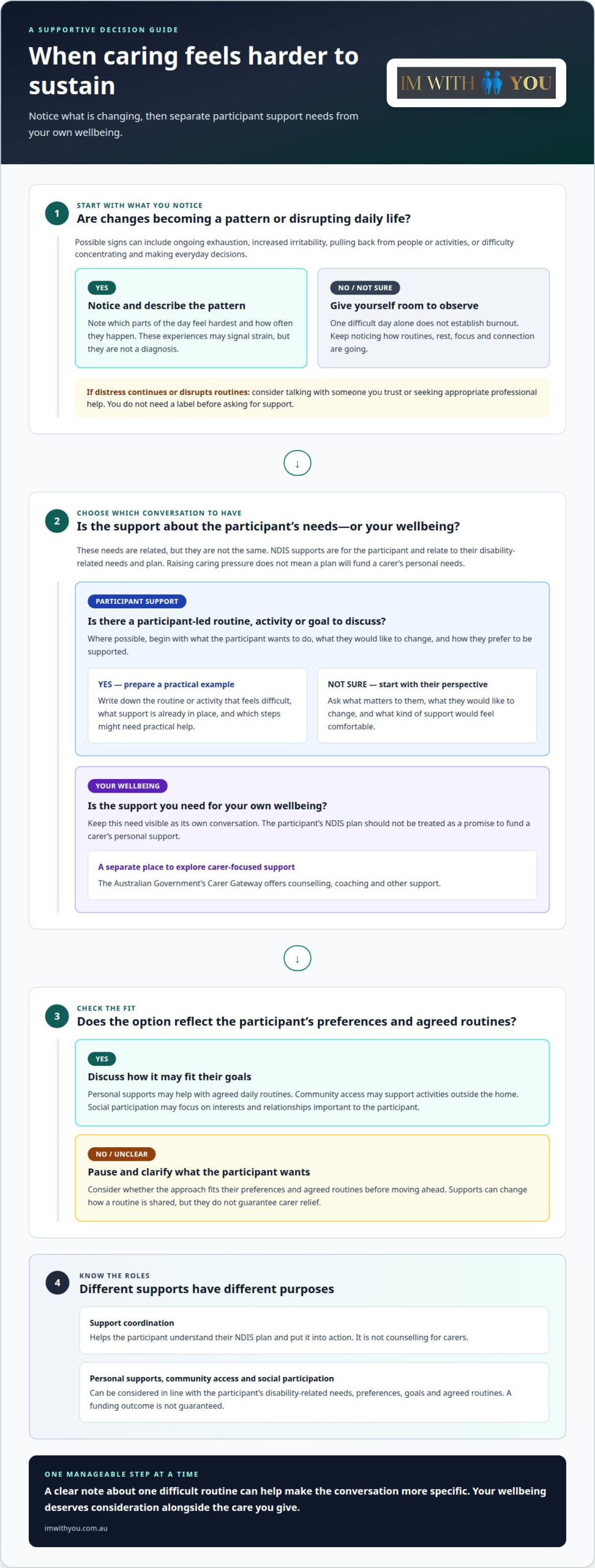
- Notice changes such as ongoing exhaustion, irritability or difficulty concentrating. These may signal that caring is getting harder to sustain, but they are not a diagnosis.
- To explore carer burnout ndis support, note the routines that feel challenging, what help is already in place and what the participant would like to change.
- Personal supports, community access and social participation can be considered in line with the participant’s preferences and agreed routines.
- Support coordination can help the participant understand and put their plan into action. It isn’t counselling for carers.
Carer burnout and NDIS support: recognise when the load is becoming too much
Caring for someone can be meaningful and demanding at the same time. You may feel close to the person you support and still find that caring takes more energy than you can regularly recover. You don’t have to wait until there’s a crisis to acknowledge that the load feels heavy.
Possible signs include ongoing exhaustion, being more irritable than usual, pulling back from people or activities, and finding it harder to concentrate or make everyday decisions. These experiences can have different causes, so they don’t diagnose burnout on their own. Background on caregiver burden and burnout also describes the physical and emotional strain that can build when support demands continue.
Noticing strain can be a reason to seek support, not a personal failure. Naming what has changed for you can be a useful first step. Try noting which parts of the day feel hardest and how often they come up. This can make it easier to explain what’s happening without needing to have all the answers.
What can carer burnout feel like day to day?
Sometimes the signs appear in ordinary routines. You might struggle to keep up with meals or appointments, have less time to connect with friends and family, or find that your mind stays on caring tasks when you’re trying to rest. You may also notice that patience or focus feels harder to draw on.
Signs vary from person to person, and one difficult day alone doesn’t establish burnout. Look for patterns and how they affect your daily life. If distress continues or disrupts your routines, consider talking with someone you trust or seeking appropriate professional help. You don’t need to decide on a label before asking for a conversation or support.
How to explore NDIS support for carer burnout without assuming what funding covers
It can help to separate two related conversations: what the participant needs to pursue their goals, and what you need for your own wellbeing. NDIS supports relate to the participant’s disability-related needs and plan. Raising concerns about caring pressure can inform a discussion, but it doesn’t mean the participant’s plan will fund a carer’s personal needs.
Discussing participant supports is not a promise that the NDIS will fund a carer’s personal needs. Keeping this distinction clear can help you ask questions without placing the whole weight of your wellbeing on the participant’s plan. For carer-focused support, the Australian Government’s Carer Gateway offers a separate place to explore counselling, coaching and other support.
What should you prepare before discussing support options?
Start with the participant’s perspective. Where possible, invite them to share what matters to them and what they’d like to change. Make a short note of the routine or activity that feels difficult, what support is already in place, and what practical help might make participation easier. For example, if a morning routine, appointment or community activity is hard to organise, describe the specific steps where support could help the participant work towards their goals.
These notes can make a conversation with the participant’s support coordinator or planning contact more specific. They can also help you consider whether a provider’s approach fits the participant’s preferences. Im with you provides guidance to help you reflect on what a good fit means.
Thinking through carer burnout ndis support doesn’t mean you have to solve everything at once. If participant-led disability supports are part of the conversation, you can explore personalised support options with Im with you at a pace that feels manageable.
How person-centred disability supports can make everyday care more manageable
Practical support starts with what the participant wants to do and how they prefer to be supported. Personal supports can help with agreed daily routines, while community access can support participation in activities outside the home. Social participation can focus on interests and relationships that matter to the participant. These supports may change how a routine is shared, but they don’t guarantee carer relief.
Support coordination has a different role. It helps the participant understand their NDIS plan and put it into action. It isn’t counselling for carers, and participant supports shouldn’t replace attention to your own wellbeing. Carers Australia offers information about NDIS supports for carers and families, including how informal caring and participant supports relate.
I’m With You provides person-centred supports in person and through telehealth. Exploring disability support options with Im with you can help you consider what may suit the participant’s preferences and goals, without assuming a particular funding outcome.
Choosing a manageable next step together
Keep the first step small: talk with the participant about the routine that feels hardest and what they’d like to change. Ask what support would feel comfortable and which interests they’d like to pursue. If you’re discussing social participation, “What Are Leisure Activities?” can help you explore participant-chosen ways to spend time.
Then consider one practical option together, such as support with an agreed routine or an activity the participant enjoys. I’m With You received the 2026 Australian Enterprise Award for Excellence in Disability Support and Advocacy. A thoughtful, participant-led next step can keep choice and dignity at the centre as you explore what feels manageable.
Take the next step at a pace that feels right
You don’t need a perfect plan before you begin. One honest conversation can create space to consider what might make the coming days more manageable for the participant and for you. Take things in stages, pause when you need to, and revisit decisions as circumstances change. Your wellbeing deserves consideration alongside the care you give.
Exploring carer burnout ndis support doesn’t mean expecting one service or plan to meet every need. It can help you find a starting point and decide what feels possible now. If you’d like to explore participant-led support options with a team that walks alongside you, explore personalised disability supports with Im with you.
There’s no need to have every answer today. A manageable next step is still meaningful, and you don’t have to take it alone. Get in touch with I’m With You to explore personalised disability support options.
Frequently Asked Questions
Is carer burnout a medical diagnosis?
Carer burnout is a phrase for a pattern of strain, not a diagnosis by itself. People experience caring pressures differently, and feeling tired or stressed doesn’t automatically mean you have burnout. If symptoms continue, feel difficult to manage or affect everyday life, consider speaking with an appropriate health professional. You deserve support without needing to label your experience first.
Can a carer receive NDIS support in their own right?
NDIS access depends on the individual applicant’s circumstances and current eligibility requirements, not simply on being a carer. If you’re exploring carer burnout NDIS support, check current official NDIA information for guidance about your own situation. Caring responsibilities alone don’t establish eligibility, and no funding outcome can be assumed. It’s okay to seek clear information before deciding what steps to take.
How can I talk with the person I support about feeling overwhelmed?
Choose a calm moment and explain what you’re finding difficult with a specific example, such as a routine that has become hard to manage. You might say, “I’d like us to look at what could make this easier.” Then give the person space to share their preferences. If it would help, invite their support coordinator to discuss the participant’s plan and possible next steps together.