
Independence isn’t about doing everything alone. Fostering independence in adults with disabilities means building the skills and confidence to make personal choices, manage daily routines and take part in community life with support that suits the person. The right support depends on their strengths, goals and circumstances.
It’s understandable to want support that encourages growth without taking over. Small, practical steps, from choosing what to wear to building social connections, can help a person have more say in how each day unfolds.
This article explains what independent living skills can include and how supportive routines, community participation and social connections can foster independence. It also explores why support works best when it adapts to the person, making room for choice, practice and help when needed.
Key Takeaways
- Independent living skills can include personal care, household tasks, decision-making and routines, shaped around each person’s strengths and goals.
- A trusted network of family, friends and other supports can offer guidance while respecting the person’s choices.
- Community activities, social groups and volunteering can create opportunities to build connection, confidence and communication skills.
- Daily living skills grow through personalised support, practice and routines that adapt as a person’s confidence develops.
1. What are Independent Living Skills?
Independent living skills help adults manage everyday tasks, express preferences and take part in meaningful activities. They can include personal care, cooking, shopping, household routines, communication and decision-making. Learning goals should reflect each person’s abilities, interests and support needs. One person might work on choosing clothes, while another practises preparing a meal.
A trusted support network can bring family, friends, neighbours and support workers together around the person’s goals. Each person can contribute differently: a friend might encourage participation in a hobby, while a support worker helps practise a daily routine. Discussing difficulties together can help the network adjust support without taking choices away. The person should help decide who they trust and what support feels useful.
There isn’t one fixed cost for independent living supports under the NDIS price guide. Costs depend on the type and amount of support, including assistance with daily activities. A support coordinator can help a person understand their NDIS plan, connect goals with planning and coordinate services. Funding depends on the person’s plan and the supports included in it. Supported independent living, individualised living options and assistance with daily activities are different support arrangements.
Professional support workers can promote autonomy by explaining choices, asking what the person prefers and providing only the assistance needed for a task. For example, they might help someone plan a shopping trip while leaving decisions to them. Challenges may include completing a task or responding to a hazard. Support should be tailored to the person’s abilities, the environment and the task, with practical safeguards where needed.
In Australia, the NDIS is a national pathway for accessing disability supports. State and territory programs may also contribute to community support, with relevant options depending on location and individual needs. A coordinated network can connect formal services with family, friends and opportunities to participate in the community.
2. Community participation and social connections
Community participation gives adults opportunities to use social and communication skills in real settings. An art group, library activity or music program can turn a personal interest into a regular connection. Support workers can help with introductions, planning and communication, then adapt their involvement as confidence grows. The aim is meaningful participation, not attendance for its own sake.
Public transport can connect someone with friends, groups, volunteering and employment. A support worker might help plan a bus journey, practise identifying the stop and discuss what to do if plans change. Practising a route to a familiar place, such as a community centre, can make travel skills useful on future trips too.
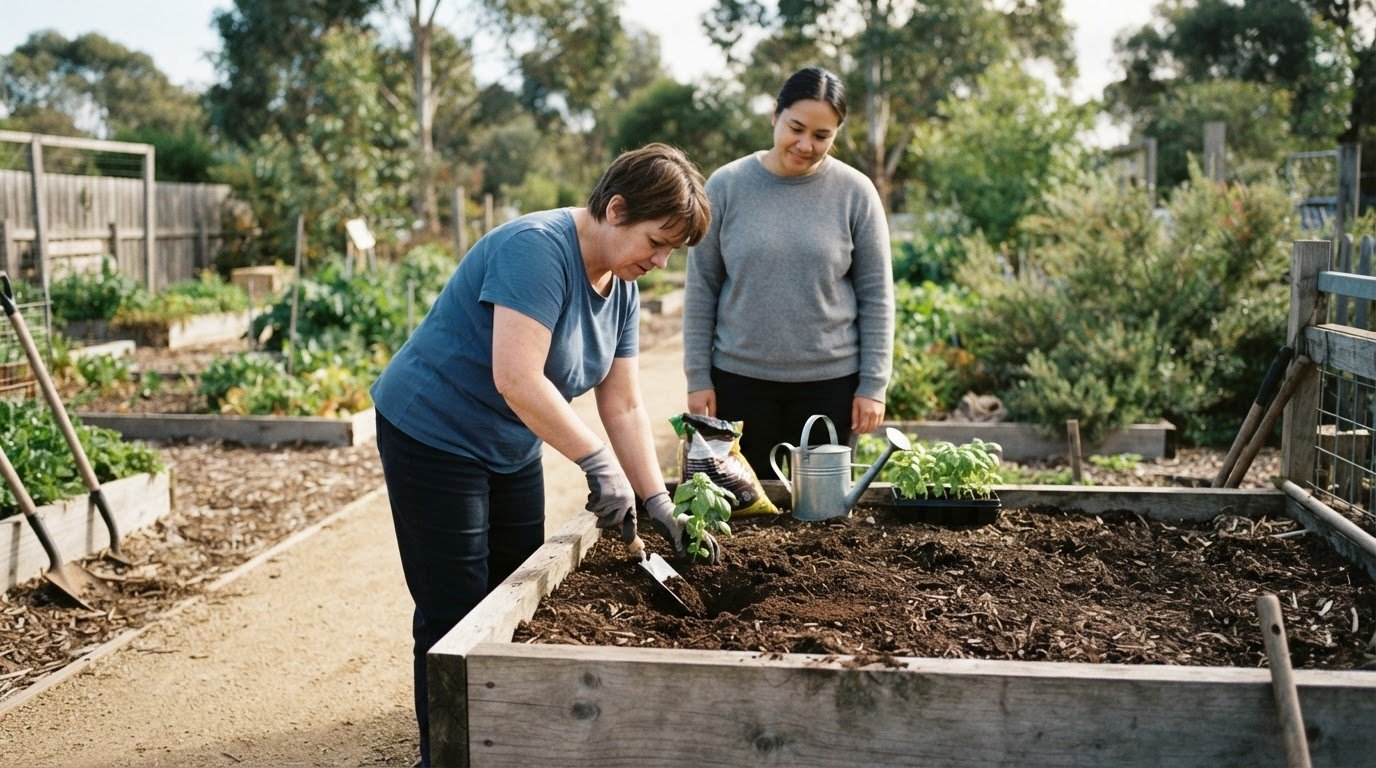
Volunteering is another way to contribute and build skills. At a community garden, for example, a person can explore tasks, meet other volunteers and practise working with a team. Starting with an activity that matches their interests can support social connections and open up possibilities for future learning or employment.
Residential communities and group homes can offer shared routines and opportunities to connect with housemates. A transition plan should consider the person’s preferences, privacy, support needs and access to activities outside the home. A provider can help an adult explore living options, identify important relationships, plan routines and visit potential settings before a move.
For a move into independent living in Australia, a provider can work with the person to map their goals, daily support needs, transport and community connections. They can coordinate the transition with the person’s chosen support network and help practise new routines in the places they’ll use.
For support to take part in local activities and build social connections, explore Community Participation Support.
3. Daily living skills
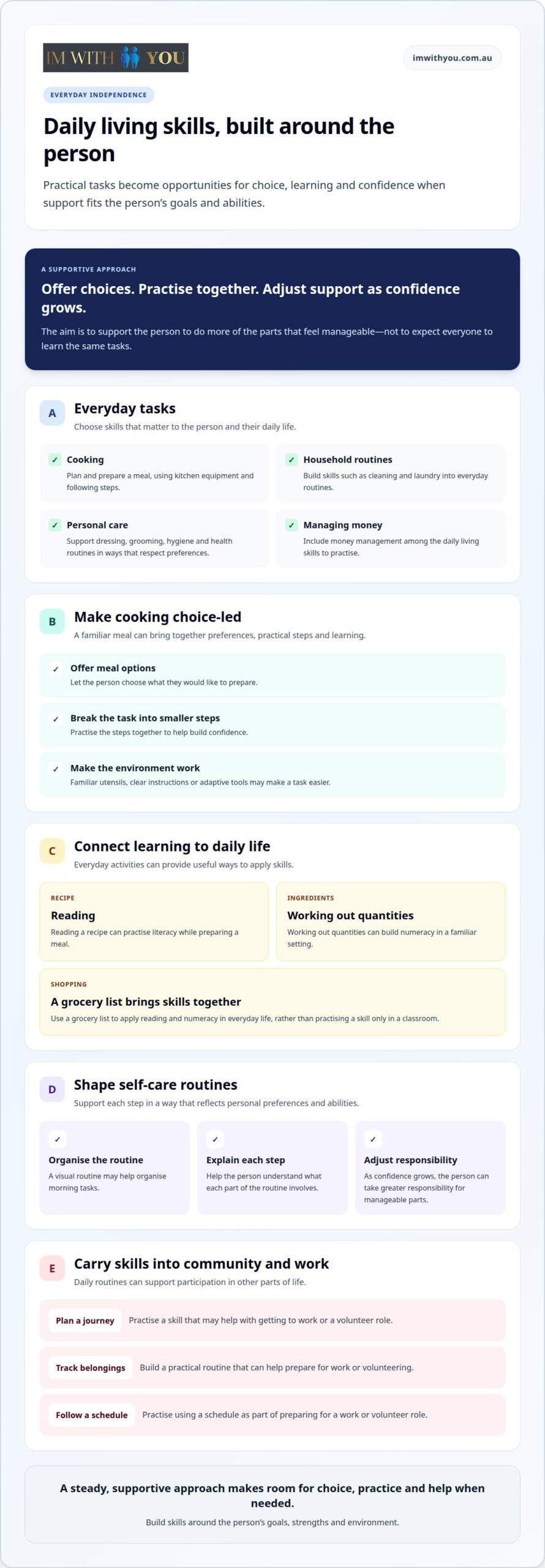
Daily living skills can include cooking, cleaning, laundry, personal care and managing money. Preparing a simple meal, for instance, involves planning, following steps and using kitchen equipment. Fostering independence in adults with disabilities means building skills around each person’s goals, rather than expecting everyone to learn the same tasks.
Choice is part of learning. A support worker can offer meal options, let the person choose and then support them to prepare their selection. Breaking cooking into smaller steps and practising them can help build confidence. The environment matters too: familiar utensils, clear instructions or adaptive tools may make a task easier.
Functional learning connects everyday skills with academic learning. Reading a recipe can practise literacy, while working out quantities can build numeracy. A grocery list brings both skills into a familiar setting. Support can focus on applying learning in daily life, rather than practising a skill only in a classroom.
Self-care can involve dressing, grooming, hygiene and health routines. Support should reflect personal preferences and abilities while helping the person understand each step. A visual routine, for example, may help organise morning tasks. As confidence grows, the person can take greater responsibility for the parts of the routine that feel manageable.
Daily skills can also connect with employment. Planning a journey, keeping track of belongings and following a schedule may help someone prepare for work or a volunteer role. Build practical daily living skills with support tailored to personal goals and the environment.
Im with you
Im with you supports adults with disabilities to work towards greater independence through practical, person-centred support. When daily tasks, community access or NDIS supports feel difficult to manage, we can work alongside the person to understand their goals and support needs.
Disability Support Services can help build everyday skills, while Community Participation Support can assist with joining activities and developing social connections. NDIS Support Coordination can bring services together around a person’s goals, and Disability Advocacy Services can support people to express their needs and preferences.
The right next step depends on what the person wants to achieve, whether that’s more confidence with daily routines, meaningful community participation or clearer coordination of supports. We work with the person and their chosen network, respecting their choices throughout.
Contact Im with you to talk about support for building independence.
Choose a next step that feels right
Independence can grow as a person’s goals and priorities change. The next step doesn’t need to be a big leap. It might be identifying a meaningful goal, discussing what support could help and deciding how the person wants others involved. This keeps fostering independence in adults with disabilities centred on personal choice, rather than a fixed idea of what independence should look like.
I’m With You can work alongside the person and their chosen network to shape support around the direction they want to take. A conversation can help clarify what matters now and what assistance could help them pursue that goal. The person remains at the centre of decisions, with room to adjust the approach as their needs and aspirations develop.
Contact Im with you to discuss a supportive next step. Progress can begin with a conversation, and every person deserves the space to move forward in a way that feels right for them.
Frequently Asked Questions
What are Independent Living Skills?
Independent living skills are practical abilities that help a person manage everyday life and make choices. They can include organising appointments, keeping track of personal belongings, communicating support needs and following a preferred routine. The skills each person wants to build will differ. One adult may focus on planning appointments, while another practises asking for help when needed.
What does fostering independence mean for adults with disabilities in Australia?
Fostering independence in adults with disabilities means supporting each person to direct their life, make choices and pursue personal goals, with assistance that matches their needs. It doesn’t mean doing every task alone. A person might choose their weekly activities and decide what support would help them participate, then revisit that arrangement as their priorities change.
What Australian disability support services help adults build independent living skills?
Australian adults can access disability supports suited to their goals and funding arrangements. Im with you offers Disability Support Services for personalised everyday assistance, Community Participation Support to help people engage in activities, and NDIS Support Coordination to help connect supports with a person’s plan. The appropriate service depends on the person’s goals and circumstances.