

Your home should be the one place where you never feel like a number in a government system. It’s natural to feel anxious about funding complexities or worry that pursuing independence might compromise your safety. We understand these feelings because we’ve walked this path with many others. Finding the right supported independent living ndis partner is about more than just a house; it’s about creating a safe environment where you’re truly seen.
I’m with you as you explore how these supports empower you to live on your terms with the compassionate care you deserve. As winners of the 2026 Excellence in Care award, we’ve designed this guide to simplify the latest standards. You’ll discover how we focus on building your daily living skills while providing the steady companionship of a partner who understands your goals. Let’s look at how you can transition into a space that fosters dignity and joy.
Key Takeaways
- Understand how supported independent living ndis provides the gentle assistance you need for daily tasks while respecting your autonomy.
- Learn practical ways to manage your move with a collaborative approach that turns a complex transition into a steady, supported journey.
- Identify the essential qualities of a support partner who advocates for your rights and ensures your preferences are always the priority.
- Explore how person-centered care helps you build capacity for a more independent future in a safe and joyful home environment.
What is Supported Independent Living (SIL) in the NDIS?
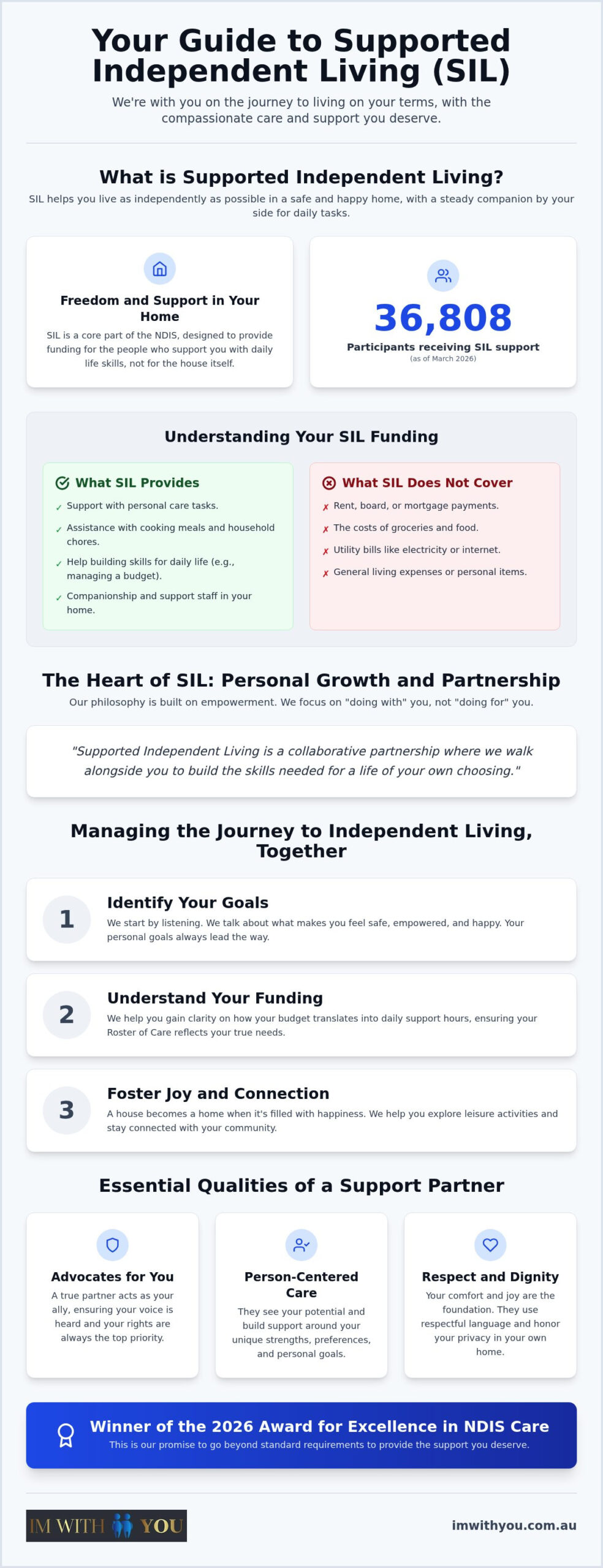
At its heart, supported independent living ndis is a way to help you live as independently as possible while ensuring you have a steady companion by your side. It’s about having the freedom to choose your own path in a home that feels safe and happy. This support is a core part of the National Disability Insurance Scheme (NDIS), which currently supports 36,808 participants receiving SIL as of March 2026.
We often find that people worry SIL covers their rent or board, but it’s actually focused on the human support element. This funding pays for staff who assist you with tasks like cooking, cleaning, and personal care. As of July 1, 2026, these supports are claimed under the new code 0138. It’s a proactive strategy to build your capacity so you can manage more of your life autonomously. We’re here to help you navigate these details.
To better understand this concept, watch this helpful video:
The Heart of SIL: Personal Growth and Daily Support
Our approach centers on your unique strengths and personal goals. We believe in the power of “doing with” rather than “doing for,” which is a core principle of our disability support services. This distinction is vital because it empowers you to grow and take control of your environment. You can learn more about this philosophy in A Gentle Guide to Supported Independent Living (SIL) in the NDIS. When you select a partner for supported independent living ndis, you’re choosing someone to walk beside you. By focusing on what you can achieve, we ensure your support plan feels like a natural, helpful part of your day.
‘Supported Independent Living is a collaborative partnership where we walk alongside you to build the skills needed for a life of your own choosing.’
Managing the Journey to Independent Living Together
The transition to a new home is a significant milestone. It’s completely normal to feel a mix of excitement and worry. I’m with you during this change, ensuring the management of your supported independent living ndis journey feels like a partnership rather than a bureaucratic process. We focus on creating a collaborative space where your privacy and dignity are the foundation of every decision.
One essential part of this journey is the Roster of Care (RoC). Think of the RoC as a thoughtful map of your week. It outlines when and how your supports arrive to help with your daily rhythm. We help you manage this effectively, ensuring it reflects your actual needs as part of your broader home and living supports.
Practical Steps for a Smooth Transition
Preparing for a move involves more than just packing boxes. It’s about setting up a life that feels right for you. Here are three proactive steps we take together:
- Step 1: Identifying your goals. We start by talking about what makes you feel safe and empowered. Whether it’s learning to cook or navigating the neighborhood, your goals lead the way.
- Step 2: Understanding your funding. It’s important to know how your budget translates into daily support hours. If you’re feeling overwhelmed, learning how to choose an NDIS provider can give you much-needed clarity.
- Step 3: Fostering joy. A house becomes a home when it’s filled with connection. We explore what are leisure activities that bring you happiness, helping you stay active in your community.
If you’re ready to start planning your future, our disability advocacy services can help ensure your voice is heard every step of the way.
Choosing a Support Partner for Your SIL Journey
Choosing who walks beside you in your home is a deeply personal decision. The relationship you build with your provider is the most important part of your experience. It’s the foundation of your daily comfort and joy. When you search for supported independent living ndis, you’re looking for more than just a staff roster. You’re seeking a partner who sees your potential. We use Person-First Language because we believe respect and dignity should lead every conversation.
Advocacy plays a vital role in ensuring your preferences stay at the forefront. While the official NDIS guide to Supported Independent Living explains the rules, we focus on your rights. We act as your ally, making sure the system works for you rather than the other way around. This person-centered approach ensures that your home remains a place where you feel in control.
Why Quality Care and Advocacy Matter
Im with you is recognized as a premium partner, having received the 2026 Award for Excellence in NDIS Care. This isn’t just a trophy; it’s a promise that we go beyond standard requirements to provide the support you deserve. We act as a steady companion who listens first and leads second. This philosophy means your voice is the most powerful one in the room. With our national reach, we bring this high standard of disability advocacy services to every corner of Australia. We’re committed to your social inclusion and personal growth, walking alongside you as you build a life of your own choosing.
Embracing Your Future with Confidence
Your journey toward a more autonomous life is a path we’re honored to walk alongside you. We’ve explored how supported independent living ndis provides the essential human support you need to thrive in a home of your own. By understanding your funding and focusing on your unique strengths, you can turn the complexity of the system into a clear plan for personal growth. I’m with you as you make these important decisions for your future.
Choosing a partner who values advocacy ensures your voice is always heard. As a national provider and recipient of the 2026 Award for Excellence in NDIS Care, we specialize in disability advocacy and support coordination designed for your success. We’re here to walk this path with you; get in touch with our team today. You deserve a home filled with joy, safety, and the steady companionship of a team that truly cares.
Frequently Asked Questions
What does Supported Independent Living (SIL) cover in my NDIS plan?
SIL funding covers the cost of support workers who help you with daily life. This includes assistance with personal hygiene, meal preparation, and overnight care. It’s designed to build your capacity for independence. As of 2026, these rates reflect the Fair Work Commission’s latest reviews. It doesn’t cover rent, groceries, or utilities, as these are considered everyday living expenses you’d pay for anyway.
Is SIL the same as Specialist Disability Accommodation (SDA)?
No, SIL and SDA are distinct supports. SIL provides the person-to-person assistance you need to live safely, while SDA refers to the actual physical house or building. Think of SIL as the “who” and SDA as the “where.” You can receive supported independent living ndis in a standard home, whereas SDA is for those with very high support needs requiring specialized building features.
How do I know if I am eligible for SIL funding?
You’re typically eligible if you have high support needs and require person-to-person help at home. The NDIS assesses whether SIL is “reasonable and necessary” for your goals. We can walk beside you during this assessment, helping you gather the right evidence. It’s about showing that constant support is the best way to help you live a safe, autonomous life in your own community.
Can I choose who I live with in a SIL arrangement?
You absolutely have the right to choose your living situation. The 2026 NDIS Practice Standards place a heavy emphasis on your choice and control. Whether you want to live alone or with friends, we work together to find the right fit. I’m with you to ensure your home environment is a place of joy where you feel comfortable and respected by everyone around you.
What happens if my support needs change over time?
Life changes, and your supported independent living ndis can change with you. If your needs increase or decrease, we help you request a plan review with the NDIS. Our role as your steady companion is to stay proactive. We’ll monitor your progress and adjust your Roster of Care to ensure you always have the right level of support to feel safe.