
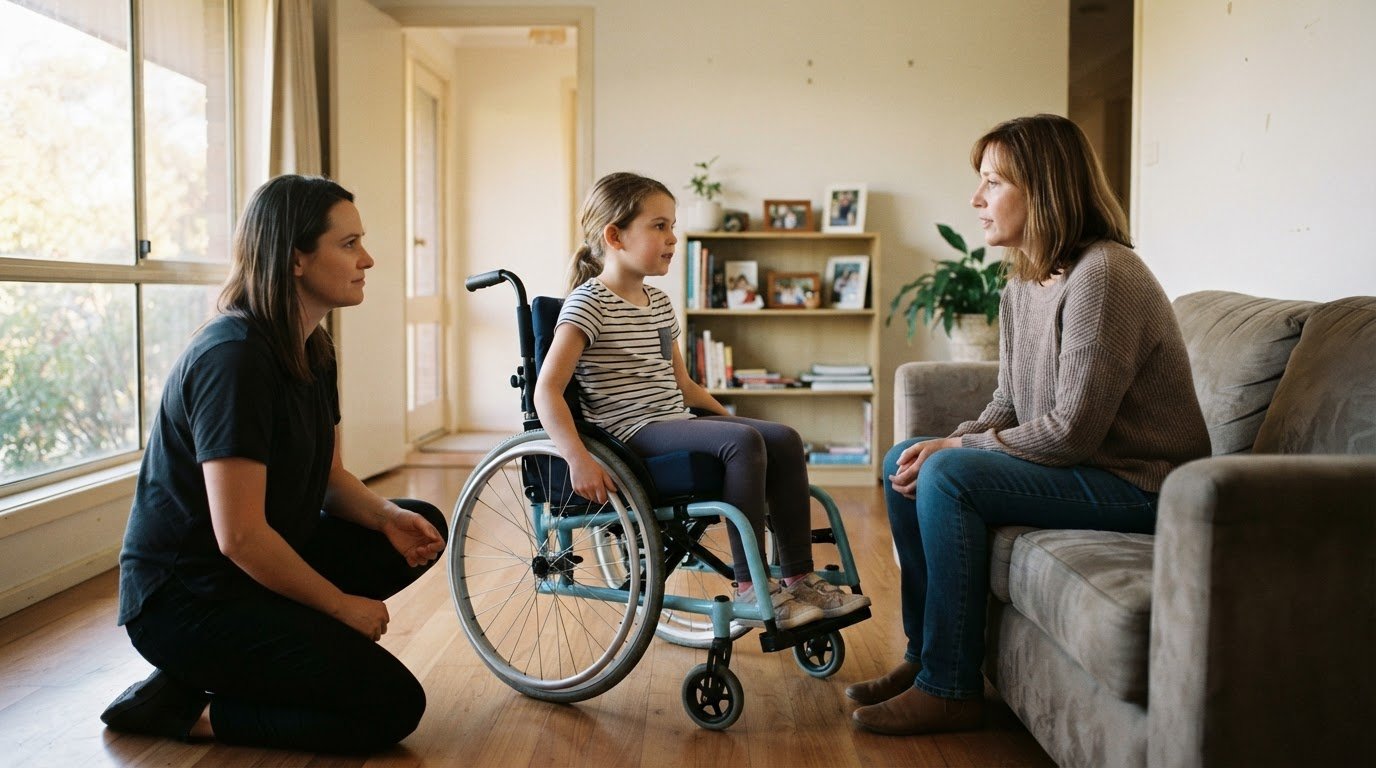
A child’s question about disability doesn’t have to become an awkward moment. Respond calmly and honestly, using clear, neutral words, then gently guide them towards respectful behaviour.
It’s understandable to worry about saying the wrong thing or sharing too much. You don’t need perfect words to begin. A simple explanation can help your child understand that differences are part of life, without suggesting that disability is shameful or something to pity.
Learning how to talk to your child about their disability is an ongoing conversation shaped by their age, questions and readiness. Explain differences in an age-appropriate way, answer questions, and keep talking as your child grows.
Key Takeaways
- Meet questions about disability calmly, and answer honestly in words your child can understand.
- Describe differences in clear, neutral language that respects each person’s dignity and privacy.
- Let your child’s questions and understanding guide an ongoing conversation that grows with them.
- Make space for your child to share their feelings and have a say in what they tell others.
1. How to Explain Your Child’s Disability and Support Them
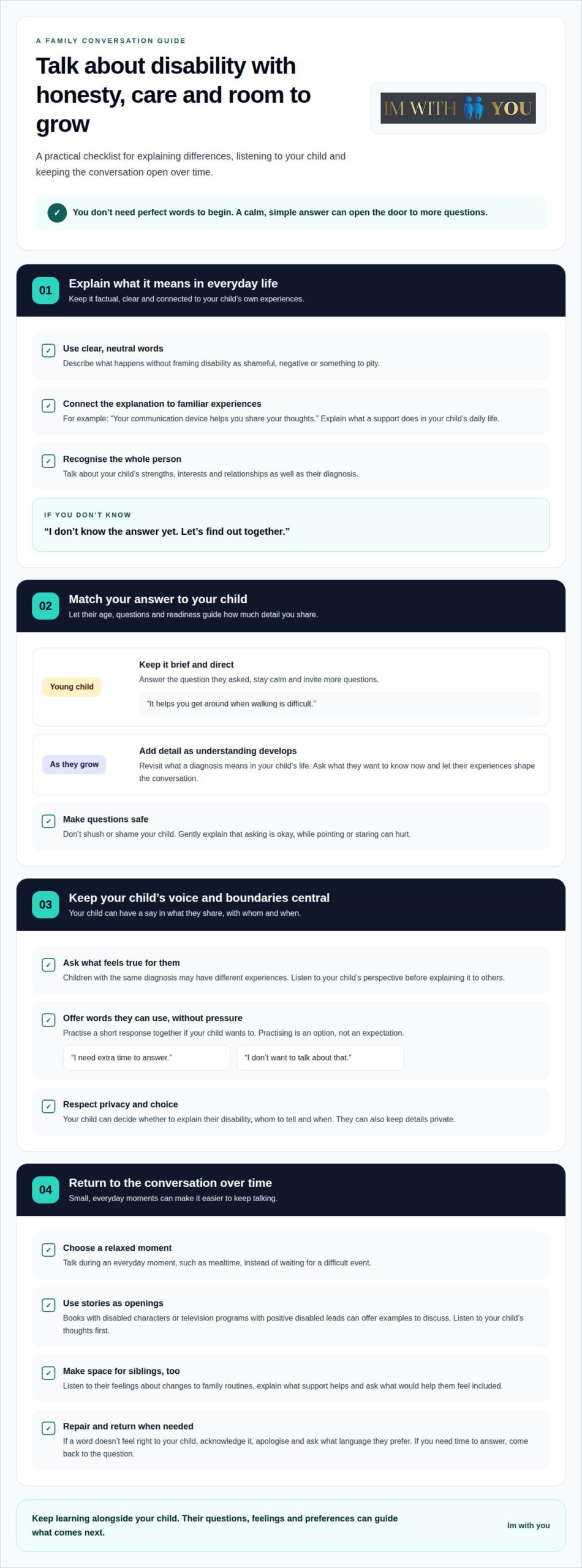
A disability doesn’t define your child or determine what they can achieve. Explain what it means for them, while also recognising their strengths and interests. For example, you might say, “Your hearing aids help you hear, and you’re brilliant at building things.” Keep the explanation factual, and avoid presenting the diagnosis as shameful or negative.
When your child asks, “Why do I have a disability?”, answer honestly with what you know. You could say, “Your body or brain works in a way that means some things are different for you. Let’s talk about what that means in your everyday life.” If you don’t know the answer, say so and find out together. Give your child time to share their feelings and questions.
For a preschooler, keep your answer brief and direct. If they ask why they use a wheelchair, you could explain, “It helps you get around when walking is difficult.” Stay calm, answer the question they asked, and invite more questions. Don’t shush or shame them. A quiet reminder that it’s okay to ask, while pointing or staring can hurt, helps them learn respectful behaviour.
You can also prepare your child for encounters at school by explaining that people look and move differently. Talk about kind and unkind comments before they happen, and encourage your child to see a classmate as a potential friend, not just as someone who is different.
Answer siblings’ questions in language they understand, and make room for their feelings about changes to family routines. Listen without blame, explain what support helps, and include them in everyday conversations. Your child with a disability can also have a say in their care and what they share with others.
2. Explaining physical and other differences in neutral language
Use clear, factual language that describes what happens without judging it as good or bad. As you consider how to talk to your child about their disability, connect the explanation to their own life. You might say, “Some people move, learn, sense or communicate differently. Your communication device helps you share your thoughts.” Avoid euphemisms or words that make disability sound shameful. Describe your child as a whole person, with interests, relationships and strengths beyond their diagnosis.
Make a diagnosis meaningful by connecting it to experiences your child recognises. For example, you could explain, “Autism is the name for a way your brain works. It can help explain why some sounds feel overwhelming or why knowing the plan feels comfortable.” Don’t assume every autistic child experiences the same things. Ask your child what feels true for them, and let their answer shape how you explain it to friends or family.
Some children like to have words ready for questions from others. You could practise a short response together, such as, “I need extra time to answer,” or, “I’m autistic, and routines help me feel settled.” Practising is an option, not an expectation. Let your child decide whether to explain their disability, whom to tell and when. They can also keep details private.
Talking to your child about their disability also means respecting their boundaries. If a comment makes them uncomfortable, help them practise a response such as, “Please ask me kindly,” or, “I don’t want to talk about that.” This gives your child words to speak up and control how much they share, including with friends who may need help understanding what respect looks like.
3. Planning an ongoing, age-appropriate conversation
Treat disability as a subject your family can return to, not a single big announcement. Start early with everyday moments, such as explaining why your child uses a hearing aid or needs extra time. A young child may need only a short explanation. As their understanding and questions develop, add detail they can grasp.
Choose a relaxed moment to start, such as mealtime, rather than waiting for a difficult event. Picture books with disabled characters and television programs with positive disabled leads can offer examples to discuss. You might ask, “What did you notice about that character?” Listen to their answer before sharing your own thoughts.
As your child grows, revisit what a diagnosis means in their life. A five-year-old may describe a support in simple terms, while an older child may want to discuss how autism affects learning, friendships or busy environments. Ask what they want to know now, and let their experiences guide the conversation.
Parents make mistakes, too. If you use a word that doesn’t feel right to your child, acknowledge it, apologise and ask what language they prefer. If you don’t have an answer, say you need time to think, then return to the question. This shows that open conversation matters more than getting every word right straight away.
Give siblings room to revisit their own feelings as family routines change. For example, explain why a plan needs adjusting, then ask what would help them feel included. If you’d value support as these conversations continue, connect for guidance with ongoing family conversations.
Im with you
Im with you can support your family as you work through disability-related questions and support needs. Disability Support Services and NDIS Support Coordination can help families navigate supports and plan around a child’s needs, preferences and participation. Disability Advocacy Services can help families express their child’s views and interests.
Consider reaching out when guidance with coordinating supports or advocating for your child would be helpful. Bring the questions you’re working through and discuss what could help your family move forward. Your child’s voice, dignity and involvement remain central to those conversations.
Contact Im with you to discuss support for your family.
Make room for your child’s voice as they grow
Your child’s understanding and preferences may change over time. Let them shape the conversation by asking what they want others to know, what they’d rather keep private, and what support helps them feel heard. Their answers can guide what comes next, whether that means revisiting a word, talking with family or making room for a new question.
Learning how to talk to your child about their disability isn’t about finding one perfect script. It’s about building trust through ongoing, respectful conversations that value your child’s perspective. Keep learning alongside them and adjust your approach as their needs and confidence develop.
If you’d like support with your family’s next steps, contact Im with you. You don’t have to work through every question alone.
Frequently Asked Questions
What should curiosity around disability be met with?
Meet curiosity with respectful, straightforward information, while remembering that each person has their own preferences. If your child asks about someone they see, answer briefly without guessing how that person feels or sharing private details. For example, you could explain that a communication device helps someone express themselves, then guide your child to speak directly and politely if appropriate.
How To Tell My Child They Have a Disability and Support Their Goals?
Explain that a disability can affect how your child approaches particular tasks, but it doesn’t define their character or limit their potential. If homework feels difficult, for example, discuss what support or adjustment might help them participate, then agree on a manageable next step. This recognises real needs while supporting your child’s effort and goals.
To label or not to label?
A diagnosis can give your child useful words to understand their experiences and explain their support needs. Use the term accurately, without making it the whole story of who they are. Your child may have a preference for how they describe themselves, or choose not to use a label in some settings. Let them guide what they share with friends, family or school.
How should I explain my child’s disability to them in age-appropriate language?
Start with an idea your child can connect to daily life, then pause to see what they understood. For instance, “That’s why the classroom can feel noisy for you” may be clearer than a long explanation of a diagnosis. Invite them to tell you what they think it means. Their response can help you decide whether to clarify, add detail or leave the conversation there for now.
When and how should parents talk to a child about their disability?
Begin talking when disability becomes relevant to your child, and return to the topic as their experiences change. A new support at school, a change in routine or a question after an appointment can be a natural starting point. Make enough privacy for your child to speak freely, and involve them in decisions about what information to share with educators or relatives.