
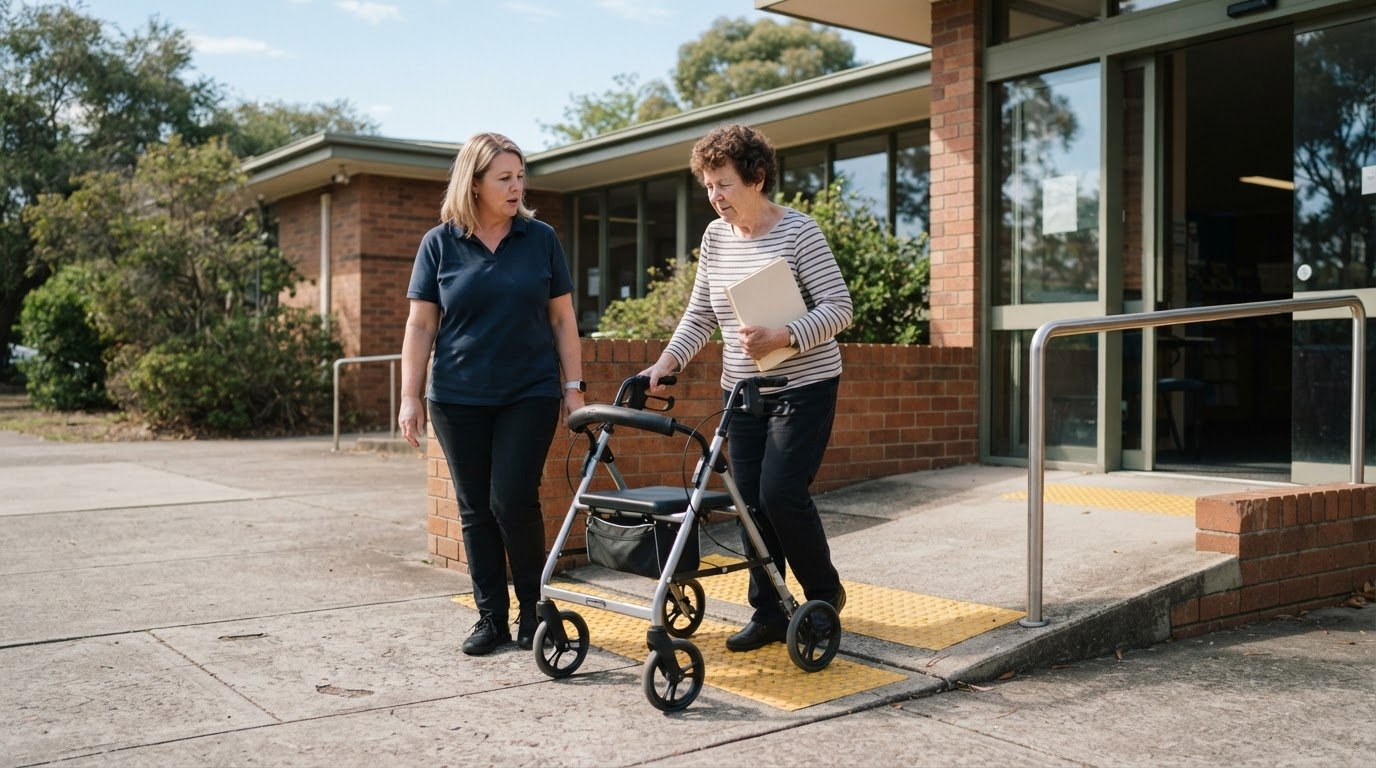
What if support helped you take part in your community, as well as manage everyday routines? Across Australia, disability support can assist with daily living, personal care and community participation. Personal support is different from nursing support, which addresses separate health-related needs.
It makes sense to want clear information about what support involves, especially when it needs to fit your routines, choices and goals. This guide explains how daily living and personal care support can work, what community participation may involve, and how these differ from nursing support. It also covers community nursing and what to consider when choosing support that respects your independence and preferences.
Key Takeaways
- Community participation support can help make everyday outings and activities more accessible while keeping your preferences at the centre.
- Personal care supports daily routines, while community nursing is a distinct option for nursing-related support.
- The right support depends on your goals, daily needs and the activities you want to take part in around Carina.
- Learn how support coordination and advocacy can help you understand your options and move towards support that fits your life.
Community access and participation
Community participation can help turn a person’s interests into planned outings, social activities or appointments. Begin with the activity they want to join, then consider the support needed, travel arrangements and access requirements. For example, someone attending a class may appreciate help planning the journey and taking part at their own pace.
How do disability providers compare on services, availability and reviews? Compare the support each provider describes, whether the schedule suits the participant’s routine, and whether reviews mention respectful communication or consistency. Reviews reflect individual experiences, not a guarantee of what someone else will experience. Support arrangements vary, so read the agreement to understand what services are included.
What NDIS rules apply when choosing disability support providers? Match the support you’re considering to the participant’s goals and funding arrangements rather than assuming every activity is covered. People who meet NDIS eligibility criteria can apply to become participants by completing an Access Request Form. Short-term accommodation includes support and accommodation away from a participant’s usual home for a limited period.
Which NDIS providers offer support coordination? Look for providers that list NDIS Support Coordination and explain how it may address the participant’s needs. What allied health and therapy support is available to NDIS participants? Occupational Therapy and Therapeutic Supports are relevant service types. To understand staff qualifications, screening and complaints handling, ask how these processes work and how concerns are received and resolved. Clear explanations can help you compare providers.
Daily living and personal care
In-home disability support can assist with daily routines and help build practical skills. The support that suits someone depends on their needs, preferences and living arrangements.
In-Home Disability Support
Support at home may include everyday tasks such as preparing meals, maintaining routines and practising household activities. Identify where assistance could make daily life easier, then discuss how support can fit your preferences. Supported Independent Living (SIL) helps NDIS participants with daily tasks so they can live as independently as possible. The right arrangement depends on individual support needs.
Personal Care and Community Access
Personal care may involve practical help with routines such as getting ready for the day. Community access support can help someone take part in activities outside the home. Look for providers that describe both types of support and explain how they can fit a person’s routine and preferences.
Personal care supports everyday activities; it isn’t automatically medical treatment. Community nursing is a separate, health-related support. For example, someone may need help with a morning routine and separate nursing support for a health-related need. Describing each need clearly can help identify the relevant support.
To make support practical, identify the tasks, preferred timing and skills the person wants to develop. These details help providers understand what assistance should look like at home and in the community. Explore daily living support options that reflect those priorities.
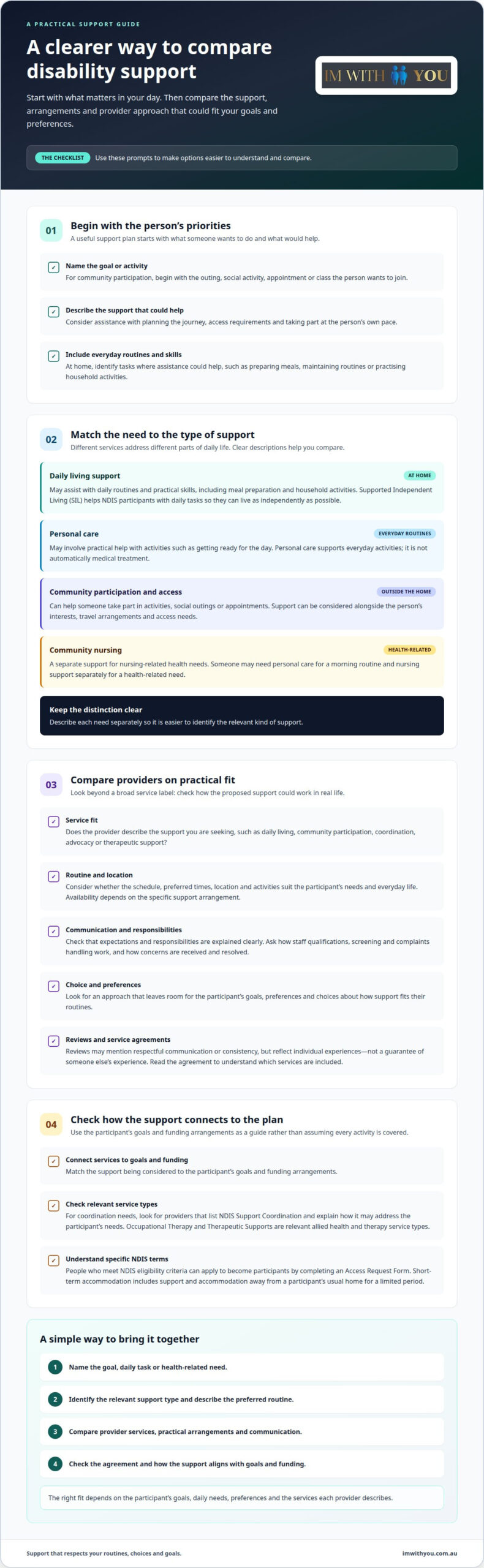
What disability support providers operate in Carina, Brisbane?
When comparing disability providers for daily and personal care, focus on the type of assistance offered rather than a single overall ranking. NDIS providers may support daily living, community participation, coordination, advocacy or therapeutic needs. A participant’s goals and support requirements help identify the relevant service.
Start by matching your support needs to the services a provider describes. For example, someone who wants help joining activities may prioritise community participation, while a person seeking help to understand their plan may look for support coordination. These are different kinds of assistance, so the service description should explain what each involves.
Availability depends on the specific support arrangement. The location, preferred times, activities and participant’s needs all affect how services can fit into daily life. Reviews can offer another perspective, but they cannot represent every person’s experience. Consider whether feedback discusses qualities that matter to you, such as clear communication, respectful support or consistency.
When evaluating disability providers for your circumstances, useful comparison points include:
- Service fit: Does the provider describe the support you’re seeking?
- Practical arrangements: Can the proposed support suit your routine and location?
- Communication: Are expectations and responsibilities explained clearly?
- Participant choice: Does the approach leave room for your preferences and goals?
These points help turn a broad search into a clearer picture of what support could look like. If you’re considering support options nationwide, explore disability support options through Im with you that align with your priorities.
Disability support may include daily assistance, community participation, support coordination, advocacy or therapeutic supports. The right fit depends on the participant’s goals and the services each provider describes.
Look for providers that describe daily support and community participation, then compare their services with the personal care or community access you need. Availability depends on the support arrangement, location, preferred times and participant’s needs.
NDIS providers may offer therapeutic supports. Compare the services they describe and consider whether they align with the participant’s goals.
Im with you
Im with you can help you explore disability support that reflects your goals, routines and preferences. If you’re considering community participation, daily support or help understanding your NDIS plan, we can talk through your options. As trusted disability providers carina, our services include Disability Support Services, Community Participation Support, NDIS Support Coordination and Disability Advocacy Services.
Support coordination can help you understand and organise supports, while advocacy can help you express your views and work through concerns. The right starting point depends on what you want support to make possible, whether that’s taking part in community activities, building independence or feeling clearer about your choices. You don’t need to have every detail decided before starting a conversation.
Contact Im with you to discuss the support you’re looking for.
Take your next step with confidence
Choosing among disability providers in Carina is a personal decision, shaped by the support that could make everyday life work better for you. Begin with one priority, such as taking part in community life or getting clearer about your NDIS arrangements. From there, the conversation can focus on what matters to you and the support you’d like to explore.
I’m With You offers Disability Support Services, Community Participation Support and NDIS Support Coordination. We’ll listen to what you’re looking for and help you consider your next step.
Contact Im with you to talk about the support you’re seeking. You can take the conversation at your own pace, with your goals guiding it.
Frequently Asked Questions
Do you offer medical or personal care?
Yes, personal care and help with daily tasks are part of personal supports. These supports are distinct from medical and clinical health services, which Im with you doesn’t offer. Community Nursing under NDIS is a separate listed service. Describing the routine and the type of assistance needed can help clarify which support is relevant.
How can I find and choose a registered NDIS provider in Carina?
Look for providers that state their NDIS registration status and the support categories they deliver. Compare those services with the assistance you’re seeking, such as help with daily routines, community activities or coordination. Consider practical fit too, including communication preferences, scheduling and how the provider explains support arrangements before services begin.
Are there disability providers near Carina with transport or accessible facilities?
Transport support can help with appointments, errands and community outings. I’m With You offers Accessible Travel Solutions for travel-related support. Accessible facilities are a separate consideration, so think about what each destination needs, such as step-free entry or accessible bathrooms. Including these requirements in your plans can help make an outing more suitable.
How do Carina disability providers compare by services, availability and reviews?
Compare the support each provider describes and whether its schedule fits the participant’s routine. Reviews can offer perspectives on respectful communication or consistency, but they cannot guarantee another person’s experience.