

Imagine sitting at your kitchen table, phone in hand, feeling the weight of a decision that affects the very heart of your home. You’ve met a candidate who seems wonderful, yet the natural anxiety of inviting a stranger into your private life remains. I’m with you in this moment, and I understand that you need more than a list of past jobs; you need to know your family is safe and supported. Learning the right questions to ask support worker references is the final, vital step in ensuring your new support person isn’t just qualified, but a true, heart-centered match for your journey.
It’s completely normal to feel uncertain about how to spot red flags or verify reliability during a brief phone call. You deserve to feel like a confident partner in your care management, and that starts with having the right tools for the job. In this guide, I’ll share a clear list of vetting questions designed to move past surface-level answers and uncover the real person behind the application. We’ll explore how to listen for the nuances of character and consistency, giving you the peace of mind to build a foundation of trust from the very first day.
Key Takeaways
- Learn how to approach reference checks as a collaborative partnership that builds a foundation of trust for your family.
- Discover practical, heart-centered questions to ask support worker references to ensure your new support person is both reliable and professional.
- Gain the skills to interpret a referee’s tone and subtle hesitations, helping you look beyond simple answers to find the right “vibe.”
- Understand how to differentiate between a lack of experience and a lack of character so you can focus on the qualities that truly matter.
- Empower yourself with a clear vetting process that replaces hiring anxiety with a sense of calm and confidence in your choices.
Approaching Reference Checks as a Partnership
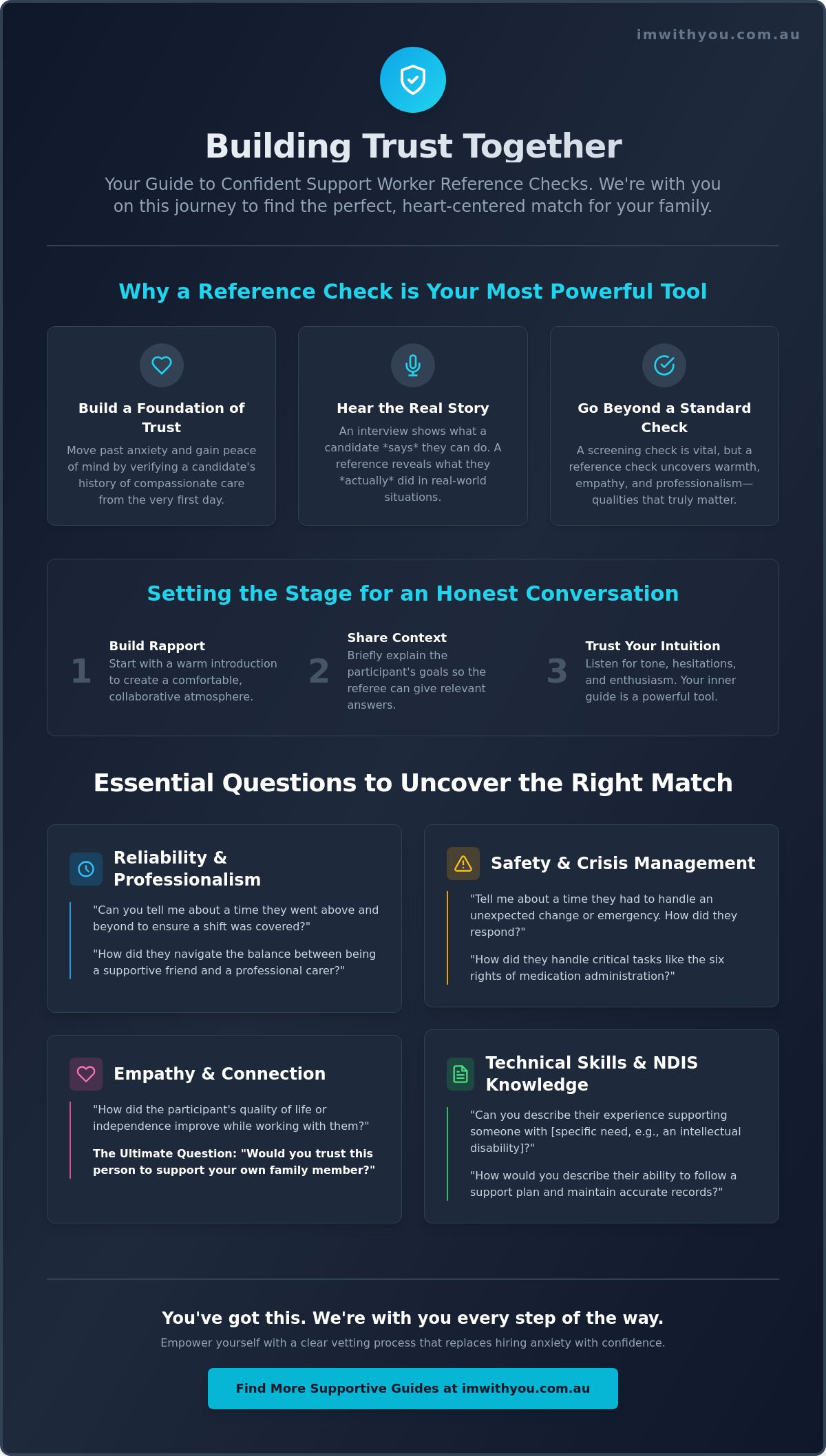
Reference checks are often the most powerful tool you have for ensuring long term safety and peace of mind. While an interview tells you what a candidate says they can do, a reference reveals what they actually did when faced with real world challenges. I’m with you in this process, and I want to help you see this call as a collaborative partnership between you and a previous employer. You’re both working together to ensure this Direct Support Professional is the right heart centered match for your family’s unique journey.
To better understand how to structure your conversation, watch this helpful video:
Trusting your intuition is a vital part of this management strategy. As a participant or carer, you have a deep understanding of what your home needs to feel safe. If something feels slightly off or particularly wonderful during your chat, listen to that inner guide. Preparing your questions to ask support worker references in advance allows you to focus on the referee’s tone rather than just scrambling for the next thing to say.
Navigating the NDIS Quality and Safeguards Framework
While the NDIS Worker Screening Check is a mandatory safety requirement, it only tells part of the story. A clearance is valid for 5 years, but it doesn’t measure the warmth or empathy a worker brings to their role. When you speak with a referee, you can dive deeper into how the worker uses person-first language and whether they uphold the high standards you’d expect from an award-winning NDIS provider. This holistic approach ensures that compliance and compassion go hand in hand.
Setting the Stage for an Honest Conversation
Before you dive into your list of questions to ask support worker references, take a moment to build rapport with the referee. Introduce yourself warmly and share a little bit about the participant’s interests or goals. This context helps the referee provide more specific, meaningful answers. When they understand the person being supported, they can better reflect on whether the worker’s strengths align with your specific needs.
Essential Questions to Ask Support Worker References
I’m with you as you prepare for these vital conversations. Having a structured list of questions to ask support worker references ensures you cover the practicalities while keeping the participant’s wellbeing at the center. Reliability is the bedrock of any support relationship. You might ask, “Can you tell me about a time they went above and beyond to ensure a shift was covered?” This question reveals their commitment to consistency and their understanding of how much your family relies on them.
Professional boundaries are equally important for a healthy, long term partnership. Ask the referee, “How did the worker navigate the balance between being a friend and a professional support?” You want to hear that they are warm and engaging but still respect the professional nature of their role. For safety, ask about crisis management: “Tell me about a time they had to handle an unexpected change or emergency.” Their response will help you understand if the candidate remains calm and capable under pressure. Finally, verify specific skills by asking, “How did they handle tasks like the six rights of medication administration?” This moves the conversation from general claims to verified safety practices.
Questions Focused on Empathy and Connection
Empathy is best seen through the joy a worker brings to their day. Ask the referee about the worker’s ability to foster connection through meaningful leisure activities. A powerful question to include is, “How did the participant’s quality of life or independence improve while working with them?” This shifts the focus toward growth and capacity building. If you’re ever in doubt, the ultimate litmus test is asking, “Would you trust this person to support your own family member?”
Verifying Technical Competence and NDIS Knowledge
If the participant has specific needs, such as living with an intellectual disability, ask the referee about the worker’s direct experience and patience in that context. Verify their ability to follow a complex support plan and maintain accurate record keeping. If you need a hand finding a team that prioritises these values, our Disability Support Services are designed to provide that steady, expert companionship.
Interpreting Answers and Finalising Your Decision
Once you’ve finished your list of questions to ask support worker references, take a quiet moment to reflect on the “vibe” of the conversation. I’m with you in this reflection; I know how much you want to get this right for your family. Pay close attention to a referee’s level of enthusiasm. A short, clipped “yes” might indicate the worker was simply “okay,” while a warm, detailed story shows a genuine connection. It’s also vital to distinguish between a lack of experience and a lack of character. A worker can learn how to follow a specific routine, but they can’t be taught basic kindness or integrity.
If you hear about past burnout, don’t immediately dismiss the candidate. Support work is deeply emotional. A previous struggle with burnout might just mean they need a better support system or a different environment to thrive. However, poor conduct or a lack of initiative are different. These are the traits that affect your daily peace of mind. Use the feedback you’ve gathered to set clear expectations during their first week. This creates a partnership built on transparency and mutual respect from the very start.
Identifying Red Flags in Support Work
A “neutral” reference is often a subtle red flag in the disability sector. If a referee is hesitant to provide details or keeps their answers strictly to dates of employment, it may suggest they’re avoiding a difficult conversation. Be wary of mentions regarding frequent last minute cancellations or boundary crossing. These behaviours disrupt the stability of your home and the participant’s sense of security. Reliable support is a core promise, not a luxury.
For those who feel they need a more rigorous vetting process to ensure their family’s safety, professional services like International Investigative Group offer the kind of comprehensive background verification that provides absolute certainty and peace of mind.
The Final Step: Trusting Your Partnership
Review your notes with a focus on evidence rather than just emotion. You’ve done the hard work of vetting, and now you can make a confident choice. Remember that you aren’t doing this alone. A premium provider like Im with you is here to walk alongside you. Through our NDIS Support Coordination and Disability Advocacy Services, we help families navigate these complex management choices with ease. We provide the expert guidance you need to feel secure in every hiring decision you make.
Step Into Your Next Chapter with Confidence
Finding the right person to enter your home is a journey of trust, and you’ve now equipped yourself with the tools to navigate it beautifully. By viewing reference checks as a partnership and focusing on the most revealing questions to ask support worker references, you move closer to a connection that truly supports your family’s independence. You’ve learned how to look beyond the surface, listen for genuine enthusiasm, and trust your own intuition when interpreting a referee’s feedback. These management strategies aren’t just about safety; they’re about finding a companion who shares your values.
I’m with you as you take these final steps toward building your support team. You don’t have to manage this alone. As a National NDIS Registered Provider and winner of the 2026 Award for Excellence in Disability Support, we’re dedicated to walking alongside you through every stage of your journey. Whether you need expert Support Coordination or Advocacy, we’re here to ensure your voice is heard and your needs are met. Let us help you find the perfect support match today. You’ve got this, and I’m right here to support your choices.
Frequently Asked Questions
Is it legal to ask a support worker for references in Australia?
Yes, it’s completely legal and standard practice to request professional references when you are hiring a support worker in Australia. This process is a vital part of your due diligence to ensure safety and quality of care within your home. I’m with you in wanting the best for your family, so don’t feel hesitant to request this information as part of your standard recruitment routine.
What should I do if a support worker says they don’t have any previous disability-related references?
You can look for transferable skills in other industries if a candidate is new to the disability sector. Ask for references from roles in aged care, education, or even hospitality where reliability and empathy were key requirements. When you are preparing your questions to ask support worker references from other fields, focus on their character, punctuality, and ability to follow instructions, as these qualities are universal for great support.
How many references should I check before hiring an independent support worker?
Aim to check at least two professional references before making your final hiring decision. This gives you a more balanced view of the worker’s history and consistency across different environments. Checking multiple sources helps confirm that their positive traits are part of a long term pattern rather than a one off experience. It’s a simple management step that provides a much higher level of confidence for your family.
Can I ask a family member of the support worker for a character reference?
While character references from family are sometimes offered, they aren’t as reliable as professional ones for assessing work performance. A family member’s perspective is naturally biased and won’t give you insight into how the worker handles professional boundaries or complex support tasks. I’m with you in prioritising safety, so it’s best to insist on references from previous supervisors, teachers, or volunteer coordinators who have seen them in a professional capacity.