

What if the person helping you get ready each morning wasn’t there to manage a medical condition, but to help you manage your day on your own terms? It’s completely natural to feel a flutter of anxiety about inviting a stranger into your private space. Many people tell me they worry about feeling like a patient rather than a person, or they’re unsure where the boundaries of professional support begin and end.
I understand those concerns deeply. This guide is designed to help you see that understanding personal care assistant responsibilities ndis is the first step toward reclaiming your agency. You deserve support that feels like a partnership, not a clinical procedure. We’ll walk through the specific tasks a carer can help with under your core supports budget, how they protect your dignity during vulnerable moments, and how you can find a companion who respects your home as much as you do. By the end, you’ll feel empowered to direct your own care and find a steady advocate who walks right alongside you.
Key Takeaways
- Understand how a Personal Care Assistant moves beyond clinical tasks to support your unique goals and personal independence.
- Explore the full scope of personal care assistant responsibilities ndis funding covers, including daily grooming, dressing, and nutritional support.
- Learn how to find a carer who acts as a steady companion and advocate, protecting your dignity in every interaction.
- Get practical tips for interviewing potential support workers to ensure their values and personality align with your own.
What is an NDIS Personal Care Assistant?
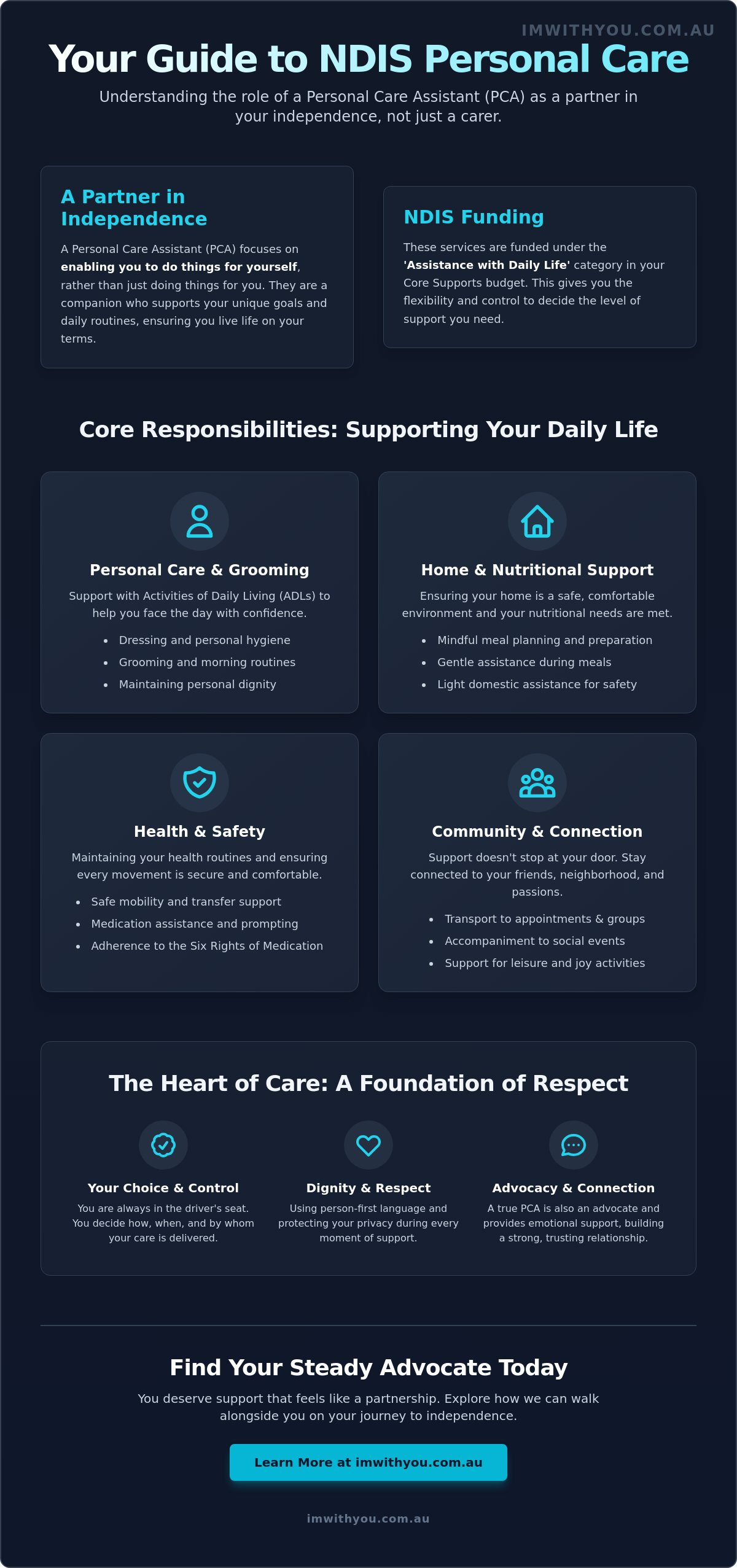
Think of a Personal Care Assistant (PCA) as someone who walks beside you to help you navigate the practical parts of your day. They provide essential one-on-one support that’s tailored specifically to the goals you’ve set in your plan. Unlike clinical staff who might focus only on medical outcomes, a PCA focuses on enabling your independence. They’re there to help you do things for yourself, rather than just doing things for you. At its heart, a PCA is your companion in independence who works carefully within the NDIS Quality and Safeguards framework to ensure your safety and well-being.
These services are usually funded through the ‘Assistance with Daily Life’ category under your Core Supports budget within the National Disability Insurance Scheme (NDIS). Because this budget is often flexible, you have the power to decide how much support you need and when you need it most. This flexibility ensures that personal care assistant responsibilities ndis are always aligned with your specific lifestyle and routine.
To see how these supports look in a real-world setting, watch this helpful video:
The Difference Between Support Workers and PCAs
While people often use the terms support worker and PCA interchangeably, there is a subtle distinction. PCAs generally focus on more intimate, daily living tasks that happen within your home, such as personal hygiene or morning routines. They integrate seamlessly with your broader support team and your chosen NDIS provider to ensure every part of your plan works in harmony. This collaborative approach means you’re never left trying to coordinate different people on your own; everyone works together for you.
A Focus on Dignity and Respect
We believe that using person-first language is the essential foundation for every interaction. It reminds us that you’re an individual with unique dreams, not a set of clinical requirements. When you understand the full scope of personal care assistant responsibilities ndis, you realize that choice and control are always in your hands. You decide how your personal care is delivered, ensuring your dignity is protected during every moment of support. It’s about feeling safe and respected in your own home.
Core Responsibilities: Supporting Your Daily Life
The heart of personal care assistant responsibilities ndis lies in the quiet, daily rhythms that make your house feel like a home. Your PCA is there to help with Activities of Daily Living (ADLs). This includes the gentle morning tasks of grooming, dressing, and personal hygiene. By supporting these needs, they help you face the day with confidence. It’s about more than just checking off a list; it’s about helping you feel ready to step into your world.
Support extends to your kitchen and living spaces. Whether it’s mindful meal planning, preparing a favorite dish, or providing gentle assistance during dinner, your carer ensures your nutritional needs are met with care. They also help maintain a safe, comfortable environment through light domestic assistance. This might involve tidying up or ensuring pathways are clear. Safety is always the priority, and PCAs are trained to facilitate mobility and transfers using the right equipment, ensuring every movement is secure and comfortable for you. When we look at the full scope of personal care assistant responsibilities ndis, we see a commitment to your safety and comfort in every room of your house.
Safe Medication Assistance
It’s vital that you maintain your health routines without losing your sense of autonomy. A PCA can support you by prompting or assisting with prescribed medications. To keep you safe, our teams follow the six rights of medication administration. This rigorous safety standard ensures the right person receives the right dose of the right medicine at the right time. It’s a layer of protection that allows you to focus on living your life while we handle the details of your routine.
Community Participation and Social Connection
Support doesn’t stop at your front door. Your companion can help you engage in leisure activities that bring you joy and purpose. Whether it’s providing transport to a local community group or accompaniment to a medical appointment, they ensure you stay connected to your friends and neighborhood. If you’re looking for a partner who truly understands these needs, explore our disability support services to see how we can walk alongside you.
The Heart of Care: Advocacy and Emotional Support
While physical tasks are vital, the emotional connection often defines the true quality of your support. Personal care assistant responsibilities ndis extend far beyond the physical to include the protection of your emotional wellbeing. A dedicated PCA acts as a steady advocate, ensuring your voice remains central in every setting, from medical appointments to community outings. They provide the kind of empathetic companionship that naturally reduces social isolation and builds your confidence to try new things. You aren’t just a participant on a plan; you’re a person with a story that deserves to be heard.
Our team members do more than just follow a schedule. They observe and report subtle changes in your wellbeing, allowing for proactive adjustments to your support before small issues become big challenges. This watchful care provides a safety net that lets you live more freely. At “Im with you,” our carers are trained to listen with the heart, not just the ears, making sure you always feel seen and understood in your own home.
Empowering Your Agency
A great PCA doesn’t just do things for you; they encourage you to do as much as you can for yourself at your own pace. This approach is especially important in supported independent living environments, where the goal is to build your capacity for a more autonomous life. By stepping back when you’re ready to lead, they help you reclaim your sense of mastery over your own world. It’s about finding the balance between support and self-reliance.
Building a Relationship of Trust
Consistency is the bridge to better long-term outcomes. When you see the same friendly face, you can relax into a rhythm of trust. We understand the delicate balance between professional boundaries and genuine friendship. It’s a unique bond where your PCA is a professional who truly cares about your happiness and success. If you’re ready for support that puts your voice first, learn more about our disability advocacy services today.
How to Choose the Right Personal Care Assistant
Choosing the person who will support you in your most private moments is a deeply personal decision. It’s about more than just a resume; it’s about finding a companion who makes you feel safe and heard. Start by identifying your specific needs and the personality traits that make you feel most comfortable. Do you prefer someone quiet and steady, or someone bubbly and energetic? When you have a clear picture of the personal care assistant responsibilities ndis participants need help with, you can look for a match that feels like a natural extension of your life.
I always recommend interviewing potential carers to ensure their values align with your own lifestyle and goals. Review the provider’s commitment to ongoing training and excellence in care to ensure they stay at the forefront of the industry. We believe a ‘meet and greet’ is the best way to see if that special ‘Im with you’ feeling of companionship is there before any services begin. This initial connection helps lower the anxiety of inviting someone new into your home.
Questions to Ask a Potential PCA
Don’t be afraid to ask practical questions about their experience with specific intellectual disabilities or mobility needs. You should also include values-based questions to gauge their approach to advocacy and respect. For example, ask how they handle situations where you want to do something your own way. Their answer will tell you if they’ll truly prioritize your choice and control above all else.
Why Quality Standards Matter
Quality standards aren’t just regulatory hurdles; they’re core promises of safety and dignity. Choosing an award-winning provider means you’re partnering with a team that prioritizes excellence in every interaction. We ensure every PCA is more than just a worker. They’re trained to be true advocates who walk alongside you, protecting your independence while providing the technical support you require. This commitment to high standards means you can rest easy knowing you’re in capable, compassionate hands.
Embracing Your Path to Independence
You now have a clearer picture of how a dedicated companion can transform your daily routine. Understanding personal care assistant responsibilities ndis allows you to take the lead in your own home. It ensures you receive support that honors your dignity while building your capacity for the life you want to lead. Whether it’s help with morning routines or exploring your local community, you deserve a carer who sees the person behind the plan.
As a nationwide NDIS registered provider and winner of the 2026 Excellence in Care Award, I’m committed to person-centered advocacy that puts your voice first. I’m here to ensure you never feel like a patient, but like the master of your own journey. Let us walk alongside you, explore our compassionate NDIS support services today. You aren’t alone in this process, and I’m ready to help you find the perfect match for your home and heart.
Frequently Asked Questions
Can a personal care assistant help me with my medication under the NDIS?
Yes, your assistant can support you with medication by providing gentle prompts or physical assistance to take prescribed doses. They follow strict safety protocols to ensure you receive the right medication at the correct time. This support is designed to maintain your health routine while respecting your choice and independence in managing your own wellbeing.
What is the difference between a PCA and a domestic cleaner?
While a cleaner focuses on the house, a PCA focuses on you. The personal care assistant responsibilities ndis funding covers include intimate tasks like grooming, dressing, and hygiene that a general cleaner doesn’t perform. A PCA may do light tidying to keep your environment safe, but their primary role is walking alongside you to support your personal daily living goals.
Do I have to use the same personal care assistant every time?
You have the right to choose who supports you and how often they visit. While many people prefer a consistent companion to build trust and a steady rhythm, you can request different assistants if your needs or preferences change. We always prioritize your comfort and ensure you feel safe and heard with whoever enters your home.
Can my PCA take me to the shops or social events?
Yes, your PCA can accompany you to social outings, community groups, or the local shops to help you stay active. This support helps reduce social isolation and builds your confidence in public settings. It’s a wonderful way to stay connected to your neighborhood while having a trusted advocate by your side to help with mobility or communication.
How do I know if my PCA is following the NDIS Code of Conduct?
Every PCA working for a registered provider must undergo a mandatory NDIS Worker Screening Check and adhere to the NDIS Code of Conduct. You’ll see this in the way they respect your privacy, prioritize your safety, and act with integrity. If you ever feel uncomfortable or unsure, your provider’s advocacy team is there to listen and ensure your rights are always protected.