

You can have a say in who you live with, but you can’t assume every SIL arrangement offers a free choice. Whether you can choose your housemates in SIL depends on the home, available vacancies, the provider’s approach and whether support arrangements work for everyone. There is no universal NDIS rule guaranteeing your choice in every setting.
Wanting to live with a friend, or feeling uneasy about a proposed match, matters. Your preferences and comfort deserve to be part of the conversation, alongside the needs and routines of people already living in the home.
This article explains how living with a friend may work, how current housemates can have a say, and what practical steps to take if household tensions arise or you are considering a move.
Key Takeaways
- You may be able to share a SIL home with a friend, including someone who isn’t an NDIS participant, if the vacancies and support arrangements suit everyone.
- Share your preferences about routines, communication and lifestyle, and take time to meet prospective housemates before deciding.
- Raise household concerns early so the people involved can explore practical changes, respectful conversations or a move.
- NDIS Support Coordination and Disability Advocacy Services can help you understand your options and express what matters to you.
1. Can I live with a friend who isn’t an NDIS participant?
Yes, you may be able to live with a friend who isn’t an NDIS participant. Supported independent living (SIL) provides support with daily life; it is not a type of housing or a system for assigning housemates. The NDIA funds eligible support, rather than choosing who lives together. There is no universal rule guaranteeing your preferred housemate in every shared SIL home.
Your options depend on the housing arrangement, available vacancies, the provider’s approach and the needs of everyone in the home. Two friends may be able to move in together if two places are available at the same time and support arrangements suit both. Before deciding, ask to meet the household and raise any concerns. Visiting more than once can help you understand how routines and shared spaces feel at different times.
SIL funding can cover eligible assistance or supervision with daily living tasks. For example, workers may support personal care or everyday activities, based on a participant’s needs. SIL funding generally doesn’t cover rent, groceries, utilities or other ordinary living expenses. These costs are separate from the support that helps make living at home possible.
Shared accommodation can still support independence. Participants can make everyday decisions, practise practical life skills and build confidence, with personalised support that reflects their goals. Private bedrooms and shared kitchens or living areas can provide personal space as well as opportunities to connect. If a housemate match stops working, raise the issue early with the organisation involved. You can explore changes to the arrangement or other housing options, taking account of your service agreements, support needs and available vacancies.
2. Do existing housemates get a say in who moves in?
Yes. Providers consider current residents’ needs and preferences when assessing a potential match. They should introduce a prospective housemate and ask residents how the meeting felt. Residents’ views matter, but they do not give a universal veto over every vacancy or guarantee a preferred match.
The NDIS doesn’t match participants with housemates or allocate people to shared homes. It supports participants to take part in decisions about their living arrangements. A support coordinator can help you communicate your preferences, discuss options and raise concerns during the matching process.
Providers consider whether household routines and support needs can work together. They may look at sleep patterns, noise tolerance, communication styles, use of shared spaces and expectations about cleanliness. For example, support needs at 7am can affect whether workers can build a workable roster. Compatibility also includes personal preferences, cultural background, language and lifestyle.
Shared interests aren’t essential, but some alignment in daily life can help. A 22-year-old may feel uncomfortable joining a household with much older residents. It’s reasonable to explain why a proposed match concerns you and what would help you feel at home. You can discuss routines, social interaction and household expectations before deciding whether to commit.
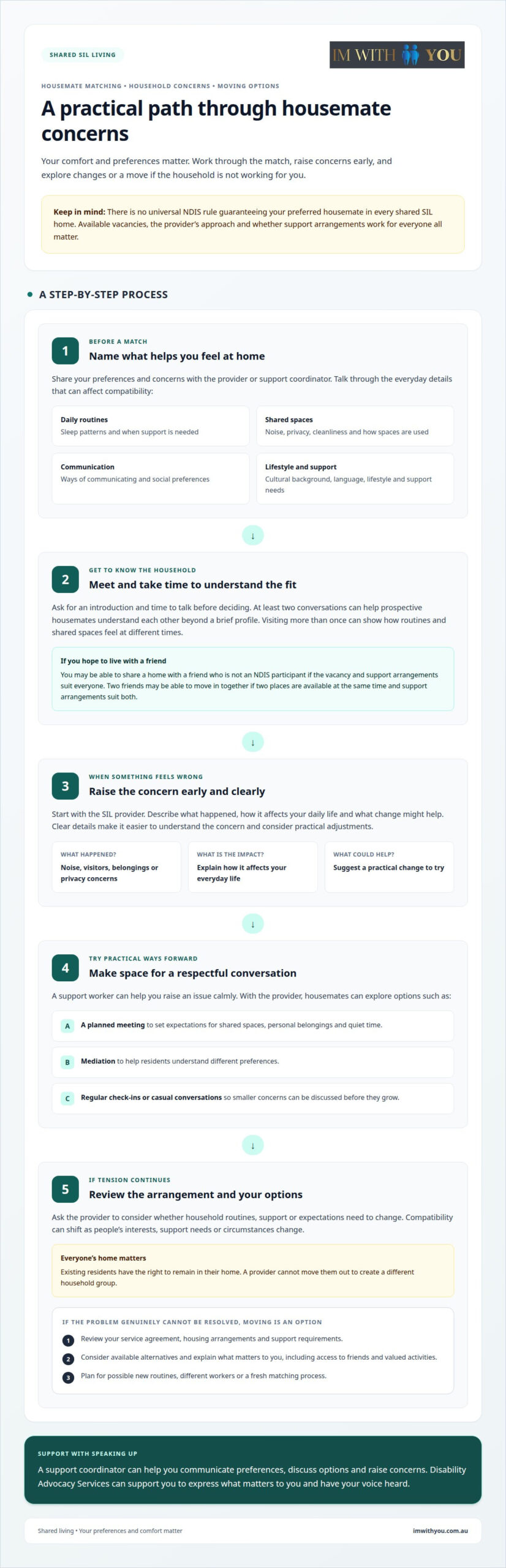
Ask for introductions and time to talk before a move. At least two conversations can help both prospective housemates understand each other beyond a brief profile. If you’d like support expressing your preferences, talk through your living arrangement options with someone alongside you.
3. Resolving household friction or moving
When tension arises, start with the SIL provider. Explain what happened, how it affects your daily life and what change might help. For example, describe whether noise, visitors, shared belongings or privacy is causing stress. Clear details help the team understand your concern and consider practical changes to household arrangements.
A support worker can help you raise an issue calmly with housemates. A planned meeting can set expectations for shared spaces, personal belongings and quiet time. Providers can also use mediation to help residents understand different preferences. Regular check-ins or casual conversations give everyone a chance to discuss small concerns before they grow.
If conflict continues, ask the provider to consider whether routines, support or household expectations need to change. Compatibility can shift as people’s interests, disability support needs or circumstances change. Existing residents have the right to remain in their home; a provider cannot move them out to create a different household group. Any response should take each person’s comfort seriously.
Moving is an option when a household problem genuinely cannot be resolved. Before changing your living arrangement, review your service agreement, housing arrangements, support requirements and available alternatives. A move may involve new routines, different workers or a fresh matching process, so explain what matters to you, including access to friends and valued activities. Keep your preferences central as plans take shape. If you need help speaking up about household concerns, get support to express your living arrangement preferences.
Im with you
Im with you can help you talk through concerns about shared living and the support that may help. If you’re considering a move, feeling unheard or unsure how to raise household issues, NDIS Support Coordination can help you understand your options and plan next steps. Disability Advocacy Services can support you to express your preferences and have your voice heard.
Your goals, relationships and everyday routines matter when deciding where and with whom you live. We’ll work alongside you to make sense of your options and speak up about what matters to you, at a pace that feels right.
If you’d like support with your living arrangement or housemate concerns, contact Im with you for a conversation.
Take your next step towards a home that feels right
Decisions about home can shape your daily comfort, relationships and sense of belonging. As you consider whether you can choose your housemates in SIL, take time to identify what matters most: feeling respected, having your preferences considered and being able to speak openly about concerns.
You don’t have to navigate these conversations alone. I’m With You can work alongside you as you consider your options and decide what support would help. A conversation can be a simple first step, whether you’re planning a change or still working out what you want.
Contact Im with you to talk through your next step. Your voice matters, and you can move forward at a pace that feels right for you.
Frequently Asked Questions
Can You Choose Your Housemates in SIL?
You can express your preferences, but there isn’t a guaranteed right to choose housemates in every SIL arrangement. Whether you can choose your housemates in SIL depends on factors such as vacancies and whether support can be organised around everyone’s needs. Before accepting a place, explain what matters to you and ask how your views will inform the decision.
Can I live with a friend who isn’t an NDIS participant?
Yes, a friend doesn’t have to be an NDIS participant to share a home with you. Their housing and everyday expenses remain separate from the SIL support funded for your eligible assistance. Discuss how you’ll each manage groceries, household responsibilities and private space, so expectations are clear before making a shared living arrangement.
Can two friends move into a SIL home together?
Yes, two friends can move into a SIL home together if two places are available at the same time and support arrangements suit both. Think through what each of you wants from the home, including privacy and social time. Visiting together can help you see whether the space and household routines suit you both.
Do existing housemates get a say in who moves in?
Yes, existing residents should meet a prospective housemate and be asked about the meeting. Their views help inform compatibility and household wellbeing, alongside the new resident’s preferences and support needs. For instance, a resident might explain that evening noise affects their routine. Raise concerns openly before committing, so the provider can consider them when making a match.
What Does Effective Housemate Matching Involve in SIL?
Effective matching considers more than shared hobbies. Providers weigh support needs, daily routines, communication styles, noise preferences and expectations about shared spaces. Different sleep schedules or approaches to visitors, for example, could affect how comfortable a household feels. Discussing these practical details before moving helps everyone understand what to expect and where adjustments may be needed.