
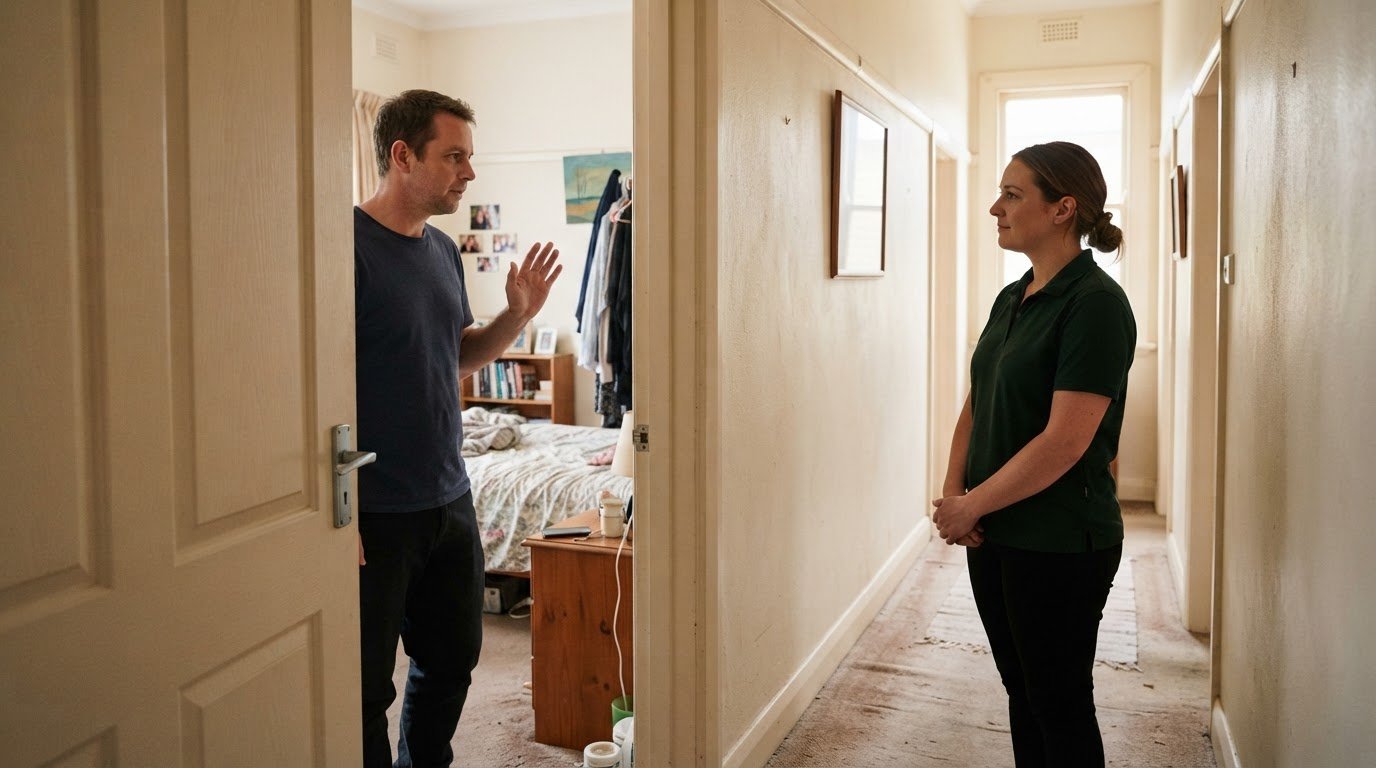
Your privacy and choices still matter when you receive support at home. The rights of residents in supported accommodation depend on the type of residence and the state or territory. A resident agreement can help you understand the services, fees, house rules, changes and how the arrangement may end. In Victoria, a resident and supported residential service must complete a residential and service agreement.
It can be hard to know what to do if your privacy isn’t respected, you’re worried about abuse or neglect, or a concern remains unresolved. This guide explains how to understand your agreement, protect your privacy, seek protection and raise a grievance. It also outlines why supported accommodation arrangements differ, so you can focus on information relevant to your situation and feel more confident speaking up.
Key Takeaways
- Read your agreement to understand the support, house rules and process for raising concerns.
- Speak up about privacy boundaries and choices that affect your daily life.
- If you’re worried about abuse or neglect, share what’s happening with someone you trust and seek support to raise the concern.
- Keep a clear record of a grievance, including what happened and the response, so you can follow up and ask for advocacy support if needed.
Privacy, independence and resident agreements
The rights of residents in supported accommodation depend partly on the housing arrangement and the state or territory. Use these steps to clarify your privacy, choices and agreement.
-
Consider privacy and independence
Write down your preferences for room access, visitors, personal information and daily routines. For example, note whether you’d like staff to knock before entering your room and how you want personal details shared. Discuss your preferences with the people supporting you, and ask how they’ll be respected day to day. The NDIS Commission inquiry found that group home residents need greater engagement to support choice and control. If it would help you express your wishes, bring someone you trust to the conversation.
-
Review residential and service agreement terms
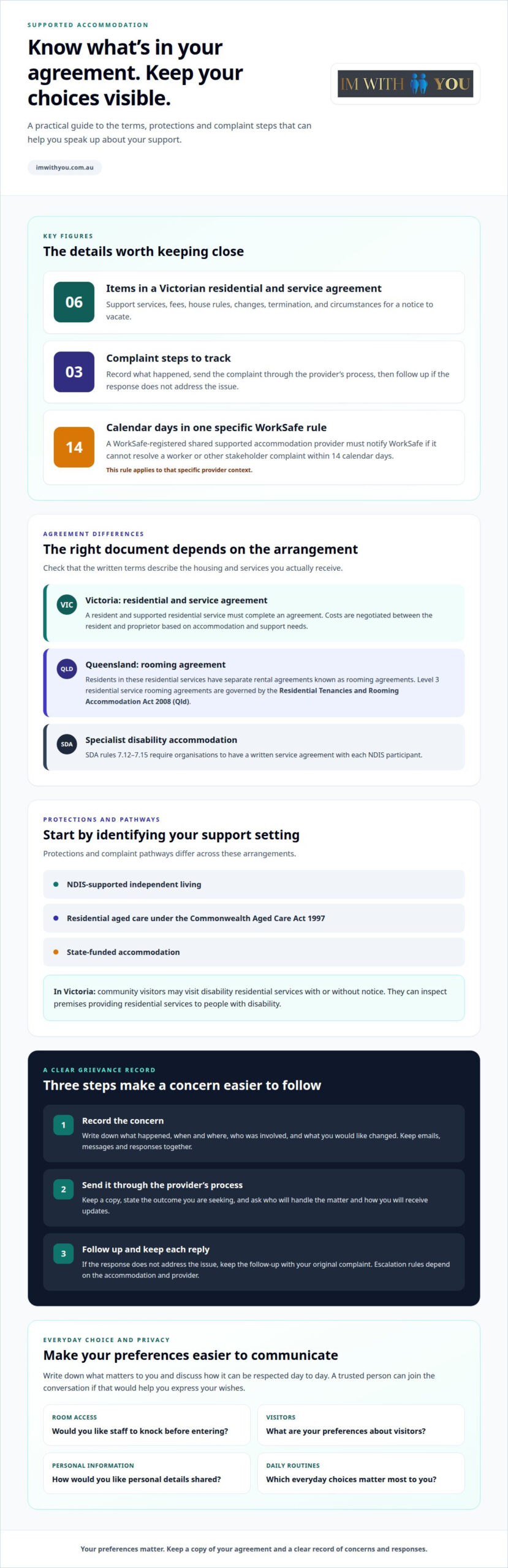
Read the agreement before signing and mark anything you’d like explained. In Victoria, a resident and supported residential service must complete a residential and service agreement. It records support services, fees, house rules, changes, termination and circumstances for a notice to vacate. Costs are negotiated between the resident and proprietor based on accommodation and support needs. Ask for examples of how a rule or change could affect your daily life, then keep a copy of the agreement and any written updates.
Compare the document with your actual arrangement. In Queensland, residents in these residential services have separate rental agreements known as rooming agreements. Level 3 residential service rooming agreements are governed by the Residential Tenancies and Rooming Accommodation Act 2008 (Qld). For specialist disability accommodation, SDA rules 7.12-7.15 require organisations to have a written service agreement with each NDIS participant. Check that the written terms clearly describe the housing and services you receive.
Protection from abuse and neglect
Protections differ across NDIS-supported independent living, residential aged care under the Commonwealth Aged Care Act 1997, and state-funded accommodation. Report concerns to the provider, record what happened, and use the complaint pathway that applies; in Victoria, community visitors may visit disability residential services with or without notice.
-
Identify resident rights and protections
First, identify who manages your accommodation and support. Note whether you receive NDIS-funded support, live in residential aged care or rely on a state-funded arrangement. These differences affect which rules and complaint pathways apply. The NDIS Commission inquiry found a need for specific regulation of group home settings to improve safety and quality for people with disability. Keep your housing and support contacts handy.
-
Report abuse, neglect, restrictive practices, or unsafe conditions
Record what happened, when and where it occurred, who was involved and whether anyone witnessed it. Include details such as an unexplained injury, missed personal care, a restrictive practice or an unrepaired hazard. Report the concern to the provider’s complaints contact and keep a copy of your message. If it involves an NDIS provider, you can also raise it with the NDIS Quality and Safeguards Commission. If you’re in immediate danger, move to safety and seek urgent help.
-
Understand protections that apply
Ask how the provider will record your concern, respond and keep you informed. Someone you trust can help explain what happened or communicate your wishes. In Victoria, community visitors can inspect premises providing residential services to people with disability, with or without prior notice. The NDIS Commission inquiry examined reportable incidents and complaints to identify trends and ways to improve support standards. Keep a record of any follow-up.
Grievance mechanisms
A clear complaint gives the provider specific information to investigate and respond to. These steps can make your concern easier to track and escalate.
- Record what happened, when it occurred and what you’d like changed. For example, if agreed support was missed, note the date, the support expected and how it affected you. Keep emails, messages and responses together. The NDIS Commission’s supported accommodation inquiry examined complaints and reportable incidents to identify trends, causes and ways to improve support standards. A concise timeline can help you explain your concern clearly.
- Send your complaint through the provider’s complaints process and keep a copy. State the outcome you’re seeking, such as a safer routine or a review of a decision. Ask who will handle the matter and how you’ll receive updates. If you discuss it in person, note the date and key points afterwards. Someone you trust can help you prepare or communicate your concerns.
- Follow up if the response doesn’t address the issue, and keep each reply with your original complaint. Escalation rules depend on the accommodation and provider. For example, a WorkSafe-registered shared supported accommodation provider must notify WorkSafe if it cannot resolve a worker or other stakeholder complaint within 14 calendar days. This rule concerns that specific provider context. If you’d like help communicating a disability-related concern, seek disability advocacy support to organise your points and next steps.
Im with you: Disability Support Services
Im with you provides Disability Support Services tailored to your needs and preferences. If you’re unsure how to communicate a concern, understand your options or take part in decisions about your support, NDIS Support Coordination can help you navigate your plan and connect with its supports. Disability Advocacy Services can help you express your views and raise concerns, while Community Participation Support can support your involvement in community life.
These supports can offer practical help to speak up, understand next steps or build more choice into everyday life. The right starting point depends on what you want help with, and you don’t have to organise your thoughts alone. Contact Im with you to discuss support for your situation.
Take your next step with confidence
Understanding the rights of residents in supported accommodation can help you speak up clearly and feel more involved in decisions about your life. Choose one practical next step: write down what you want changed, decide who you’d like beside you, or plan how to raise a concern. Taking the process at your own pace can make it feel more manageable.
If you’d value support along the way, Im with you offers Disability Support Services, Community Participation Support and NDIS Support Coordination. These supports can help you build skills, take part in community life, or work through NDIS support decisions. You deserve to have your preferences heard and respected. Contact Im with you to explore a next step that feels right for you. You don’t have to figure it all out alone.
Frequently Asked Questions
What legal rights do residents have in supported accommodation in Australia?
Residents retain rights to dignity, privacy, safety, choice and participation, though the laws governing their housing depend on the arrangement. Australia ratified the United Nations Convention on the Rights of Persons with Disabilities in 2008. Practically, ask who provides your housing and support, what agreement governs your stay, and how decisions affecting your daily life are made.
What tenancy and occupancy protections apply to residents in supported accommodation in each Australian state and territory?
There is no single national occupancy rule for every supported home. In Victoria, supported residential services use residential and service agreements; Queensland residential service residents may have rooming agreements. NSW protections depend on whether you’re a tenant, boarder or lodger. In South Australia, group homes or homes where the support agency is head tenant aren’t covered by the Residential Tenancies Act 1995. In other states and territories, identify your accommodation type and agreement first.
Can a resident be asked to leave or have their accommodation terminated, and what notice and appeal rights apply?
A provider may seek to end an arrangement, but the applicable process depends on your agreement and legal status. Read the termination and notice provisions, keep any notice, and promptly seek advice about review options. In Victoria, a 90-day notice period for some SDA residents was a VCOSS recommendation, not a general rule. Don’t assume it applies to every resident or arrangement.
What rights do residents have to privacy, visitors, personal belongings, and control over daily routines?
Your agreement and applicable housing rules help clarify these matters, while your preferences should guide everyday support. Ask for specific arrangements, such as staff knocking before entering, storing personal belongings securely or planning meals and activities around your routine. If a restriction affects visitors or personal choices, ask what agreement or safety reason supports it, and request a discussion with someone you trust.
What complaints and advocacy services can residents contact, including the NDIS Quality and Safeguards Commission and state ombudsmen?
Start with the accommodation or support provider’s complaint process, then consider an external body relevant to your concern. NDIS participants can raise concerns about NDIS providers with the NDIS Quality and Safeguards Commission. A state or territory Ombudsman may be relevant for complaints about a government agency within its remit. Keep a timeline and copies of correspondence, and consider getting an advocate’s help to communicate your concerns.