
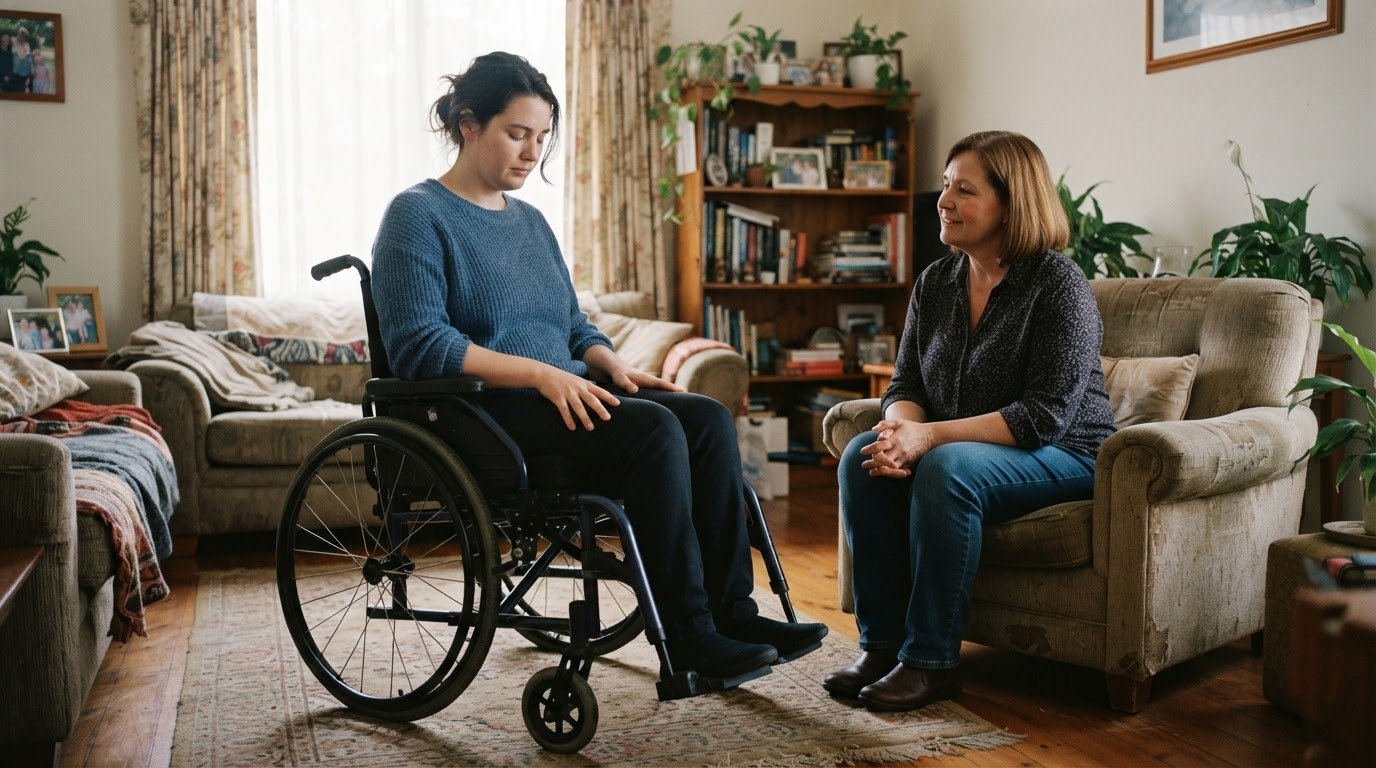
What if mindfulness began with noticing one small thing, rather than sitting still and clearing your mind? It means paying attention to what’s happening now, including your thoughts, feelings and sensations, without judging them. You can practise regularly, but there’s no need to be hard on yourself if you miss a day. Mindfulness activities for people with disabilities can be adapted to individual sensory preferences and access needs.
A body scan or guided practice may not feel comfortable in its usual format. You can adjust your position, focus on a manageable sensation or use cues that work for you. This guide explains mindfulness in everyday terms, considers how often to practise and shares ways to adapt body scans and guided activities for visual, auditory and other sensory needs. Take it step by step to find an approach that feels comfortable and personal.
Key Takeaways
- Mindfulness is about noticing what’s happening in the present, without judging yourself.
- Build a practice that fits your routine, and return to it gently if you miss a day.
- Adapt a body scan by choosing a comfortable position and focusing on sensations that feel manageable.
- Make guided practices more accessible with cues and sensory approaches that suit you.
1. Do I have to practice mindfulness exercises everyday?
No. A daily routine can help mindfulness feel familiar, but missing a day isn’t a failure. Try taking three comfortable breaths and noticing each inhale and exhale, or focus on your breathing for six breaths or a minute. The aim is to notice the present moment, not to meet a target or force relaxation.
For a feather activity, breathe gently towards a feather and watch it move. A buddy can model the steps or join in. You can also breathe in, hold, breathe out and wait for four counts, but skip the breath-hold if it feels uncomfortable. Belly breathing means noticing your abdomen rise and fall; don’t force a deeper breath.
In Australia, you can practise free, self-guided breathing exercises at home. Online sessions offer guided prompts, while in-person activities make it possible to practise with others. Low-cost options vary, so consider what feels accessible, whether you prefer support and whether you want to practise alone or with others.
If you’re autistic or have sensory sensitivities, choose one predictable cue, such as a familiar sound or watching a feather move. Keep the setting comfortable, and stop or change the activity if a sensation increases your stress.
For intellectual disability or learning difficulties, use one short instruction at a time, such as “notice your breath”, then allow time to respond. A familiar object or a trusted buddy can make the steps easier to follow. Mindful breathing may support relaxation, but it isn’t respiratory treatment; avoid forcing breaths, especially if breathing feels difficult. In Australia, the Australian Government lists 000 as the emergency services number, available 24 hours, 7 days a week.
2. Adapting body scans to sitting or lying positions
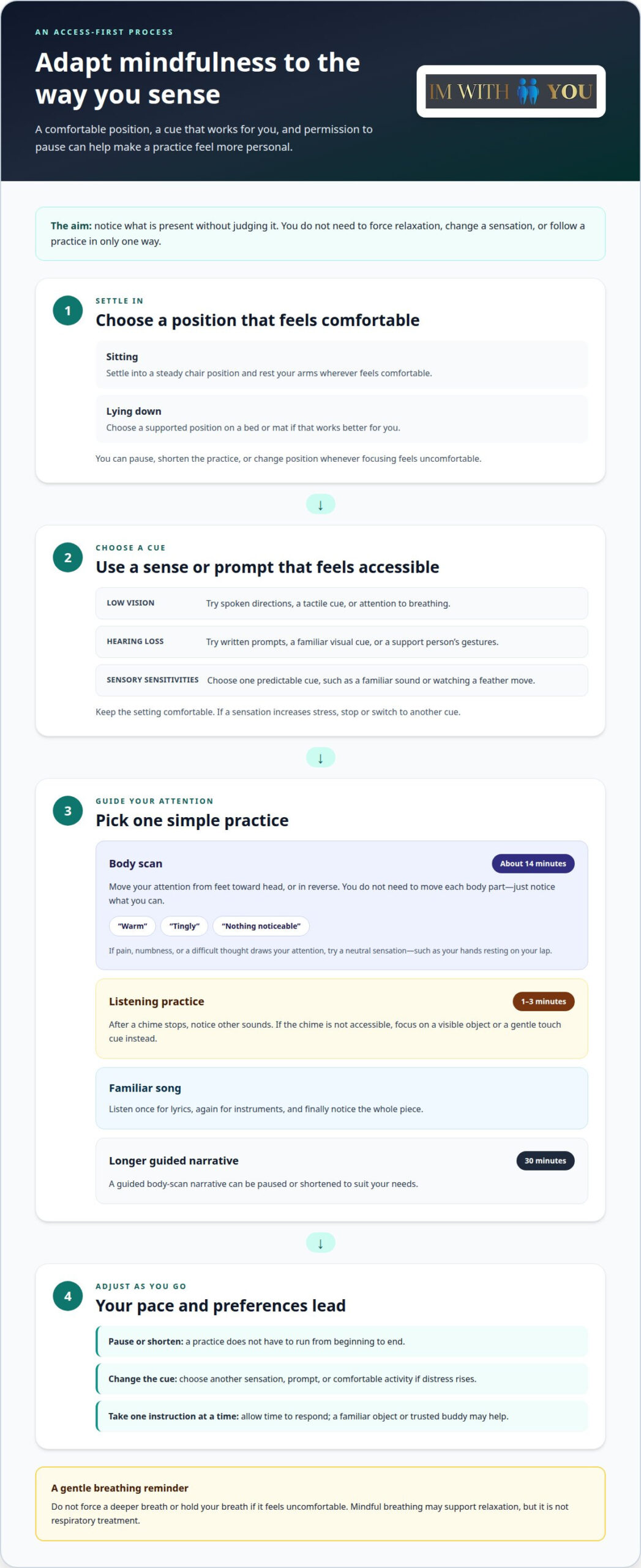
A body scan guides attention through different areas of the body, helping you notice sensations without needing to change them. A guided body scan can take about 14 minutes. You can pause, shorten the practice or move to a different position whenever focusing becomes uncomfortable.
In a chair, settle into a steady position and rest your arms wherever feels comfortable. If lying down works better, choose a supported position on a bed or mat. Gradually move your attention from your feet towards your head, or in reverse. You don’t need to move each body part; simply notice what you can.
Sensations vary. You might notice warmth in your hands, pressure where your body meets the chair or no clear sensation at all. Describe what you notice in simple words, such as “warm”, “tingly” or “nothing noticeable”. If pain, numbness or a difficult thought draws your attention, shift it to a neutral sensation, such as your hands resting on your lap.
Guided relaxation can use spoken prompts, quiet pauses or a steady sound. Choose the format that supports your awareness, and stop the exercise if it increases distress. Meditation isn’t about controlling your thoughts or changing your behaviour; it’s practice in noticing what’s present. An occupational therapist can help adapt positioning and everyday activities to your access needs. Explore occupational therapy support for a more personalised approach.
3. Guided practices for visual or auditory impairments
Guided mindfulness doesn’t need to rely on both sight and sound. A person with low vision can follow spoken directions, tactile cues or attention to breathing. Someone with hearing loss may use written prompts, a familiar visual cue or a support person’s gestures. A guided body scan can be adapted from its 30-minute narrative by pausing or shortening the practice.
For a listening activity, ring a chime, then notice other sounds for 1-3 minutes after it stops. If hearing a chime isn’t accessible, focus on a visible object or a gentle touch cue instead. Another option is a familiar song: listen once for lyrics, then again for instruments, and finally notice the whole piece. These techniques give attention a clear focus without requiring a particular way of sensing.
Practising mindfulness regularly can mean returning to a chosen activity during an everyday routine. For children, a brief shared practice with a trusted adult may feel more approachable than a long meditation. In group mindfulness, participants can share attention and feelings at their own pace. A group plan described by Fleming and Kocovski uses about 8 members, with sessions lasting 2 hours every week for 12 weeks. That’s one model, not a requirement for every group.
Carers and support workers can offer one clear instruction at a time, describe each step, and ask which cues feel accessible. Let the person choose whether to join, pause or stop; if anxiety or emotional discomfort rises, shift to a familiar, comfortable activity. Mindfulness is not a treatment for every disorder, and a positive experience depends on personal preference. Connect for support with accessible mindfulness.
Im with you
Im with you can help you connect mindfulness with the support and everyday goals that matter to you. If sensory preferences, access needs or uncertainty about support options make it harder to take part, our Disability Support Services and Community Participation Support can help you work towards greater inclusion in daily life. Our NDIS Support Coordination can assist you in navigating supports, and Disability Advocacy Services can help ensure your preferences and voice are respected.
Mindfulness is personal, and it doesn’t need to look like a formal meditation. You might want support to explore an accessible community activity, communicate what works for you, or consider how your supports align with your goals. Contact Im with you to talk about the support that may suit your needs.
Make space for a practice that feels like yours
Your next step doesn’t need to be a complete routine. Choose one small moment in your day to notice what helps you feel present, then let your practice grow around your preferences. The most useful mindfulness activities for people with disabilities respect your choices, sensory needs and pace. Adjust your approach as your needs or daily circumstances change.
If you’d like support connecting your personal goals with everyday participation, Im with you can walk alongside you. Contact Im with you for support and talk through what could work for you. You deserve to explore a path that feels comfortable, inclusive and your own.
Frequently Asked Questions
What is Mindfulness?
Mindfulness means paying deliberate attention to what you’re experiencing instead of moving through an activity on autopilot. While washing a cup, for example, notice its weight, the water’s temperature and the sound it makes. Your thoughts may wander; noticing this and returning your attention to the task is part of the practice, not a mistake.
Do I have to practice mindfulness exercises everyday?
No, you don’t have to practise every day. A routine can help, but you can also try a brief exercise while waiting for transport or preparing for a change in plans. Choose a cue that’s already part of your day, such as touching a familiar keyring, and practise when it feels useful.
How do you apply mindfulness to real life?
Use a routine task as a reminder to pause and notice your experience. Before opening a message, for instance, notice whether you feel tense or settled, then choose how to respond. During a conversation, pay attention to the other person’s words and your own reactions. This gives you space to make a considered choice.
What mindfulness activities are suitable for people with different disabilities?
Suitable activities depend on what each person finds accessible and comfortable. Someone with low vision might notice the feel of a textured object; someone with hearing loss could focus on a visual pattern. Mindfulness activities for people with disabilities can also involve describing a familiar object, noticing a preferred sensory experience or observing a stim without judgement.
How can mindfulness exercises be adapted for people with physical disabilities or limited mobility?
Mindfulness exercises don’t require standing, stretching or changing position. Practise in your usual chair or supported resting position, noticing a chosen sensation, such as your hands on a cushion or your clothing moving as you breathe. Keep aids and supports in place, and choose prompts that don’t require painful or tiring movement.