
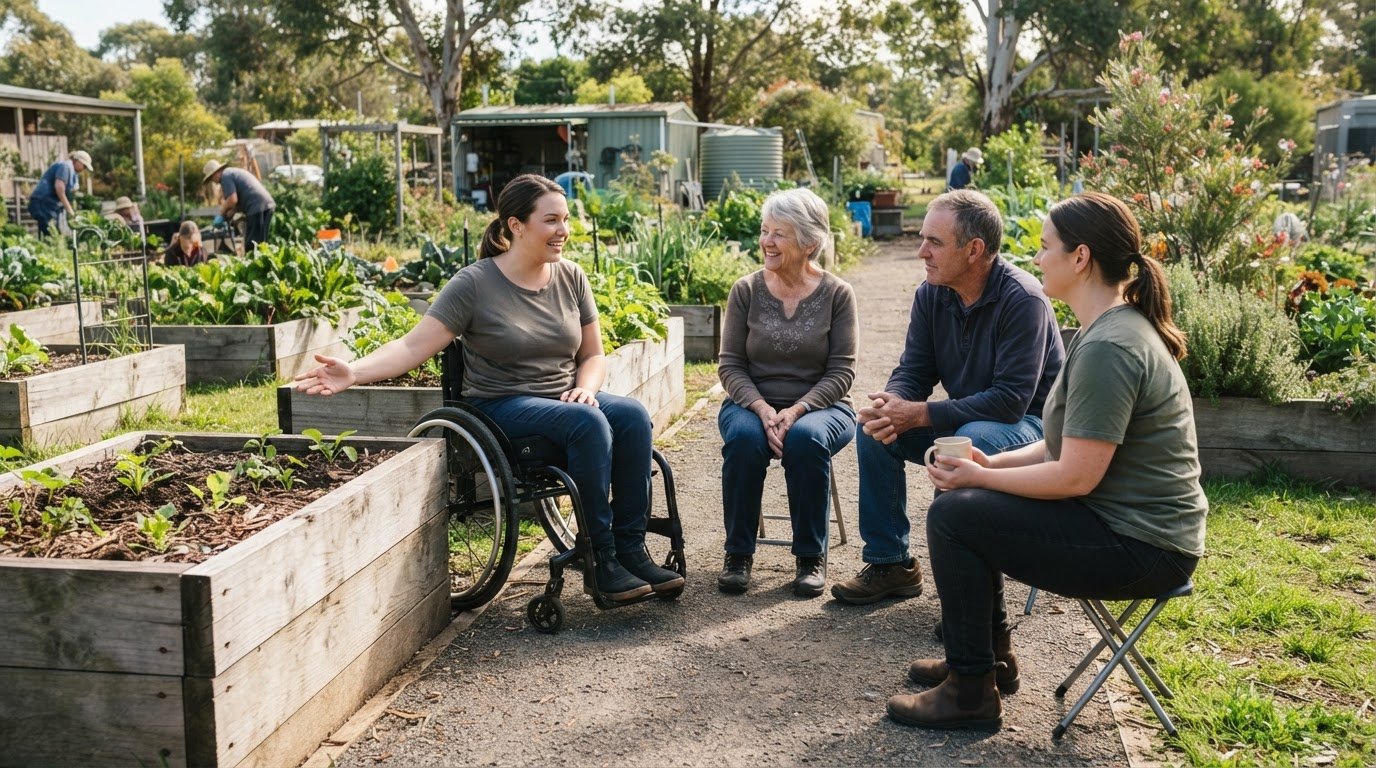
If you’re wondering what a circle of support is, it’s a group of people who meet with a person with disability to help them think about, plan and pursue personal goals. The person stays at the centre: their ideas, choices, identity and values guide the conversations. Members may include family, friends and other important people in their life.
It’s understandable to want support that respects a person’s independence while easing some pressure on carers. In self-directed planning (SDP), a circle can help turn hopes into shared goals and practical next steps. This article explains how a circle works, how it can benefit the person and their carers, and how listening closely to the person’s aspirations can help shape a more fulfilling life.
Key Takeaways
- Shape conversations around the person’s hopes, using communication approaches that help them take part and express what matters.
- Build a circle from trusted relationships, then let its members and roles evolve as the person’s goals change.
- Shared support can ease pressure on carers, reduce isolation and help turn everyday ideas into steps towards greater independence.
- When extra support is helpful, connect personal goals with practical supports that build skills, community participation and coordination.
Listening to the focus person’s dreams
The person’s aspirations should guide every conversation, from the first meeting onwards. Person-centred planning puts their needs, wishes and goals first. Ask what they want to do, then listen without replacing their ideas with other people’s priorities. A goal might be joining a local group, finding work, moving out or taking a holiday.
Who can be part of a circle of support? Friends, family, neighbours, teachers, classmates, coworkers and other important people may join. Choose people whose qualities suit the support needed and who can build rapport with the person. They may also choose a trusted champion to help keep their expressed wishes central.
Members help the person think through goals, explore options and plan next steps. They may offer advice or help solve problems, while keeping the person’s wellbeing in focus. Their role isn’t to take over decisions or provide personalised care plans. At least two facilitators can share meeting tasks: one leads the discussion, while another records information and creates graphics.
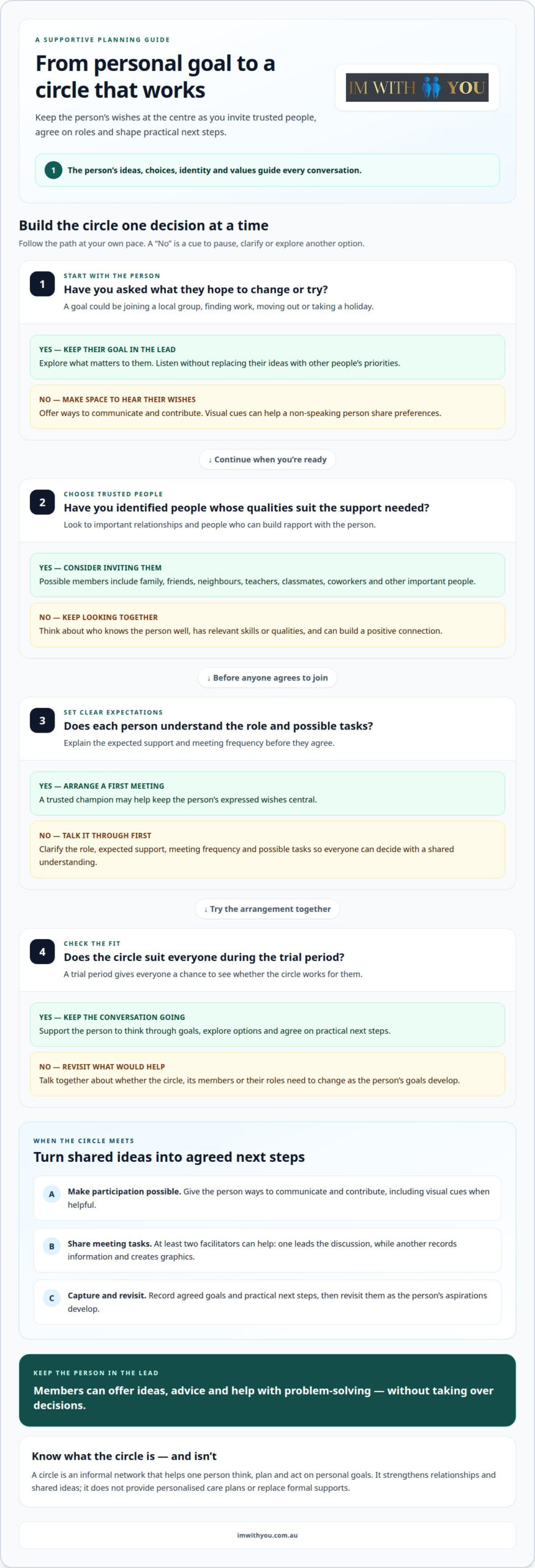
How do you set up a circle of support step by step? Start with the person’s goals, identify suitable people, explain each invitation clearly, and arrange a first meeting.
- Ask the person what they hope to change or try, such as joining a community activity.
- Invite people who care about them and have relevant skills or qualities.
- Explain the role, expected support, meeting frequency and possible tasks before they agree.
- Use a trial period to see whether the circle suits everyone involved.
During meetings, give the person ways to communicate and contribute. Visual cues can help a non-speaking person share their preferences. Record agreed goals and practical next steps, then revisit them as the person’s aspirations develop.
Benefits for people with disability and carers
A circle can make everyday decisions feel less isolating. For example, members can help someone consider moving into their own home, talk through practical concerns and identify who could help. The person stays involved in decisions while trusted people offer ideas and encouragement. Sharing the thinking can make a major transition feel more manageable.
Community connections can grow through small, supported steps. A circle member might accompany someone to a local event or help them meet people in a group setting. Regular contact can build relationships and reduce isolation. It can also create opportunities to share achievements, from joining an activity to developing a new friendship.
Carers may benefit when trusted people share some responsibilities. Members can help with decisions, brainstorm solutions and offer reassurance when a carer is unsure where to turn. This doesn’t make friends or family responsible for personalised care. Instead, the circle can strengthen the person’s natural support network and ease some pressure on primary carers.
Planning ahead matters too. A circle can discuss who might help if a regular caregiver becomes unable to provide support. These conversations can contribute to continuity planning and reduce uncertainty for families. Members can also encourage positive risk-taking by weighing possible challenges alongside the person’s wishes and available support.
Support can include honest conversations when plans need to change, as well as time to celebrate progress. If self-advocacy feels difficult, talk through support options with someone who can help you consider the next step. A circle works best when its contributions strengthen the person’s relationships and choices, rather than taking control away from them.
Definition and purpose of a circle of support
A circle of support is an informal group that helps one person think, plan and act on personal goals. Its purpose is to keep support connected to that person’s identity and wellbeing.
How a Circle of Support Works
The person and circle members meet or communicate to consider goals, share ideas and agree on practical help. For example, members might discuss what could make joining a community group easier. A circle differs from a support group, which usually brings people together around shared experiences. It also differs from case management, which coordinates services rather than centring informal relationships.
Use in Australian Disability and NDIS Services
In Australia, circles of support are informal networks around people with disability. They can complement family relationships and professional services, but they don’t replace personalised care or support plans. This distinction helps everyone understand their role: friends and relatives can offer connection and ideas, while formal services address support needs within their remit.
There’s no single set price for an informal circle. Members may contribute voluntarily, while a paid facilitator or related professional support may involve costs. NDIS funding applies to a particular support and its fit with the person’s plan, not simply to the existence of a social circle. Keep these arrangements distinct when discussing budgets.
Privacy starts with the person’s consent. Agree what information members can share, with whom and for what purpose. For example, meeting notes about a personal goal should only go to people the person has agreed can receive them. Set clear boundaries, respect the person’s choice to withdraw consent, and discuss any safety concerns openly with appropriate supports.
Im with you: Therapeutic Supports
Im with you can help connect personal goals with practical disability supports. Therapeutic Supports can help build skills for everyday life, while Community Participation Support can assist with taking part in community activities. NDIS Support Coordination can help you understand support arrangements and connect them with your goals.
A circle of support offers informal relationships and shared ideas. Professional support can complement that network when you want help working towards a goal. You might consider Therapeutic Supports when developing skills is part of your plan, or Community Participation Support when you want to become more involved in your community. The right support depends on what matters to you and the steps you want to take.
If you would like to discuss support that fits your goals, contact Im with you.
Take the next step at your own pace
Understanding what a circle of support is can help you start a conversation about the life someone wants to build. The next step might be small: naming a goal, inviting a trusted person into the discussion, or exploring what support could help. The person’s wishes can continue to guide those choices as circumstances change.
When you’d like practical support alongside your informal network, I’m With You offers Disability Support Services to help you work towards personal goals. Talk with us about the kind of support that feels relevant to your situation. You don’t need to have every detail worked out first.
Contact Im with you to discuss a next step that feels right for you. Your goals matter, and you can move towards them with support beside you.
Frequently Asked Questions
What is a Circle of Support, and Why Are They Important in SDP?
In self-directed planning, a circle can keep a person’s priorities visible as they explore choices and organise support. For example, if someone is deciding between learning at home and joining a course, trusted people can help them consider what suits them. Their role is to support the person’s participation, not make the decision for them.
What is a circle of support?
A circle of support is a group of people who come together around one person’s goals and wellbeing. Understanding what a circle of support is can help clarify that it’s a relationship-based network, not a formal decision-making authority. For instance, members might help someone prepare questions before a conversation about a new opportunity, while leaving the person to decide what to ask.
What is the purpose of a circle of support?
The purpose is to help a person move towards a life that reflects their values, relationships and choices. A circle might help someone think through what matters before a major change, such as taking on a new responsibility. Members can share perspectives and encouragement, while the person decides which ideas feel right and what they want to pursue.