

What if your NDIS plan felt less like a list of unfamiliar supports and more like a practical path towards your goals? It’s understandable to feel unsure about what your funding can be used for, how to connect different providers or how to accept help while keeping choice and control. The benefits of NDIS support coordination can include having someone alongside you to make sense of your plan and turn it into practical next steps.
In this article, you’ll learn how a support coordinator can help you connect supports, work through challenges and keep your personal goals at the centre of decisions. We’ll also look at how to prepare for conversations and work collaboratively, so you can move forward in a way that suits you.
Key Takeaways
- The benefits of ndis support coordination can include turning plan details into practical steps that connect with your priorities.
- Preparing a few questions about your goals, current supports and what feels difficult can make coordination conversations more focused.
- You can share your preferences and make your own decisions while a coordinator helps you explore and connect relevant supports.
- Im with you provides NDIS Support Coordination and Specialist Support Coordination to help participants work through their plans collaboratively.
What are the benefits of NDIS support coordination?
Understanding an NDIS plan and connecting different services can feel like a lot to manage, especially when you’re working out what each support means in everyday life. The National Disability Insurance Scheme (NDIS) is Australia’s national scheme for supporting eligible people with disability, and the scheme’s wider purpose provides helpful context for how individual plans fit into the picture.
Support coordination helps you understand your NDIS plan and put its funded supports into practice.
A coordinator can help clarify plan details, organise conversations with providers and connect different supports around your goals. You might use coordination to map out who to contact, what to discuss and what steps to take next. This can make it easier to focus on practical actions without having to work out every part of the system alone. The benefits of ndis support coordination depend on your circumstances and what matters to you.
How can a coordinator help turn a plan into practical support?
Imagine you’d like to take part in an art group but aren’t sure how your existing supports could help. A coordinator could talk through the goal with you, help identify relevant supports in your plan and assist with connecting the providers involved. You could agree on a first step, such as discussing your goal with a relevant provider. You remain at the centre of decisions; the coordinator helps make the next steps easier to understand and organise.
Support coordination isn’t automatically included in every NDIS plan. It can be used when your plan includes funding for it. If you’re unsure what your plan says, a coordinator can help you understand the relevant wording and consider how that funding relates to your priorities. Coordination can offer guidance and connection, but it doesn’t guarantee a particular outcome.
How does NDIS support coordination help while keeping you in control?
Accepting help shouldn’t mean handing over your choices. Support coordination works best as a partnership: you share what matters to you, and your coordinator helps you explore options, connect with relevant providers and communicate your preferences. You can stay involved in decisions about who supports you and how those supports fit your life.
The official NDIS guidance on support coordination explains how a coordinator can help you understand and use your plan. Coordination focuses on connecting and organising supports; it isn’t the same as plan management, which relates to handling plan funding and payments. Your coordinator can help you make sense of supports, but they don’t take control of your funding or make personal decisions for you.
What does working collaboratively with a support coordinator look like?
You might begin by talking through what feels most important, what has been working and where you’d like more support. Together, you can agree on priorities and identify specific next steps, such as making a list of providers to contact or noting questions you want answered. If your needs or goals change, you can revisit the plan for coordination and adjust the focus. You can also choose how you take part in conversations, including what you’d like shared with providers.
Collaborative support coordination helps you make informed choices; it doesn’t make those choices on your behalf.
These benefits of ndis support coordination grow from a working relationship where your voice stays central. Im with you provides NDIS Support Coordination with a person-centred approach, walking alongside you as you connect supports with your priorities.
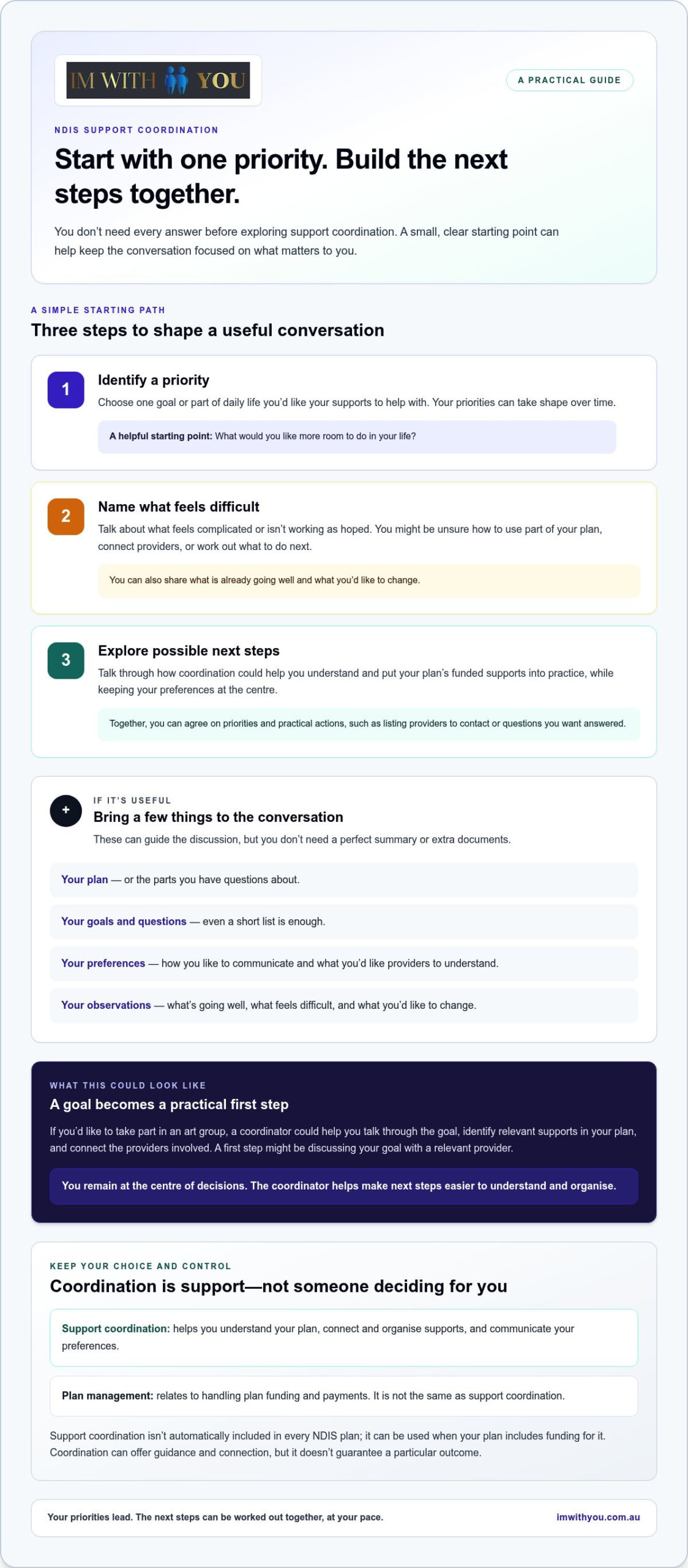
How to take a supportive next step with NDIS support coordination
You don’t need to have everything figured out before exploring support coordination. A small, clear starting point can make the conversation feel more manageable and help keep the focus on what matters to you.
- Identify a priority. Think about one goal or part of daily life you’d like your supports to help with.
- Name what feels difficult. You might be unsure how to use a part of your plan, how to connect providers or what to do when a support isn’t working as hoped.
- Explore possible next steps. Talk through how coordination could help you understand and implement your plan, while keeping your preferences at the centre.
Im with you provides NDIS Support Coordination and Specialist Support Coordination. You can discuss your goals, what you’d like help organising and the questions you have about your plan. Understanding the benefits of NDIS support coordination starts with your priorities, not a one-size-fits-all checklist.
What can you bring to an initial support coordination conversation?
If it’s useful, bring your NDIS plan or the parts you have questions about, along with a short list of goals or things you’d like to ask. These can guide the discussion, but you don’t need to prepare a perfect summary or gather extra documents before speaking. Your own observations are a helpful starting point.
You could share what’s going well, what feels complicated and what you’d like to change. If you’re also considering other supports, a guide to choosing an NDIS provider may help you think about what matters in a provider relationship. You can also note how you prefer to communicate and what you’d like providers to understand about your goals. Take the next step at your own pace. A conversation about NDIS Support Coordination can help you explore support that works alongside you and your goals.
Take your next step at your own pace
You don’t need to have every answer before seeking support. A useful next step can simply be noticing what you’d like more room to do in your life, and allowing that intention to guide a conversation. Your priorities may take shape over time. The aim isn’t to move faster, but to find a way forward that feels right for you.
The benefits of ndis support coordination are most meaningful when the support reflects your voice and direction. You deserve space to consider what feels comfortable, ask questions and decide what comes next without pressure. Im with you provides support coordination to help you connect your NDIS supports with your priorities.
Explore how Im with you can support your NDIS journey. Share what matters to you and take the next step with a team that works alongside you.
Frequently Asked Questions
What are the main benefits of NDIS support coordination?
The main benefits can include understanding your plan more clearly, making it easier to organise support and knowing what steps you could take next. For example, if you’re unsure who to contact about a particular support, a coordinator can help clarify the options and plan possible next steps with you. The benefits of ndis support coordination can look different for each person, depending on their goals and circumstances.
Does NDIS support coordination take away my choice and control?
No, support coordination should help you make your own decisions, not make them for you. You can talk through options, explain what matters to you and decide which supports feel suitable. If a suggested approach doesn’t feel right, you can say so and discuss alternatives. You can also ask for information in a way that helps you feel comfortable taking part.
What is the difference between support coordination and plan management?
Support coordination helps you understand and put your plan into practice by connecting supports, while plan management focuses on the financial administration of your NDIS funding. For instance, a coordinator may help you understand how to connect with a relevant provider; a plan manager handles plan-related financial tasks. They are separate roles, even though both relate to using your plan.
Can support coordination help me connect different NDIS supports?
Yes, a coordinator can help you consider how different supports might work together towards a goal. If you want to build confidence preparing meals, for example, you could discuss whether supports in your plan could contribute to that goal and how to organise conversations with relevant providers. Your choices and plan shape what connections may be useful.