

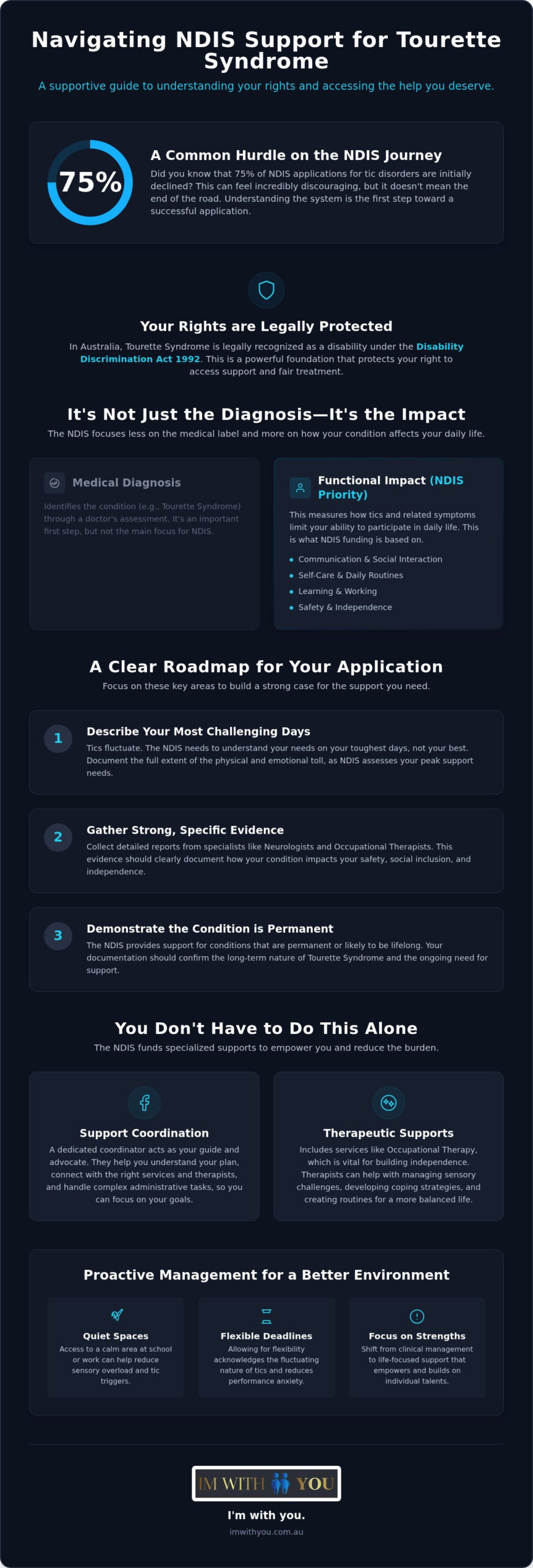
Did you know that 75% of NDIS applications for tic disorders are initially declined? When you’re constantly asking yourself, is tourettes a disability that the system actually recognizes, this statistic can feel incredibly discouraging. I understand how draining it is to explain your tics to a world that doesn’t always listen, or to feel the physical toll of a day spent fighting your own body. It’s frustrating when the support you need feels just out of reach.
I’m here to show you that your struggle is valid and supported. You’ll discover how Tourette Syndrome is recognized as a disability in Australia in 2026 and learn the practical steps to access the NDIS support you deserve. We’ll explore a clear roadmap for eligibility, the importance of documenting functional impact, and how a steady advocate can help you find your voice within the system.
Key Takeaways
- Understand how the Disability Discrimination Act 1992 legally protects your rights and helps clarify the question, “is tourettes a disability,” based on your unique life experiences.
- Learn how to present evidence for NDIS eligibility by focusing on the functional impact of your condition during your most challenging and fluctuating days.
- Discover practical management strategies and environmental adjustments for school or work that can reduce triggers and create a more supportive space for you.
- Explore how specialized Support Coordination and Therapeutic Supports can empower you to build independence and navigate your NDIS journey with confidence.
Recognising Tourette Syndrome as a Disability in Australia
Under the Australian Disability Discrimination Act 1992, Tourette Syndrome is legally recognised as a disability. This means you have protected rights to access support and fair treatment in schools, shops, and workplaces. I know that living with tics isn’t just about movement; it can be physically painful and deeply exhausting. It’s a daily reality that requires immense energy to manage. Recognizing that is tourettes a disability in the eyes of the law is a powerful step toward getting the help you deserve.
To better understand this concept, watch this helpful video:
The legal framework looks beyond a doctor’s letter to see how your life is truly affected. This is known as functional impairment. It measures how your symptoms might interfere with your communication, social interactions, or your ability to learn in a traditional environment. If you’re looking for more clinical context, the Tourette Syndrome Wikipedia page offers a comprehensive history of the condition.
The Difference Between Medical Diagnosis and Functional Impact
Functional impact is the degree to which a condition limits daily activities like self-care or socialising.
While a medical diagnosis identifies the condition, the NDIS prioritizes the practical hurdles you face every day. They focus on what you can’t do easily rather than just the name on your medical file. This person-centered approach ensures your funding matches your actual needs. I’m with you in this journey, and I encourage you to use person-first language when describing these challenges. It’s a simple way to maintain your dignity while clearly communicating that is tourettes a disability that impacts your daily choices and independence.
Accessing NDIS Support for Tourette Syndrome
Applying for NDIS funding can feel like a mountain to climb, but the process is manageable when you focus on the right criteria. When people ask, is tourettes a disability that the NDIS covers, the answer depends on the functional impact on your daily life. In 2026, the NDIS requires proof that your condition is permanent and significantly affects your ability to participate in everyday activities. While the medical community provides Tourette Syndrome Information regarding its neurological origins, the NDIS cares most about your capacity to live independently.
A common hurdle is the fluctuating nature of tics. Some days are calm, while others are physically draining. It’s vital to describe your life based on your most challenging days. The NDIS looks at these peak needs to determine support levels. Gathering strong evidence from neurologists and Occupational Therapists is essential. They can document how tics impact your safety and social inclusion. Learning how to choose an NDIS provider early on can give you a head start in understanding these requirements. It’s much easier to answer the question, is tourettes a disability that qualifies for funding, when you have expert guidance by your side.
How Support Coordination Simplifies the NDIS Journey
Support Coordination is a dedicated service designed to take the weight off your shoulders. A coordinator acts as your steady companion, helping you implement your plan and connect with the right therapists. They advocate for you, ensuring your plan supports real-life goals like finding joy in leisure activities and community connection. At Im with you, I walk alongside you to handle the complex paperwork and phone calls that often cause anxiety. My goal is to keep the focus on your agency and growth. If you’re feeling overwhelmed, our Disability Support Services are here to help you navigate every step with confidence.
Effective Management Strategies and Advocacy
Living well with Tourette’s involves more than just a medical diagnosis. It’s about proactive management and environmental adjustments. For example, simple changes at school or work can significantly reduce tic triggers. This might include quiet spaces or flexible deadlines. When considering the question, is tourettes a disability, we focus on these practical solutions that empower you. Occupational Therapy, a form of Therapeutic Support, is often vital for managing sensory processing challenges that often accompany tics. By focusing on your strengths, we move away from clinical management and toward life-focused support.
You don’t have to manage this journey alone. Advocacy is a core part of living a full life, and I’m here to act as your steady companion. Organizations like the Tourette Syndrome Association of Australia provide wonderful resources for families. When we explore the reality that is tourettes a disability, it’s clear that the right support system makes all the difference. My goal is to build your confidence through Community Participation Support, helping you feel more secure in social settings. Whether it’s joining a local group or navigating a new hobby, we’ll walk alongside you to ensure you feel heard.
Building a Supportive Care Team
Your care team should be a collaborative circle involving family, specialists, and support workers. We work as one to prioritize your agency. The goal isn’t to ‘hide’ your tics; it’s to ensure they don’t stop you from being independent. Given that 90% of Australians with Tourette Syndrome have at least one co-occurring condition, understanding intellectual disability or ADHD is vital for a holistic care plan. This partnership ensures every aspect of your well-being is supported, allowing you to focus on your personal growth and happiness.
Your Path Toward Empowerment and Support
You’ve explored how the law protects your rights and how the NDIS evaluates your functional needs on your most challenging days. Recognizing that is tourettes a disability under Australian law is the first step toward accessing vital Therapeutic Supports and meaningful environmental adjustments. You don’t have to face these government systems on your own. As the 2026 Excellence in Disability Support Award winner, Im with you provides expert NDIS Support Coordinators who offer compassionate, person-centered advocacy to help you thrive.
I’m here to ensure your voice is heard and your personal goals remain the focus of your care. We’re here to walk this path with you; contact our team for NDIS support today. You possess incredible resilience, and I’m honored to be your steady companion as you move forward with confidence and dignity.
Frequently Asked Questions
Is Tourette Syndrome considered a permanent disability for the NDIS?
Tourette Syndrome is recognized as a permanent neurological condition. To qualify for the NDIS, you must demonstrate that this permanence results in a significant functional impairment. This means showing how tics affect your daily life and independence. I’ll help you gather the right evidence to prove that your support needs are enduring, making the question of is tourettes a disability clear to the assessors.
What kind of NDIS funding can I get for Tourette Syndrome?
Your funding is based on your unique goals and daily needs. You might access Therapeutic Supports, such as Occupational Therapy for sensory processing. Many participants also receive funding for Community Participation Support to build social confidence. I specialize in NDIS Support Coordination, which helps you understand your plan and connect with providers who truly understand tics. Together, we’ll ensure your budget reflects your life-focused support goals.
Can I get disability support for my child with Tourette’s at school?
Schools must provide educational adjustments, but the NDIS funds supports that build your child’s functional skills. This includes therapy to help with self-regulation or Capacity Building Skills to increase independence. I can walk alongside you through our Disability Advocacy Services to ensure your child’s needs are understood. We’ll work together to create a supportive bridge between your child’s home life, their therapy, and their school environment.
What happens if my NDIS application for Tourette’s is rejected?
Please don’t feel discouraged if your application is rejected; research shows that 75% of initial applications for tic disorders are declined. You can request an internal review or reapply with more detailed evidence. I’m here to act as your steady companion during this stressful time. We’ll focus on documenting your functional impact more clearly, ensuring the NDIS understands why is tourettes a disability that requires support.