

What if medication management wasn’t a source of anxiety, but a quiet moment of connection and safety between you and the person you support? I know how heavy the responsibility feels when you’re balancing NDIS documentation with the warmth of a home environment. It’s completely normal to feel a bit overwhelmed by the technical details while trying to keep things personal and dignified. I’m with you in this journey. I’ll help you master the six rights of medication administration using a supportive framework that puts the individual first.
You’ll gain the confidence to manage medications safely without losing the human touch that makes your care so special. We’ll explore how to navigate the 2026 NDIS standards with ease; ensuring every dose is a step toward better health, autonomy, and independence for those we walk beside.
Key Takeaways
- You’ll discover how the six rights of medication administration act as a gentle, reliable checklist to keep the people you support safe and healthy every day.
- I’ll show you how to blend clinical precision with person-centered care, making identity checks and dose management feel like a natural part of a warm home environment.
- Gain a clear understanding of the 2026 NDIS Practice Standards so you can feel confident and prepared when managing complex documentation requirements.
- Learn practical strategies for creating a calm, stress-free atmosphere that honors the choice and dignity of the individual while strengthening your partnership with GPs and pharmacists.
Why the Six Rights are the Foundation of Safe Disability Support
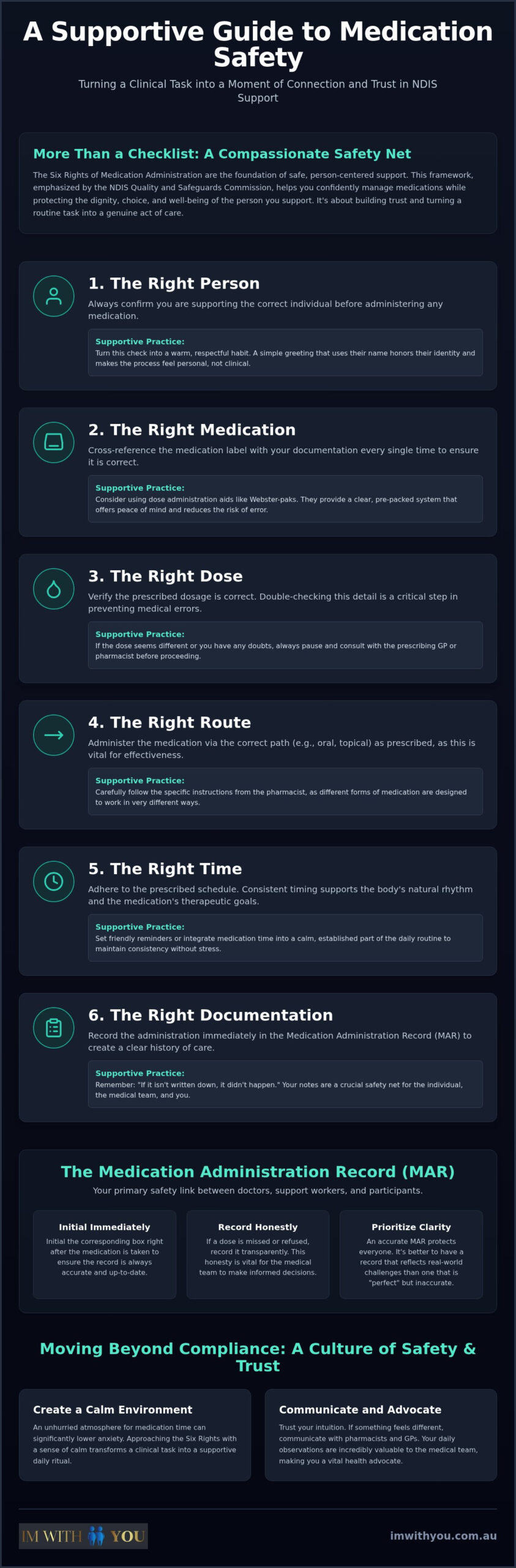
Managing medication in a home setting can feel like a heavy weight on your shoulders. I understand that the clinical nature of these tasks often feels at odds with the warmth of a family home. That’s why the six rights of medication administration are so valuable. They aren’t just a list of rules from a textbook; they’re a compassionate safety net designed for preventing medical errors while building a foundation of trust. By following this simple checklist, you’re ensuring that safety becomes a quiet, reliable part of your daily routine.
In 2026, the NDIS Quality and Safeguards Commission emphasizes these standards to protect everyone involved. This framework helps you meet your compliance goals without losing sight of the person at the center of the care. I’ve found that when we view medication as a collaborative journey, it stops being a clinical burden and becomes an act of support. This “active support” approach invites the participant to be a partner in their health journey, rather than a passive recipient of care.
Protecting Dignity and Choice in Medication Management
Using person-first language is just the start of showing respect. The six rights of medication administration empower participants by upholding their right to be informed. Every person has the right to know what they’re taking, why it’s been prescribed, and what the benefits are. Honoring these preferences isn’t just about safety; it’s about dignity. When you explain a dose or listen to a concern about a side effect, you’re validating their agency and choice. This partnership ensures that medication time is a moment of mutual respect and clear communication.
The Six Rights of Medication Administration: A Practical Framework
Applying the six rights of medication administration doesn’t have to feel like a hospital procedure. It’s a series of gentle checks that ensure safety while you’re enjoying a cup of tea or catching up on the day’s news. I’m here to help you turn these clinical steps into a natural part of your daily routine.
Confirming the “Right Person” is as simple as a warm greeting that acknowledges the individual. In long-term care relationships, this check becomes a respectful habit that honors the person’s identity. For the “Right Medication” and “Right Dose,” always cross-reference the label with your documentation. Many families find that using dose administration aids like Webster-paks provides peace of mind; they offer a clear, pre-packed system that reduces the risk of error.
The “Right Route” and “Right Time” are vital for ensuring the medication remains effective. Staying consistent with these timings supports the body’s natural rhythm and therapeutic goals. If you ever feel overwhelmed by these requirements, our Community Nursing under NDIS specialists are here to walk alongside you and provide guidance.
Finally, the “Right Documentation” acts as a safety net. It records the care you’ve provided and protects everyone involved by creating a clear history of health support. We often say “if it isn’t written down, it didn’t happen,” and viewing this as a protective measure for everyone helps remove the stress often associated with paperwork.
The Critical Role of the Medication Administration Record (MAR)
A Medication Administration Record is the primary safety link between doctors, carers, and participants. To keep an NDIS-compliant MAR chart, simply initial the corresponding box immediately after supporting the person with their medication. If a dose is missed or refused, record it honestly. Transparency helps the medical team make informed decisions; it’s much better to be open about challenges than to aim for a perfect, but inaccurate, record.
Moving Beyond Compliance: Creating a Culture of Safety and Trust
Safety is about more than just checking boxes. It’s about how the person feels during the process. I’ve found that creating a quiet, unhurried environment for medication time can significantly lower anxiety for both you and the individual you support. When we approach the six rights of medication administration with a sense of calm, it transforms a clinical requirement into a supportive daily ritual. You’re not just a carer; you’re a vital advocate for their health and wellbeing.
Open communication with pharmacists and GPs is a key part of this journey. If something doesn’t feel right or you notice a subtle change in the person’s reaction, trust your intuition. You’re the one who walks alongside them every day, which makes your observations incredibly valuable to the medical team. When you’re choosing an NDIS provider, look for a partner that values this blend of clinical governance and genuine emotional warmth.
Collaborative Support: We Are With You Every Step
Setting up safe systems at home doesn’t have to be a solo effort. Our NDIS Support Coordination can help you organize everything from dose administration aids to clear documentation protocols. I want you to know that seeking help with complex care is a sign of high-quality support and professional strength. It shows your commitment to excellence, and you may also wish to explore Medical and Dental Emergency Training Services to stay informed on 2026 compliance standards across the health sector. By working together, we ensure the six rights of medication administration remain a promise of safety that honors the dignity and choice of the person at the heart of our care.
Walking Together Toward Safer, More Compassionate Care
You’ve now explored how the six rights of medication administration can transform a clinical requirement into a meaningful act of support. By prioritizing the person behind the prescription, you’re not just ensuring safety; you’re honoring their dignity and choice every single day. I’m with you as you create a home environment where trust and wellbeing flourish alongside technical excellence. Documentation and safety checks are simply tools that help us protect those we walk beside.
As a national Australian provider awarded for excellence in care in 2026, we’re dedicated to helping you master these complex systems with warmth. Our team of person-centered advocacy specialists is ready to walk alongside you. Explore our compassionate Disability Support Services today and discover how we can help. You’re doing an incredible job, and I’m here to ensure you feel confident every step of the way.
Frequently Asked Questions
What are the six rights of medication administration in simple terms?
The six rights of medication administration are a safety checklist to ensure the right person receives the right medication, in the right dose, via the right route, at the right time, with the right documentation. I think of them as a gentle promise of safety. They help you stay focused on the individual’s needs while maintaining high standards in a warm home environment.
Why is documentation considered one of the six rights in NDIS care?
Documentation is a core right because it protects both you and the person you support. In the 2026 NDIS framework, keeping an accurate record ensures continuity of care and provides vital information for doctors. It’s not just about compliance; it’s a way to honor the person’s health journey by making sure their history is clear and respected within the six rights of medication administration.
What should I do if a medication error occurs while following the six rights?
If an error happens, the first step is to stay calm and ensure the person is safe. I’m with you, and I know how stressful this feels. You should immediately contact a GP or pharmacist for medical advice and follow the 2026 NDIS incident reporting guidelines. Being honest and proactive shows your commitment to safe care and helps prevent future mistakes from happening again.
How can NDIS Support Coordination help me manage complex medications?
Our NDIS Support Coordination services help you navigate healthcare systems by connecting you with specialized professionals. We’ll assist in setting up medication management plans or finding a community nurse who understands your needs. This collaborative approach ensures that clinical safety and emotional warmth always go hand in hand; providing a sense of security that you aren’t alone in these challenges.