

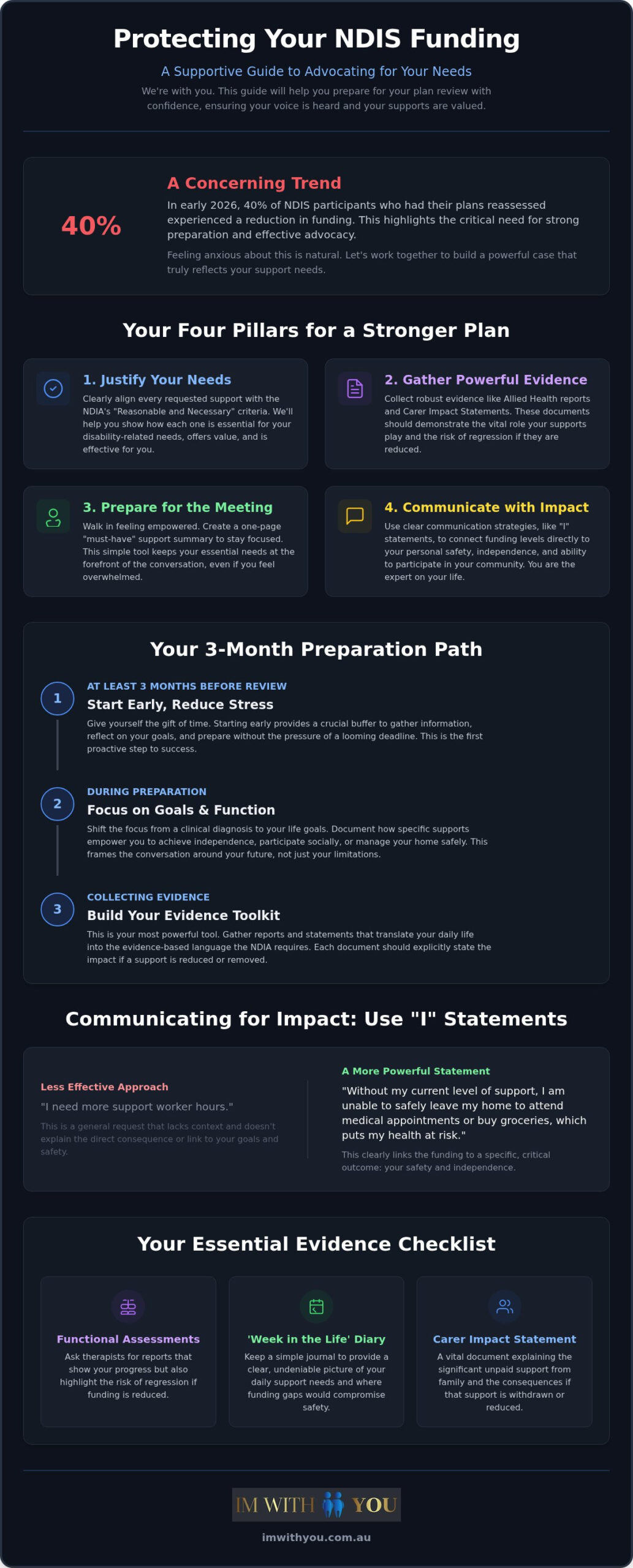
Did you know that in the first three months of 2026, 40% of NDIS participants who had their plans reassessed saw their funding reduced? This statistic can feel incredibly heavy, especially when your supports are what keep you connected and independent. It’s natural to feel anxious about your upcoming review or worry that your voice won’t be heard. I’m with you, and I understand how much is at stake for your daily life. Learning how to advocate for your NDIS plan not to receive less funding is about more than just asking for help; it’s about speaking the right language.
This guide will show you how to proactively gather the functional evidence the NDIA values most. We’ll explore how to translate your daily challenges into clear, actionable data so your funding remains a true reflection of your support needs. You’ll gain the confidence to walk into your next meeting feeling heard, empowered, and fully prepared.
Key Takeaways
- Understand how to align your support needs with the NDIA’s “Reasonable and Necessary” criteria to ensure every dollar in your plan is clearly justified.
- Learn how to gather powerful evidence, including allied health reports and Carer Impact Statements, that demonstrate the vital role your current supports play in your daily life.
- Discover practical tips on how to advocate for your NDIS plan not to receive less funding by preparing a “must-have” support summary for your planning meeting.
- Empower yourself with communication strategies, like using “I” statements, to clearly articulate how specific funding levels directly impact your safety and independence.
Building a Strong Foundation for Your NDIS Plan Review
Preparing for a plan review can feel like a heavy weight, but you don’t have to carry it alone. I’m with you in this process. To understand how to advocate for your NDIS plan not to receive less funding, we need to start with a solid foundation. The most effective strategy is to begin your preparation at least three months before your current plan ends. This buffer gives us plenty of time to breathe, reflect, and gather the right information without the pressure of a looming deadline.
When we sit down to prepare, our focus shifts from simply listing a diagnosis to highlighting your life goals. The National Disability Insurance Scheme (NDIS) is designed to support your independence and social participation. Instead of describing what you can’t do, we’ll document how specific supports empower you to join a local club, learn a new skill, or manage your home safely. This goal-oriented approach transforms the conversation from a clinical assessment into a roadmap for your future.
Identifying the ‘Reasonable and Necessary’ Evidence
The NDIA uses six specific criteria to decide what they will fund. Every support must be related to your disability, represent value for money, and be likely to be effective and beneficial for you. It’s also vital to distinguish between disability-related needs and everyday living costs. For instance, the NDIS generally won’t pay for rent or groceries, as these are costs everyone faces. By focusing on evidence that proves a support is essential for your specific functional needs, we build a much stronger case for your funding.
It’s completely normal to feel drained by this process. We’re here to help you stay focused on your strengths and the progress you’ve already made. By starting early and centering the conversation on your aspirations, you’re taking the first proactive step toward learning how to advocate for your NDIS plan not to receive less funding.
Gathering Evidence to Protect Your Funding Levels
Collecting evidence is your most powerful tool. It’s how you translate your daily life into the specific evidence-based language the NDIA requires. To learn how to advocate for your NDIS plan not to receive less funding, you need reports that don’t just list what you do; they must explicitly state the impact if that support is reduced. I’m with you in making sure these documents reflect your reality. It’s helpful to keep a “week in the life” diary to show where gaps in funding would compromise your safety or independence. This data provides a clear, undeniable picture of your support requirements.
A “Carer Impact Statement” is equally vital. It documents the significant unpaid support family members provide and explains the consequences if that support is withdrawn. Throughout all your documentation, we recommend using person-first language to ensure the focus stays on you as an individual. This approach keeps the narrative centered on your agency and personal growth rather than just a diagnosis. It reminds the planner that they’re supporting a person with a life to lead.
Working with Your Support Team for Stronger Reports
Ask your therapists for “Functional Capacity” assessments. These show your progress while highlighting the risk of regression if funding drops. Reports should also cover how supports facilitate leisure activities and social connection. Consistency in care is essential to prevent future hospitalisations or crises. If you’re feeling overwhelmed, our Disability Advocacy Services can walk alongside you to review your documentation. If a plan comes back with cuts, understanding the official NDIS review process is your next step in learning how to advocate for your NDIS plan not to receive less funding.
Navigating Your Planning Meeting as Your Own Best Advocate
The planning meeting is your moment to share your story, but I know it feels daunting. To master how to advocate for your NDIS plan not to receive less funding, bring a one-page summary sheet of your ‘must-have’ supports. This simple tool keeps you grounded if you feel overwhelmed by technical terminology. Use ‘I’ statements to connect funding directly to your safety and independence. Instead of just asking for more hours, explain how a funding cut would stop you from accessing your community. This makes the impact personal, clear, and undeniable for the planner.
You’re the expert on your own life. If you feel unheard or rushed during the conversation, it’s okay to ask for a break. You can even request to reconvene the meeting another day when you feel more prepared. Choosing the right ndis provider is a vital part of your long-term success. They should act as your steady companion, helping you explore options for insufficient funding if the initial plan draft doesn’t meet your support requirements.
When to Seek Professional Support Coordination
Sometimes, the system feels too complex to handle alone. A Support Coordinator acts as your professional ally, walking alongside you to translate your needs into the specific language the NDIA values. They’re especially helpful when gathering the detailed evidence needed for complex requests like supported independent living ndis. Having a specialist in your corner ensures you aren’t just reacting to changes, but proactively learning how to advocate for your NDIS plan not to receive less funding with total confidence.
Step Confidently Into Your Next Plan Review
Navigating the NDIS doesn’t have to be a journey you take alone. By starting your preparation early, focusing on functional capacity, and using clear personal statements, you’ve built a powerful foundation. You now have the tools to understand how to advocate for your NDIS plan not to receive less funding while keeping your life goals at the center of every conversation. Remember that your voice is the most important one in the room; the evidence you’ve gathered is your strongest ally in protecting the supports that matter most.
At Im with you, we’re dedicated to a compassionate, person-centered approach that honors your unique journey. As an organization awarded for excellence in 2026, we provide expert NDIS Support Coordination to help you navigate these complex systems with ease. We’re here to walk alongside you; contact ‘Im with you’ for expert NDIS support and advocacy today. You have the strength to secure the support you deserve, and I’m with you every step of the way.
Frequently Asked Questions
What should I do if my NDIS funding is reduced unexpectedly?
If your funding drops unexpectedly, you should immediately request an internal review of the decision. You usually have three months from the date you receive your plan to do this. I’m with you in this stressful time, so reach out to a professional advocate who can help you understand the NDIA’s reasoning and help you gather the necessary evidence to challenge the cut.
How do I prove that my support needs haven’t changed?
To prove your needs haven’t changed, provide updated Functional Capacity Assessments showing your progress depends on your current support. It’s vital to explain that your stability is a direct result of your funding; if supports are removed, you risk regression. This documentation is a key part of learning how to advocate for your NDIS plan not to receive less funding effectively.
Can I ask for a review of a decision if I’m not happy with my new plan?
Yes, you absolutely have the right to request a review if your new plan doesn’t meet your support requirements. Start with an Internal Review of a Reviewable Decision. If you still aren’t satisfied with that outcome, you can progress to an external review through the Administrative Review Tribunal. Having a partner walk alongside you through these formal steps can make the process feel much safer.
What evidence is most important for maintaining my NDIS budget?
The most valuable evidence includes detailed reports from allied health professionals that link your supports to “Reasonable and Necessary” criteria. Carer Impact Statements and “week in the life” diaries are also powerful tools. These documents provide the concrete data needed when showing how to advocate for your NDIS plan not to receive less funding by proving the essential nature of every support.