

What if the key to your independence wasn’t about a medical diagnosis, but about rediscovering the joy in your morning cup of tea? It’s exhausting when simple tasks feel like mountains, and even more draining when you feel like just another case file in a complex system. You deserve to feel like a person, not a patient. I’m with you in that frustration, and I know that finding the right support can feel overwhelming. Today, we’ll explore how the benefits of Occupational Therapy go far beyond physical exercises to help you reclaim your daily routines with confidence.
We’ll look at how a steady companion can help you build capacity, manage your NDIS journey with less anxiety, and participate in your community on your own terms. It’s time to move toward a life defined by your strengths rather than your limitations.
Key Takeaways
- Learn how to redefine “occupation” as any meaningful activity that fills your day and discover ways to adapt your environment to suit your unique needs.
- Discover how the benefits of Occupational Therapy help you reclaim independence in daily self-care tasks like dressing and cooking with renewed confidence.
- Understand how therapeutic supports fit into your NDIS plan under Capacity Building to foster your long-term dignity and community participation.
- Explore a clear four-step pathway to start your therapy journey with a steady companion who focuses on your personal strengths and goals.
What is Occupational Therapy? A Supportive Path to Everyday Success
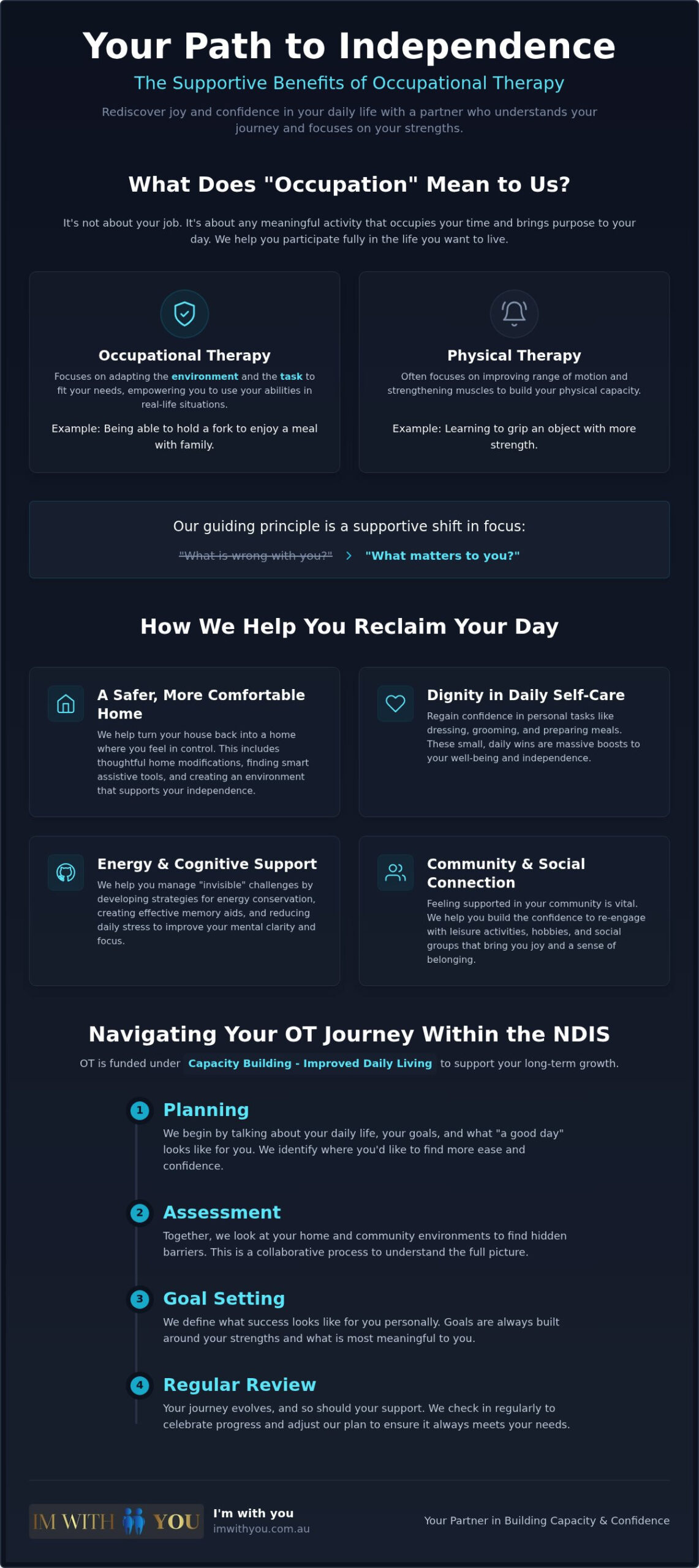
When you hear the word “occupation,” you might think of a career or a job. In our world, an occupation is simply anything that occupies your time and brings meaning to your day. This includes the small, vital moments like brushing your teeth, the practical tasks like catching a bus, or the joyful hobbies that make you who you are. Occupational therapy is the art of helping you participate in these activities whenever a challenge gets in the way.
The core philosophy here is simple but powerful. Instead of focusing only on what your body can’t do, we look at how we can change the environment or the task to fit you. While physical therapy often focuses on strengthening muscles or improving your range of motion, the benefits of Occupational Therapy lie in how those movements translate into your actual life. It’s the difference between learning to grip an object and being able to hold a fork to enjoy a meal with your family. One of the greatest benefits of Occupational Therapy is the way it empowers you to reclaim your agency through these practical, everyday wins.
The Role of an OT as Your Supportive Guide
Your therapist acts as a steady companion who walks alongside you. They look for hidden barriers in your home or community that might be making life harder than it needs to be. We believe in asking “what matters to you?” rather than “what is wrong with you?” This approach ensures that every goal we set together is truly yours. We also prioritize using person-first language because we see the individual before the disability. You’re the expert in your own life; I’m here to provide the tools and support to help you navigate it with dignity.
The Practical Benefits of Occupational Therapy in Your Life
The benefits of Occupational Therapy are most visible in the quiet, personal moments of your day. It’s about the dignity of dressing yourself without struggle or the simple joy of cooking a favorite meal for a friend. We look at your home and see a space full of potential. By using smart tools and thoughtful home modifications, we make your living environment safer and much easier to navigate. This practical support turns a house back into a home where you feel in control and at ease.
We also focus on the invisible challenges that can weigh you down. Managing your energy levels and creating memory aids are vital parts of reducing daily stress. I want to help you build the confidence to step back into the world and enjoy leisure activities that once felt out of reach. Understanding what occupational therapy can do for you helps you see that social connection is just as important as physical safety. When you feel supported in your community, your sense of belonging grows.
Reclaiming Joy Through Capacity Building
Capacity building is about more than just learning a new skill; it’s about fostering your long-term dignity and independence. We work together to develop the specific abilities needed for supported independent living (SIL), ensuring you feel empowered in your own space. These small, daily wins lead to a massive boost in your mental well-being. The benefits of Occupational Therapy extend far beyond the physical; every task you master is a step toward a more confident version of yourself. If you’re looking for a partner to help you explore these Therapeutic Supports, I’m here to walk alongside you.
Navigating Your OT Journey Within the NDIS
Understanding the NDIS can feel like learning a new language, but I’m here to simplify the process. In your plan, Occupational Therapy usually sits under the Capacity Building – Improved Daily Living category. This funding is specifically designed to help you build the skills needed for a more independent life. It’s a proactive way to ensure your support plan focuses on your long-term dignity and personal growth.
Starting your journey follows a supportive four-step path:
- Planning: We talk about your daily life and identify where you need more ease.
- Assessment: We look at your home and community environments together to find hidden barriers.
- Goal Setting: We define what success looks like for you personally, focusing on your strengths.
- Regular Review: We check in often to ensure your support evolves as you do.
If the system feels too complex, NDIS Specialist Support Coordination can help you find the right therapeutic match and advocate for the funding you deserve. You don’t have to navigate these systems alone; my promise is that I’m with you every step of the way. One of the benefits of Occupational Therapy is having a partner who understands both your goals and the framework that supports them. This partnership ensures your plan reflects your actual life needs.
Choosing the Right NDIS Provider for Your Therapy
When you’re looking for a therapist, prioritize empathy and a genuine commitment to your specific journey. You need someone who listens first and advises second. It’s helpful to look for a provider that treats your dignity as a core promise rather than just a requirement. For more support on this, read our guide on how to choose an NDIS provider to find your ideal match. The benefits of Occupational Therapy are truly felt when your therapist feels like a trusted ally.
Embracing Your Future with Confidence and Support
Reclaiming your independence is a journey that you don’t have to walk alone. We’ve seen how redefining your daily activities and adapting your environment can turn simple tasks back into moments of success. As a trusted national NDIS provider, we know the benefits of Occupational Therapy extend far beyond physical skills. They touch every part of your confidence and community connection. Whether you’re navigating your NDIS plan or seeking a therapist who truly listens, our 2026 Award for Excellence in Care reflects our commitment to your dignity. I’m with you as you take these next steps toward a life filled with more joy. Let us walk alongside you; explore our Occupational Therapy and Support services today. You have the strength to lead the way; we’re here to provide the steady support you deserve.
Frequently Asked Questions
How is Occupational Therapy different from Physical Therapy?
Physical therapy generally focuses on improving your physical movement, strength, and range of motion. Occupational therapy takes those physical abilities and applies them to your specific life goals. We look at the occupations of your day, like managing your morning routine or visiting a friend. The benefits of Occupational Therapy lie in adapting the task or your environment to ensure you can participate fully.
Can Occupational Therapy help with mental health or intellectual disabilities?
Yes, we provide vital support for individuals living with mental health challenges or intellectual disabilities. I’m with you in finding ways to manage sensory needs, build daily routines, and develop social confidence. We focus on capacity building skills that help you navigate the world with less anxiety. Our goal is always to foster your long-term dignity and empower you to participate in your community.
Does the NDIS cover the full cost of Occupational Therapy?
The NDIS typically covers the cost of therapy if it’s deemed reasonable and necessary to help you reach your personal goals. Most participants find this funding under the Capacity Building category of their plan. Because the benefits of Occupational Therapy are so central to independent living, we can help you understand how to advocate for the support you need during your plan review.
What should I expect during my first Occupational Therapy assessment?
Your first assessment is a gentle, supportive conversation about what matters most to you. We’ll walk through your home or community spaces together to identify any hidden barriers to your independence. Instead of focusing on limitations, we look at your strengths and the practical tools that can help. This session is the first step in our partnership, ensuring every goal we set is truly yours.