

What if the simple act of rearranging a sentence could transform how someone feels about their place in the world? I know it feels overwhelming to keep up with changing terminology. You want to be respectful, yet sometimes the clinical terms used in the NDIS can feel like they strip away the very humanity of the people you care for. It’s natural to worry about accidentally causing offense when you just want to help.
Im with you in this journey. My goal is to show you how to use person first language as a bridge to deeper connection rather than a hurdle of rules. By shifting your focus, you’ll learn to foster dignity and respect in every conversation. We’ll explore practical ways to embrace this inclusive approach, ensuring you feel confident and capable as you walk alongside the people you support.
Key Takeaways
- Discover how shifting your wording can move the conversation away from clinical management and toward life-focused support.
- Understand the difference between person-first and identity-first language so you can honour the unique identity of every individual you walk alongside.
- Gain practical tips for replacing medicalised terms with inclusive phrases that highlight a person’s strengths and independence.
- Build your confidence in using person first language to foster deeper connections and act as a more effective advocate within the NDIS community.
What is Person-First Language and Why Does It Matter?
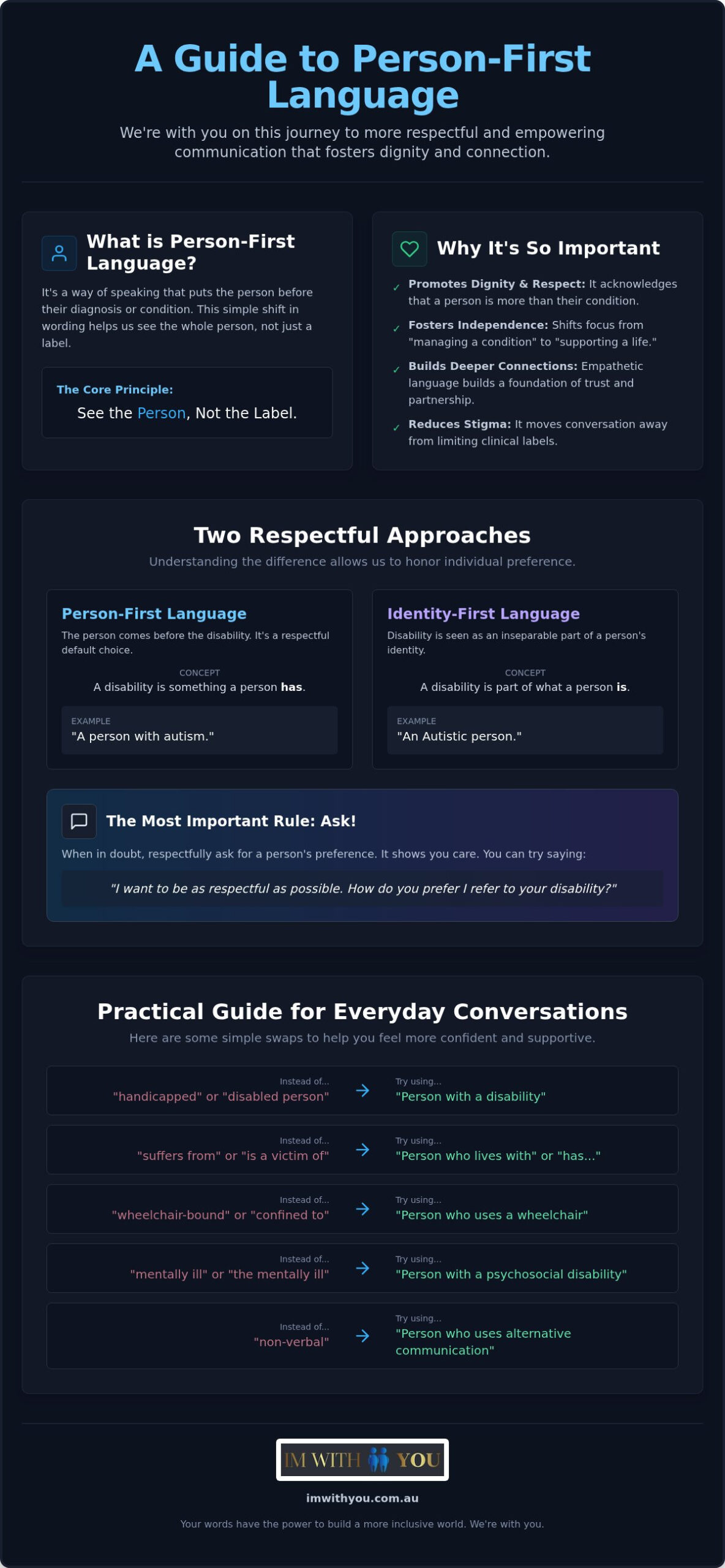
Person first language is a communication strategy that prioritises human identity over medical conditions. This approach isn’t just about grammar; it’s about seeing the person as a whole being first. For those seeking a comprehensive overview of person-first language, the history shows it emerged as a way to reclaim dignity. It moves us away from clinical labels that often feel cold and limiting. By placing the individual before the diagnosis, we create a space where they can be seen for who they truly are.
To better understand this concept, watch this helpful video from the Special Olympics team:
In the Australian NDIS context, using person first language is vital for promoting independence. When we say “a person with a disability” rather than “a disabled person,” we acknowledge their agency. It shifts the focus from what someone “is” to what they “have” or experience. This subtle change helps lower the barriers of stress that families often feel when navigating complex systems. It reminds us that disability is just one part of a vibrant, multi-faceted life.
The Heart of Person-Centered Care
Our words shape how we perceive a person’s potential. If we use language that feels clinical, we might accidentally overlook their dreams and strengths. This philosophy is at the core of our Disability Advocacy Services. We believe in moving from “managing a condition” to “supporting a life.” It’s about walking alongside you as a companion, ensuring that every conversation reinforces a sense of partnership and social inclusion. When we speak with empathy, we build a foundation of trust that allows for genuine growth and connection.
Person-First vs. Identity-First: Respecting Individual Choice
While we often default to person first language to ensure dignity, it’s vital to remember that there’s no “one size fits all” rule. Some groups, particularly the Autistic and Deaf communities, frequently prefer identity-first language. They see their disability as an inseparable, proud part of who they are. This perspective often aligns with the Social Model of Disability, which suggests that people are disabled by societal barriers and lack of accessibility rather than by their own bodies or minds.
Acknowledging this nuance is a key part of effective NDIS Support Coordination. As your companion, I believe our role is to follow your lead rather than imposing a clinical standard. The NIH guide on Person-first and Destigmatizing Language highlights that while PFL is a respectful default, the individual’s choice always comes first. This flexibility ensures our communication remains a tool for empowerment.
How to Ask About Language Preferences
If you’re worried about saying the wrong thing, try a gentle script. You might say, “I want to be as respectful as possible. Do you prefer me to say ‘person with a disability’ or ‘disabled person’?” Most people appreciate the care you’re showing. It’s okay if you make a mistake. What matters most is that you’re coming from a place of warmth and support. In NDIS reporting, we often use clinical terms to meet formal requirements, but in our daily conversations, your personal preference is the only rule that matters. If you’d like to explore how we can support your unique journey, you can learn more about our approach here.
Practical Examples: How to Use Person-First Language Every Day
Using person first language in your daily life is a gentle way to show you care. It’s about shifting from labels that feel heavy to words that highlight a person’s agency. Instead of saying someone is “disabled,” I prefer “person with a disability.” This simple change reminds us that the person exists independently of their condition. We also want to move away from words like “suffers from” or “is a victim of.” These terms suggest a lack of power. Instead, we use “lives with,” which acknowledges their strength and daily experience.
Similarly, equipment like wheelchairs are tools for freedom, not cages. A “wheelchair user” isn’t “confined” to their chair; the chair is what allows them to participate in the community. You can find more Practical examples of People First Language to help guide your daily interactions. When we talk about cognitive differences, I often look to resources like Understanding Intellectual Disability to ensure we’re using the most respectful and current terms. I’ve found that using “a person who uses alternative communication” is often more accurate and respectful than “non-verbal,” as it focuses on how a person connects with the world.
A Quick Reference Guide for Respectful Terms
Making these shifts in your vocabulary helps build a more inclusive world. Here are a few common examples to help you feel more confident in your conversations:
- “Person with a psychosocial disability” instead of “mentally ill”
- “Person with a vision impairment” instead of “the blind”
- “Person with a disability” instead of “handicapped”
- “Person who uses a wheelchair” instead of “wheelchair-bound”
- “Person with a lived experience of disability” instead of “disabled person”
When you’re looking for an NDIS provider, notice the language they use. It tells you a lot about their values and whether they’ll treat you as a partner or just a case number. I’m here to help you navigate these choices with confidence, ensuring you always feel heard and respected.
Building Connections Through Respectful Speech
Choosing your words with care is a powerful way to honour the unique journey of every person you support. By embracing person first language, you acknowledge the individual before their diagnosis, creating a space built on dignity. We’ve seen how respecting personal choice strengthens our relationships and validates lived experiences. Replacing clinical labels with strength-based terms isn’t just about rules; it’s about seeing the whole person.
I’m here to support you. As winners of the 2026 Award for Excellence in Disability Support, we take an advocacy-led approach to care. Whether you need Specialist Support Coordination for complex needs or a trusted companion, we’re ready to help. Let us walk alongside you, discover our person-centered NDIS supports. You’ve got the tools to build deeper connections, and I’m with you all the way.
Frequently Asked Questions
What is the simplest definition of person-first language?
Person first language is simply the practice of putting the individual before their diagnosis in every conversation. I believe it means describing someone as a “person with a disability” rather than defining them by a label. This shift helps us see the whole person, focusing on their humanity and dreams rather than just their medical history or their specific support needs.
Is it ever okay to use identity-first language like ‘disabled person’?
It is absolutely okay to use identity-first language if that is what the individual prefers. I’ve seen many people in the Autistic and Deaf communities who feel their disability is a core, proud part of who they are. Being a supportive companion means following their lead. Your respect for their personal choice is the most important part of building trust.
Why does the NDIS encourage the use of person-first language?
The NDIS encourages person first language because it supports the principles of choice, control, and independence. By focusing on the person rather than the condition, the system promotes a more inclusive and empowering environment. This approach helps move away from cold, clinical models toward a life-focused way of providing support for all Australians navigating the scheme.
What should I do if I accidentally use the wrong term?
If you make a mistake, the best approach is to offer a simple, warm apology and ask for guidance. You might say, “I’m sorry, I want to be as respectful as possible. How do you prefer to be described?” Most people appreciate your genuine effort to learn. It’s a shared journey, and your heart and intent are what truly matter.
How does person-first language help with disability advocacy?
This approach helps with disability advocacy by actively challenging outdated stereotypes and reducing social stigma. When we use language that prioritises a person’s humanity, we’re standing up for their right to be seen as an equal. It sets a standard for respectful communication, ensuring that dignity and social inclusion remain at the very heart of everything we do.