

What if the path to getting the support you deserve didn’t have to feel like a lonely battle against a mountain of paperwork? You likely feel overwhelmed by complex rules and worried that one small mistake might stall your application. It’s a heavy burden to carry when you’re already managing the daily challenges of a disability. I’m here to show you exactly how to access ndis services with clarity, turning a daunting system into a manageable journey.
I want you to know that you don’t have to do this alone. This guide provides a gentle roadmap designed around your dignity and personal goals. We’ll explore the essential residency and age requirements for Australians, explain how to gather strong medical evidence, and show you how a dedicated advocate walks beside you. By the end, you’ll have the confidence to take that first step toward the empowered life you deserve.
Key Takeaways
- Start by confirming you meet the Australian residency and age requirements, which ensures you’re on the right path from the very beginning.
- Discover how to access ndis services by reaching out to a Local Area Coordinator who’ll help you navigate the Access Request Form with ease.
- Focus your application on your specific daily support needs and personal goals to help the NDIA understand the unique care you deserve.
- Learn how to turn your approved funding into real-world support by utilizing Support Coordination to bridge the gap between your plan and your life.
Understanding NDIS Eligibility with Confidence
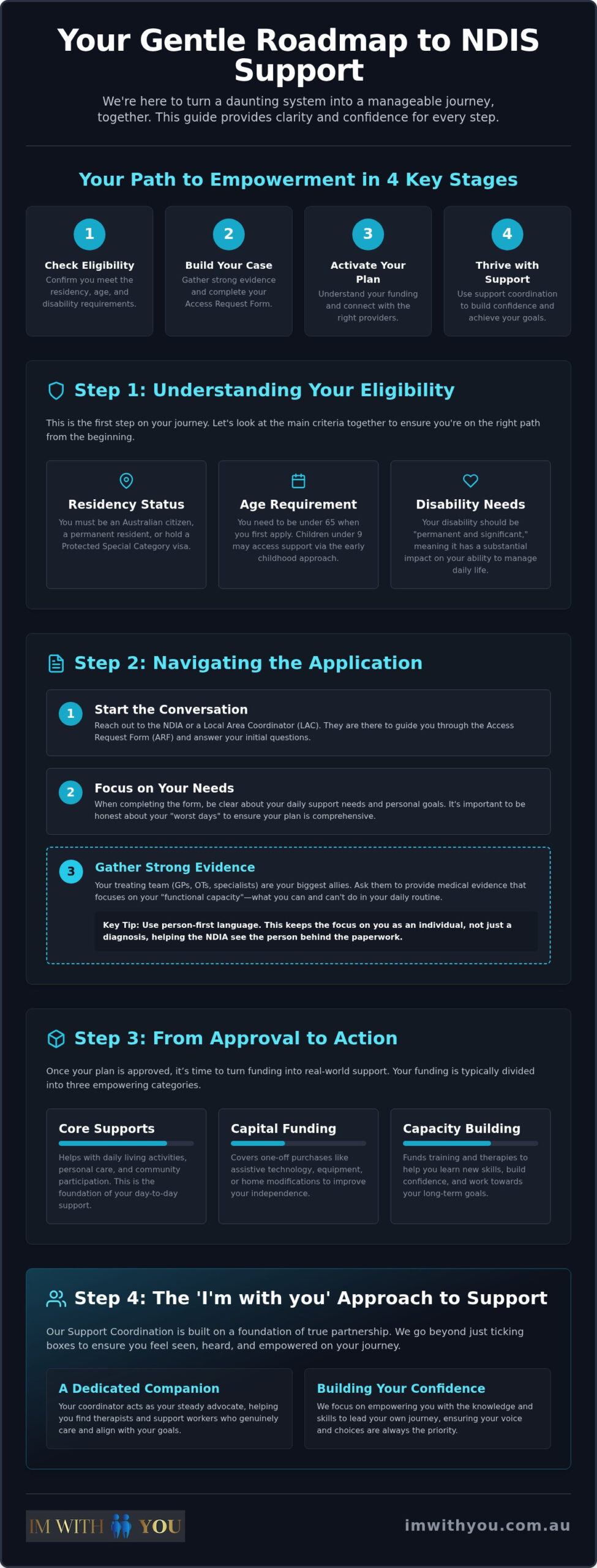
Determining if you qualify is the first step on this journey. I know it feels like a lot of boxes to tick, but we’re looking at these together. To find out how to access ndis services, you first need to meet three main criteria. You must be an Australian citizen, a permanent resident, or hold a Protected Special Category visa. Age is also a factor; you should be under 65 when you apply. If you’re supporting a child, the early childhood approach specifically helps children under 9 through a dedicated early intervention pathway.
The heart of your application involves showing a “permanent and significant” disability. This means your condition is likely to stay with you and has a real impact on how you manage daily life. It isn’t just about a medical label. It’s about how your impairment affects your ability to communicate, interact socially, or move safely. I’m here to help you see that this process is designed to ensure you get the specific care that respects your dignity and independence.
Gathering the Right Evidence for Your Access Request
When learning how to access ndis services, remember that your treating team is your biggest ally. GPs, occupational therapists, and specialists provide the medical evidence the NDIA needs to see. When you speak with them, ask them to focus on your “functional capacity.” This describes what you can and can’t do in your daily routine, like preparing meals or joining in community activities. Using person-first language helps keep the focus on you as an individual rather than just a diagnosis. This clarity makes it much easier for the system to see the person behind the paperwork and understand the actual help you need to live your best life.
Navigating the NDIS Application Process Step-by-Step
Starting your application begins with a simple conversation. You can reach out to the NDIA directly for guidance. Their teams are there to help you understand how to access ndis services by guiding you through the initial paperwork. When you complete your Access Request Form (ARF), keep the focus on your daily support needs. I know it feels vulnerable to list your challenges, but being clear about where you need help ensures the system sees the real you.
Learning how to access ndis services also involves a bit of patience. After you submit your form, there’s usually a waiting period. This time can feel heavy or uncertain, and it’s okay to feel anxious about the outcome. I encourage you to use this space to think about your long-term life goals. Whether you want to gain independence at home or join a community group, these dreams will form the foundation of your first planning meeting.
Collaborating with Your Support Network
Your family and carers see the small, vital things you do every day. They can help document the “invisible” support they provide, like help with personal care or emotional guidance. It’s important to be honest about your “worst days” during these discussions. If your plan only covers your best days, you might lack support when life gets difficult. Starting to think about how to choose an NDIS provider early helps you feel more in control of what happens next. If the process feels overwhelming, remember that an award-winning advocate is always ready to walk beside you.
From Approval to Action: Implementing Your NDIS Plan
Once your plan is approved, the “now what?” phase begins. It’s an exciting time, but I understand if it feels a little daunting. Your funding usually falls into three categories. Core supports help with daily living, while Capital funding covers one-off purchases like assistive technology. Capacity Building is perhaps the most empowering, as it funds the training you need to reach your goals. This is where the theory of how to access ndis services meets the reality of your daily life. You’ll start setting up service agreements with providers who see you as a person, not a number. These documents ensure every service respects your choices and your dignity.
Life is about more than just managing tasks. It’s about finding joy and connection through leisure activities that make you feel like yourself. Whether it’s a creative hobby or a social group, your NDIS plan helps you reconnect with the community. I want to see you thrive in ways that matter to you, turning your funding into moments of genuine happiness.
The Im with you Approach to Support Coordination
My approach to NDIS Support Coordination focuses on true partnership. A dedicated coordinator acts as your steady companion and advocate, helping you find therapists and support workers who genuinely care. We move beyond simply ticking boxes. Instead, we focus on building your confidence so you feel empowered to lead your own journey. By integrating person-first language into every interaction, we ensure your agency is always the priority. This collaborative process is the final step in understanding how to access ndis services in a way that truly changes your life. Im with you every step of the way.
Your Journey Toward Empowered Support Starts Here
Taking the first step toward the support you deserve is a brave and meaningful choice. We’ve explored the essentials of eligibility and the gentle steps of the application process. You now have a clearer understanding of how to access ndis services and how to turn a funded plan into a life filled with joy and community connection. You don’t have to navigate this complex system alone.
As a national provider and recipient of the 2026 Award for Excellence in care, I’m here to offer expert Support Coordination tailored to your specific life goals. Whether you’re just starting or ready to implement your plan, let us walk this journey with you; contact our friendly team today. I’m committed to your dignity and independence every single day. You have the strength to move forward, and I’ll be right beside you.
Common Questions About Your NDIS Journey
How long does it take to get a decision on my NDIS access request?
The NDIA generally aims to make a decision within 21 days of receiving your completed application. If they need more information, they’ll contact you within that same timeframe. I know waiting can feel like a long time when you need support, but this period is simply part of ensuring they understand your unique needs before moving forward and approving your plan.
What happens if my NDIS application is not successful the first time?
If your application isn’t successful, you can request an internal review within three months of the decision. It’s also possible to re-apply later if your circumstances change or you gather new evidence. I’m here to remind you that a “no” isn’t necessarily the end of the road; it’s often just an invitation to provide more specific detail about your daily life.
Can I still access the NDIS if I am already receiving other government supports?
Yes, you can still access the NDIS while receiving other government supports, such as the Disability Support Pension. The NDIS works alongside existing systems like Medicare and the education department. When learning how to access ndis services, it’s helpful to remember that this funding specifically targets disability-related needs that other departments don’t cover, ensuring your care is comprehensive and dignified.
Do I need a formal diagnosis to apply for NDIS services?
While a formal diagnosis is the most common way to prove a permanent impairment, the NDIS focuses primarily on your functional capacity. This means they look at how your condition affects your ability to perform daily tasks. Providing clear medical evidence from your GP or specialists is vital. It helps the NDIA see how to access ndis services in a way that best supports your individual independence.