

You’re more than a case number or a collection of symptoms to be managed by a rigid checklist. I understand that living with a condition that changes from one hour to the next makes navigating the system feel exhausting. It’s completely natural to worry that ndis support for parkinson’s disease won’t keep up with your fluctuating needs or that you’ll get lost in complex jargon like Section 25. I’m here to ensure you don’t have to face these challenges alone.
This guide will help you understand exactly how to access the funding you deserve and which practical supports can make your daily life easier. I’ll walk you through eligibility requirements, therapy examples, and how to find a provider who acts as a steady companion rather than just a service. You can manage your journey with confidence when you have a partner who truly listens and walks alongside you every step of the way.
Key Takeaways
- Learn how the NDIS supports Australians under 65 and why the ‘Early Intervention’ stream is a proactive way to protect your quality of life.
- Explore how funding for physiotherapy and occupational therapy can help you manage tremors and mobility challenges with greater ease.
- Discover how to access ndis support for parkinson’s disease that adapts to you, providing core supports that help you start every day with confidence.
- Understand how a trusted advocate and steady companion can simplify the system and keep the focus on your personal agency and dignity.
Understanding NDIS Eligibility for Parkinson’s Disease
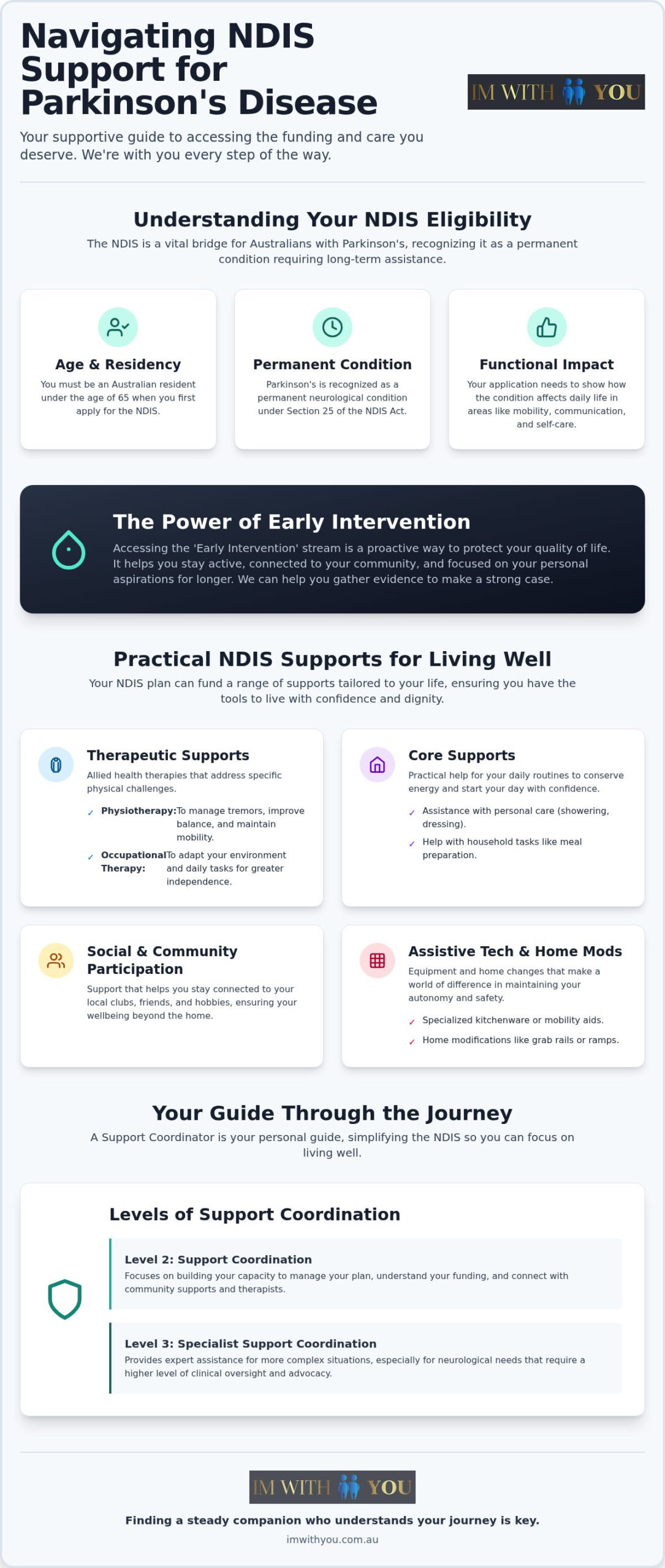
The NDIS is a vital bridge for Australians under 65 who find that living with Parkinson’s disease impacts their ability to manage daily tasks independently. Because it’s a permanent condition, the system recognizes that you need reliable, long-term assistance to maintain your autonomy. Securing ndis support for parkinson’s disease starts with showing how the condition affects your functional capacity, specifically looking at mobility, communication, and self-care.
To better understand what to expect following a diagnosis and how support can help, watch this helpful video:
Parkinson’s is recognized under Section 25 of the NDIS Act as a neurological condition that often requires specialized, ongoing care. When you apply, it’s essential to gather medical evidence that captures the “on” and “off” periods of your day. Standard clinical snapshots often miss the reality of fluctuating tremors or fatigue. I’ll help you document these variations so your plan truly reflects your lived experience.
The Role of Early Intervention in Parkinson’s Management
The Early Intervention stream acts as a proactive way to maintain your quality of life before challenges become overwhelming. Accessing support early helps you stay active in the workforce and connected to your community for much longer. Together, we’ll set outcome-focused goals that prioritize your personal aspirations, like continuing a hobby or staying social. I’m with you during every stage of evidence-gathering to make sure your voice remains the heart of the process.
Practical NDIS Supports for Living Well with Parkinson’s
Once you’ve secured your funding through the National Disability Insurance Scheme (NDIS), the focus shifts to how these resources can best serve your daily life. Effective ndis support for parkinson’s disease often centers on allied health therapies that address specific physical challenges. Physiotherapists work with you to manage tremors and improve balance, while Occupational Therapists help you adapt your environment to maintain independence. These Therapeutic Supports aren’t just about clinical outcomes; they’re about ensuring you can continue doing what you love.
Core supports provide the practical help needed for daily routines, from meal preparation to personal care. This allows you to start your day with confidence and energy. Beyond the home, social and community participation supports help you stay connected to your local clubs, friends, and hobbies. This holistic approach ensures that ndis support for parkinson’s disease covers every facet of your wellbeing, keeping you at the center of your own life.
I believe that care should always start with respect. Using person-first language is a core part of how I ensure you never feel like just another file in the system. Whether it’s through assistance with morning routines or supporting your social life, the goal is to uphold your dignity. If you’re looking for a partner who values your identity, our team at Im with you is ready to walk this path with you.
Assistive Technology and Home Modifications
Equipment makes a world of difference in maintaining your autonomy. You might explore specialized kitchenware that compensates for tremors or mobility aids that make moving through your home safer. Home modifications, like installing grab rails or adjusting floor levels, create an environment that adapts as your needs change. I’ll collaborate closely with your therapists to make sure every piece of technology and every home change truly serves your unique lifestyle and goals.
Building Your Support Team with ‘Im with you’
Finding the right NDIS provider is about more than just checking boxes; it’s about finding a steady companion who understands the nuances of your life. At Im with you, I’m committed to a person-centered approach that prioritizes your agency and independence above all else. I bridge the gap between complex government systems and your real-world needs, ensuring you never feel like you’re navigating this alone. Our 2026 Award for Excellence in care reflects this dedication to compassionate, high-standard support. I act as your trusted advocate, making sure your ndis support for parkinson’s disease is seamless, adaptive, and deeply respectful of your personal journey.
NDIS Support Coordination: Your Guide Through the Journey
A Support Coordinator acts as your personal guide, helping you implement your plan and connect with the right therapists. My goal is to simplify the process so you can focus on living well. There are two main levels of coordination we can explore together:
- Level 2 Support Coordination: Focuses on building your capacity to manage your plan and connect with community supports.
- Level 3 Specialist Support Coordination: Provides expert assistance for complex neurological needs that require a higher level of clinical oversight.
Organizations like Fight Parkinson’s provide wonderful resources, but having a dedicated coordinator means you have someone to handle the administrative heavy lifting. I’m here to help you adjust your ndis support for parkinson’s disease as your symptoms evolve, ensuring your plan always keeps pace with your journey. This collaborative approach means we can pivot quickly when your needs change, keeping your goals within reach. We’ll work together to make sure your funding translates into meaningful action. You don’t have to be an expert in the system because I’m right here with you.
Embracing a Future of Support and Independence
You deserve a life defined by your goals, not your diagnosis. By understanding your eligibility and accessing practical therapies, you can navigate your journey with greater ease. Securing effective ndis support for parkinson’s disease is a collaborative process that works best when you have a dedicated advocate by your side. As the winner of the 2026 Award for Excellence in Disability Support, I’m proud to offer a specialist NDIS Support Coordination team and national advocacy services that prioritize your dignity.
I’ll help you bridge the gap between complex systems and your daily needs, ensuring your voice is always heard. Let’s walk this path together; contact Im with you today for a gentle chat about your NDIS journey. You’re never alone in this process, and I’m here to ensure you move forward with warmth, confidence, and care.
Frequently Asked Questions
Can I get NDIS support if I was diagnosed with Parkinson’s after age 65?
No, the NDIS is designed for Australians who apply before they turn 65. If you’re diagnosed after this age, you’ll typically access support through the My Aged Care system instead. I can help you understand how these systems differ so you feel confident about which pathway is right for your current stage of life.
What kind of medical evidence do I need for my NDIS Parkinson’s application?
You’ll need a formal diagnosis from a neurologist and evidence showing how the condition affects your functional capacity. It’s vital to document how symptoms like tremors or fatigue impact your ability to move, communicate, or manage self-care. I’ll help you gather this evidence to ensure your ndis support for parkinson’s disease accurately reflects your daily reality.
Will the NDIS fund my Parkinson’s medications?
The NDIS generally doesn’t fund medications or clinical treatments as these are covered by Medicare and the Pharmaceutical Benefits Scheme. Instead, your funding focuses on disability-related supports like physiotherapy or assistive technology. I’ll guide you through your plan to ensure you’re using your budget for the practical tools and services that make daily life easier.
What happens if my Parkinson’s symptoms get worse over time?
If your symptoms change, you can request a plan review due to a change in circumstances. This ensures your ndis support for parkinson’s disease remains relevant and effective as your journey evolves. I’m right here to help you navigate the review process so your support team can adapt quickly to your changing needs and maintain your quality of life.