

What if the house your loved one lives in felt less like a clinical facility and more like the heart of a vibrant, independent life? When you first explore supported independent living ndis, it’s easy to feel buried under technical jargon and the weight of administrative tasks. I know how exhausting it is to balance the intricate demands of the NDIS with your simple, heartfelt wish for your family member to be safe, happy, and truly seen. You might be feeling overwhelmed by the July 2026 pricing updates or the new mandatory registration requirements for providers. I’m with you in this journey, and I want to help lower that barrier of stress.
This guide will show you how to secure the right funding while ensuring your loved one receives the warm, person-centered support they deserve. You’ll gain a clear understanding of how SIL differs from other housing supports and learn actionable steps to prepare for an assessment. We’ll also explore how to choose a provider that feels like a trusted companion rather than just a service. Together, we can turn the complexity of a Roster of Care into a meaningful plan for a dignified, joyful life.
Key Takeaways
- Learn how SIL funding goes beyond daily chores to foster a genuine sense of belonging and community for your loved one.
- Discover the essential management strategies for preparing a successful supported independent living ndis application, including how to gather the right evidence from therapists.
- Understand why starting with personal goals, rather than just a budget, is the key to creating a truly person-centered home environment.
- Identify the vital questions to ask potential partners to ensure they prioritize emotional safety and staff consistency.
- I’m with you as you navigate these complexities, providing the steady guidance needed to turn administrative requirements into life-changing support.
What is Supported Independent Living (SIL) under the NDIS?
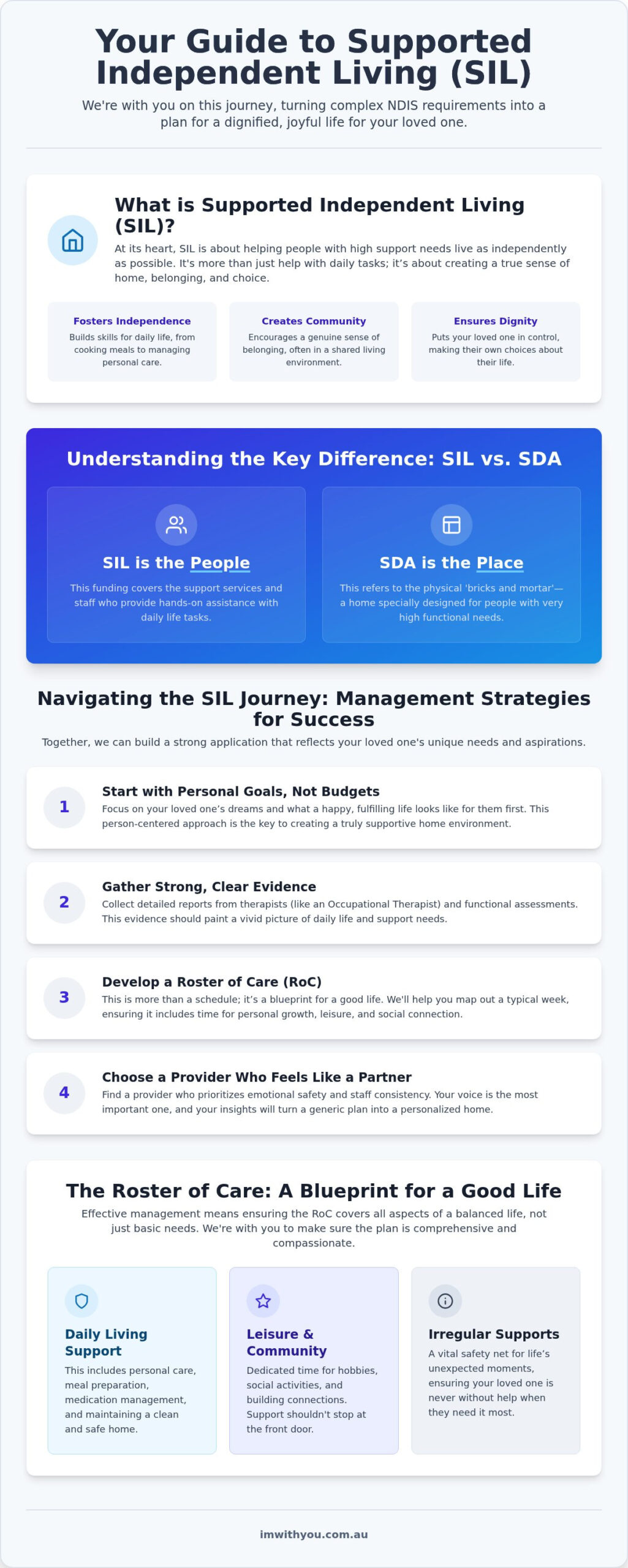
At its heart, supported independent living ndis is about more than just having someone help with the dishes or the laundry. It’s a specialized type of support funded by the National Disability Insurance Scheme (NDIS) designed to help people live as independently as possible. Whether it’s cooking a favorite meal, managing personal care, or keeping the home tidy, SIL provides the hands-on assistance needed to build a life of dignity and choice. I’m with you in wanting to ensure that this support feels like a natural part of a happy home rather than a clinical service.
To better understand this concept, watch this helpful video:
The focus of SIL is always on the ‘life’ being lived, not just the ‘support’ being delivered. It’s a tool for building skills and fostering a genuine sense of belonging within the community. Sometimes, the NDIS uses the term ‘high support needs’ to describe who this funding is for. It’s vital to remember that this label doesn’t mean a loss of agency or choice. Even when significant help is required, your loved one remains the pilot of their own life. While SIL is typically a shared support model where participants live with others to share costs, individual options can be explored to ensure the setting feels right for the person’s unique needs.
SIL vs. SDA: Understanding the Difference
It’s helpful to think of SIL as the people and SDA as the place. SIL covers the support services and the team members who assist with daily tasks. Specialist Disability Accommodation (SDA) refers to the specialized bricks and mortar, the actual building designed for people with very high support or functional needs. You can receive SIL in a standard home; you don’t necessarily need an SDA-modified property to access these supports. For those with complex physical requirements, the synergy between SIL and SDA ensures that both the physical environment and the daily care work together to promote safety and independence.
Who is SIL for? Identifying the Right Path
Identifying if SIL is the right path involves looking at the level of assistance needed throughout the day and night. It’s often the best fit for individuals with an intellectual disability or those with high-intensity support needs who require a consistent presence to stay safe and well. While ‘Personal Care’ might cover specific morning or evening routines, SIL provides a more comprehensive, around-the-clock approach. If your loved one is looking for a more flexible, non-rostered way of living, you might also consider Individualised Living Options (ILO) as an alternative.
Navigating the SIL Journey: Management Strategies for Success
You aren’t alone in this journey. Working closely with your Support Coordinator allows you to explore tailored supported independent living ndis options that fit your family’s unique situation. Always remember that you are the expert on your loved one’s needs. Your voice is the most important one in the room when decisions are being made; your insights turn a generic plan into a personalized home.
Understanding the Roster of Care (RoC)
A Roster of Care is a tool that maps out support hours for a typical week. It’s not just a schedule; it’s a blueprint for a good life. When managing this document, ensure there’s dedicated time for leisure activities and social connection. Support shouldn’t stop at basic hygiene. We also advocate for including ‘Irregular Supports’ to provide a safety net for those unexpected moments that life naturally brings, ensuring your loved one is never left without a helping hand.
The Role of Advocacy in SIL
Disability advocacy services are vital for protecting the rights and dignity of participants in shared living environments. If conflicts arise or needs change, having a partner who walks alongside you makes the system feel much less scary. If you need a steady companion to help manage these transitions, our team is here to provide specialized NDIS support coordination tailored to your family’s needs.
Finding Your Perfect Match: Choosing a SIL Partner Who Truly Sees You
When you interview a potential ndis provider, look for staff consistency and shared values. Ask how they match support workers to participants’ personalities and how they maintain a stable environment. Safety is also a cornerstone of trust, especially as the NDIS moves toward mandatory registration for SIL providers in 2026 to ensure higher standards. We prioritize clinical excellence by strictly following the six rights of medication administration. This ensures that while the support feels warm and human, it remains rigorous, safe, and professional.
The Importance of Person-First Communication
The way a team speaks about participants tells you everything about their culture. We believe in using person first language because it centers the individual rather than their disability. It’s a sign of deep respect that should extend to every interaction. A quality support team will always honor your loved one’s agency and treat their living space with the care a true home deserves, fostering independence at every turn.
Taking the Next Step Together
Starting a conversation about supported independent living ndis shouldn’t feel like a high-pressure sales pitch. It’s a gentle invitation to explore possibilities together and find a path that feels right. I’m here to help you navigate how collaborative management can transform a house into a place of true belonging. Let’s talk about how we can walk alongside your family to create a supportive environment where your loved one feels seen, heard, and valued every single day.
Building a Future of Independence and Belonging
Creating a home where your loved one can truly thrive is a journey that requires both heart and strategy. We’ve explored how supported independent living ndis is far more than a set of rostered hours; it’s a foundation for skill-building and deep community connection. By focusing on personal goals first and gathering the right evidence, you can navigate the NDIS bureaucracy with confidence. Your insights as a family member are the most powerful tools in designing a life that honors your loved one’s agency and dignity.
Finding a partner who prioritizes emotional safety and person-first communication ensures that support feels like a natural extension of family care. As a 2026 Excellence in Care Award Winner, we provide expert support coordination and advocacy with national coverage and a personal touch. I’m with you as you take these next steps toward a brighter, more independent future. We’re here to walk this path with you; contact our team for a gentle chat about SIL today. You don’t have to manage these complexities alone; we’re ready to be the steady companion your family deserves.
Frequently Asked Questions
Can I choose who I live with in a SIL arrangement?
Yes, you have the right to choose your housemates and where you live. The NDIS emphasizes choice and control, so your preferences for the people you share your home with are a central part of the planning process. I’m with you in finding a living situation that feels safe and harmonious. Most providers will arrange meet-and-greets so you can get to know potential housemates before making any decisions, ensuring everyone feels comfortable.
What happens if my support needs change over time?
You can request a plan reassessment if your support needs increase or change unexpectedly. The NDIS recognizes that life circumstances shift, and your funding should always reflect your current reality. I’m with you as we gather fresh evidence, such as updated functional assessments, to advocate for the right level of supported independent living ndis funding. This collaborative approach ensures you always have the companionship and care required to live with dignity.
Does SIL funding cover my rent or groceries?
No, SIL funding is dedicated strictly to support services and doesn’t cover everyday costs like rent, utilities, or groceries. It pays for the dedicated team members who assist you with daily living tasks and skill-building within your home. You’ll continue to use your own income or pension to manage your board and personal expenses. This clear boundary ensures your funding is used strictly for the specialized care that helps you maintain your independence.
How do I know if I am eligible for SIL or if I only need drop-in support?
You’re likely eligible for SIL if you require significant help with daily tasks for a large part of the day or night. If you only need a little help at specific times, such as an hour in the morning, drop-in support might be a better fit. Supported independent living ndis is typically for those who need a more consistent roster of care to stay safe and thrive. We can help you review your assessments to decide which path feels right.