

What if the key to deeper connection isn’t about fixing your mistakes, but about magnifying the moments where you’re already shining? When communication feels difficult or strained, it’s natural to feel a sense of disconnection or even worry that you’re being judged for how you interact. You might be asking yourself, what is video interaction guidance, and wondering if it’s just another clinical process filled with jargon. I’m with you in this journey, and I want to reassure you that this approach is built on warmth, respect, and noticing the good that already exists.
This gentle, strengths-based method uses the power of positive moments to help you see the wonderful things you’re already doing. In this guide, we’ll discover how Video Interaction Guidance transforms communication by focusing on partnership rather than “fixing.” We’ll explore how it works as a practical capacity building tool within your NDIS plan and provide you with a sense of hope for your most important relationships. You’ll walk away with a clearer understanding of how to build on your existing strengths to create lasting, meaningful bonds.
Key Takeaways
- Learn exactly what is video interaction guidance and why focusing on your strengths is more powerful than analyzing mistakes.
- Discover the gentle, collaborative process of using short video clips to capture and magnify the beautiful moments of connection you’re already creating.
- Explore how to set personalized goals that matter to you, from improving mealtime interactions to better understanding a loved one’s unique communication style.
- Understand how VIG fits into your NDIS plan as a Capacity Building tool, helping you and your support workers grow together through practical, real-world strategies.
- Gain a sense of partnership and hope, knowing that I’m with you as you learn to trust your own natural abilities and build stronger, more resilient relationships.
What is Video Interaction Guidance (VIG)? Understanding the Heart of Connection
At its heart, Video Interaction Guidance (VIG) is a gentle way to help people communicate better by highlighting what is already working. Instead of looking for mistakes, a practitioner works with you to review short, ten-minute clips of your daily life. You might find yourself wondering, what is video interaction guidance exactly? It’s a relational intervention where we look at “successful” moments together to see how you’re already connecting with the person you care for. This process helps you see the micro-moments of connection that are often missed in the busyness of daily care.
At “Im with you”, we believe this process is about honouring the bond you already have while building new skills for the future. Our strengths-based philosophy means we don’t focus on what went wrong. Instead, we celebrate what is going right. This approach reduces the anxiety of being judged and creates a safe space for growth. I’m with you as we explore these positive interactions together, focusing on your unique strengths as a carer.
To better understand this concept in a supportive setting, watch this helpful video:
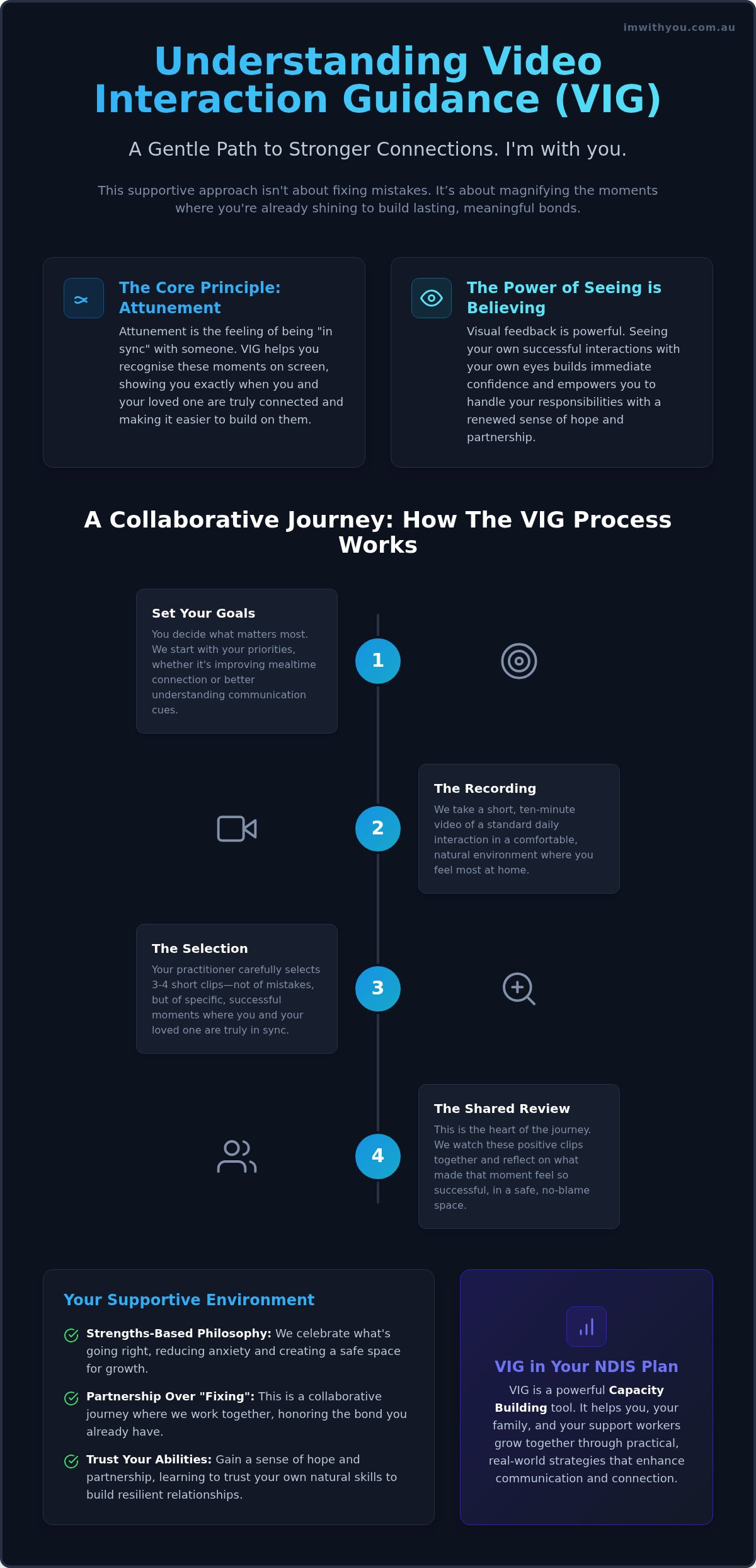
The Core Principle: What is Attunement?
Attunement is the feeling of being “in sync” with someone else. It’s about being deeply aware of another person’s emotions and needs. VIG helps you recognise these “synced” moments on screen, showing you exactly when you and your loved one are truly connected. When you notice these small, successful exchanges, it becomes much easier to build on them. This awareness is the foundation of better communication and stronger, more resilient relationships.
The Power of Seeing is Believing
Visual feedback is often much more effective than verbal advice for changing habits. It’s one thing for someone to tell you that you’re doing well, but it’s another thing entirely to see your own success with your own eyes. Seeing yourself succeed builds immediate confidence and agency. This visual evidence makes the learning process feel real and achievable. It empowers you to handle your responsibilities with a renewed sense of hope and partnership.
How the VIG Process Works: A Collaborative Journey
The beauty of this process lies in its simplicity and focus on your agency. If you’re exploring what is video interaction guidance to support your family, it’s helpful to see the roadmap ahead. We move at your pace, ensuring you feel supported and heard throughout every stage. This isn’t about professional observation from a distance; it’s about walking together toward a deeper understanding of your relationship.
- Step 1: Setting Goals. You decide what matters most. Whether you want to improve mealtime connection or gain a better way of understanding intellectual disability and communication cues, we start with your priorities.
- Step 2: The Recording. We take a short, ten-minute video of a standard daily interaction. This happens in a comfortable environment where you feel most at home.
- Step 3: The Selection. Your practitioner carefully selects three to four clips. These aren’t random; they’re specific moments where you and your loved one are truly connected and “in sync.”
- Step 4: The Shared Review. We look at these positive clips together. We reflect on what you did, what your loved one did, and what made that specific moment feel so successful.
The Shared Review: Your Safe Space for Reflection
The shared review is the heart of the journey. I’m with you during this time, acting as a guide rather than a teacher. We maintain a strict “no-blame” zone. We don’t look at what went wrong or where you struggled. Instead, we spend our time in the warmth of your successes. This supportive environment allows you to reflect deeply on your natural skills without the weight of judgment.
What to Expect as a Participant
It’s completely normal to feel a bit nervous about being on camera. Many people worry about how they’ll look or sound, but this feeling usually fades within the first few minutes of the first session. Most families find that three to four cycles of recording and review are enough to see significant, positive changes in their communication. If you’d like to learn more about how we can support your journey, our team at Im with you is ready to help you explore these possibilities.
VIG in the NDIS: Empowering Families and Carers
Navigating the NDIS can feel like a lot to manage, especially when you’re looking for supports that truly make a difference. When you’re reviewing your plan, you might ask, what is video interaction guidance and how does it fit into my funding? VIG is typically funded under “Capacity Building” or “Therapeutic Supports.” Because this method focuses on building your skills and confidence as a communicator, it aligns perfectly with the NDIS goal of increasing independence and social participation.
This approach isn’t just for family members. It’s also a powerful tool for training teams in supported independent living ndis settings. When support workers see those successful moments of connection on screen, they learn to respond with more empathy and precision. This shared learning creates a more supportive environment for everyone involved, ensuring that care is always person-centered and respectful.
For those who have limited verbal communication, VIG acts as a vital advocacy tool. It highlights non-verbal cues that might otherwise go unnoticed in a busy day. By capturing a smile, a specific glance, or a slight shift in posture, we give a clearer voice to your loved one’s needs and preferences. This builds a bridge of understanding that honors their dignity and agency.
As you choose an ndis provider, look for a partner that values this collaborative approach. At Im with you, our 2026 Excellence Award recognition reflects our deep commitment to walking alongside you with genuine compassion and expertise.
Supporting the Carer’s Wellbeing
Caring for a loved one is a journey of deep love, but I know it can also feel overwhelming at times. VIG helps reduce carer stress by intentionally shifting the focus away from perceived failures and toward your successes. I’m with you in managing these daily complexities. Seeing your own strengths on camera provides a sense of relief and validation that you’re already doing so many things right.
Next Steps: Bringing VIG into Your Home
If you’re ready to explore this, a great first step is to talk to your NDIS Support Coordinator about including VIG in your next plan review. You don’t have to wait for a formal meeting to start noticing the good moments, though. I encourage you to take a moment today to write a single sentence describing a recent time where you felt truly connected to your loved one. This small act of noticing is exactly where your journey toward deeper connection begins.
Embracing Your Natural Strengths for Deeper Connection
Your journey toward a more connected relationship doesn’t require you to become a different person. It simply asks you to notice the beautiful moments you’re already creating. Understanding what is video interaction guidance is the first step toward seeing your interactions through a lens of success rather than struggle. By focusing on attunement and the micro-moments where you’re truly in sync, you build a foundation of confidence that transforms daily care into a partnership of joy.
At Im with you, we’re proud to walk alongside you as a steady companion. As a 2026 Excellence Award winner specializing in NDIS Support Coordination, our team is dedicated to providing compassionate, person-centered guidance that honors your dignity. I’m with you as you navigate these complex systems, ensuring you have the practical strategies needed to thrive. If you’re ready to explore how these positive reflections can strengthen your family, connect with our empathetic team to see how we can support your journey. You’re doing a wonderful job, and the best moments are yet to come.
Frequently Asked Questions
Is Video Interaction Guidance a type of therapy?
Yes, Video Interaction Guidance is a relational intervention designed to improve communication and strengthen bonds. While it feels more like a supportive partnership than a clinical session, it’s recognized as a therapeutic support. By focusing on your existing strengths, it helps you develop practical strategies for better communication. I’m with you in this process, ensuring it feels safe and empowering rather than clinical or overwhelming.
Do I have to show the videos to anyone else?
No, your privacy is our priority. The short video clips are strictly for you and your practitioner to review together during your sessions. We understand that being on camera can feel vulnerable, so we ensure a “no-blame” and confidential environment. These videos are tools for your personal growth and aren’t shared with outside parties without your explicit consent. It’s a safe space for reflection and growth.
Can VIG help if my child or loved one is non-verbal?
Yes, VIG is incredibly effective for supporting those who communicate non-verbally. When you ask, what is video interaction guidance, it’s important to know it captures subtle cues like eye contact, facial expressions, or body language. These “micro-moments” of connection are often the primary way non-verbal individuals express their needs. By highlighting these successful exchanges on screen, we help you understand and respond to their unique communication style with more confidence.
How much does VIG cost under an NDIS plan?
The cost of VIG depends on the specific therapeutic rate of the professional delivering the service, such as a psychologist or social worker. Under the NDIS, these services are typically billed according to the current NDIS Pricing Arrangements and Price Limits. You can find the maximum hourly rates in the 2026-27 NDIS Price Guide. I’m with you in navigating these details, and your Support Coordinator can help confirm how this fits within your budget.