
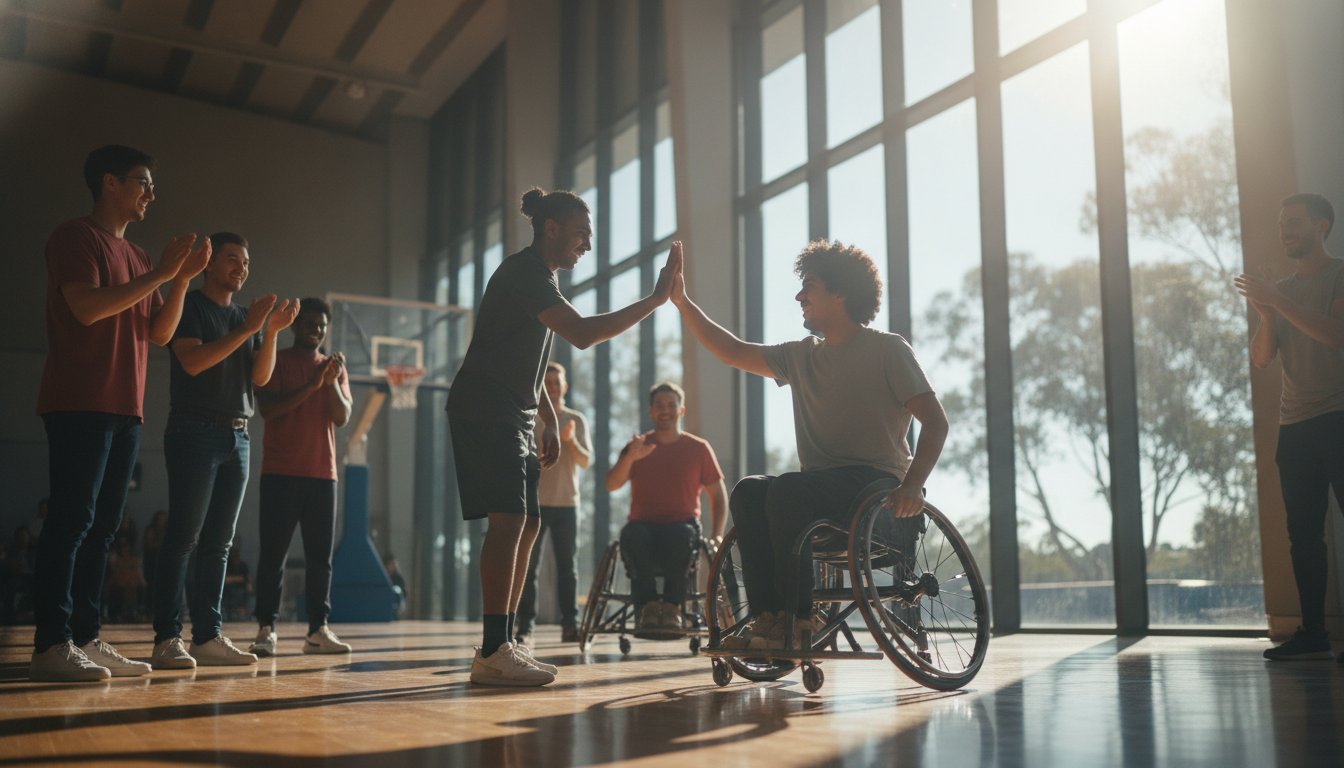
What if finding the right sports club wasn’t just about finding a ramp, but about finding a community that truly values your presence as much as your participation? It’s completely natural to feel a sense of hesitation or even anxiety when you think about joining a new group. You might have felt excluded from mainstream clubs in the past, or perhaps you’re worried about whether a venue can truly meet your sensory and physical needs. I’m with you, and I understand that these barriers can make the world feel a little smaller than it should be.
The good news is that finding inclusive sport and recreation activities is about more than just checking a box; it’s about reclaiming your right to health, joy, and social connection. This guide is designed to help you navigate those initial uncertainties and show you how to access the community participation support you deserve. We’ll look at practical strategies for identifying safe spaces, building your social confidence, and using your NDIS funding effectively under the latest 2026-27 pricing arrangements. You don’t have to manage this alone. I’m here to walk alongside you as you discover activities that make you feel strong, seen, and supported.
Key Takeaways
- Discover that true inclusion is about more than just physical access; it’s about finding a space where you are genuinely welcomed and valued for who you are.
- Learn practical strategies for finding inclusive sport and recreation activities by using specialized databases and engaging directly with clubs about their inclusive practices.
- Understand how to advocate for your needs by looking for clubs that use person-first language and offer coaching tailored to your individual goals.
- Explore how to effectively use your NDIS Core Supports to fund essential assistance, such as transport or a support worker, to help you participate with confidence.
- Gain the confidence to build new social connections and improve your physical health, knowing that I’m with you to help navigate every step of your participation journey.
What Defines Truly Inclusive Sport and Recreation Activities?
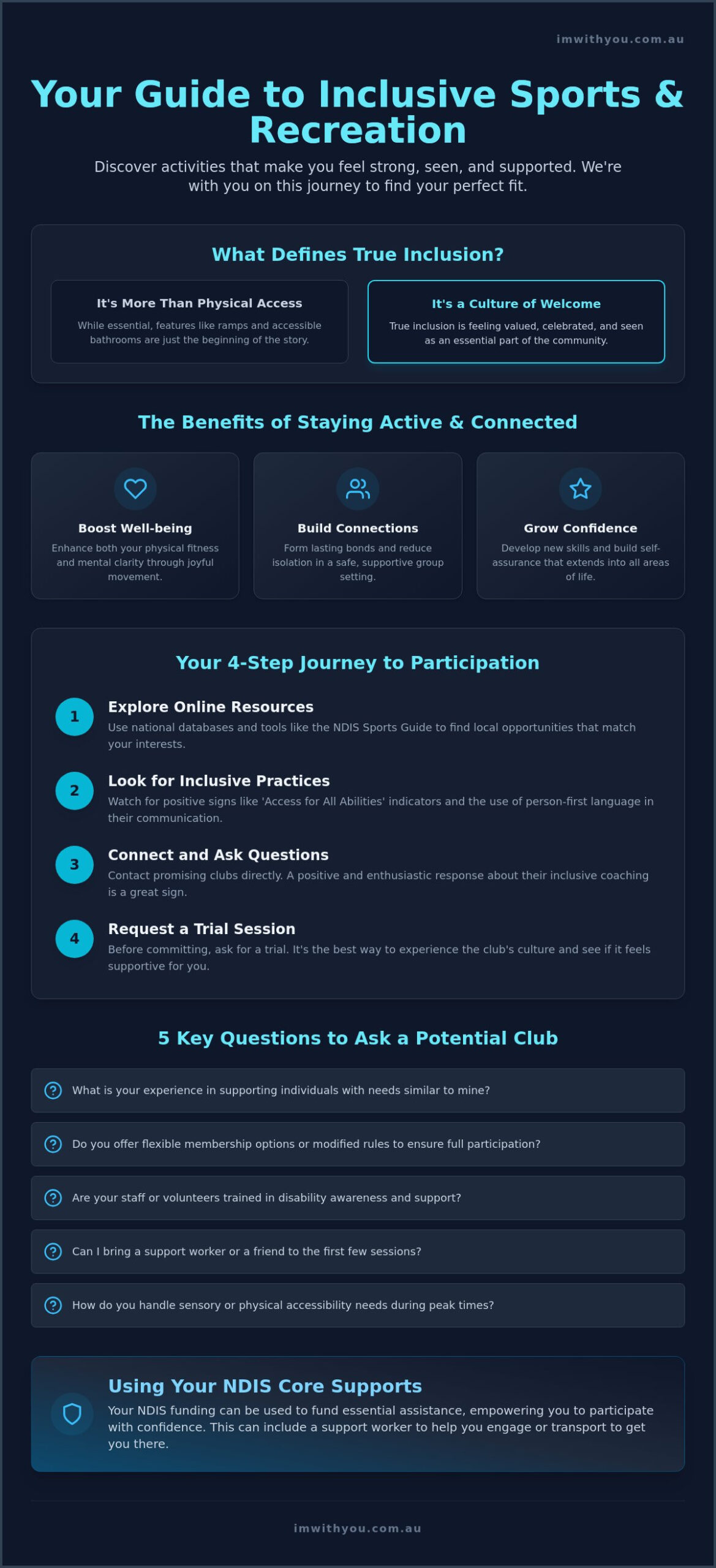
When we talk about inclusion, it’s easy to focus on physical features like ramps or accessible bathrooms. While these are vital, true inclusion goes much deeper into the heart of a community. It’s about how you feel when you arrive: are you welcomed, valued, and seen as an essential part of the group? Inclusive activities are those that adapt to your personal goals, whether you’re looking for a relaxed social connection or aiming for competitive excellence. Inclusive recreation is a space where barriers are removed through collaborative planning.
Understanding What is Inclusive Recreation? helps us see the shift from simple physical access to a culture of genuine welcome. It’s the difference between being able to enter a building and being invited to play a lead role in the game. I’m with you in the process of finding inclusive sport and recreation activities, and I want to help you find spaces where your presence isn’t just accommodated, but celebrated.
To see how inclusive activities can look in practice, watch this helpful video showing coordination and movement exercises:
The Benefits of Staying Active and Connected
Staying active is about so much more than physical fitness. When you engage in community participation, you’re building long-term confidence and social skills that ripple into every area of your life. Understanding what are leisure activities can help you see how these moments of play contribute to your mental well-being and independence. These activities provide a safe space to practice new skills and form bonds that reduce the isolation many feel when navigating complex systems.
Identifying Your Personal Recreation Goals
As you begin finding inclusive sport and recreation activities, I encourage you to focus on what brings you genuine joy rather than just what seems available. Ask yourself what makes your heart sing. Do you prefer the quiet focus of individual pursuits like swimming or archery, or do you crave the camaraderie and shared energy of a team environment? Identifying these preferences is the first step toward building a lifestyle that reflects your unique strengths and passions. I’m here to help you explore these options until we find the perfect fit for your lifestyle.
Practical Strategies for Finding Inclusive Sport and Recreation Activities
Taking the first step toward a new hobby can feel like a big leap, but you don’t have to do it alone. I’m with you in this search. A great way to start is by using national databases and NDIS-specific search tools to identify local opportunities that align with your interests. Tools like the NDIS Sports Guide are wonderful resources for understanding how to prepare for these new experiences. As you browse, look for ‘Access for All Abilities’ indicators or similar national inclusion quality marks. These signs often show that a club has already done the work to ensure their environment is welcoming for everyone.
When you find a group that looks promising, I encourage you to contact them directly. Pay close attention to the way they communicate. It’s a positive sign if they use person first language and speak enthusiastically about their inclusive coaching methods. Don’t be afraid to ask for a trial session before you commit to a full membership. It’s the best way to see if the culture of the club feels like a safe and supportive fit for you. If you’d like a companion to help you explore these options, our community participation support can provide the steady guidance you need to get started.
Five Questions to Ask a Potential Club or Group
- What is your specific experience in supporting individuals with needs similar to mine?
- Do you offer flexible membership options or modified rules to ensure full participation?
- Are your staff or volunteers trained in disability awareness and support?
- Can I bring a support worker or a friend to the first few sessions?
- How do you handle sensory or physical accessibility requirements during peak times?
Using Online Directories and Community Networks
Digital tools are incredibly helpful for finding inclusive sport and recreation activities in your area. Look for ‘AAA Play’ equivalents in your state or territory, as these directories specialize in connecting people with accessible options. I also recommend checking social media groups where other NDIS participants share their personal stories. These lived experiences can give you the most honest insight into which local clubs truly walk the talk of inclusion and community spirit. For those interested in cultural arts and engagement programs, you can learn more about Communities Together and their work in strengthening local social cohesion.
How Your NDIS Plan Supports Your Participation Journey
Your NDIS funding is more than just a set of numbers on a page; it’s a tool designed to help you live a full and active life. When you’re finding inclusive sport and recreation activities, your plan provides the practical resources to turn your goals into reality. You can leverage your ‘Core Supports’ budget to cover the cost of transport to a local club or to have a dedicated support worker by your side during the activity. Resources from national organizations like Disability Sports Australia can help you identify which programs are most compatible with your specific funding and needs.
Beyond immediate access, ‘Capacity Building’ funds are there to help you grow. You might use these to work with a therapist on physical mobility specifically for a sport, or to attend a workshop that builds the social skills needed for team environments. Choosing the right ndis provider is a vital step in this process. They’ll help you manage these different funding streams so you can focus on the fun of the game rather than the stress of the paperwork.
The Role of Support Coordination in Finding Activities
If your plan includes support coordination, you have a powerful ally in your corner. A coordinator can do the heavy lifting by researching local clubs, checking accessibility, and helping you navigate the registration process. I’m with you in advocating for the specific adjustments you need to succeed. Whether it’s requesting modified equipment or ensuring a sensory friendly environment, we can work together to make sure the club understands how to support you best.
Managing Your Responsibilities and Budget
Effective management of your ‘Social and Community Participation’ budget ensures you can attend your favorite activities consistently throughout the year. It’s helpful to track your spending monthly so you don’t run out of funds before your next review. When your plan review does come around, be sure to share your recreation successes and future goals. This helps ensure you have adequate funding for the year ahead, allowing your participation journey to continue growing alongside your confidence and health.
Embrace Your Journey to Community and Health
You now have the knowledge to look beyond physical access and find communities where you’re truly valued for who you are. By using your NDIS funding strategically and asking the right questions, finding inclusive sport and recreation activities becomes a rewarding path toward lasting joy and social confidence. It’s about matching your unique personal goals with a club that understands the deep importance of person-centered support and cultural inclusion.
At Im with you, we specialize in NDIS Support Coordination and compassionate, person-centered advocacy. Our team was honored with the 2026 Award for Excellence in Disability Support, which reflects our deep commitment to walking alongside every participant we serve. We believe that everyone deserves to feel a sense of belonging in their local community. Let’s find your community together; contact Im with you for support today.
You don’t have to navigate these complex systems alone. I’m with you every step of the way, and I’m excited to help you discover the activities that bring out your very best. Your journey to a more active, connected life starts right here.
Frequently Asked Questions
Can NDIS funding pay for my club membership fees or equipment?
NDIS funding usually doesn’t cover standard club membership fees or basic equipment that any person without a disability would be expected to pay for. It’s designed to cover the extra costs specifically related to your disability support needs. However, if you require specialized adaptive equipment to participate safely, this might be funded under your Capital Supports. I’m with you in exploring how to best align these needs with your goals.
How do I know if a recreation centre is truly accessible for my specific needs?
The best way to know if a centre is truly accessible is to contact their inclusion officer directly and ask for a trial session. While physical features like ramps are a great start, true accessibility involves a culture of welcome and staff trained in disability awareness. I recommend asking for a site tour before you join. This allows you to check the sensory environment and layout to ensure it feels safe and comfortable for you.
What if I need a support worker to come with me to my inclusive sport activity?
You can certainly use your ‘Assistance with Social and Community Participation’ funding to have a support worker accompany you to any activity. This support can include help with transport, personal care, or providing the social confidence needed to engage with others. Finding inclusive sport and recreation activities is much easier when you have a trusted companion by your side. I’m with you in managing your budget to ensure consistent support.
Is there a way to find inclusive activities that are specifically for adults?
Many community directories and social groups offer filters to help you find inclusive activities designed specifically for adults. You can also check with local councils, social media groups, or discover InklusoRise to learn more about specialized support for adults with disabilities. If you’re having trouble finding inclusive sport and recreation activities for your age bracket, our team can help research niche groups that match your interests. We’ll work together to find a community where you feel right at home.