

The true value of your NDIS plan isn’t found in the numbers on a screen; it’s found in the coffee dates, the local footy matches, and the quiet confidence of belonging. While the 2026 reforms bring changes, including the 30% reduction in social and community participation budgets, your right to a vibrant life remains the priority. I’m with you as we explore how to use ndis for social and community participation to ensure you stay connected to your world without the constant worry of running out of funds or making a mistake.
It’s natural to feel overwhelmed by the confusion between Core and Capacity Building budgets or the stricter reassessment criteria introduced in June 2026. You might worry that these changes mean more time alone, but that doesn’t have to be your reality. This guide will help you understand your funding, navigate the new Inclusive Communities Fund, and choose activities that truly spark joy. We’ll look at practical management strategies to help you feel confident, supported, and ready to stay active in the community you love.
Key Takeaways
- Distinguish between Core and Capacity Building budgets to remove the anxiety of managing your funding.
- Learn how to use ndis for social and community participation by effectively matching your personal goals with the right support categories.
- Experience the peace of mind that comes with a partner who says “I’m with you” while navigating the complexities of your plan.
- Find out how to choose a support provider that prioritizes your social identity and advocates for your place in the community.
Understanding Your NDIS Budget for Social and Community Participation
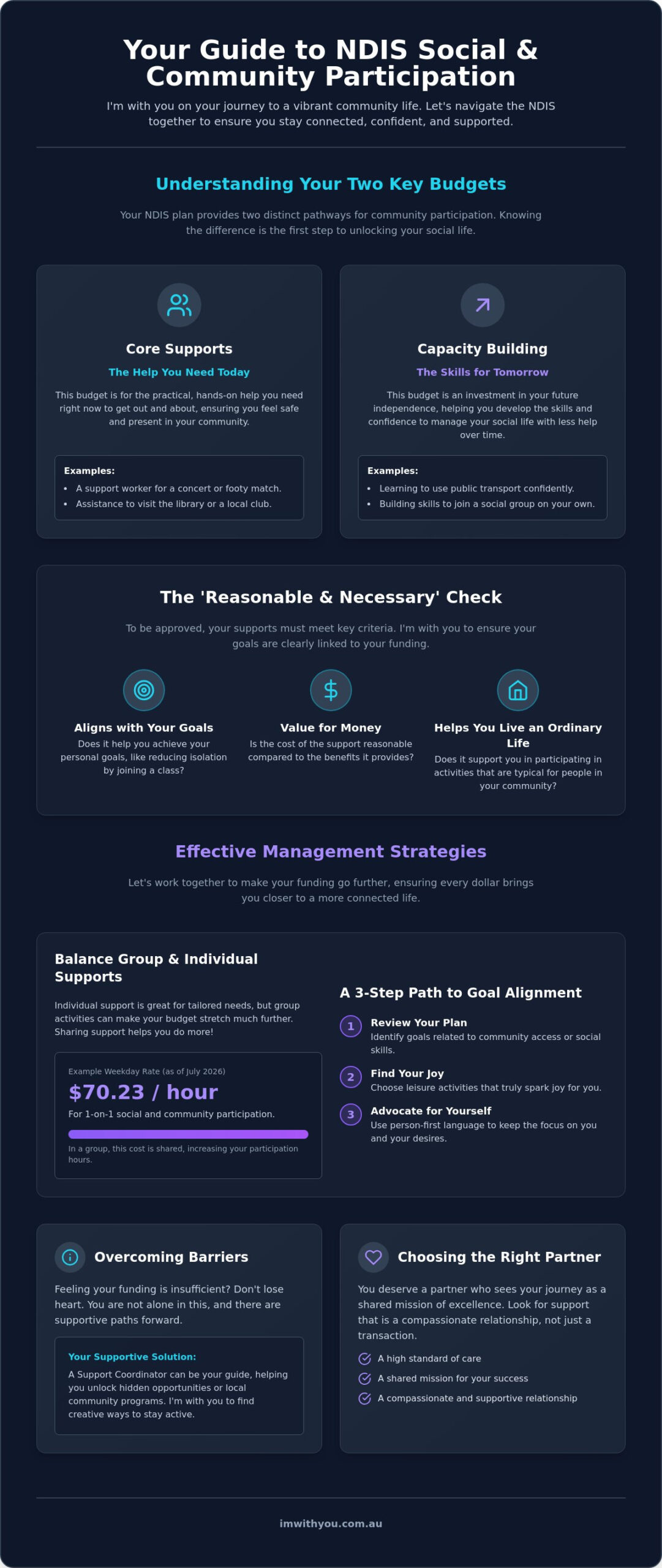
Understanding your funding is the first step toward reclaiming your social life. The National Disability Insurance Scheme (NDIS) provides two distinct pathways to help you get out and about. I’m with you as we look at how to use ndis for social and community participation by balancing these budgets effectively. This is especially vital as we move through the 2026 reforms, which include a progressive 30% reduction in these specific budgets starting from October.
To ensure your supports meet the “reasonable and necessary” criteria, they must align with your personal goals. If you want to join a local art class to reduce isolation, the NDIS looks at whether the support is value for money and helps you live an ordinary life. It’s about making sure the money you spend actually moves you closer to the life you want to lead.
To better understand how these supports empower your daily life, watch this helpful video:
Core Supports: The Help You Need Today
Core funding is about the help you need right now. Under Category 4, Assistance with Social and Community Participation, you can use your budget for a support worker to accompany you to a concert, the library, or a local sporting club. This provides the physical, hands-on help to get you there and ensures you feel safe while you’re out. It’s about being present in your community today and having the practical assistance to stay active.
Capacity Building: The Skills for Tomorrow
This budget focuses on your future independence. It’s often listed as “Increased Social and Community Participation” in your plan. Instead of just having someone take you to the shops, you might use this to learn how to use public transport or build the confidence to join a social group on your own. Capacity building is the bridge between needing support and finding your own rhythm. It’s about developing the skills to manage your social life with less help over time, empowering you to take the lead in your own journey.
Strategic Management: How to Use NDIS for Social and Community Participation Effectively
Effective management starts with your “why.” It’s not just about filling hours; it’s about making sure your activities align with the goals in your plan. When we work together, I’m with you to ensure that every dollar spent brings you closer to a more connected life. This collaborative approach shifts the focus from spending money to building a life.
One strategic way to manage your funding is by balancing group and individual supports. Individual support is wonderful for tailored needs, but group activities often allow your budget to stretch much further. For example, as of July 2026, the weekday rate for a support worker is $70.23 per hour for social and community participation. By sharing this support in a small group setting, you can participate in more outings over the course of your plan. This helps ease the anxiety of running out of funds before your next review. Managing activity-based transport is also vital. You should discuss these costs with your provider upfront to avoid any surprises on your statement.
Step-by-Step Goal Alignment
Review your current plan to identify where social participation is mentioned. Look for goals related to community access or social skills. From there, you can identify what are leisure activities that truly spark joy for you. Using person-first language is a powerful way to advocate for yourself. It keeps the focus on you as an individual with unique desires rather than just a set of support needs.
Overcoming Common Management Barriers
If you feel your funding is insufficient, don’t lose heart. A Support Coordinator can help you unlock hidden opportunities or local community programs that don’t always require high-cost funding. They act as a guide, helping you understand how to use ndis for social and community participation even when the path seems narrow. If you’re feeling stuck, our community participation support can help you find creative ways to stay active. By following the official NDIS guidelines, we can ensure your plan supports your right to be included and heard.
Finding the Right Partner for Your Community Journey
Choosing a support partner is one of the most personal decisions you’ll make in your journey toward a more connected life. While finding someone who is available is a start, a provider’s “standard of care” is what truly transforms a simple outing into a meaningful connection. You deserve a partner who views your community participation as a shared mission of excellence. I’m with you to ensure that your support is never just a clinical transaction, but a compassionate relationship built on trust and mutual respect.
Effective management means moving away from purely administrative tasks toward life-focused support. As you learn how to use ndis for social and community participation, you’ll find that the right partner acts as a steady guide. They don’t just lead the way; they walk alongside you, helping you build the confidence to explore new spaces. This level of support is vital for overcoming the isolation that many feel when trying to manage a complex plan on their own.
Evaluating Support Providers
When you meet potential partners, it’s helpful to ask questions that reveal their heart for service. Do they match you with support workers who share your interests? How do they handle changes in your social goals? I’ve created a gentle guide to finding your perfect match to help you navigate these conversations. Finding someone who aligns with your values is the key to a successful, long-term partnership.
The “Im with you” Difference in 2026
In 2026, our commitment to person-centered care was honored with the Excellence Award 2026. This recognition reflects our unwavering promise to provide quality care that respects your dignity and agency. Our disability advocacy services are a core part of this promise. We help you navigate the NDIS system, including the new digital claims processes, so you never have to face these challenges alone. We’re here to stand up for your right to be included, ensuring your plan remains a tool for growth and social joy.
Stepping Into a More Connected Future
Your journey toward meaningful community connection is a path worth walking. By understanding the balance between your Core and Capacity Building budgets, you can ensure your funding supports both your immediate needs and your long-term independence. We’ve explored how to use ndis for social and community participation to bridge the gap between isolation and belonging. It’s about more than just managing a budget; it’s about reclaiming your place in the world alongside a partner who truly understands your vision.
As a national NDIS provider with a gentle, human touch, we’re dedicated to your growth. Our person-centered advocacy specialists work tirelessly to ensure you feel heard and respected in every interaction. We’re proud to be recognized with the Excellence in Care Award 2026, a testament to our commitment to quality and partnership. I’m with you as you navigate these systems, providing the steady guidance you need to feel confident and secure. Let us walk this journey with you—contact our team for NDIS support today.
You don’t have to manage these changes alone. With the right strategy and a supportive companion, your social life can flourish in 2026 and beyond. We’re ready to help you find your rhythm and stay active in the community you love.
Frequently Asked Questions
Can I use NDIS funding to pay for gym memberships or movie tickets?
No, you generally can’t use your funding for the cost of entry tickets or membership fees. The NDIS views these as everyday living costs that everyone pays, regardless of their disability. However, your plan can cover the cost of a support worker to accompany you or any specialized assistance you need while you’re there. For example, if you’re focused on fitness, you could check out 6X Training to see how a professional studio can support your health goals. I’m with you in finding creative ways to make these outings affordable and enjoyable within your budget.
What is the difference between Category 4 and Category 9 in my NDIS plan?
Category 4 is part of your Core Supports and provides the practical, hands-on help you need right now to get out into the world. This covers the hourly rate for a support worker to assist you at a social event. Category 9 belongs to Capacity Building and focuses on skill development. Learning how to use ndis for social and community participation often involves using Category 9 to build the confidence or transport skills needed to attend activities independently in the future.
Do I need a Support Coordinator to use my social and community participation funding?
You don’t officially need a Support Coordinator, but having one can take a lot of weight off your shoulders. They act as a knowledgeable guide to help you find local clubs and negotiate service agreements with providers. If you don’t have coordination in your plan, I’m with you to help simplify the process. We can look at your goals together and find the right community activities that match your interests and your budget.
Can my support worker drive me to social activities using my NDIS budget?
Yes, your support worker can provide transport, but it’s important to know how this is billed. While their time is covered by your social participation funding, the actual kilometers they drive are usually billed as activity-based transport. In some cases, using a dedicated service like Get U There Shuttles for event or airport transfers can provide a more specialized solution for your travel needs. You should always discuss these costs with your provider first to ensure they fit within your plan. Understanding how to use ndis for social and community participation transport helps you avoid unexpected bills and keeps your funding on track for the whole year.