

What if the person who understands your story best isn’t just a line item on a budget, but a steady companion through every upcoming NDIS update? It’s completely natural to feel a sense of unease when you hear about the 2% growth cap or the transition to new “Navigator” roles by July 2028. You’ve worked incredibly hard to build a life of independence and dignity, and the thought of shifting rules can feel like the ground is moving beneath your feet. I understand that stress, and I want you to know that I’m with you every step of the way.
The process of navigating NDIS reforms with a support coordinator is about much more than just ticking boxes; it’s about ensuring your voice remains the loudest in the room. This guide will help you manage the 2026 to 2028 transition with total confidence, knowing you have a dedicated partner walking beside you. We’ll explore exactly what these changes mean for your plan funding and provide actionable steps to help you secure the supports that matter most to your daily life. You aren’t alone in this, and together, we can turn complexity into a clear path forward.
Key Takeaways
- Learn how the system is evolving toward a new Navigator model and why your current support remains your strongest ally during this transition.
- Discover practical ways to work with your coordinator today to document your unique story and preferences, ensuring they are preserved for the future.
- Strengthen your decision-making muscles through capacity building skills so you can approach administrative shifts with confidence and clarity.
- Understand why navigating NDIS reforms with a support coordinator provides the emotional and technical anchor you need to stay focused on your personal goals.
- Find reassurance in the power of a long-term partnership, knowing I’m with you to help translate complex reforms into simple, life-focused steps.
Understanding the 2026 NDIS Reforms: From Support Coordination to Navigation
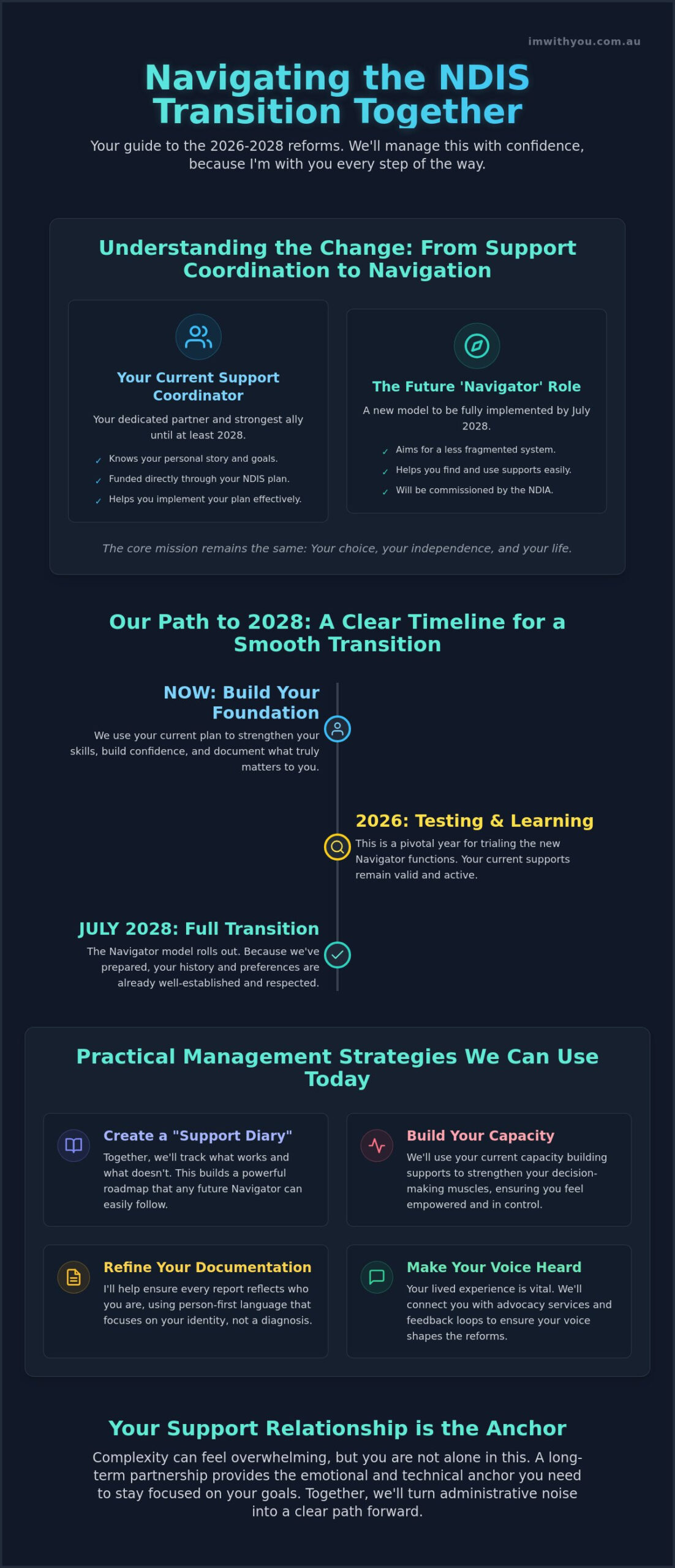
The National Disability Insurance Scheme (NDIS) is entering a season of growth and refinement. The recent NDIS Review suggested moving toward a “Navigator” model to help people find and use supports more easily. While change can feel heavy, the primary goal is simple: to build a system that’s less fragmented and more deeply connected to your daily life. I want you to feel steady during this time. I’m with you to ensure your needs are always the priority as we look toward 2026 and beyond.
Navigating NDIS reforms with a support coordinator means you have an expert who knows your history helping you prepare for these future shifts. This transition is a thoughtful journey rather than an overnight switch, giving us plenty of space to manage your plan with care. We’ll work together to ensure your voice isn’t lost in the administrative details, keeping the focus on your personal growth and community participation. My role is to act as your anchor, providing clarity when the headlines feel overwhelming.
To better understand how these updates impact your current support, watch this helpful video:
Support Coordinators vs. Navigators: What is changing?
The proposed shift involves moving from plan-funded coordination to agency-commissioned navigation services. While the names might change by July 2028, your current NDIS Support Coordination remains the most vital tool for implementing your plan today. We are focusing on your agency and choice. The heart of the scheme stays exactly the same: your goals, your independence, and your right to live the life you choose. We’ll use this phase to strengthen your decision-making muscles and ensure you feel empowered.
The Timeline: What to expect in 2026
The year 2026 is a pivotal time for testing and trialing these new navigation functions. It’s important to remember that if your current plan includes coordination funding, those supports are still valid and should be used effectively. We’ll use this period to document what works best for you. This ensures that when the transition to Navigators fully rolls out in 2028, your history and preferences are already well-established and respected. You have time to adjust, and I’ll be here to guide you through every milestone.
Practical Management Strategies for a Stress-Free Transition
I know the word “reform” can sound a bit clinical and cold. It’s often associated with paperwork rather than people. But when you’re navigating NDIS reforms with a support coordinator, we can turn that administrative noise into a clear strategy for your future. I’m with you to help decipher every update, ensuring you never feel lost in the shuffle. One of the most effective ways to manage this transition is to start a “Support Diary” today. By tracking what works, what doesn’t, and which specific supports make your best days possible, we’re building a roadmap that any future Navigator can easily follow.
Building your decision-making muscles is another vital step in this journey. We’ll use your current capacity building supports to explore how you want your life to look in 2026 and beyond. This isn’t just about compliance; it’s about empowerment. We’re working to ensure your agency remains the central focus of every decision made about your care.
Strengthening Your Current NDIS Plan
Now is the perfect time to ensure your documentation reflects who you truly are. We’ll work together to use person-first language in every report, keeping the focus on your identity rather than a diagnosis. I can also help you audit your current service delivery to ensure every hour of support is being used efficiently and purposefully toward your long-term vision for independence. If you ever feel overwhelmed, reaching out for professional guidance can provide the clarity you need to move forward with confidence.
Collaborative Advocacy: Your Voice in the Reform Process
The foundation for these changes comes from the official NDIS Review, which emphasizes the importance of participant feedback. Your voice is a powerful tool in this process. We can connect you with disability advocacy services to ensure your choice and control are protected as the system evolves. I’ll also encourage you to join NDIA consultations and feedback loops. Your lived experience is the most valuable data the government has, and together, we’ll make sure it’s heard and respected.
Why Your Support Relationship is the Anchor in Changing Times
Systems and names may evolve, but the heart of your journey is the person who knows your name, your family, and your dreams. Navigating NDIS reforms with a support coordinator gives you a dedicated partner who acts as a reform translator. I’m with you to simplify complex government updates, turning technical jargon into clear, actionable steps for your daily life. Having someone with specialized expertise in disability support services means you aren’t just reacting to changes; you’re proactively shaping your future with a steady hand beside you.
This relationship is built on trust and a deep understanding of your history. While the NDIA updates its frameworks, I’ll keep the focus on your unique aspirations. It’s about ensuring that administrative shifts never overshadow your personal growth or your right to a dignified life. We’ll work together to keep your goals front and center, regardless of what’s happening in Canberra.
Finding the Right Match for Your Journey
Choosing the person to walk this path with you is a deeply personal decision. It’s helpful to know how to choose an NDIS provider who prioritizes partnership over paperwork. You should look for a coordinator who balances empathy with strong legislative knowledge and an unwavering commitment to your rights. A great match feels like a calm, capable friend who happens to be an expert in a complex field, providing a sense of security that you aren’t alone in these challenges.
Maintaining Continuity of Care
Stability is essential when the ground feels like it’s shifting. We’ll work together to ensure your supported independent living ndis arrangements remain secure and uninterrupted during the reform process. My promise is one of accompaniment. Whether the system calls the role a coordinator or a navigator in the future, the core commitment remains the same: I’ll be right there with you, ensuring your home and your supports remain the safe haven they are meant to be. We’ll manage every transition with patience and care, keeping your independence protected.
Embracing the Future with Confidence and Clarity
The journey toward 2026 and beyond is simply the next chapter in your story of independence. By focusing on practical strategies like documentation and building your capacity today, you’re creating a solid foundation for whatever the future holds. Navigating NDIS reforms with a support coordinator means you don’t have to carry the weight of these changes alone. I’m with you to ensure your voice remains central to every decision.
Let’s navigate these changes together; reach out to our supportive team today. You have the strength to handle this transition, and I’ll be right beside you to make sure every step feels safe and certain.
Frequently Asked Questions
Will I lose my Support Coordinator because of the NDIS reforms?
No, you won’t lose your current support immediately. Your existing plan and its coordination funding remain valid as the system moves through this transition phase. The government has planned a gradual shift, with the full Navigator model not expected to be fully in place until July 2028. I’m with you to ensure your current supports stay steady while we wait for more details on the new framework.
What exactly is an NDIS Navigator and how is it different?
An NDIS Navigator is a proposed new role meant to simplify how you find and connect with services. While support coordinators are currently funded within your individual plan, Navigators will likely be commissioned directly by the agency. This change aims to make the system less fragmented by helping you access both NDIS services and mainstream community supports, like health and education, through a single, knowledgeable point of contact.
How can I prepare my NDIS plan for these upcoming changes?
The best way to prepare is to document your needs and successes clearly. Navigating NDIS reforms with a support coordinator allows you to audit your current plan and ensure your goals reflect your true vision for independence. I recommend keeping a diary of what works well in your daily life. This history will be incredibly valuable when it’s time to brief a new Navigator on your unique story.
Do I need to change providers when the Navigator model starts?
You don’t need to make any provider changes today. The NDIA will eventually provide a list of commissioned Navigator organizations, but this is a long-term goal for 2028. My priority is helping you maintain continuity of care. We’ll explore those future options together when the time comes, making sure you always have a partner who values your dignity and choice above administrative requirements.