

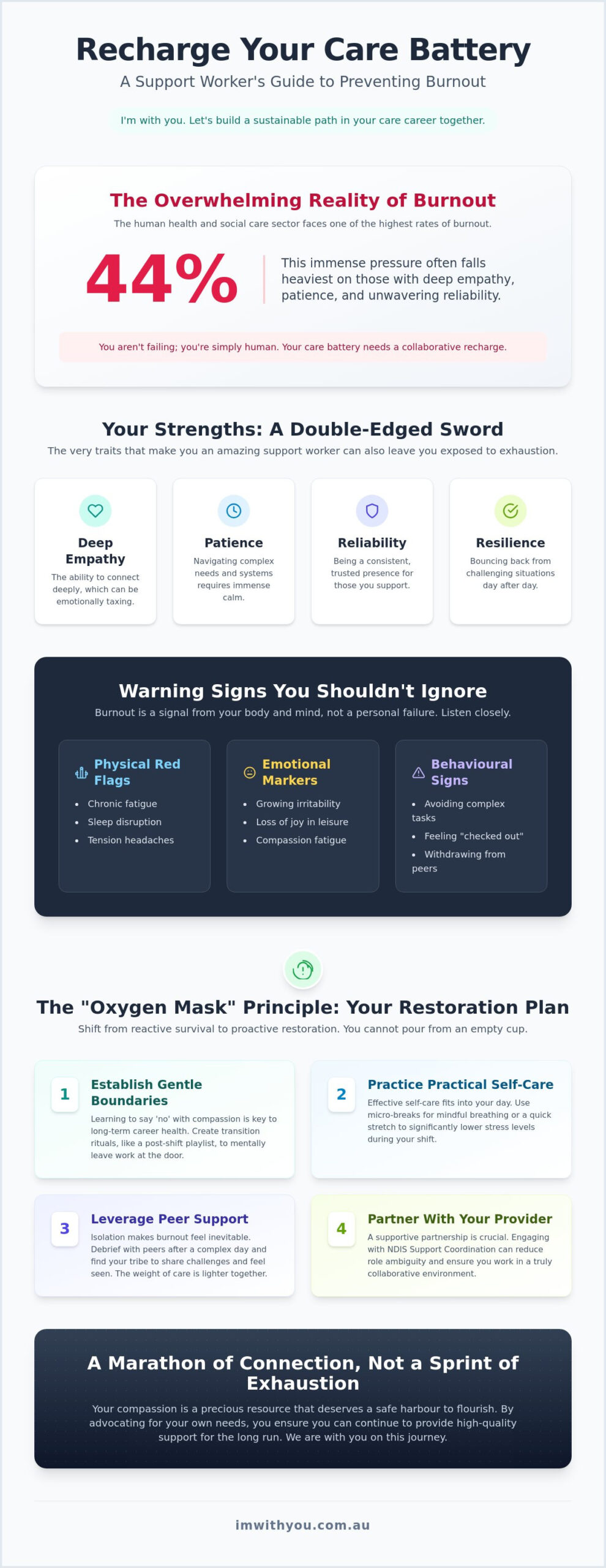
Did you know that the human health and social care sector currently faces one of the highest burnout rates at 44%? This pressure often falls most heavily on those who embody the essential qualities of a good support worker, such as deep empathy, patience, and unwavering reliability. When you’re balancing the complexity of NDIS administration with the emotional weight of high-needs care, it’s natural to feel depleted. You aren’t failing; you’re simply human, and your care battery needs a collaborative recharge.
I know how isolating it feels when the passion that led you to this career starts to flicker under the weight of exhaustion. I’m with you, and I want to remind you that your well-being is just as important as the support you provide to others. This guide offers a gentle path toward restoration, sharing practical strategies to recognise burnout early and reclaim your joy in disability support. We’ll look at how to build a sustainable way to work where you feel truly heard, empowered, and supported by your provider every step of the way.
Key Takeaways
- Recognise why the core qualities of a good support worker, such as deep empathy and resilience, require intentional care to prevent emotional exhaustion.
- Embrace the “oxygen mask” principle to prioritise your own mental health as the essential foundation for providing high-quality disability support.
- Learn how to shift from a state of reactive survival to a proactive restoration plan that keeps your passion for the NDIS sector alive.
- Understand the importance of a supportive partnership with your provider to ensure you never feel isolated while navigating complex care needs.
- Discover how to transform your daily routine into a sustainable marathon of connection, focusing on long-term joy and professional resilience.
Recognising the Qualities of a Good Support Worker in 2026
Being a support worker in Australia’s NDIS space is a role built entirely on heart. The essential qualities of a good support worker, such as deep empathy, patience, and resilience, are what allow you to provide life-changing Disability Advocacy Services and community participation support. I’m with you in acknowledging the heavy emotional weight this carries. Often, the very traits that make you an expert at connecting with others are the ones that leave you most exposed to exhaustion. Understanding this connection is the first step toward building a sustainable career where you can continue to make a difference without losing yourself in the process.
I’ve seen that for those starting this path, especially international students, Apeiro Institute provides the vocational training and guidance necessary to thrive in Australia’s health and social care sectors.
To better understand how these traits look in a professional setting, watch this helpful video:
Empathy and Dedication: The Double-Edged Sword
It’s vital to tell the difference between a long, tiring day and a depleting career state. High-quality care relies on your ability to remain present, yet this constant emotional output can lead to a sense of being drained. One way we maintain our professional health is by consistently using person-first language. This practice helps us see the individual’s strengths rather than just their support needs, which reduces the risk of clinical detachment. Compassion fatigue is the natural result of caring deeply without adequate systemic support.
Warning Signs You Should Not Ignore
Identifying Occupational burnout early can prevent a long-term health crisis. It’s not a personal failure, but a signal from your body and mind. You might notice physical red flags like chronic fatigue, sleep disruption, or tension headaches that don’t improve after a weekend off. Emotional markers are just as telling. You may feel a growing sense of irritability or a sudden loss of joy in leisure activities you once loved. Behaviourally, you might find yourself avoiding complex NDIS administrative tasks or feeling “checked out” during your shifts. These signs suggest it’s time to pause and reach for the support you deserve.
Effective Management Strategies for Support Worker Stress
Managing stress isn’t about just getting through the day; it’s about creating a space where you can thrive alongside those you support. The “Oxygen Mask” principle is the foundation of quality care. You simply cannot pour from an empty cup. While the UK Government’s core qualities for support workers highlight values like respect and compassion, these qualities of a good support worker are only sustainable if you protect your own mental health first. Moving toward proactive restoration means building a resilience toolkit that fits into your busy NDIS schedule.
Establishing Gentle Boundaries and Self-Care
I’m with you when you feel the pressure to take on just one more shift because you care so deeply. However, learning to say ‘no’ with compassion is a key management strategy for long-term career health. It ensures that when you’re with a participant, you’re bringing your best self. Simple transition rituals, like changing your clothes immediately after a shift or listening to a specific playlist, help you leave work at the door. Practical self-care doesn’t always need a full hour; micro-breaks and mindful breathing during your workday can significantly lower your stress levels.
The Power of Debriefing and Peer Support
Isolation often makes burnout feel inevitable. Professional debriefing after a complex care day is essential for processing the emotional labour you provide. Finding your tribe among other carers lets you share advocacy tips and feel seen in your challenges. By engaging with NDIS Support Coordination, you can reduce role ambiguity and ensure you’re working in a truly collaborative environment. When we work together, the weight of care becomes much lighter and your passion for the role stays protected.
Building a Sustainable Path Forward in Your Care Career
Choosing the right environment is perhaps the most critical step in protecting your longevity in the disability sector. The qualities of a good support worker, like deep compassion and patience, are precious resources that deserve a safe harbour to flourish. I’m with you in believing that disability support is a marathon of connection rather than a sprint of exhaustion. By advocating for your own needs as a professional, you ensure that you can continue to provide high-quality Disability Advocacy Services and support for years to come.
How a Supportive Provider Makes the Difference
When you’re choosing an NDIS provider as an employer, look for a culture that treats worker well-being as a core promise. My “I’m with you” commitment means I understand that excellence in care starts with excellence in worker support. Our 2026 Award for Excellence serves as a testament to this supportive culture, where we prioritise partnership over simple administrative management. We walk alongside you, ensuring you have the resources and emotional backing to do your job safely and joyfully.
Your Journey Toward Balanced Support
Creating a personalised sustainability plan for your upcoming NDIS plan cycles helps you stay grounded. This plan should include specific strategies to prevent support worker burnout, such as regular peer check-ins and clear work-life boundaries. You can integrate joy back into your role by focusing on the transformative power of Community Participation Support and Therapeutic Supports. These areas often remind us why we entered this field: to witness growth and foster independence.
I encourage you to take one small step toward restoration today, whether that’s requesting a formal debrief or simply reclaiming your lunch hour for quiet reflection. Remember that the qualities of a good support worker include the wisdom to know when you need a recharge. I’m with you in every part of this journey, supporting your growth as you support the community. You aren’t alone in this, and together, we can build a career that feels both sustainable and deeply rewarding.
Embracing Your Future in Disability Support
Your commitment to the NDIS sector is a gift to the community. We’ve seen how the essential qualities of a good support worker, such as your deep empathy and patience, require a supportive environment to remain sustainable. By implementing proactive management strategies and seeking out professional debriefing, you can transform your role from a source of stress into a career of lasting joy. You’ve learned that setting boundaries isn’t about caring less; it’s about caring enough to stay in the marathon for the long term.
At Im with you, we’re more than just a National NDIS Provider; we’re expert advocates who walk alongside you. Our 2026 Award for Excellence in Disability Support reflects our dedication to a premium, person-centred approach for both our participants and our team. You don’t have to navigate the complexities of high-needs care or admin alone. We believe that when you feel supported, you can provide the highest level of care to those who need it most.
Discover how we support our team and participants at Im with you
I’m with you as you take these steps toward restoration and professional resilience. Your well-being matters, and together, we can ensure your passion for support work continues to shine brightly for years to come. You’re doing incredible work, and you deserve to feel empowered every single day.
Frequently Asked Questions
What is the number one cause of support worker burnout in Australia?
How can I tell if I am just tired or actually suffering from burnout?
General tiredness usually resolves after a good night’s sleep, but burnout is a persistent state of emotional and physical exhaustion. If you find that rest no longer leaves you feeling refreshed, or if you feel increasingly cynical about your role, you’re likely experiencing burnout. I’m with you in identifying these markers early. Persistent irritability and a loss of joy in your work are clear signals that your care battery needs a collaborative recharge.
Is it okay to take a mental health day as a disability support worker?
It’s absolutely okay, and often necessary, to take a mental health day to preserve your well-being. Taking time to recharge ensures you can continue to embody the qualities of a good support worker, such as patience and empathy, when you return to your participants. I’m with you in prioritising your health, because a well-rested carer provides safer, more compassionate support. Your mental health is the foundation upon which all your professional work is built.
How do I talk to my NDIS provider about feeling overwhelmed?
Schedule a formal time to discuss your current workload and emotional well-being with your supervisor. Be honest about specific challenges, whether they involve NDIS administration or the intensity of community participation support. I’m with you in this conversation. A supportive provider will welcome your feedback as an opportunity to collaborate on a more sustainable schedule. Open communication is a professional strength that helps prevent isolation and ensures you feel valued and heard in your role.