
Imagine having a world of thoughts inside you but no way to share them with the people you love most. It’s a deeply personal challenge that can leave you feeling isolated or unheard in your own life. Finding the right assistive technology for communication ndis shouldn’t be another source of stress, yet it’s natural to feel anxious about meeting “Reasonable and Necessary” requirements. I’m with you as we explore these options together, ensuring you don’t have to face the complex system alone. You might worry about the high cost of dedicated devices, which can start from $7,995 for specialized systems, but the right guidance makes the path forward much clearer.
I believe that every person deserves a reliable way to connect and be understood. In this guide, you’ll discover how to navigate NDIS cost tiers and the 2024 Replacement Supports Framework with confidence. We’ll look at practical management strategies to help you gather professional evidence and choose the right tools to empower your everyday connections. You’ll learn how to secure the funding you need while feeling supported by a partner who truly understands the journey toward finding your voice.
Key Takeaways
- Discover how simple communication tools and strategies help you share your thoughts and build deeper connections with those around you.
- Learn to identify clear communication goals and find the right assessor to help you access assistive technology for communication ndis funding.
- Understand how having a supportive guide by your side can turn complex technology into a natural, empowering part of your daily life.
- I’m with you in using advocacy to ensure your voice is prioritized, making sure your choices are respected by the system.
- Gain practical management strategies to navigate the NDIS system with less anxiety and more focus on your personal growth.
Empowering Connections: What is Assistive Technology for Communication?
Communication is the heartbeat of our connections. When we talk about assistive technology for communication ndis, we’re really talking about the tools that help your unique voice reach the world. It isn’t just about equipment; it’s about your fundamental right to be heard and understood. I’m with you in recognizing that every thought you share is a bridge to the people you love. Whether you’re sharing a simple need or a complex dream, these tools are here to ensure nothing gets lost in translation.
Many people use Augmentative and alternative communication (AAC) to bridge these gaps. This sounds technical, but it’s just a way of saying “different ways to communicate.” It might mean using a tablet to speak for you, pointing to symbols on a board, or using specialized software. Whatever the method, it serves to empower your agency and independence. It’s a supportive way to make sure your personality shines through every interaction.
To help you visualize how these supports work within the scheme, watch this helpful video:
The Spectrum of Communication Supports
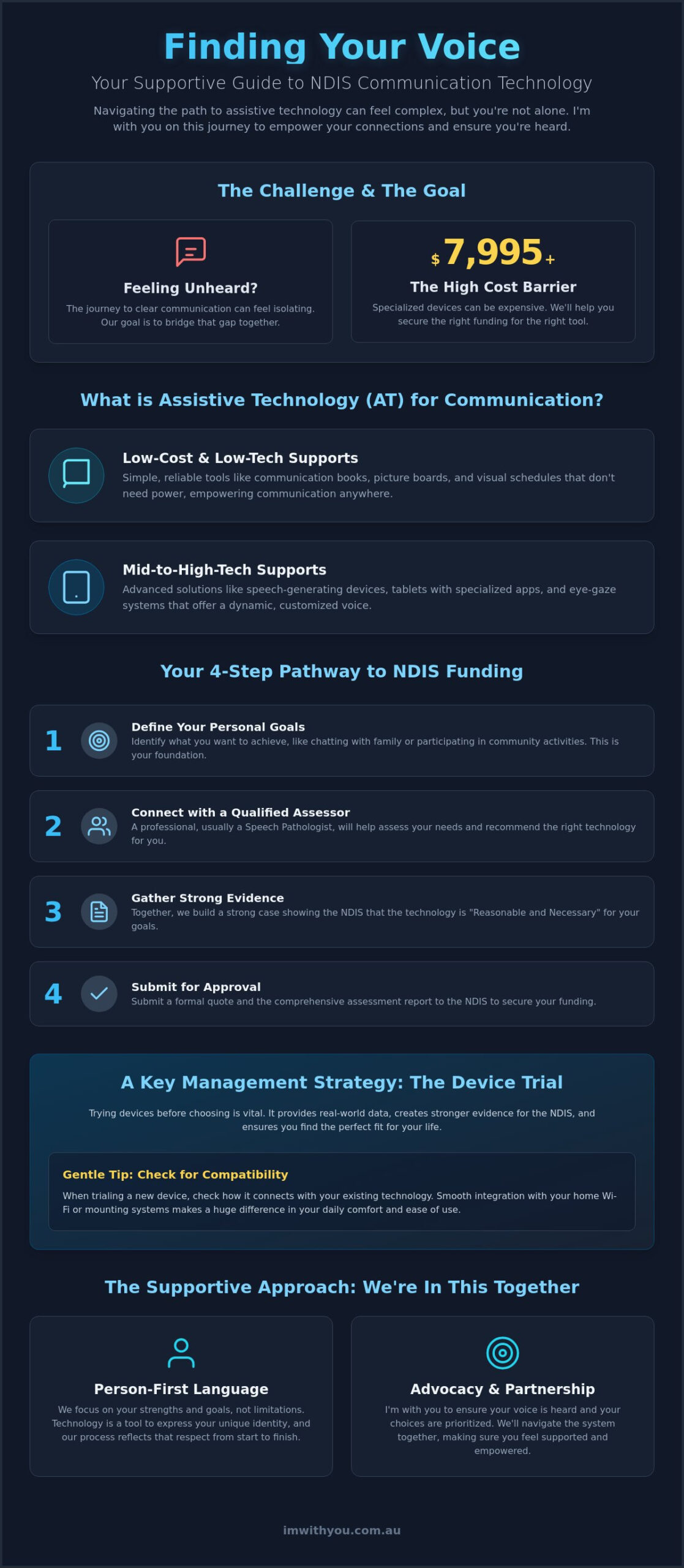
The beauty of modern technology is that it offers a solution for every lifestyle. We often look at these supports in different categories based on their complexity and cost. Low-cost AT includes non-electronic tools like communication books, visual schedules, or simple picture boards. These are reliable and don’t need batteries. Mid-to-high-cost AT includes specialized speech-generating devices and sophisticated software that can be controlled by touch or even eye movements. The most expensive gadget isn’t always the right one. The “best” technology is the one that feels like a natural part of your life and fits into your daily routine without adding extra stress.
The Role of Person-First Language
I believe the assessment process should always start with who you are, not just what you need. This is why we use person first language to keep the focus on your strengths and goals. When we see assistive technology for communication ndis as an extension of your identity rather than a sign of a limitation, the whole experience changes. It becomes a tool for growth and a way to show the world your true self. This approach ensures your voice is the priority throughout the entire journey, keeping the human touch at the center of the technology.
Navigating the NDIS Funding Path for Communication Supports
Securing assistive technology for communication ndis can feel like a daunting climb, but you don’t have to reach the summit alone. I’m with you as we break this journey down into manageable steps that keep your needs at the center. The first step is identifying your personal communication goals within your NDIS plan. Think about what you want to achieve, like chatting with friends or participating in meetings. Next, you’ll connect with a qualified AT Assessor, usually a Speech Pathologist, who understands your unique challenges. Together, you’ll gather evidence to show the NDIS that the technology is “Reasonable and Necessary” for your specific goals. Finally, you’ll submit a formal quote and a comprehensive assessment report for approval.
Meeting the NDIS Funding Criteria
The NDIS looks for three main pillars: value for money, clear evidence of benefit, and a measurable impact on your function. It’s about more than just getting a piece of hardware. It’s about how that tool helps you engage in social participation and build your independence. If the paperwork feels heavy, our NDIS Support Coordination team can walk alongside you to handle these requirements. I’m with you in ensuring that every piece of evidence highlights your potential rather than just your limitations. We want the system to see how this support changes your life for the better.
The Importance of a Device Trial
Choosing a tool is a significant decision, so trialing multiple types of assistive devices is a critical management strategy. A trial lets you experience how a device feels in your daily environment before you make a final choice. During this time, keep a simple log of your experiences. Note which features felt intuitive and which ones were difficult to use. This real-world data creates much stronger evidence for the NDIS than a clinical report alone. It shows that you’ve actively managed the process to find the best possible fit.
Gentle Tip: When you’re trialing a new device, check how it talks to the things you already use. Compatibility with your home Wi-Fi or existing mounting systems is a small detail that makes a huge difference in your daily comfort. Just as businesses ensure their connectivity through professional services like IntelliComms, having a reliable technical foundation is essential for your assistive tools.
Managing Your AT Journey with Compassionate Support
Receiving your new device is a beautiful milestone, but it’s only the start of your communication journey. The NDIS defines What is Assistive Technology as any tool that helps you do things you otherwise couldn’t, but a device only becomes a voice when it’s integrated into your life. This is where NDIS Support Coordination becomes invaluable. I’m with you to ensure that your assistive technology for communication ndis doesn’t just sit on a shelf. We work together to turn that piece of equipment into a life-changing tool for connection. If you’re just starting out, learning how to choose an NDIS provider can help you find a partner who truly values your agency.
Implementation and Training Strategies
Learning to use a new communication system is a team effort. We use Capacity Building skills to help you, your family, and your support circle become confident with the technology. It’s about creating a safe, supportive environment where you feel encouraged to practice without pressure. We focus on practical management strategies, like setting up the device for dinner table conversations or community outings. When everyone around you understands how to support your new way of speaking, your confidence grows naturally. I’m with you to make sure the setup process feels like a step toward freedom rather than a technical chore.
Advocacy for Long-Term Success
Your needs will likely change over time, and your technology should grow with you. I’m with you during plan reviews to ensure your communication supports remain current and effective. Our Disability Advocacy Services are here to make sure your voice is prioritized over bureaucratic convenience. If a device needs an upgrade or your goals shift, we’ll be right there to help you navigate the evidence requirements again. We don’t just walk away once the funding is approved. Your voice matters deeply, and we’re committed to helping you share it with the world for years to come.
Embrace Your Future with Confidence and Connection
You’ve taken a significant step today by exploring how to access assistive technology for communication ndis. We’ve explored how these tools are more than just hardware; they are the keys to sharing your thoughts, needs, and dreams with the world. By setting clear goals, trialing the right equipment, and gathering strong evidence, you can secure the funding you deserve. The journey doesn’t end when the technology arrives. It’s about ongoing growth, capacity building, and having a dedicated advocate by your side to handle every plan review.
I’m with you as you move toward a life of greater independence and deeper connection. As the recipient of the 2026 Award for Excellence in Disability Support, our team provides expert NDIS Support Coordination and Advocacy with a deeply compassionate touch. We believe that your voice is a fundamental right, and we’re here to make sure it’s heard. It’s time to move beyond the stress of the system and focus on your personal growth.
Find your voice with a partner who cares, connect with Im with you today. You have so much to share, and I’m honored to walk this path with you.
Frequently Asked Questions
What is considered assistive technology for communication under the NDIS?
Communication AT includes any tool that helps you express thoughts or interact with others. This ranges from simple picture boards and books to high-tech speech-generating devices. I’m with you in exploring how these tools, whether they’re low-cost visual schedules or advanced software, can be tailored to your specific needs. The NDIS funds assistive technology for communication ndis when it’s directly related to your disability and helps you achieve your personal independence goals.
How do I get an NDIS communication assessment?
You can begin the process by connecting with a qualified professional, typically a Speech Pathologist, who serves as an AT assessor. They’ll spend time understanding your daily life and trialing different options to see what feels most natural. I’m with you during this stage to help coordinate these appointments and ensure the final report clearly explains why the technology is a vital necessity for your personal growth and connection.
Will the NDIS pay for an iPad or tablet for communication?
The NDIS may fund tablets, but they’re now considered “replacement supports” under the November 2024 framework. This means you need a strong justification showing that a mainstream device is the most effective way to meet your communication needs. I’m with you in gathering the evidence required to show how assistive technology for communication ndis replaces other more expensive or less effective funded supports in your plan, ensuring you have the right tools to connect.
What happens if my communication technology breaks or needs repairs?
If your device stops working, the NDIS typically provides funding for repairs and maintenance to keep your voice active. For low-cost items, you can often use your consumables budget for a quick fix. For more expensive technology, you may need a quote from a repairer to seek approval. I’m with you in managing these unexpected hurdles so you aren’t left without a way to connect while waiting for a solution to be found.